Muromachi and Sengoku: Diffused power, social growth
When the center weakened, why could markets and culture still grow?
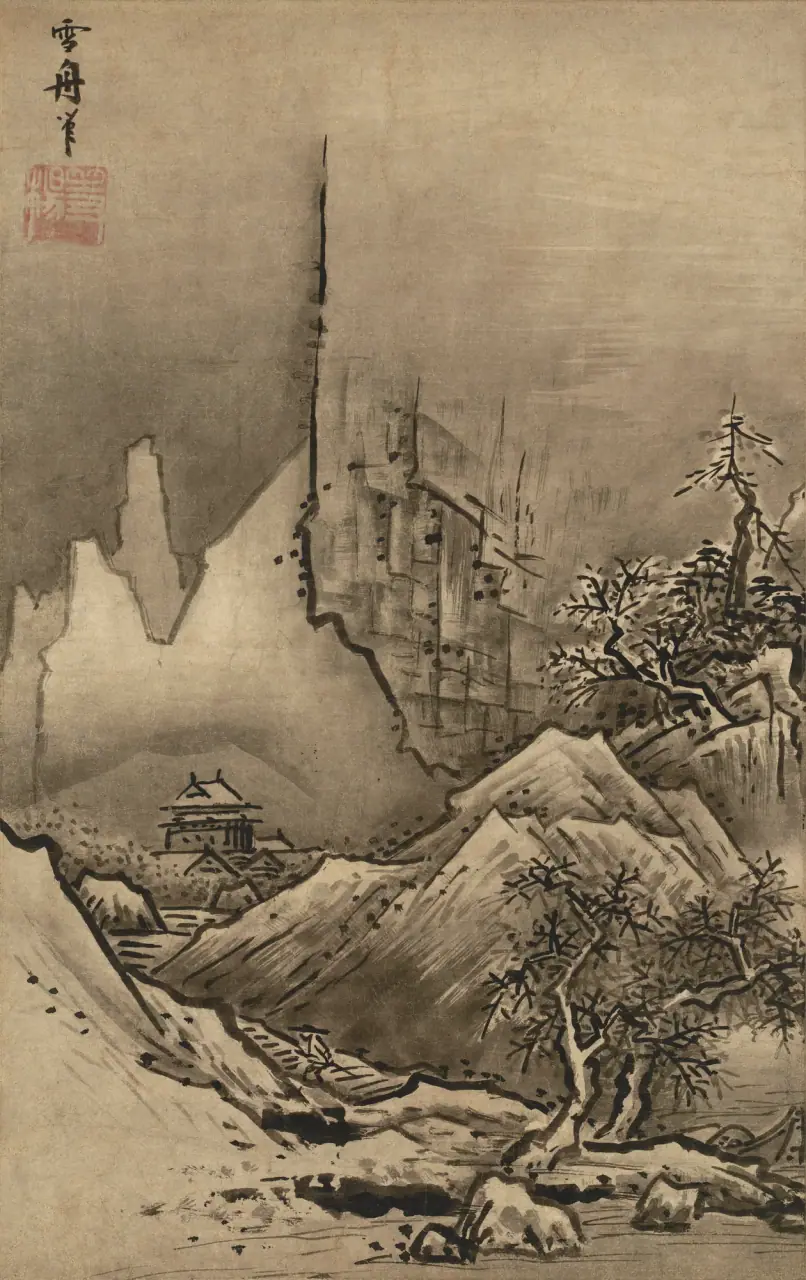
Kyoto was devastated in the Ōnin War, but maritime trade certificates and local markets did not therefore disappear from history. After 1333, the Kenmu Restoration, the Northern and Southern Courts rivalry, and the Ashikaga shogunate rearranged power; by the second half of the fifteenth century, wars among local daimyo further weakened the center. Monks, merchants, artisans, and villages still drove transport, currency, painting, Noh, and tea culture amid instability. The diary of a monk who entered Ming China in 1468 even preserves the format of the kangō tally, turning abstract "trade" into a piece of paper that needed verification. The Ryukyu Kingdom also developed within its own political and maritime trade networks, and all the neighboring islands of that time cannot be incorporated in advance into the story of a unified Japanese state.
01 / 1333–1573How this era began
When Kamakura fell, the rights of the Kyoto court, temples and shrines, and local warriors were still interlocking, and the victors had no agreed plan for rewards and rule. Emperor Go-Daigo tried to strengthen imperial authority, while warriors such as Ashikaga Takauji had their own followers and land interests. The new conflict arose from these practical arrangements, not from society naturally waiting for a more centralized ruler as soon as the old shogunate disappeared.
Why did this era begin?
The Kenmu Restoration was brief, and the Northern and Southern Courts then coexisted, with the Ashikaga shogunate based in Kyoto seeking support from local shugo. The unification of the courts in 1392 did not eliminate the autonomous resources of shugo daimyo, and military-political relations still required negotiation and alliance. After the Ōnin War, family disputes and territorial competition spread, and new local powers built castle towns, roads, and house laws, reorganizing order at different scales.
02 / 1333–1573Who held power
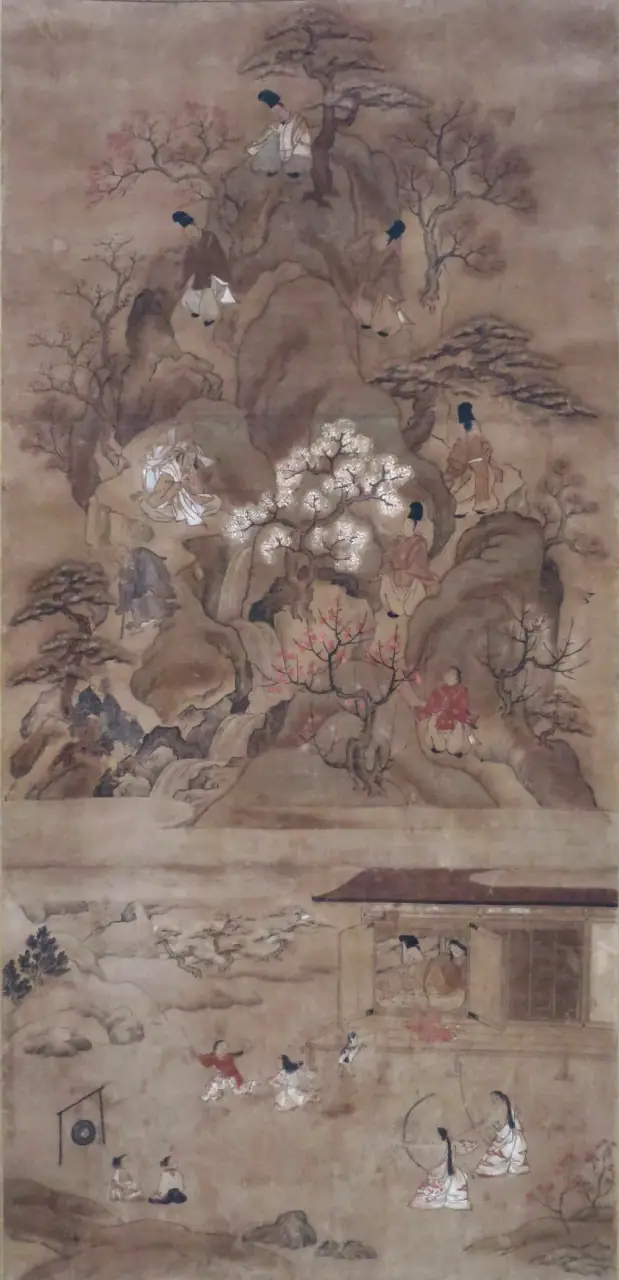
Shoguns, shugo daimyo, temples and shrines, and local families shared and contested power, and the Ashikaga shogunate could not easily replicate the control methods of the Tokugawa era. Alliances and inheritance among daimyo could affect the situation more than a central order on paper, and rural and urban organizations also had room for collective action. Strengthened local governance did not mean residents were generally free; new levies and service arrangements could likewise be accompanied by force and coercion.
What tensions existed within the era?
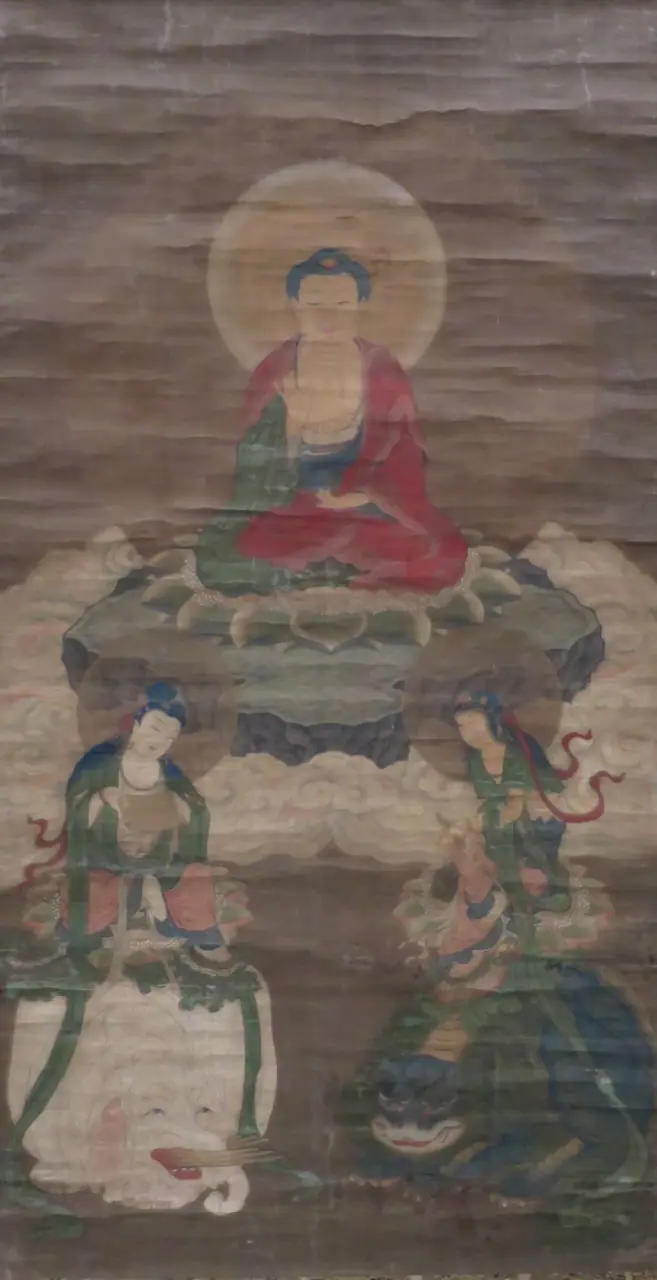
Territorial competition and inheritance disputes kept conflict constant, while armed temple-shrine forces and village and merchant associations also pursued their own interests. Maritime trade created opportunities but was also controlled by credentials, ports, and violence. After the arrival of European merchants, firearms, and missionaries, local daimyo did not all make the same choice; religious belief, profit, and political security could support one another or produce new persecution and war.
03 / 1333–1573How society worked
The Japan-Ming trade brought in copper coins, silk threads, and books, while goods such as sulfur and swords were exported, and ports and transport developed accordingly. The tally credentials linked legitimate trade with maritime regulation, and merchants, monks, and crew members all took part in actual operations. War sometimes stimulated transport and military supply, but it also destroyed fields, cities, and livelihoods; overall commercial growth must not obscure the losses suffered by a village after being raided.
How did ordinary people live?
Peasants worked paddy fields, merchants relied on markets and roads, and artisans made objects ranging from farm tools to tea utensils; when facing war they had to arrange tax payments, flee, and protect their communities. Linked verse, Noh, and tea gatherings provided venues for interaction across status lines, though opportunities to participate were still limited by wealth and connections. Elite gardens and ink wash paintings display a selected ideal of nature and life, not a complete record of the rural landscape.
04 / 1333–1573Where change began
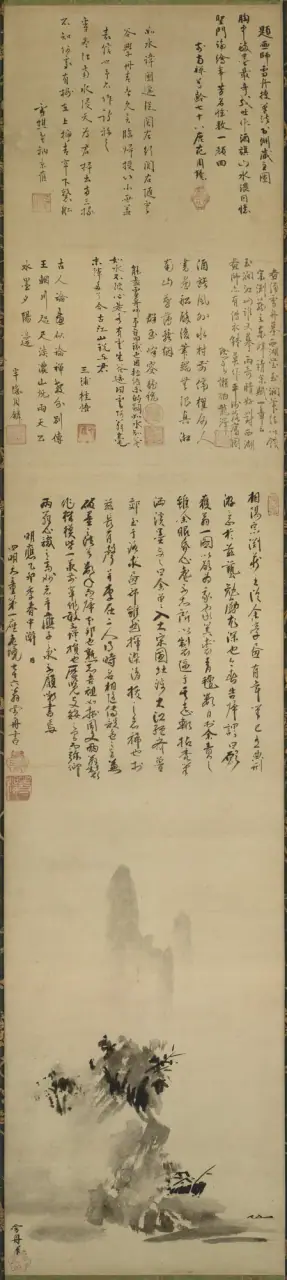
Oda Nobunaga took Kyoto and expelled Ashikaga Yoshiaki in 1573, bringing the shogunate's role as the national political center to an end. The Sengoku competition did not end immediately with this, and unification would still require succession crises, land surveys, and new alliances. 1573 is a reading boundary for political periodization; ink painting, tea culture, and local markets continued to develop, and an art-historical period shift must not be treated as a total rupture in society.
Milestones that changed direction
1333: The attempt at the Kenmu Restoration
After the victory over the Hojo, rule was reorganized, and the plan to restore imperial authority quickly came into conflict with warriors' demands for reward.
1336: The Northern and Southern Courts rivalry begins
Emperor Go-Daigo and the Kyoto court backed by Ashikaga stood side by side, and political and military alliances continued to shift.
1392: The two courts are united
Formal unification strengthened the Ashikaga political position, but local shugo daimyo still held their own resources.
1401: Ashikaga Yoshimitsu sends ships to Ming
The subsequent tally trade combined diplomatic status with the exchange of currency and goods; this does not mean that private contacts had been entirely absent before.
1467: The Onin War breaks out
The destruction of Kyoto and the spread of territorial competition further weakened central control, but local governance did not disappear as a result.
1468: A diary draws the format of the tally credentials
The monk Tenyo Seikei, who entered Ming, recorded the trade credentials, leaving readable concrete material on the verification system.
1543: The Portuguese and the connection with firearms
New maritime trade connections and firearms technology were selected and developed by local powers; this must not be understood as all ways of fighting being replaced on the same day.
1549: Xavier arrives in Kagoshima
Missionary activity entered local society, intertwined with trade opportunities, belief, and daimyo politics.
1573: Ashikaga Yoshiaki is expelled
Oda Nobunaga changed the political configuration of Kyoto, and the unification process and local competition would continue.
What we know
Diaries, trade records, house codes, temples, and paintings each provide clues about action, norms, and patronage. The Kyoto National Museum, based on the 1468 Record of a Journey to Ming, explains the format of the tally credentials; the original credentials themselves do not survive complete, and an illustration must not be passed off as the original document. The narrative of the Onin War and the dating of a given painting must also be kept separate; later war screens do not automatically become eyewitness accounts of fifteenth-century battlefields.
Questions still debated
The starting and ending points of the Sengoku period differ by region and by research question, and no single date such as 1467, 1573, or 1600 can flatten a long-term process. Whether commercial growth meant a more autonomous society requires separate examination of the resources of merchants, villages, and daimyo. Summarizing this period in the past as anarchic chaos, or conversely praising only its innovation, would both ignore the fact that local governance, violence, and everyday cooperation existed at the same time.
Legacies for later generations
Local administrative experience, castle towns, and commercial connections provided resources for later unification, and culture also formed multiple patronage networks among temples, warrior houses, and cities. The overseas study of figures such as Sesshu shows that artistic exchange was connected to trade and cannot be described merely as a closed national style. The castles and sacred sites of Ryukyu preserve the history of another kingdom, showing that East Asian interaction did not have only Kyoto and local daimyo as its center.
References and evidence
These materials support this page's account. Check the purpose, perspective and accessible scope of each source. Notes identify the evidential limits of excerpts, summaries and timelines.
- Muromachi periodThe Metropolitan Museum of Art · Museum research
Shugo daimyo, the Onin War, trade, and Zen culture; the page's starting point of 1392 differs from the shogunate's founding in 1336/1338.
- Japan: A Country Study (1992 edition), Historical Background chapterFederal Research Division, Library of Congress; edited by Ronald E. Dolan and Robert L. Worden · Specialist reference
Actually read the relevant passages of the 1992 edition's historical chapter: PDF pages 49–62, 64–80, and 81–110, and sampled the social environment section on PDF pages 129–132; the research mainly runs through 1990. The book's old Yayoi dating, some ethnic classifications, and several dates are clearly outdated or erroneous; errors such as the atomic bomb in 1941/August 8 and Kwantung Army losses of 80,000 were not adopted; precise dates and causation were checked against updated archaeology, NDL, and institutional materials. Makes no claim to have read all 670 pages or to treat old statistics as 2024 current conditions.
- Japan–Ming tally trade and the 1468 record of a mission to Ming ChinaKyoto National Museum · Museum research
Actually read the trade credentials, goods, and the tally diagram drawn by the monk Tenyo Seikei in 1468; the cessation of missions to Tang China does not mean there was no private maritime trade afterward.
- Gusuku Sites and Related Properties of the Kingdom of RyukyuUNESCO World Heritage Centre · Specialist reference
Read the descriptions of the castles, ancestor worship, the 12th–17th century trade network, and postwar reconstruction; emphasize Ryukyu's own political culture and the distinction between original material objects and reconstructions.
- Kamakura and Nanboku-cho periodsThe Metropolitan Museum of Art · Museum research
Warrior power, the Mongol invasions, and Buddhist art; 1185 and 1192 represent different founding nodes.
- Momoyama periodThe Metropolitan Museum of Art · Museum research
Unifiers, castles, trade, and painting; art-historical periodization is not equivalent to all political periodization.
At the end, bring this chapter to a close.