Occupation and reconstruction: Rewriting public life
How did a new constitution become the rules of ordinary people's lives?
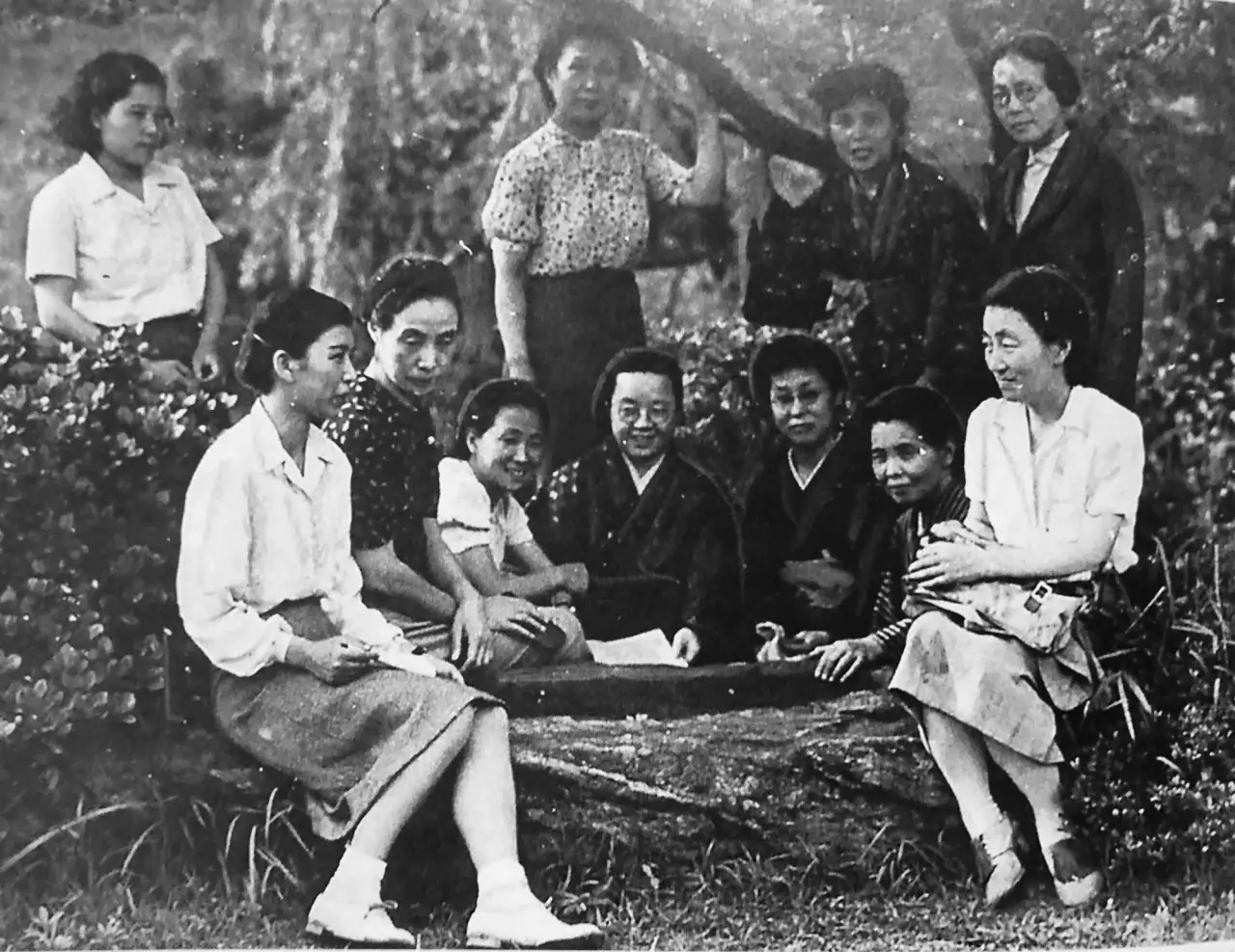
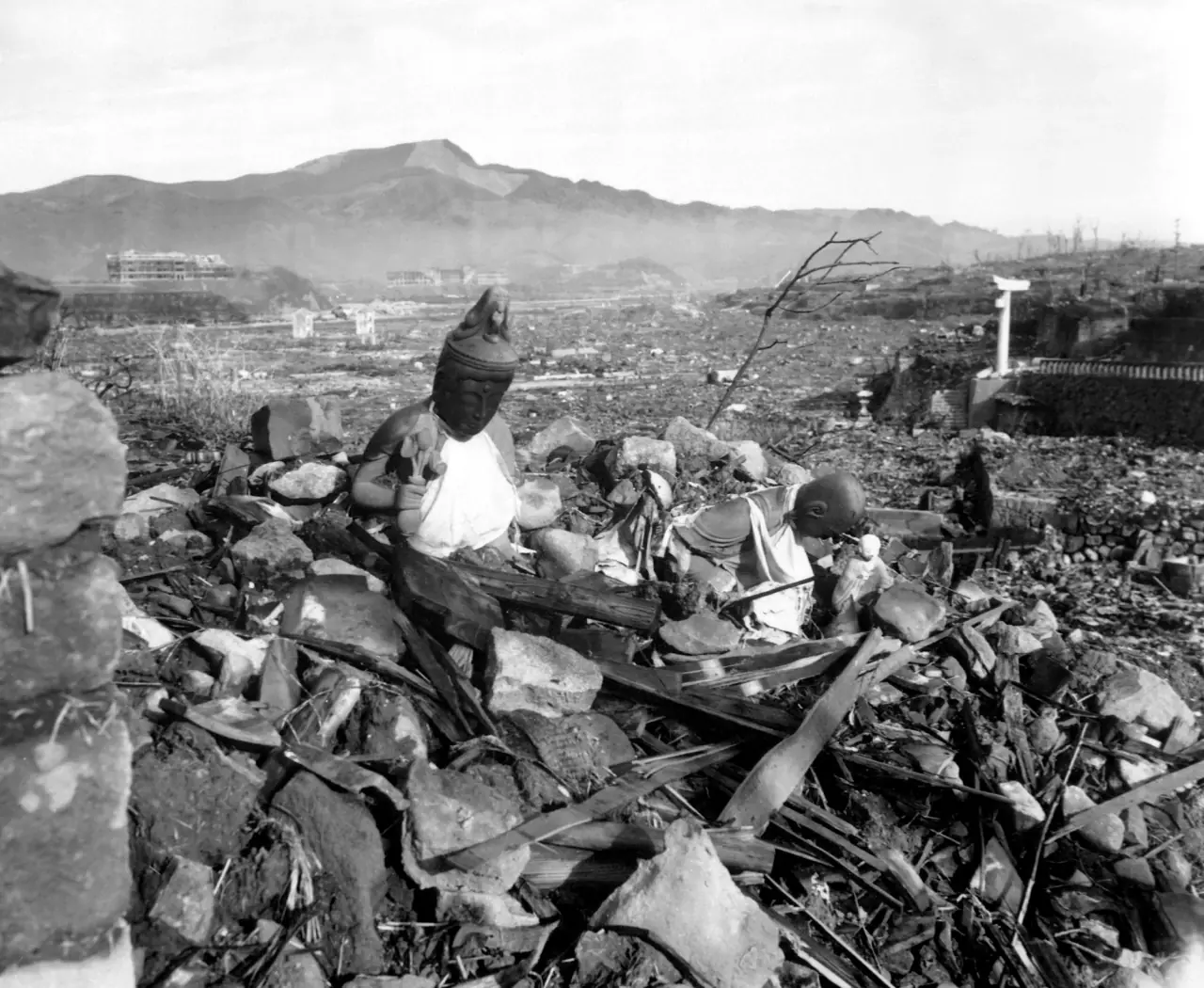
Defeat cost Japan its colonial empire, and the Allied occupation, led by the United States, advanced demilitarization and institutional reform. Women gained the right to vote, land reform changed tenant-landlord relations, and the new constitution affirmed popular sovereignty, fundamental rights, and the renunciation of war; the reforms also relied on the participation of Japanese domestic groups, officials, and the Diet. Residents in the ruins simultaneously faced food, housing, return, and missing relatives, and rights on paper could not immediately fill material scarcity. As the Cold War deepened, occupation policy gave greater weight to economic recovery and anti-communism; procurement during the Korean War promoted Japanese production but came from a war in a neighboring country. The restoration of sovereignty in 1952 was still accompanied by U.S. bases and the continued separation of Okinawa.
01 / 1945–1955How this era began
The surrender in 1945 ended the war but left destroyed cities, industrial conversion, food shortages, and large numbers of returnees. The loss of the colonies redefined imperial identity and relations to land and family, and residents of different nationalities and ethnic groups faced different circumstances. The Allies already had arrangements for disarmament and the transformation of Japan's institutions, but ordinary people first had to find food, shelter, work, and missing family members rather than wait for grand policies to be completed.
Why did this era begin?
The occupation authorities retained Japanese administrative organs to carry out many orders while leading the dissolution of the military, political purges, and the direction of reform. The Japanese government's conservative constitutional revision plan was not accepted; GHQ proposed a draft in 1946, after which government negotiations and Diet revisions followed. Changes to land, labor, and education systems required actual implementation, so the reforms involved both occupation coercion and domestic organizations' struggles for rights and adjustments to daily order.
02 / 1945–1955Who held power
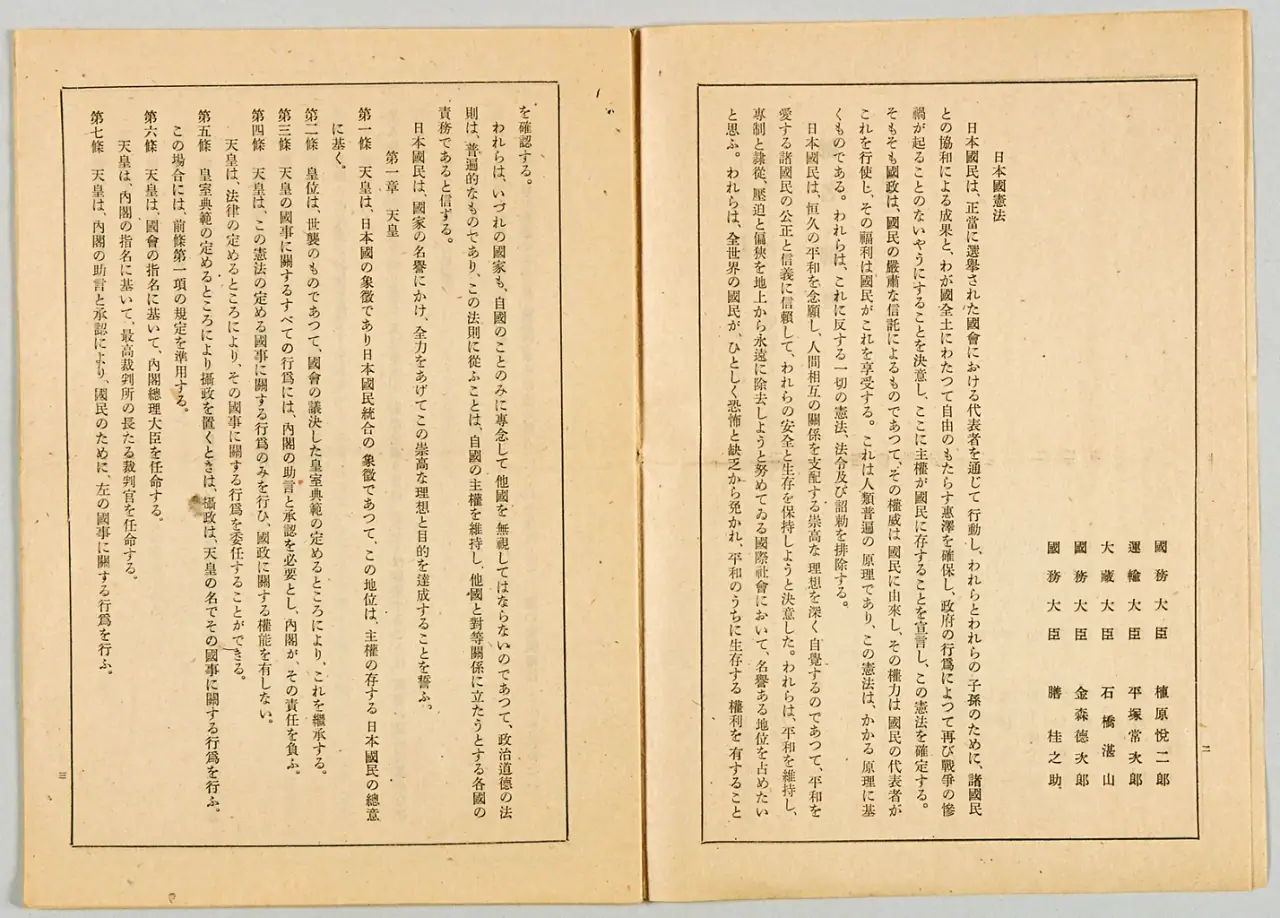
The General Headquarters of the Supreme Commander for the Allied Powers held ultimate authority, and the Japanese cabinet, bureaucracy, and Diet operated under these conditions; the occupation cannot be called a fully autonomous democratic process. The new constitution vested sovereignty in the people and made the emperor a symbol, and the bicameral parliament and judicial review redefined the power structure. Women's participation in elections and expanded local autonomy widened participation, while continuity in the police, administration, and old elites meant institutional practice remained tense.
What tensions existed within the era?
The occupation lifted old repression and expanded participation on the one hand, but also imposed censorship and restricted radical labor movements during the Cold War. The direction of political purges and economic concentration reforms was not always consistent, and reformers continually negotiated with existing bureaucrats. War crimes trials addressed only part of the responsibility, and the continuation of the emperor system and the status of former colonial residents make the narrative of "society as a whole starting over" too simple.
03 / 1945–1955How society worked
Land reform weakened the tenant relations of large landlords, labor reform expanded space for trade unions, and zaibatsu reform and industrial conversion changed corporate arrangements. Inflation and shortages of raw materials and food made residents dependent on rationing and informal transactions; reconstruction did not begin from a blank sheet. Cold War policy gradually prioritized restoring production, and Korean War procurement brought orders, but the war suffered by a neighboring country must not be written merely as good fortune for the Japanese economy.
How did ordinary people live?
Residents repaired housing and sought work and relatives; returning soldiers, orphans, widows, and former colonial residents each faced difficulties. Women participated in House of Representatives elections for the first time, and workers' organizations and public discussion gained new space, but caregiving burdens within families did not automatically disappear. Constitution popularization meetings used handbooks, lectures, and songs to explain rights; the bright households in propaganda should be read alongside actual housing and food scarcity.
04 / 1945–1955Where change began
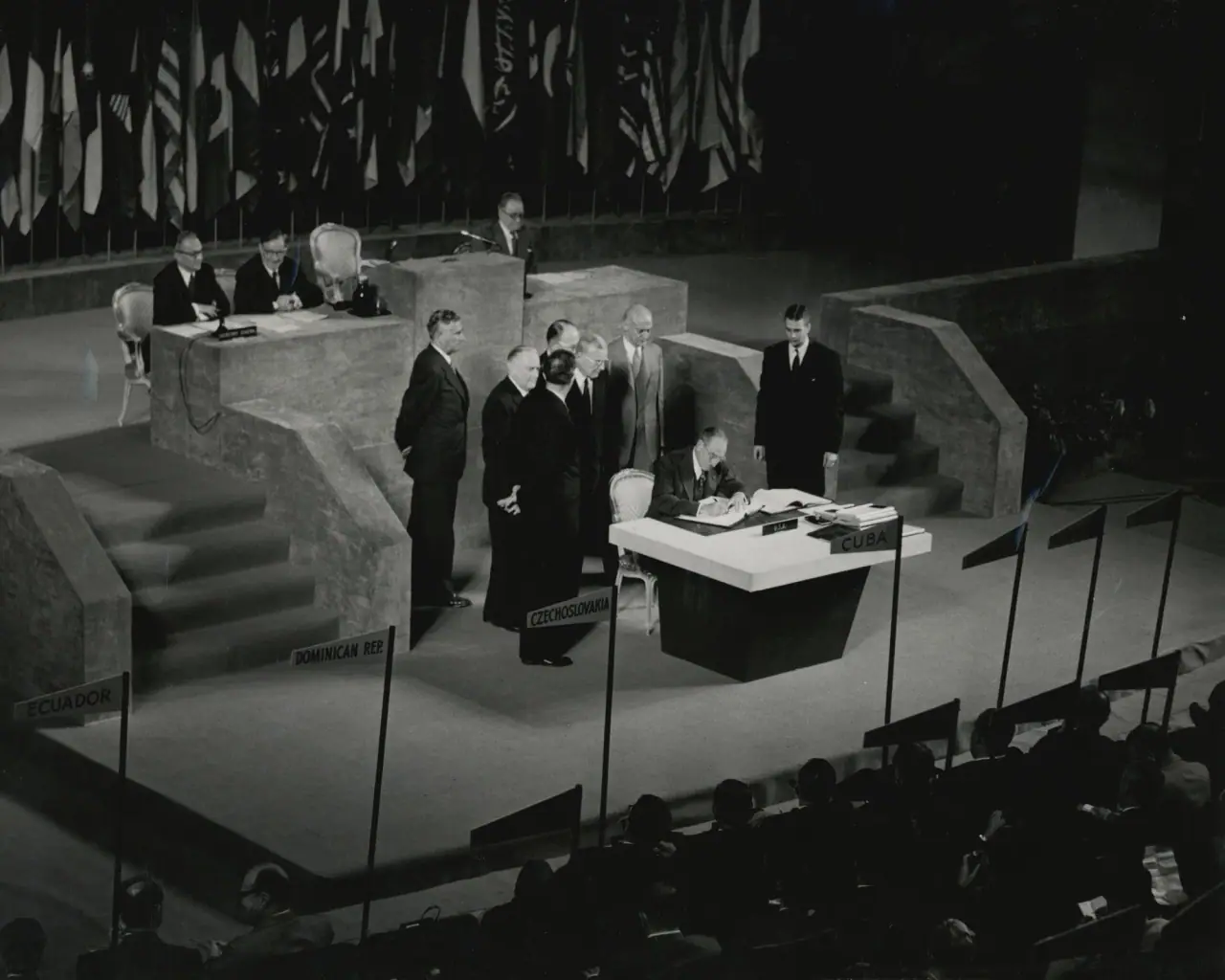
The San Francisco Peace Treaty and the Japan-U.S. Security Treaty were signed in 1951, the peace treaty took effect in 1952, and the occupation system ended in most of Japan. Garrison bases continued to exist, Okinawa remained under U.S. administration, and the restoration of sovereignty did not give all regions the same status on the same day. With the establishment of the Self-Defense Forces in 1954 and the realignment of party politics in 1955, the tension between the peace constitution and Cold War security arrangements entered a new long-term phase.
Milestones that changed direction
1945: The Allied occupation begins
The U.S.-led occupation advanced disarmament and institutional reform, while Japanese administrative organs still participated in implementation; residents first faced food and shelter.
1946: The GHQ draft and women's participation in elections
In February GHQ presented a draft to the Japanese side, and on April 10 women participated in House of Representatives elections for the first time; these were different institutional processes in the same year.
1946: Constitution Promulgated and Land Reform
The new constitution was promulgated on November 3; land reform adjusted rural rights relationships, and institutional provisions had to enter family life through subsequent implementation.
1947: New Constitution Takes Effect
On May 3, provisions on popular sovereignty, fundamental rights, and renunciation of war took effect, and the corresponding laws on the parliament, courts, and local autonomy were adjusted in turn.
Around 1948: Occupation Turns in the Cold War
The United States placed greater weight on economic recovery and anti-communism, and the initial reforms, political purges, and labor policy were adjusted, affecting the space for workers' participation.
1950: Korean War and Special Procurement
War procurement drove Japan's production and supply systems; economic recovery and the suffering of the Korean Peninsula's people during the war were different circumstances within the same regional process.
1951: San Francisco Peace Treaty and Security Treaty
Japan signed a peace treaty with most Allied powers while establishing Japan-U.S. security arrangements; the restoration of sovereignty was linked to the continuation of bases.
1952: Occupation Ends, Okinawa Still Separate
After the treaty took effect, Japan regained sovereignty, but Okinawa under U.S. administration did not return at the same time; the experiences of different places cannot be reduced to a single date.
1954: Self-Defense Forces Established
The relationship between Cold War security arrangements and Article 9 of the constitution became an ongoing public debate; institutional interpretation did not disappear with the establishment of the organization.
1955: Postwar Party Landscape Reorganized
The founding of the Liberal Democratic Party and the reorganization of socialist parties formed the political basis for later long-term government and opposition competition.
What we know
The GHQ draft, Japanese opinions, Diet revisions, and the original constitutional text can reconstruct how rights entered the articles; later summaries alone cannot be cited. Land and labor records and residents' materials supplement institutional implementation, and propaganda pamphlets show the life the state wanted people to understand. U.S. diplomatic history reviews emphasize occupation goals and must be cross-checked against Japanese archives and the experiences of governed groups, avoiding wholesale adoption of their narrative of successful reform.
Questions still debated
External leadership and domestic participation in the new constitution are not mutually exclusive; debate should address the power of the draft, specific revisions, and social acceptance at each level. Regarding the "reverse course," it is necessary to distinguish different timings for demilitarization, economic policy, and labor repression. Whether the restoration of sovereignty meant true equality cannot be judged only by the signing of the Tokyo treaty; the circumstances of Okinawa, base areas, and former colonial residents must be included.
Legacies for later generations
Popular sovereignty, gender equality provisions, local autonomy, and labor rights provided important institutional resources for postwar society, and land reform also changed rural structures. The U.S.-led occupation and the Japan-U.S. alliance simultaneously affected diplomacy, security, and life around bases. Democratic reform was neither solely an external gift nor solely a domestic spontaneous creation; understanding its mixed origins is necessary to see the role of ordinary people in striving for rights under limited conditions.
References and evidence
These materials support this page's account. Check the purpose, perspective and accessible scope of each source. Notes identify the evidential limits of excerpts, summaries and timelines.
- Occupied and Rebuilt Japan, 1945–1952Office of the Historian, U.S. Department of State · Specialist reference
Land reform, democratization, the Cold War turn, and the peace treaty; a retrospective account by a US institution.
- Japan: A Country Study (1992 edition), Historical Background chapterFederal Research Division, Library of Congress; edited by Ronald E. Dolan and Robert L. Worden · Specialist reference
Actually read the relevant passages of the 1992 edition's historical chapter: PDF pages 49–62, 64–80, and 81–110, and sampled the social environment section on PDF pages 129–132; the research mainly runs through 1990. The book's old Yayoi dating, some ethnic classifications, and several dates are clearly outdated or erroneous; errors such as the atomic bomb in 1941/August 8 and Kwantung Army losses of 80,000 were not adopted; precise dates and causation were checked against updated archaeology, NDL, and institutional materials. Makes no claim to have read all 670 pages or to treat old statistics as 2024 current conditions.
- The birth of the Constitution of JapanNational Diet Library of Japan · Archive
Occupation, drafts, Diet deliberation, and implementation of the 1947 constitution; includes original documents and background explanations.
- The GHQ Draft and the Japanese Government's ResponseNational Diet Library of Japan · Archive
Actually read the full text of Part Three; the February 1946 GHQ draft, the government's rewriting, and the Far Eastern Commission debates. One page states March 17 while another states April 17; the main text does not rely on that disputed date.
- The 1946 Imperial Diet deliberation of the new constitutionNational Diet Library of Japan · Archive
Actually read the entire feature text and check the April 10, 1946 women's suffrage and candidacy, the June–October deliberations, and the November 3 promulgation, distinguishing the GHQ-led draft, parliamentary revisions, and pressure from the Far Eastern Commission.
- Implementation of the 1947 Constitution and public education activitiesNational Diet Library of Japan · Archive
Actually read the entire text; it took effect on May 3, 1947, with corresponding legal revisions, elections to both houses, and a constitution popularization association. The popularization pamphlets are propaganda materials and cannot prove that rights were immediately realized.
- English Translation of the Original Text of the Constitution of JapanNational Diet Library of Japan · Primary source
Actually read the provisions on the preamble, the emperor, Article 9, fundamental rights, education and labor, and local autonomy; the November 3, 1946 promulgation and May 3, 1947 coming into force are listed separately.
- The Formation of Fundamental Human Rights Guarantees: Drafts and DeliberationNational Diet Library of Japan · Archive
Actually read the sections on human rights, social rights, and foreigners' rights; civil groups, political parties, and government drafts all participated; constitutional text and implementation conditions are kept separate.
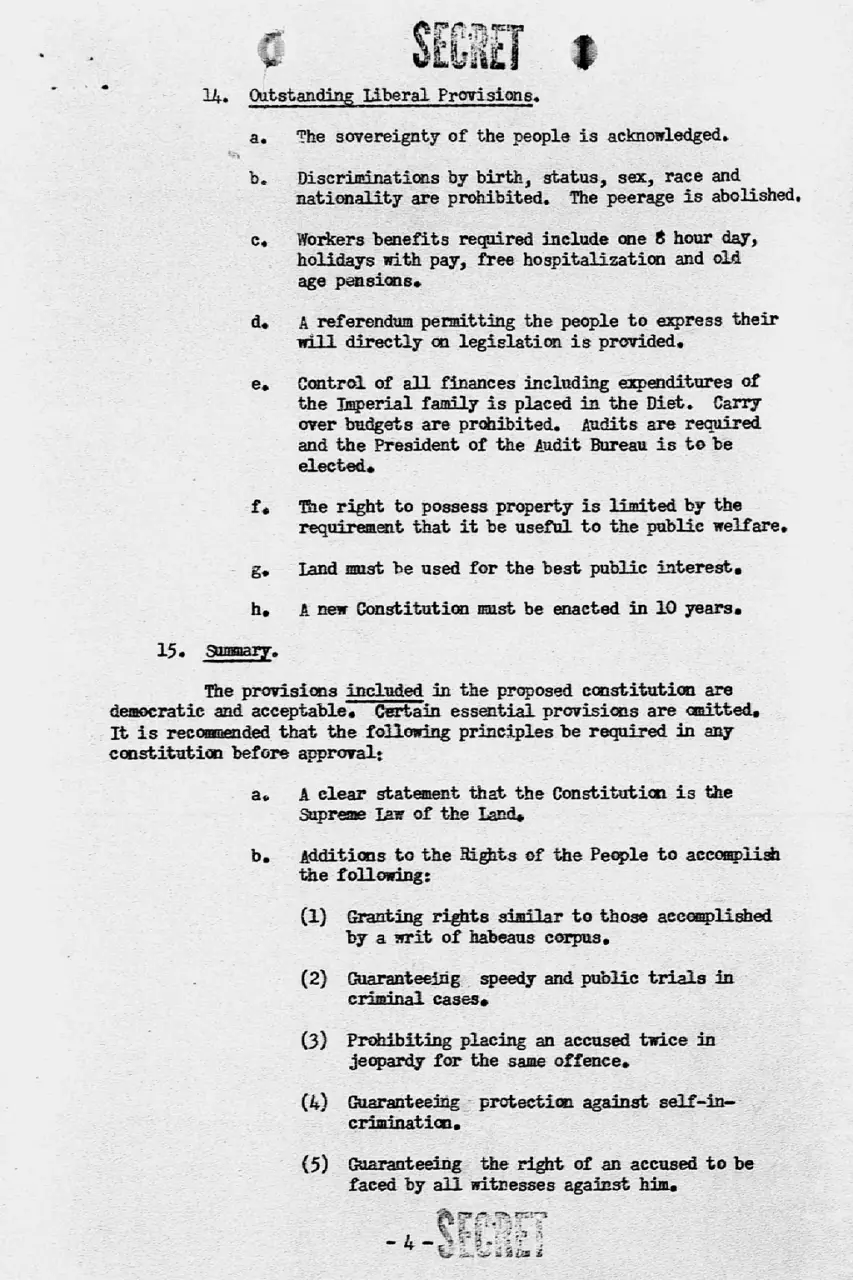
- Rovell's memorandum reviewing a private draft constitutionNational Diet Library of Japan / U.S. National Archives RG331 · Primary source
Read the complete document description and the image of the fourth page original, and check the January 11, 1946 submission to the Chief of Staff, the Constitutional Research Association proposal, and GHQ/SCAP GS(B)02090–02092. Do not claim to have read the entire memorandum or treat it as the final constitution.
At the end, bring this chapter to a close.