Sanctions, the Nuclear Dispute, and Public Life
How did international disputes and domestic power enter work, the internet, and bodily autonomy, and how did residents strive to speak?
A blocked cross-border payment, a salary eroded by inflation, and a detention over clothing bring international disputes and state power into daily life. After the 2015 nuclear deal entered implementation, the United States withdrew in 2018 and reimposed related sanctions; Iran then gradually reduced its nuclear commitments, and verification was also more restricted. Economic, pandemic, gender, and political-representation issues intertwined, and the 2019 fuel-price protests and the 2022 "Woman, Life, Freedom" movement presented demands at different levels. The state's security narrative also cannot replace evidence-based judgment about specific acts. The observation is fixed to the end of 2024; diplomacy, verification, and rights issues still had no commonly accepted resolution.
01 / 2015–2024 · Fixed research cutoffHow this era began
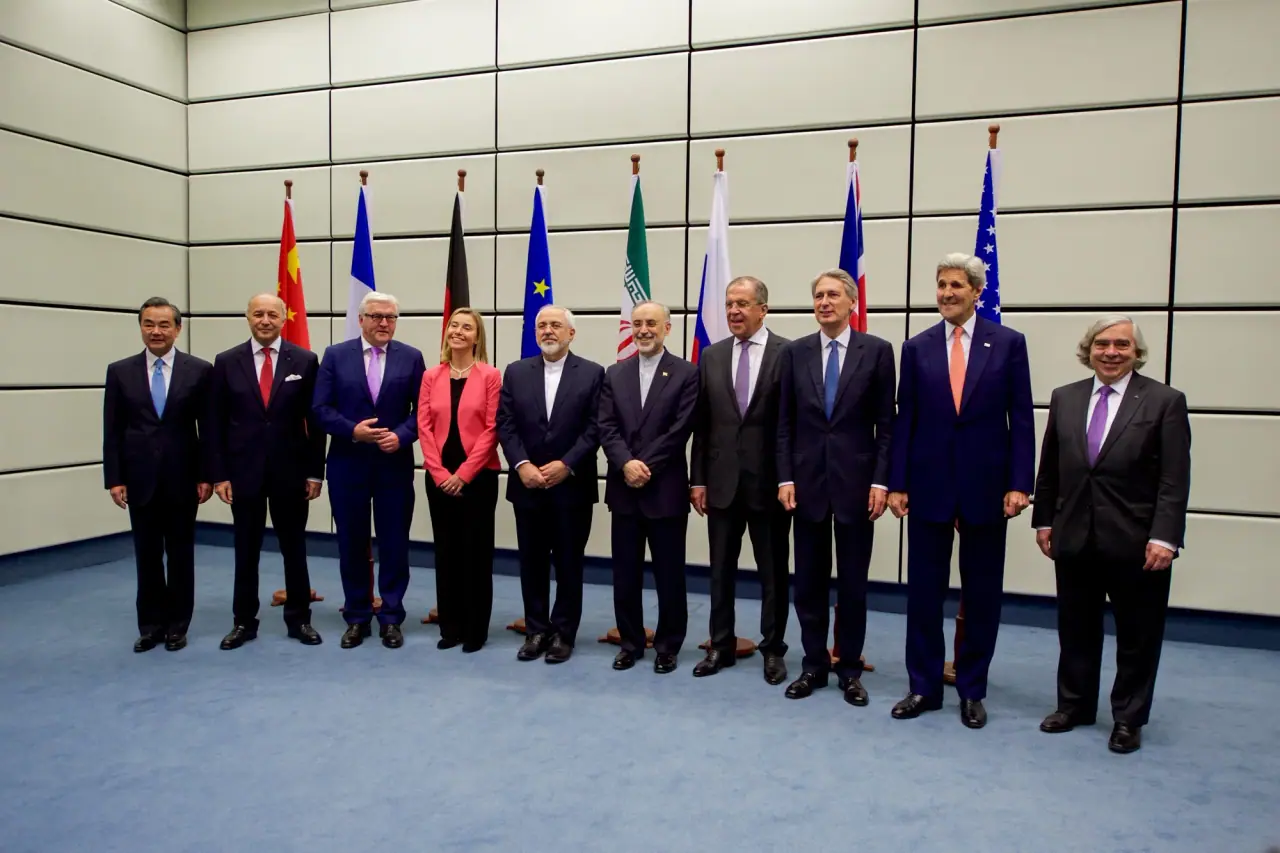
The negotiating hopes of 2015 exchanged nuclear limits, verification, and sanctions relief. The deal addressed specific nuclear issues and did not eliminate all historical and regional differences between the United States and Iran. Tensions over employment, gender, and political participation that had accumulated after the war also continued. Whether the deal could improve daily life depended on legal implementation, financial transactions, and domestic distribution; the diplomatic image at signing cannot by itself answer these questions.
Why did this era begin?
Implementation day was in January 2016; in May 2018 the United States announced its withdrawal and reimposed related sanctions. From 2019 Iran gradually stopped implementing some nuclear commitments, and in 2021 it further stopped several arrangements under the deal framework. Different steps had their own timing and actors; this cannot be written as all parties withdrawing together on the same day, nor can restricted verification be equated with all safeguards having ceased entirely from then on.
02 / 2015–2024 · Fixed research cutoffWho held power
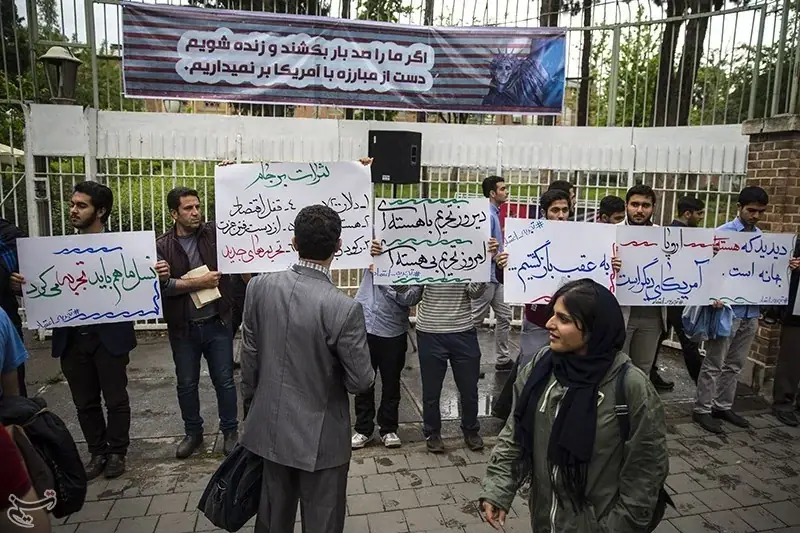
Institutions including the president, parliament, and Supreme Leader take part in diplomatic and economic choices, while oversight, judicial, and security organizations restrict public activity. Sanctions make some transactions harder, and differences in domestic access to permits, foreign exchange, and organizational resources also affect who can cope. Women's bodily autonomy and citizens' speech therefore involve specific institutions as well as law enforcement and remedies, and cannot be explained only by abstract cultural difference.
What tensions existed within the era?
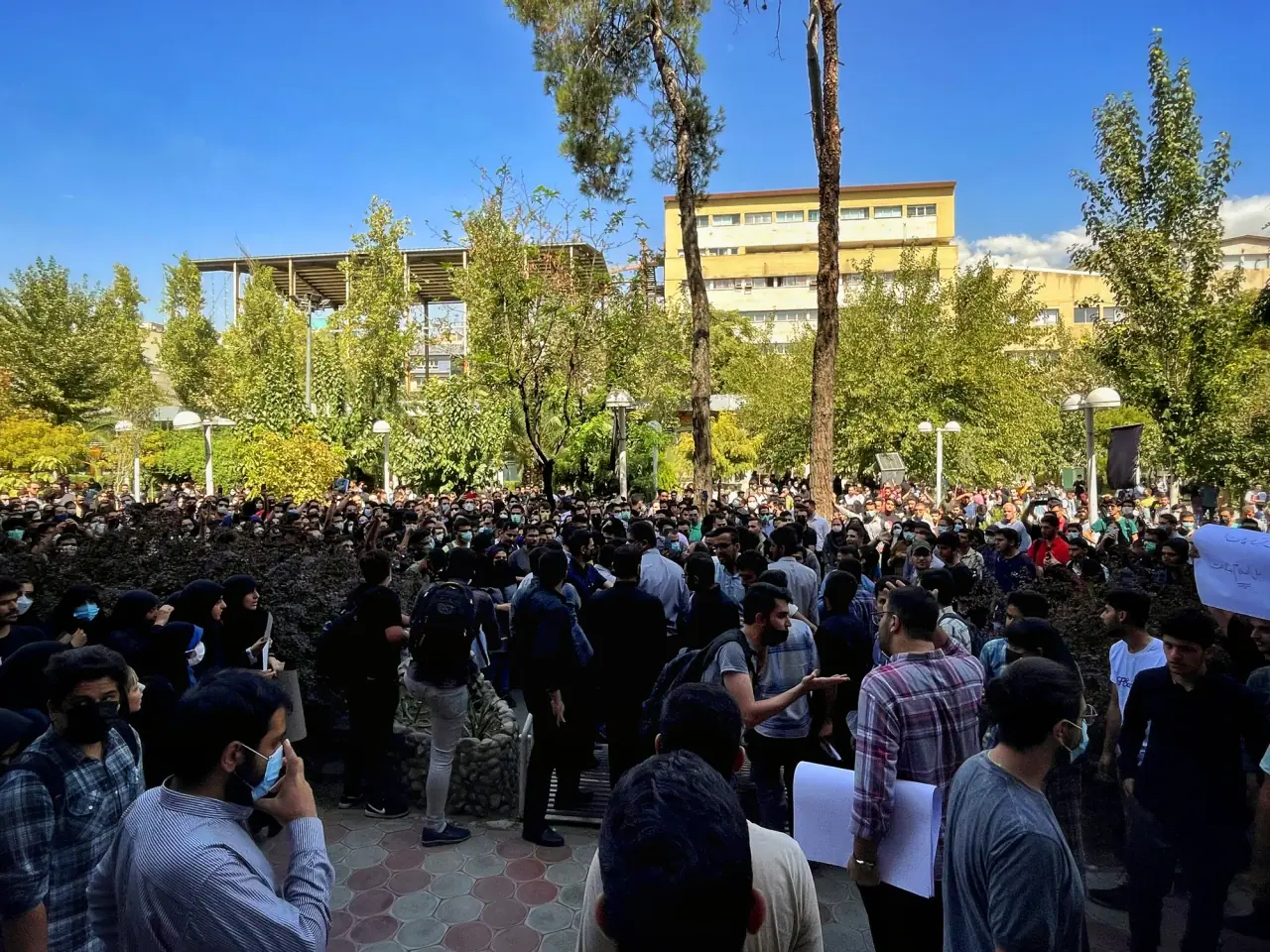
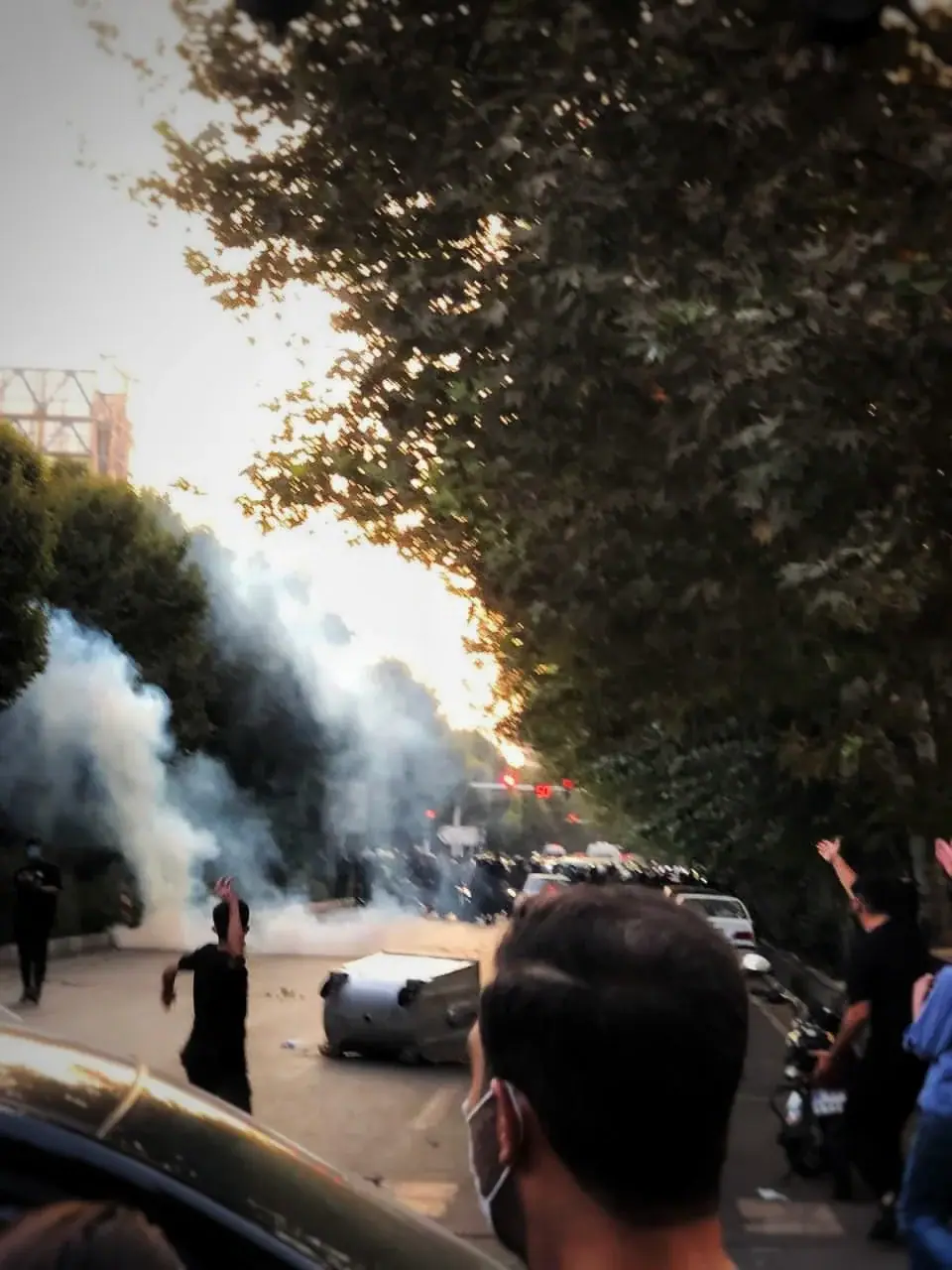
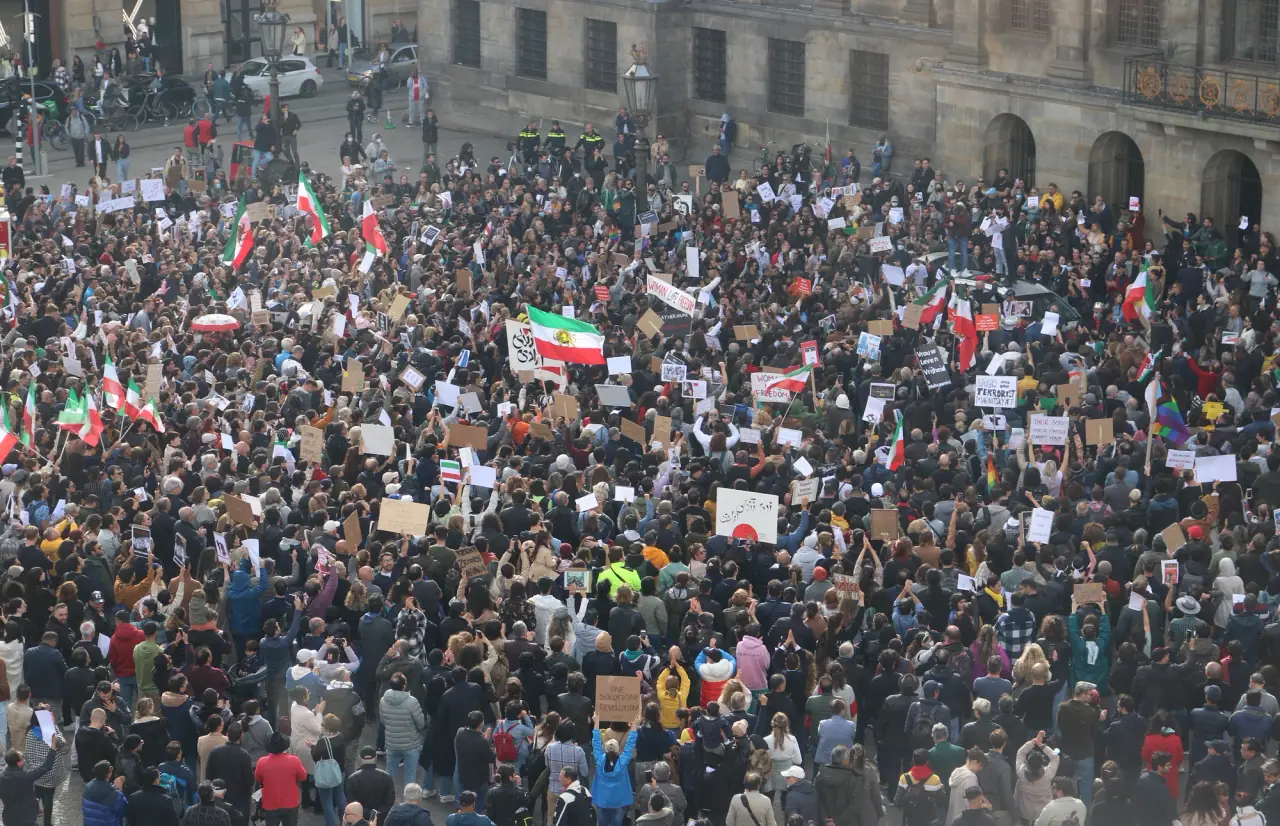
Protests broke out after the 2019 fuel-price increase, and Jina Mahsa Amini's death after detention in 2022 triggered widespread mobilization, with demands concerning gender, dignity, and political rights. A 2024 UN fact-finding mission report found serious violations and explained its evidentiary standards, access restrictions, and differing regional impacts. The state's accusations of hostile forces cannot replace case-by-case proof, and protesters did not all adopt the same methods and goals.
03 / 2015–2024 · Fixed research cutoffHow society worked
Oil exports, financial transactions, and investment are constrained by sanctions, while exchange rates, budgets, price policies, and structural bottlenecks also affect outcomes. A 2024 World Bank report recorded both some growth and improvement in poverty indicators and high inflation, low labor participation, and rural-urban disparities. Transfers can support households, while inflation erodes real value; different indicators must state their definitions, and macroeconomic recovery must not automatically be equated with improvement in every person's life.
How did ordinary people live?
The pandemic, employment, housing, and food prices changed household arrangements, and women, young people, and university graduates faced different barriers to entering occupations. The internet serves work, knowledge, and contact, but was also blocked and monitored during protests, affecting those who depend on online income. Rural-urban, linguistic, and religious differences still matter; the lifestyles most visible on social media in the capital cannot be allowed to represent all residents.
04 / 2015–2024 · Fixed research cutoffWhere change began
By the end of 2024, nuclear negotiations and verification still faced major obstacles, and the effects of social protests did not end with changes in the scale of street demonstrations. The change of president and direct regional military conflict added further uncertainty. In its reports that year, the IAEA distinguished verified information from gaps in continuity of knowledge; this time cross-section cannot automatically be extended into conclusions about later nuclear activities, diplomatic outcomes, or domestic political conditions.
Milestones that changed direction
The Nuclear Agreement and Resolution 2231
On July 14 the parties reached the JCPOA, and on July 20 the Security Council adopted Resolution 2231 and arranged verification and related procedures. Political agreement, resolution adoption, and subsequent implementation are not the same point in time.
The Agreement Enters Implementation Day
On January 16 the IAEA confirmed that Iran had completed the specified initial nuclear steps, and the agreement entered implementation day. Specific nuclear commitments and sanctions relief have a defined scope; this does not mean that all historical disputes or all sanctions disappeared at once.
The United States Withdraws and Reimposes Related Sanctions
On May 8 the US president announced the cessation of participation in the nuclear agreement and arrangements to reimpose related sanctions. The formal decision and the government's assessment of the agreement should be kept separate; the other participants did not jointly withdraw on the same day.
Iran Gradually Reduces Nuclear Commitments
From May onward, Iran suspended some of its nuclear-deal commitments in stages, and the verification relationship continued to change afterward. IAEA reports distinguish verified activities from monitoring restrictions; non-compliance or disputes cannot automatically be taken as proof that a nuclear weapon has been produced.
Reports of fuel-price protests and repression
After the November fuel-price adjustment, protests spread, and UN special rapporteurs documented reports of lethal force, detention, and restrictions on expression. This text preserves sources and their stated scope, and does not add figures from different institutions into an unverified precise total.
Additional verification and continuity of knowledge restricted
After February, Iran stopped implementing several arrangements related to the nuclear deal, including the temporary voluntary implementation of the Additional Protocol. Additional verification under the deal differs in scope from IAEA safeguards; this cannot be written as the international agency having become completely unable to verify any activity.
Amini's death and "Woman, Life, Freedom"
Jina Mahsa Amini died on September 16 after being detained by the morality police, and protests spread in many places. People of different genders, regions, and minority communities took part; their demands and experiences should not be flattened into a single voice.
Transnational solidarity and political memory
The European Parliament awarded the Sakharov Prize to Amini and the Woman, Life, Freedom movement, reflecting public support from an external institution. External awards and diaspora activities cannot replace the full range of demands and lived experience of participants inside the country.
Report of the UN fact-finding mission
The mission set out conclusions on Amini's death, the crackdown on protests, and digital space, and stated the standard of reasonable grounds to believe, access restrictions, and methodology. Findings must retain their attribution and must not be presented as a final criminal judgment or an exhaustive count of all victims.
Presidential change and a new political moment
Pezeshkian's inauguration became one of the year's political changes, and the UN meeting briefing in July also took his inauguration activities as background. A change of office does not mean that all state institutions and social tensions changed with it; institutions and actual policies must be observed separately.
Escalation of direct strikes between Iran and Israel
Direct strikes by both sides in October further escalated the regional conflict, and the Security Council discussed avoiding a wider war. The Assistant Secretary-General's briefing and the accusations of state representatives must be distinguished; a statement by one side cannot automatically be treated as an independent investigative finding.
The year's cross-section of verification and diplomatic deadlock
A November IAEA report described gaps in verification scope and continuity of knowledge, and in December the Security Council was still discussing the deadlock over restoring compliance. The chapter is fixed as ending at the end of 2024 and does not present arrangements or predictions for 2025 as facts that later occurred.
What we know
Resolution 2231, the 2018 US memorandum, and IAEA reports respectively explain international arrangements, the withdrawal decision, and the scope of verification; they cannot substitute for one another. The UN fact-finding mission uses the standard of reasonable grounds to believe; its report is an investigative conclusion, not a final criminal judgment, and its methodology, access restrictions, and cross-checking of sources must be retained. Estimates, historical data, and forecasts in economic reports must also be kept separate; forecasts cannot be treated as having occurred.
Questions still debated
How sanctions and domestic governance jointly affect the economy, responsibility for the reversal of the nuclear deal and possible alternative paths, and how protests produce long-term institutional change still require comparison of multiple kinds of material. Security pressure is not an automatic justification for violating individual rights, and external criticism cannot exempt the livelihood costs of foreign policy from scrutiny. Explanations should distinguish verifiable acts, parties' statements, and causal inferences, and should preserve the specific circumstances of different residents.
Legacies for later generations
The nuclear deal and its reversal changed expectations about diplomatic commitments and economic opportunities, and repeated protests brought bodily autonomy, accountability, and minority-community rights into shared discussion. Survivors, journalists, families, and diaspora members preserve experience in different ways, and international solidarity has its own choices. Long-term effects are still unfolding; changes up to 2024 can be recorded, but no final outcome can be announced in advance on behalf of future society.
References and evidence
These materials support this page's account. Check the purpose, perspective and accessible scope of each source. Notes identify the evidential limits of excerpts, summaries and timelines.
- Security Council Resolution 2231 (2015), including the JCPOA annexUnited Nations Security Council · Primary source
The original 104-page document was actually opened, and the relevant body text of the 20 July 2015 resolution, the JCPOA arrangements, and the implementation framework was checked; no claim is made of having read every technical annex page by page. Signing, adoption of the resolution, implementation, and subsequent verification are not the same point in time.
- IAEA GOV/2024/61: Verification and monitoring in Iran in light of resolution 2231 (2015)International Atomic Energy Agency · Primary source
A 12-page report declassified on 19 and 21 November 2024; the body text on background, verification limits, and conclusions has been read. The 2016 implementation day, the 2019 step-by-step suspension of commitments, and post-2021 verification limits are listed separately; estimates, verified quantities, and gaps in continuity of knowledge must not be conflated; the report is not used to assert that a nuclear weapon has been built or to state the 2026 status.
- Presidential Memorandum on Ceasing U.S. Participation in the JCPOA, 8 May 2018Archived White House presidential actions · Primary source
The formal U.S. decision of 8 May 2018 to cease participation and restore relevant sanctions was checked; the document's evaluative wording is the position of the government concerned and is not taken directly as an independent factual conclusion about Iran's nuclear activities or the agreement's effects.
- A/HRC/55/67: Report of the independent international fact-finding mission on IranUnited Nations Independent International Fact-Finding Mission on Iran; public document copy hosted by ecoi.net · Primary source
The original 20-page UN report with the same symbol was downloaded and extracted, and pages 2–5 and 16–20 were read for methodology, Amini's death, protests, digital space, and conclusions, not merely the summary. Direct reading of the same-symbol PDF from the official digital library failed; the reading channel was a public document copy on ecoi, and no claim is made of comparing hashes with the official copy. The reasonable grounds standard, access restrictions, and the distinction between investigation conclusions and final judicial rulings are retained.
- Iran Economic Monitor, Spring 2024: Sustaining Growth amid Rising Geopolitical TensionsWorld Bank · Academic research
The 52-page report was downloaded and its text extracted, and PDF pages 13–15 (executive overview) and relevant economic body paragraphs were actually read; no claim is made of having read the entire book. Iran's 2023/24 fiscal year, historical estimates, and projections after 2024/25 are distinguished; the body text uses only structures with clearly defined scope and reported results, and projections are not written as events that have occurred by 2026.
- A/HRC/43/61: Report of the Special Rapporteur on human rights in Iran (2020)United Nations Special Rapporteur on Iran · Primary source
Paragraphs 5–7 on the November 2019 fuel price increase, protests, and crackdown were checked via the official body-text index; direct PDF capture failed, and no claim is made of having read the full text. Casualty and detention figures are quoted from other reports and have definitional limits; this draft does not combine them into a precise total.
- Security Council meeting coverage SC/15868, 28 October 2024United Nations Meetings Coverage · Primary source
The Assistant Secretary-General's briefing and related paragraphs in the meeting news were read, checking the October 2024 escalation of direct strikes between Iran and Israel; allegations in states' statements remain attributed and are not treated as independent investigation conclusions. The date wording of the 25th in the introduction and the early hours of the 26th in the briefing sometimes differs by time zone/level; the body text uses the month rather than inventing a unified time conversion.
- Security Council meeting coverage SC/15782, 31 July 2024United Nations Meetings Coverage · Primary source
Pezeshkian's inauguration background and the briefing at the time on 2024 regional tensions were checked; this is used only for the already-established change of office and meeting context, and not all allegations by speakers about responsibility for attacks are automatically treated as adjudicated fact.
- Security Council meeting coverage SC/15942, 17 December 2024United Nations Meetings Coverage · Primary source
The briefing at the time, as of December 2024, that resuming compliance with the nuclear agreement remained at an impasse was checked; expressions about 2025 terms and the future are arrangements or expectations at that time and are not automatically rewritten in this text as subsequently occurring facts.
- European Parliament official photograph and statement on the 2023 Sakharov Prize laureatesEuropean Parliament official Flickr record, archived on Wikimedia Commons · Primary source
The original institutional statement confirms the award was given to Amini and the Woman, Life, Freedom movement; it is used only for the European Parliament's action and wording at the time, and external solidarity is not allowed to substitute for all the demands of residents of Iran. The photography license is reviewed separately, and institutional views are not directly transferred as this museum's unattributed conclusions.
At the end, bring this chapter to a close.