Asuka and Nara: building capitals and the state
What supported the splendor of the capitals and the Great Buddha?
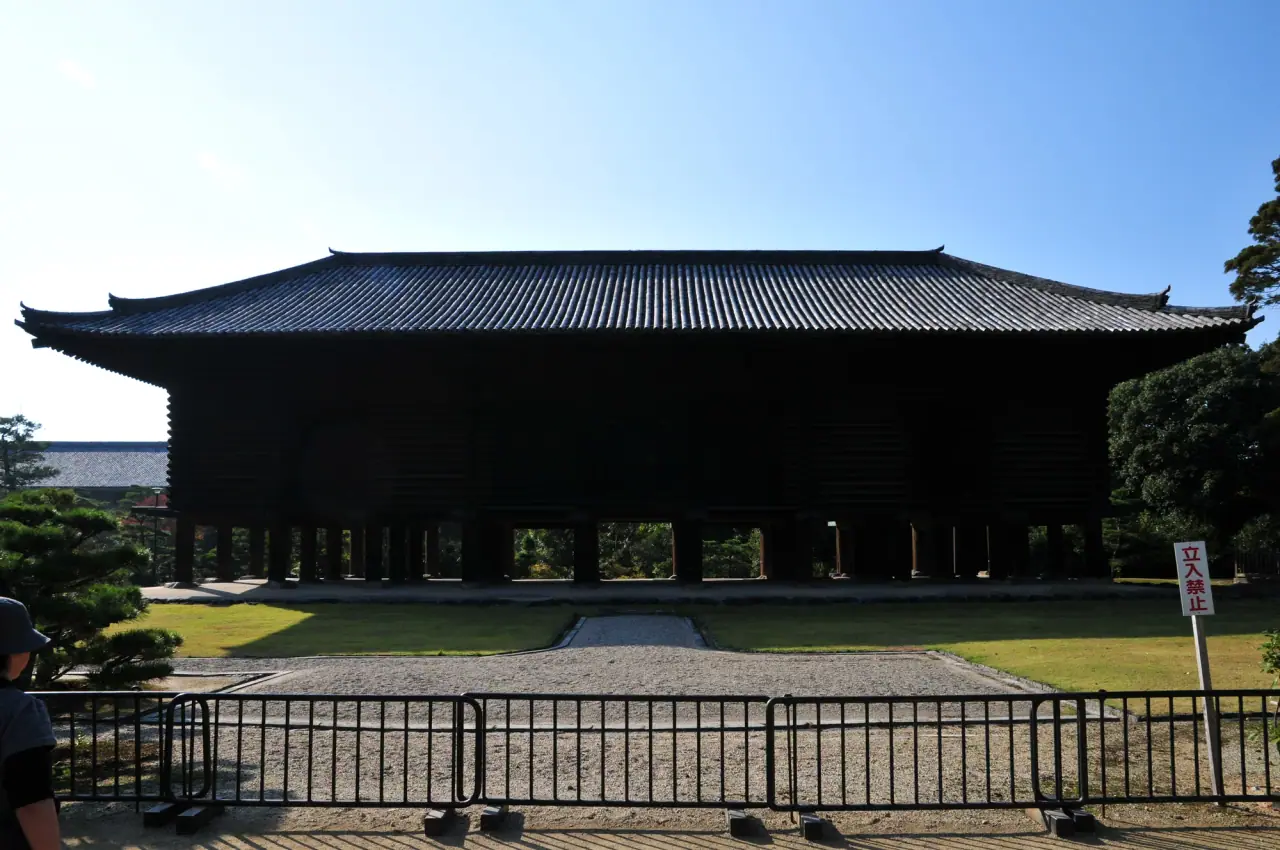
Officials in the capital used paper and wooden tablets to handle affairs, and rice, salt, fish, and timber had to be transported from distant places. From the sixth to the eighth century, Buddhism, Chinese characters, and continental institutions entered the court through the peninsula and diplomatic networks, and royal power established laws, local offices, and a more stable capital amid competition. In 710 CE the capital moved to Heijō-kyō, and historical compilation, temple construction, and the mass printing of sutras concentrated resources and memory. Behind the works and rituals were taxpaying households, transporters, artisans, and sutra copyists. How the court wished to govern differed from how much material could actually be levied in each region; modern reconstructions of palaces also cannot directly serve as original Nara-period buildings.
01 / 538 CE–794 CEHow this era began
The clan networks of the Kofun period had already gathered agricultural produce, crafts, and transmarine knowledge, while the court still lacked the more stable documentary and local administrative systems of later times. Buddhism did not bring only a Buddha image; it was also tied to writing, translation, monks, and construction techniques. The choice at court to accept or oppose the new religion also involved clan functions and interests, and the debate cannot be reduced to a contrast between advanced and backward.
Why did this era begin?
Envoys, student monks, and artisans brought institutions and techniques back to the archipelago, while coups and succession struggles drove further reorganizations of power. The traditional reforms of 645 CE and the Taihō Code of 701 CE belong respectively to political mobilization and later legal codification, and cannot be treated as a unified plan completed on a single day. Household registers, land allocation, and taxes and corvée had to be implemented locally; the center's proclamation of "public land and public people" did not mean that all actual control changed immediately.
02 / 538 CE–794 CEWho held power
Emperors, nobles, and temples together constituted court politics, and the classification of offices, ranks, and local governors made rule more recordable. Women served as monarchs during this period, and later male succession systems cannot be used to infer backward that ancient times lacked female political authority. Temples received royal patronage and also built their own wealth and networks; writing religion simply as a tool of the state would miss the specific competition among monks and nobles.
What tensions existed within the era?
Capitals, temples, and large rituals could strengthen royal power, but they also increased demand for goods and labor. When faced with taxes, corvée, and land arrangements, local households might move away or attach themselves to large landholders, creating a gap between central ideals and actual collection. Court factions and monastic politics also affected resource distribution; the relocation of the capital cannot be explained solely as one ruler's dislike of Buddhism while ignoring fiscal, transport, and administrative problems.

03 / 538 CE–794 CEHow society worked
Capital construction and daily supply depended on rice, local specialties, and corvée labor, and timber, tiles, and transport all required organized labor. Place names and goods names on wooden tablets from the Heijō Palace can ground the grand capital system in a batch of fish or rice transported from somewhere. Coinage had already been minted, but one cannot therefore assume that villages generally used cash; tribute in kind and regional exchange remain key to understanding the burdens on ordinary households.
How did ordinary people live?
Officials used brushes, ink, inkstones, and small knives for shaving wooden tablets; kitchens needed bowls, plates, storage jars, and cooking vessels, and the labor of suppliers is usually hidden behind objects and labels. Local wooden tablets preserve the orders of district governors and the collection of goods, making people absent from official histories partly visible. The desks and illustrated figures in site exhibitions are interpretive displays; only excavated labels, artifacts, and features can be treated as primary materials.
04 / 538 CE–794 CEWhere change began
In the late eighth century, court competition, temple influence, and governing pressures led to another relocation of the capital, to Nagaoka in 784 CE and then to Heian-kyō in 794 CE. Heijō-kyō was no longer the capital, but laws, temples, and local networks did not disappear with the move. The chapter boundary marks a change in the political center; it does not mean that all village life changed abruptly, nor does it mistake all Nara-period buildings for original structures preserved intact today.
Milestones that changed direction
538/552 CE: traditional dates for Buddhism's entry into the court
Envoys, monks, and craft connections from the peninsula provided routes for the spread of religion; the two commonly used years preserve differences among sources, and it is not assumed that all inhabitants converted at the same time.
Early seventh century: Envoys and temple networks
The court sent envoys to Sui and expanded Buddhist patronage; the traditional founding of Horyu-ji and the dating of the surviving reconstructed buildings differ.
645: Court coup and reform tradition
The reorganization of power is linked to reforms of land and taxation and corvee, but the institutional goals recorded in later histories do not equal their immediate and complete implementation in every region.
701: Compilation of the Taiho Code
Government offices, rank, and local administration acquired systematic form in law; excavated wooden tablets can further test everyday operation.
710: Heijo-kyo becomes the capital
Government offices, residences, and roads required large quantities of goods, and local cargo tags linked the capital with distant producers.
712: Compilation of the Kojiki
The court organized narratives of origins and royal lineage; readers must distinguish eighth-century compilation from the earlier eras it describes.
720: Compilation of the Nihon Shoki
A history in Chinese set court history within an annalistic framework; myth, diplomacy, and royal lineage narratives require different forms of evidential testing.
c. 764-770: The Hyakumanto printed-sutra project
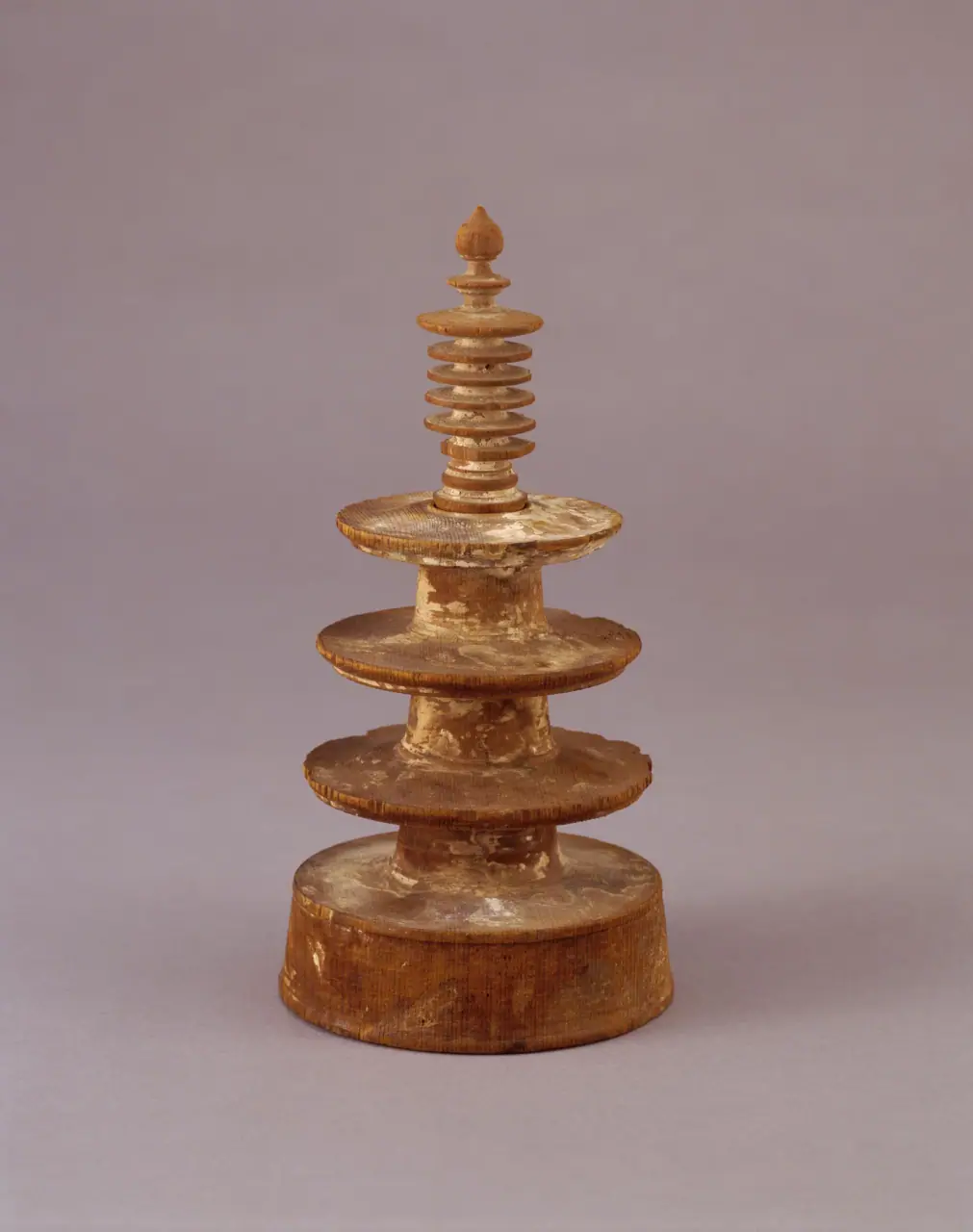
Surviving small wooden pagodas and printed sutra strips show the organizational scale of religious production; the specific printing blocks and production details remain under study.
794: Capital moved to Heian-kyo
The move changed the political center, while Nara temples, existing institutions, and local society continued; a single year cannot summarize the entire transformation.
What we know
The ritsuryō codes and historical works show the court's norms and self-narrative, while wooden tablets and local sites can test how these were implemented. The goods tags from Heijō Palace and the Shinano command materials differ in scale; they can corroborate logistics and administration but cannot directly calculate the nationwide implementation of tax rates. The original Hōryū-ji buildings were destroyed by fire in 670 CE, and the surviving parts begin with the subsequent reconstruction; the date of the photograph, the date of architectural components, and the traditional founding date of the temple should be marked separately.
Questions still debated
The dates of 538 and 552 CE for the introduction of Buddhism come from different chronological traditions and should not be quietly flattened. The speed of central state formation, the relationship between reform edicts and later compilation, and the political space of female monarchs all require comparison of different materials. Studying the sacred royal genealogy in historical works does not deny the value of the texts; rather, it restores their time of compilation and political purposes to interpretation and does not treat legend as eyewitness record from the same era.
Legacies for later generations
Written administration, the ritsuryō codes, historical works, and Buddhist architecture provided later ages with institutional and cultural resources, and monks, artisans, and transporters took part in this heritage. The Hyakumantō printed sutras show that religious production could be organized on a very large scale, but the technique of woodblocks or metal plates remains debated. Hōryū-ji preserves early wooden architecture but also experienced reconstruction after fire and modern repairs; its historical value comes from a traceable accumulation of layers, not from an imagination that it never changed.
References and evidence
These materials support this page's account. Check the purpose, perspective and accessible scope of each source. Notes identify the evidential limits of excerpts, summaries and timelines.
- Asuka and Nara periodsThe Metropolitan Museum of Art · Museum research
Buddhism, Chinese characters, capitals, and taxes and corvée; the introduction of Buddhism has two chronological dates, 538 and 552.
- Buddhist Monuments in the Horyu-ji Area: History and ConservationUNESCO World Heritage Centre · Specialist reference
Actually read the account of the original buildings' 670 fire, late 7th- to 8th-century reconstruction, and modern repairs. Extant buildings cannot all be retro-dated uniformly to 607, and modern restoration must be retained.
- Heijo Palace Site: Officials' Work, Transport Tags, and Everyday ObjectsNara National Research Institute for Cultural Properties · Primary source
The institutional guidebook distinguishes archaeological artifacts, wooden tablets, and interpretive drawings; it links transport tags for Izu bonito and abalone and conscription wooden tablets to the capital's resource supply. See the matrix for reading scope.
- Ancient Shinano Administration and Wooden TabletsNagano Prefecture · Primary source
The local history account uses wooden tablets from the Yashiro site to explain district magistrate orders, rice taxes, and local products; this is locally excavated evidence and does not automatically represent the same burden across the entire archipelago.
- Japan: A Country Study (1992 edition), Historical Background chapterFederal Research Division, Library of Congress; edited by Ronald E. Dolan and Robert L. Worden · Specialist reference
Actually read the relevant passages of the 1992 edition's historical chapter: PDF pages 49–62, 64–80, and 81–110, and sampled the social environment section on PDF pages 129–132; the research mainly runs through 1990. The book's old Yayoi dating, some ethnic classifications, and several dates are clearly outdated or erroneous; errors such as the atomic bomb in 1941/August 8 and Kwantung Army losses of 80,000 were not adopted; precise dates and causation were checked against updated archaeology, NDL, and institutional materials. Makes no claim to have read all 670 pages or to treat old statistics as 2024 current conditions.
At the end, bring this chapter to a close.