Heian: Behind the screens and above the estates
Refined court life was connected to whose labor?
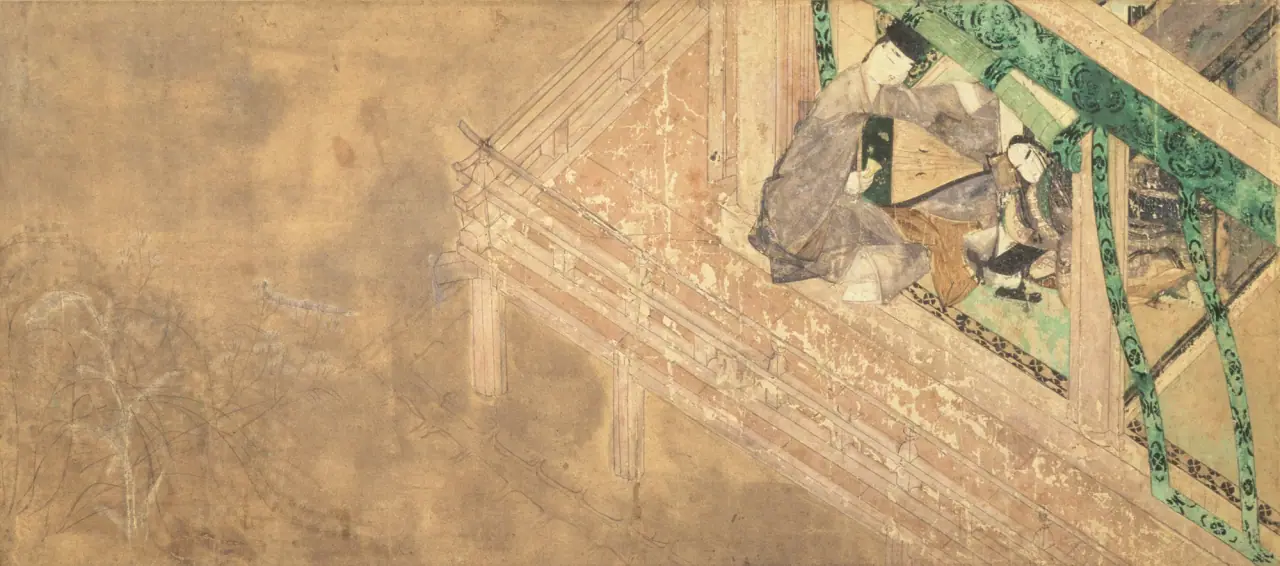
Screens separated the rooms of the court and also separated those whom later generations can most easily see from those whom they can least easily see. After 794, Heian-kyo left behind poetry, diaries, The Tale of Genji, and religious picture scrolls, with especially rich writing by aristocratic women; this culture was supported by estate income, local labor, and knowledge from across the sea. The Fujiwara family maintained influence through marriage and regency, while retired emperors, temples and shrines, and local warriors repeatedly rearranged power. Heian was not a four-century unchanging golden age of the court; political centers and land control had multiple layers. When reading literature, documents, and paintings, one must see both the experience they open up and remember that peasants, transporters, and marginal regions rarely had the same opportunity to speak.
01 / 794-1185How this era began
The Nara period had already formed a network of code-based government offices, Buddhist temples, and local collection. The move of the capital did not erase these relationships. Heian-kyo still referred to continental capital layouts, and the court also had to handle local security and resource supply. Later changes in envoy exchanges with China did not mean that books, monks, and goods completely stopped crossing the sea; so-called national culture developed through long-term connections, rather than suddenly casting off all foreign knowledge.
Why did this era begin?
Aristocratic families expanded influence through marriage, regency, and household organization, while land gradually entered estate networks of the imperial family, temples and shrines, and powerful nobles. For peasants, nominal rights, the party to whom dues were paid, and the actual manager might not be the same person. The development of kana writing, tales, and diaries made new experiences recordable; this cultural change was connected to finance, family, and religious patronage, not merely a change in aesthetic taste.
02 / 794-1185Who held power
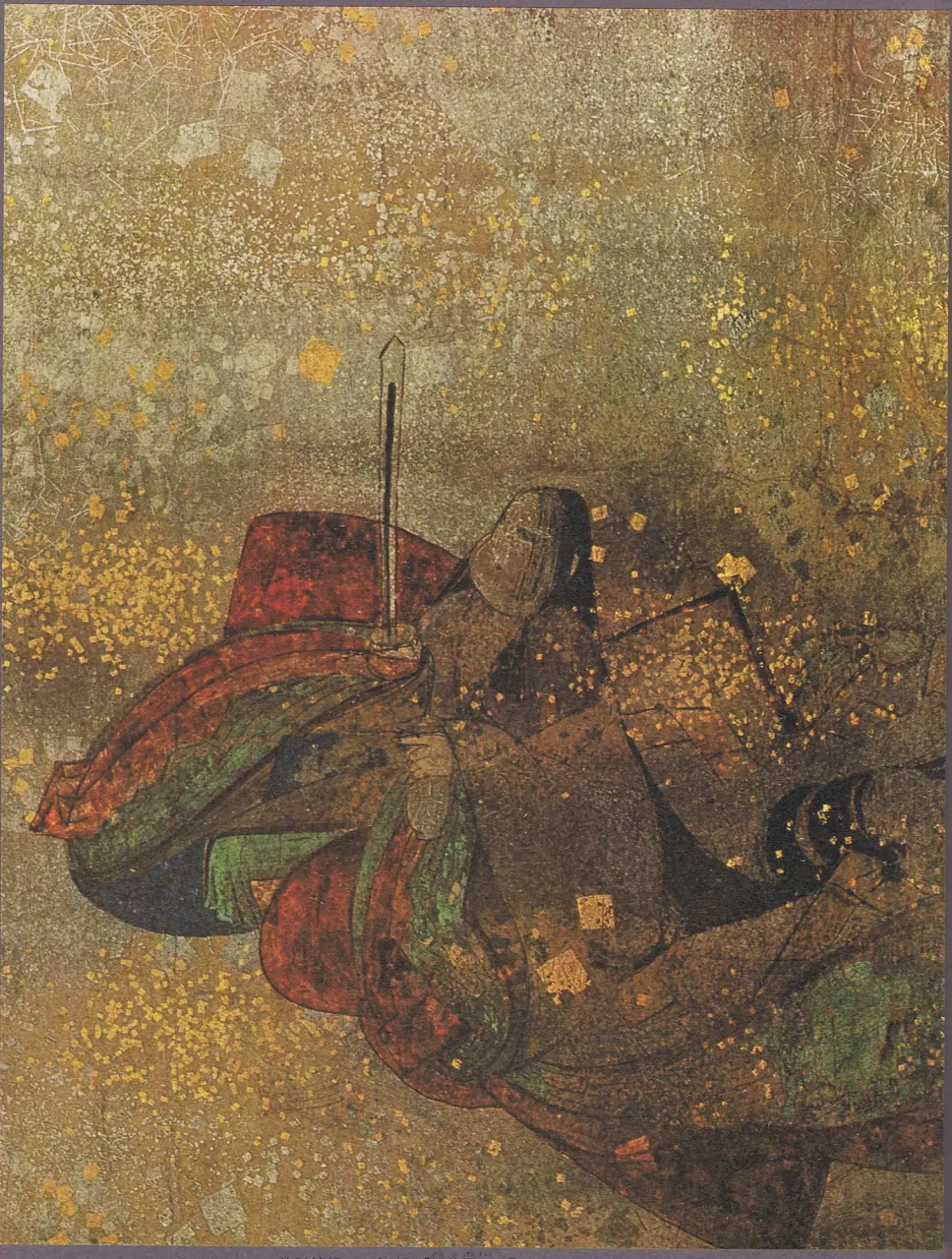
The Fujiwara family's marriage position allowed them in some periods to act for or influence imperial power, but the emperor was never reduced to a single fixed role. In the late eleventh century, cloistered rule developed, creating new power arrangements among retired emperors, reigning emperors, aristocrats, and temples and shrines. Local warriors were connected both to court titles and to land management; the court and warrior houses cannot be imagined as two separate societies that suddenly met on some particular day.
What tensions existed within the era?
Land revenue and competition for office were intertwined, and the demands of powerful families, temples and shrines, and the imperial household organization could conflict. Aristocratic emphasis on ritual, bloodline, and rank made it easier for some to obtain positions and forced others to rely on dependent relationships to approach resources. The growth of local armed force responded to needs for security and management but also created new struggles; social transformation cannot be blamed solely on luxurious court life or the corruption of a single family.
03 / 794-1185How society worked
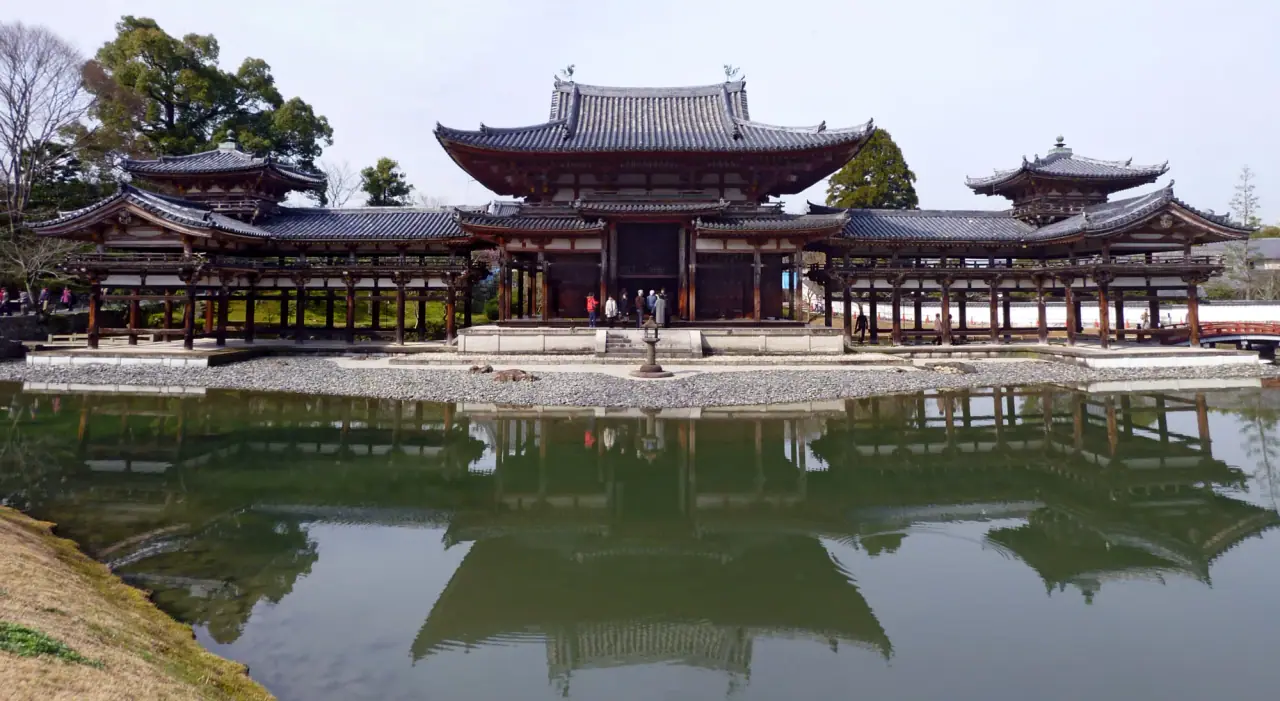
Estates and public lands together supported income, while local management and rights arrangements constantly changed; the court was unable to directly control all land as legal ideals imagined. Aristocratic cultural consumption required food, textiles, paper, and transport, and unnamed producers stood behind refined objects. Judging national prosperity by the wealth left by the court would ignore land management, taxes and corvee, and regional differences, and would mistake the visibility of a few patrons for the experience of all.
How did ordinary people live?
Court women's diaries and tales preserve clothing, seasons, emotions, and interpersonal competition, but they are limited by genre, readership, and family position. Ordinary people's dwellings, food, and life and death are more often visible through archaeology and fragments in picture scrolls. The Gaki Zoshi depicts scenes of the human realm in order to explain the sufferings of the six realms in Buddhism; it can raise questions about life, but it is not a street photograph without compositional choices.
04 / 794-1185Where change began
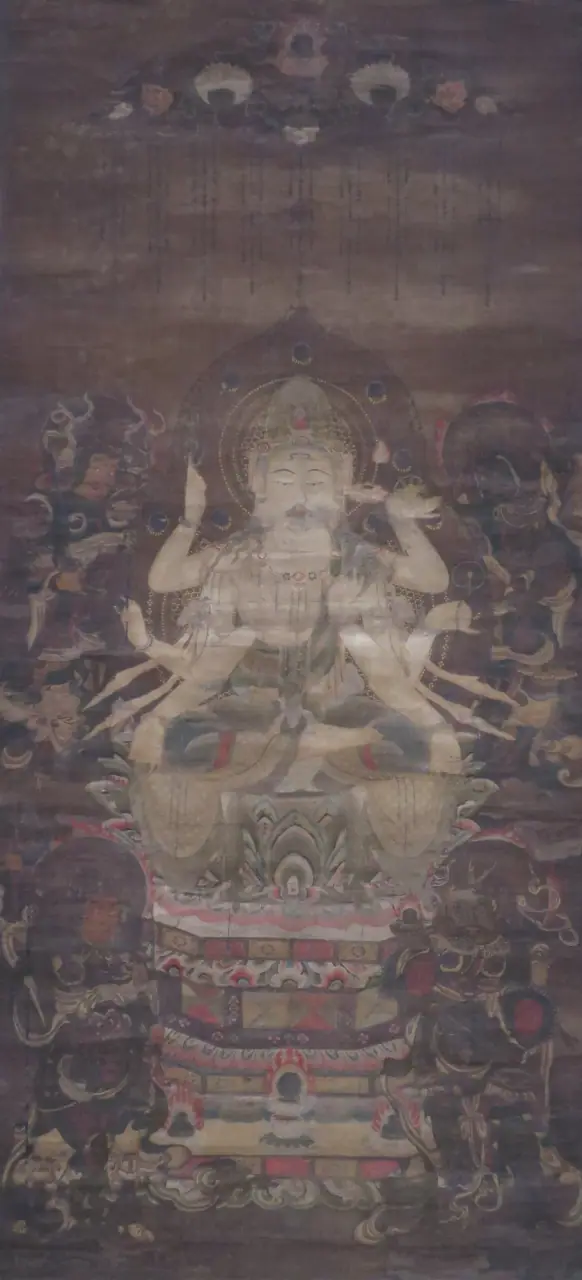
Inheritance and military conflict in the twelfth century drew the Taira and Minamoto more deeply into court politics, and the wars of 1180-1185 changed the advantage of the warrior houses. 1185 was not the year when the court, temples and shrines, or estates all disappeared, but an important node in the process of establishing the Kamakura regime. Capital culture continued to develop, and later warrior houses still had to maintain ties with Kyoto; therefore what changed in periodization was first of all the combination of powers, not a sudden replacement of civilization.
Milestones that changed direction
794: Heian-kyo becomes the political center
The move of the capital followed and also adjusted continental capital models, and old institutions and Nara temples did not exit history.
c. late ninth to tenth century: Kana and literature unfold
Kana provided new expressive forms for Japanese narrative and diaries, while Chinese writing and knowledge from across the sea continued.
c. 1000: Fujiwara power and court writing
The Fujiwara family's marriage politics was connected to cultural patronage, and the experience of women writers such as Murasaki Shikibu came from specific court positions.
Late eleventh century: Cloistered rule changes the combination
The household and political activities of retired emperors expanded, while regent families, reigning emperors, and temples and shrines still participated in power competition.
Twelfth century: Scenes of the human realm in religious picture scrolls
Scrolls such as the Gaki Zoshi depict suffering and imaginings of the afterlife, and the details of life within them must be read within their didactic purpose.
1185: An important node in the end of the Genpei War
The Minamoto victory accelerated the formation of a warrior government, while the Kyoto court and its land and cultural resources still existed.
What we know
Court diaries allow close examination of specific relationships, novels provide imagination and value order, and estate documents and archaeology approach questions of resources and dwelling. The Tokyo National Museum's description of the Gaki Zoshi clearly states its religious purpose, and later images must also be read according to their dates of production. The generalization in older synthetic histories that "the court lost all power" is too strong; this chapter instead organizes evidence around the coexistence of regency, cloistered rule, and local power.
Questions still debated
Whether Heian politics was the decline of royal power or a change in how power operated, and how the rise of estates and warriors was connected, cannot be explained by a single central-decline line alone. Women's agency in literature cannot directly equal universal equality. The distinctive forms of national culture are indeed worth studying, but connections with continental books, religion, and commerce continued; distinctiveness must not be written as the result of long-term isolation.
Legacies for later generations
The Tale of Genji, kana, and religious art provided continuing resources for later literary and visual traditions and were also rewritten in different eras. Twelfth-century picture scrolls and seventeenth-century screens tell the same story, but the patronage, materials, and viewing habits they embody may differ. Labeling all Genji images backward as belonging to the era of Murasaki Shikibu would erase the history of the works' reinterpretation and mistake aristocratic women's experience for the lives of all women.
References and evidence
These materials support this page's account. Check the purpose, perspective and accessible scope of each source. Notes identify the evidential limits of excerpts, summaries and timelines.
- Heian periodThe Metropolitan Museum of Art · Museum research
Court, Fujiwara family, kana, and literature; aristocratic materials do not represent all of society.
- The Tale of Genji: a Japanese classic illuminated by imagesThe Metropolitan Museum of Art · Museum research
Murasaki Shikibu, eleventh-century court literature, and later image traditions; the novel and later paintings are not photographs of contemporary life.
- National Treasure Hungry Ghosts Scroll: The Religious Context of a 12th-Century HandscrollTokyo National Museum · Museum research
Actually read the exhibition text and object entry A-10476, which explains the six realms, the Ojoyoshu, and the scroll's didactic nature. Everyday scenes cannot be treated as unselective social photographs.
- Japan: A Country Study (1992 edition), Historical Background chapterFederal Research Division, Library of Congress; edited by Ronald E. Dolan and Robert L. Worden · Specialist reference
Actually read the relevant passages of the 1992 edition's historical chapter: PDF pages 49–62, 64–80, and 81–110, and sampled the social environment section on PDF pages 129–132; the research mainly runs through 1990. The book's old Yayoi dating, some ethnic classifications, and several dates are clearly outdated or erroneous; errors such as the atomic bomb in 1941/August 8 and Kwantung Army losses of 80,000 were not adopted; precise dates and causation were checked against updated archaeology, NDL, and institutional materials. Makes no claim to have read all 670 pages or to treat old statistics as 2024 current conditions.
- Kamakura and Nanboku-cho periodsThe Metropolitan Museum of Art · Museum research
Warrior power, the Mongol invasions, and Buddhist art; 1185 and 1192 represent different founding nodes.
At the end, bring this chapter to a close.