Edo: City and Village in Peace
How did warriors who relied on rice taxation confront increasingly wealthy merchants?
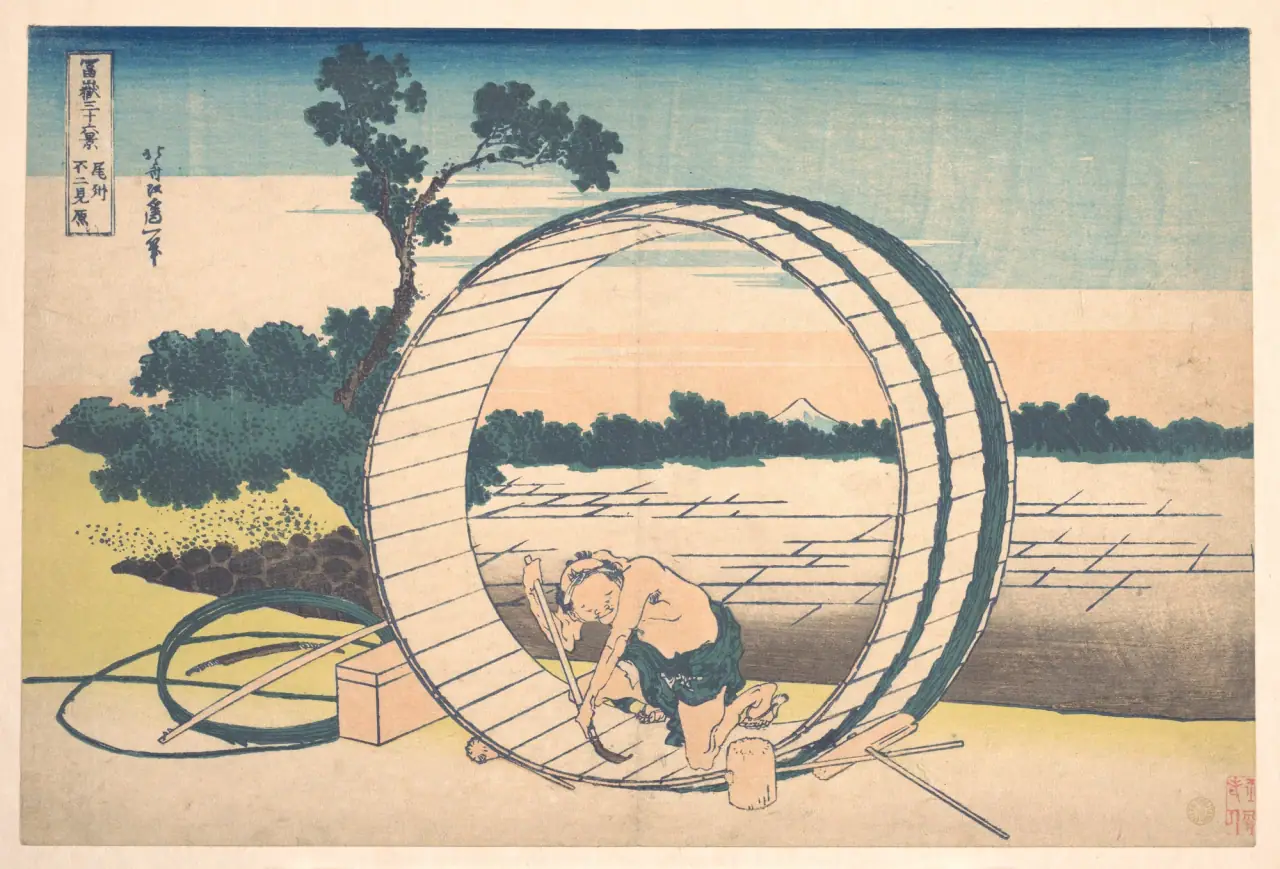
After the Osaka campaigns, the Tokugawa shoguns and domain lords ruled villages and cities in a long peace. Warrior income rested on rice and domains, while merchants accumulated influence through circulation, credit, and publishing; farming households also entered networks of commodity production and side work. Alternate attendance tied roads, post stations, and Edo consumption together, but status restrictions, taxes, and famines made the distribution of prosperity extremely uneven. The so-called "closed country" did not cut off all overseas contact; Nagasaki, Tsushima, Ryukyu, and Ezo each had their own channels and relations of domination. The late shogunate crisis therefore came not only from gunboats but also from the shogunate's long-term difficulties in handling finances, livelihood, and authority.
01 / 1615–1853How this era began
The fall of the Toyotomi regime removed the main center of military competition, but did not put the shogun in direct control of all land in the country. The Tokugawa had to arrange domains and relationships among collateral, hereditary, and outer daimyo to guard against challenges from alliances. Past wartime mobilization gradually shifted toward administration and taxation, and peasants, merchants, and temples and shrines also sought positions in the new order that could sustain their livelihoods; regional differences remained.
Why did this era begin?
The shogunate maintained control through rules on daimyo marriage, castle building, and alternate attendance, while the domains retained finances, retainers, and local governance. The residence of daimyo families in Edo and their regular journeys increased the cost of submission and also generated demand for post stations, transport, construction, and consumption. Political constraints did not simply suppress society; rather, they fostered market and information networks that the shogun and lords could not fully control.
02 / 1615–1853Who held power
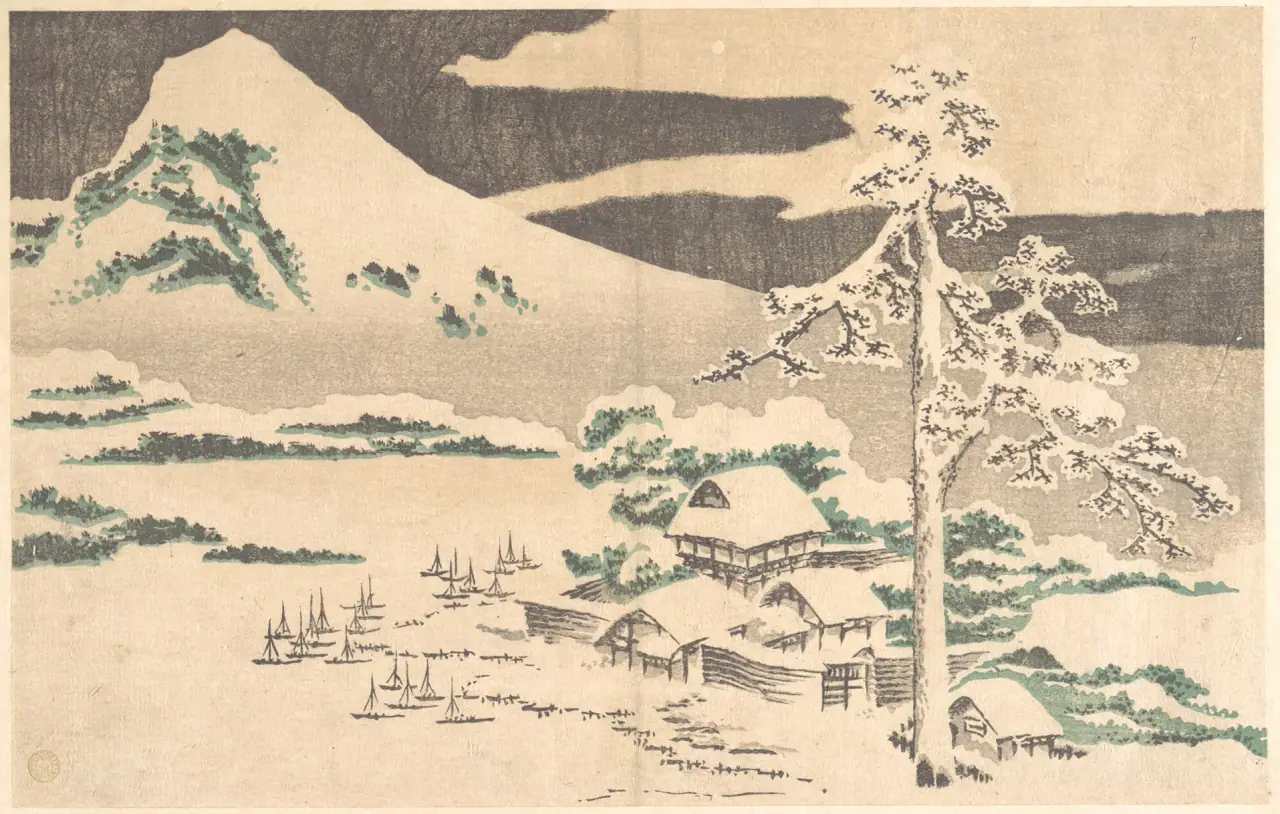
The shogun stood at the top of the bakuhan system, the court retained ritual and cultural authority, and daimyo exercised powers such as taxation and justice within their domains. Status distinctions existed among warriors, peasants, and artisans and merchants, and stigmatized groups faced separate exclusion; actual occupation, wealth, and legal status did not always coincide. Village and town organizations handled taxation and public affairs, making grassroots governance depend on negotiation and mutual surveillance.
What tensions existed within the era?
Lords' finances depended on agricultural taxes, but town trade drove monetization, and warrior debt and reforms limiting luxury recurred. Famines such as Tenmei and Tempo made grain distribution, speculation, and relief focal points of conflict; commoner petitions and riots were not merely resistance to an abstract status system. Repression of Christians and marginalized groups, as well as control over Ryukyu, Ainu trade, and land, also formed the cost of the peace order.
03 / 1615–1853How society worked
Agricultural surplus and annual tribute supported the lords' regime; rice was exchanged for cash through markets such as Osaka, and warrior households became increasingly dependent on merchant credit. Rural areas developed sericulture, weaving, and other commodity side work, while cities concentrated handicrafts and services. Market expansion did not guarantee that farming households escaped poverty: in poor harvests, grain prices, debt, and fixed burdens could compound, and those who profited from commerce and those who bore the risks were often not the same people.
How did ordinary people live?
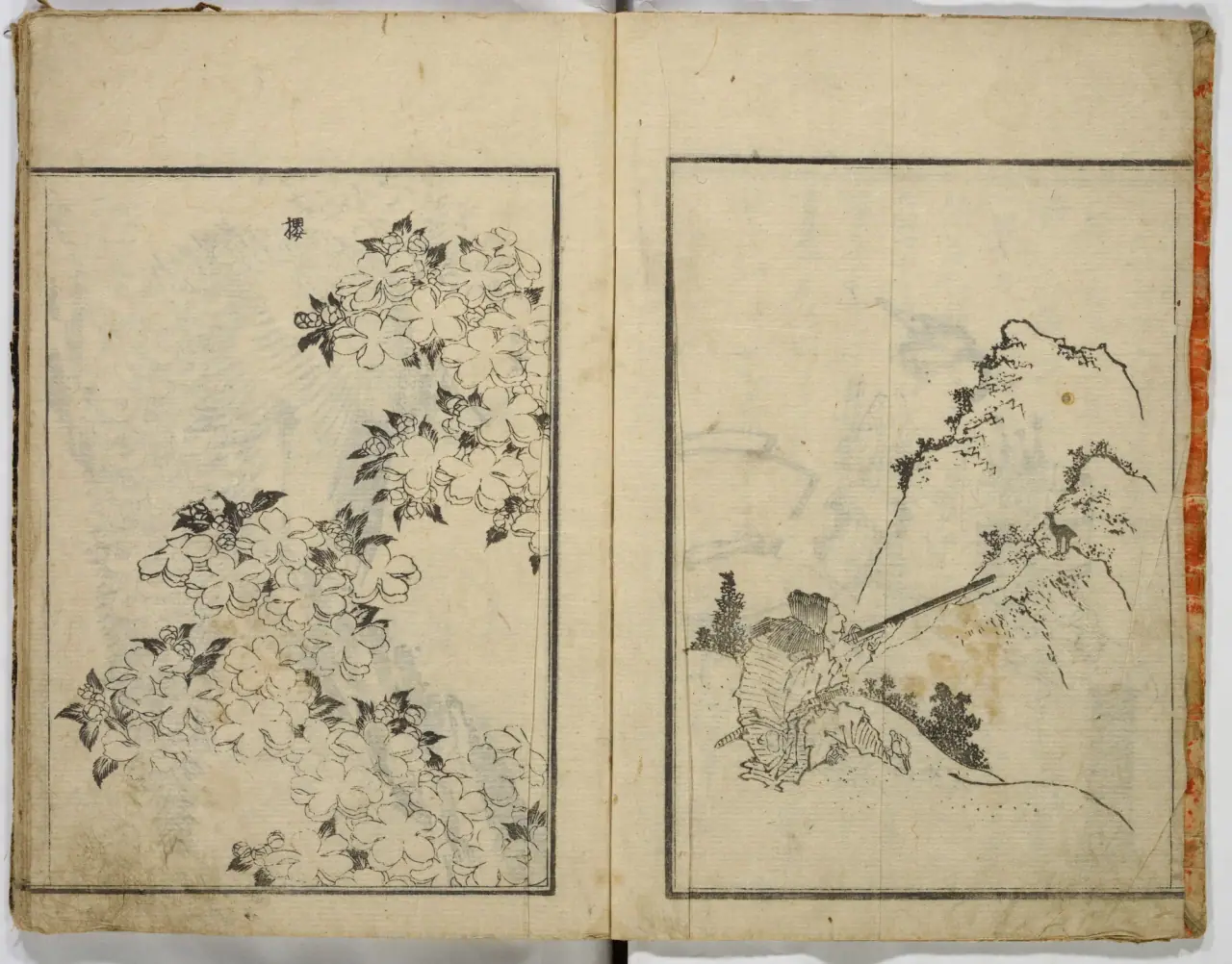
People allocated time among farm work, weaving, street markets, and household labor; travel, terakoya education, kabuki, and cheap printed materials broadened the horizons of some. The amusements and fashions in prints are a selective presentation of the world of consumption and cannot replace the account books of poor households. Women participated in production and cultural activity but were constrained by household relations and status order, and life in villages and large cities also differed greatly.
04 / 1615–1853Where change began
The famines and financial reforms of the first half of the nineteenth century failed to resolve the regime's structural difficulties, and coastal defense spending and the entry of Western powers into East Asia added pressure. After Perry's fleet arrived in 1853, the shogunate's diplomatic decisions provoked debate between the court and the domains. Opening ports was neither a case of a closed society suddenly encountering the world, nor did it automatically lead to the overthrow of the shogunate; the choices made in handling treaties and domestic authority were what caused the crisis to escalate continuously.
Milestones that changed direction
1615: End of the Osaka campaigns
Toyotomi power falls; the relationship between Tokugawa generals and daimyo gradually shifts toward maintaining domains and administrative order; peace still presupposes control of military competition.
1635: Alternate attendance incorporated into the laws of the warrior houses
Rules requiring daimyo to travel regularly to Edo create political constraints while also driving demand for roads, post stations, and transport.
1639: Portuguese ships banned from entering port
The shogunate strengthens control over Christianity and overseas contact; trade channels with the Dutch, Chinese, and surrounding regions still operate under different rules.
Second half of the 17th century: Growth of the urban cultural market
In Kyoto, Osaka, and Edo, commerce and publishing expanded, and consumption by merchants and other townspeople created demand for ukiyo-e, theater, and fashion.
1783: The Tenmei famine deepens
Poor harvests and disasters made grain prices, relief, and the burden of annual tribute into questions of survival, showing that market prosperity and household food security are not the same thing.
From 1833: The Tenpō famine
Successive poor harvests struck both countryside and city, and debt, food supply, and the regime's capacity for relief intensified social conflict.
1853: Perry's fleet arrives in Edo Bay
The United States used naval power to demand the establishment of relations; how the shogunate handled diplomacy and consulted the domains triggered a wider crisis of authority.
What we know
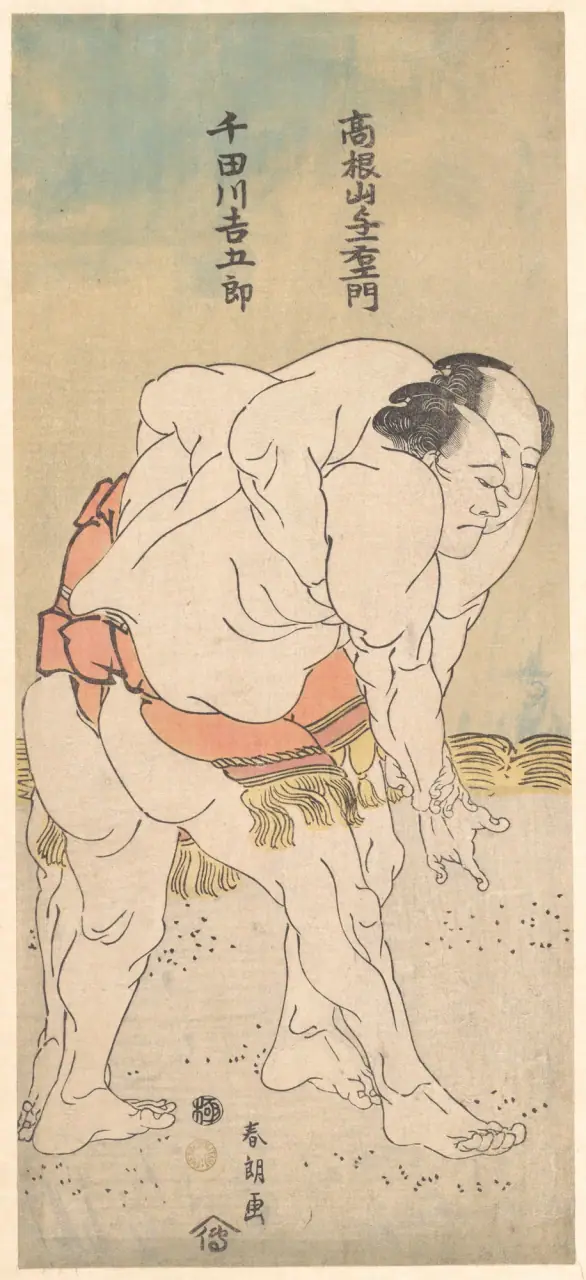
Village annual tribute ledgers, loan and petition documents help reveal production and burdens; shogunate laws show ruling intentions but cannot prove uniform enforcement across the country. Ukiyo-e, travel books, and theater can reveal consumption, occupations, and ideal images, but often served the urban market. Only by reading these materials together with local records can a few prosperous districts avoid standing in for the whole society of more than two centuries.
Questions still debated
"Closed country" is a later summary; researchers place more emphasis on the rules of different ports and surrounding channels, and on the unequal power in exchanges. As for whether the Edo economy prepared conditions for industrialization, a distinction must also be made among market expansion, technological capacity, and living standards; later success must not be projected backward as inevitable. The supposed nationwide homogeneous status system likewise needs to be tested against actual occupations and judicial records in various regions.
Legacies for later generations
The Edo period left behind markets, roads, education, and local administrative experience, which were later reused by the modern state and enterprises. It also left behind a strict hierarchy of status, regional rule, and social exclusion; literacy and urban prosperity must not be used to smooth over these costs. Many "Japanese traditions" familiar to modern people took commercial form in this period, while still changing through cross-regional exchange and the practices of different groups.
References and evidence
These materials support this page's account. Check the purpose, perspective and accessible scope of each source. Notes identify the evidential limits of excerpts, summaries and timelines.
- Art and the city in the Edo periodThe Metropolitan Museum of Art · Museum research
Actually read the full main body of the art-history text and the object catalogue, used for patronage, publishing, and urban consumption; generalizations about complete isolation or all townspeople enjoying prosperity are not adopted, and it is read alongside the full Columbia course text and the national history chapter.
- Introduction to Tokugawa Japan: Full Text of Scholar InterviewsColumbia University Asia for Educators · Academic research
Read the interview text on political stability, currency, commerce, cities, and status ethics. One page's quotation attributed to Mitsui Takatoshi is dated 1616, conflicting with the listed birth year of 1622; that quotation and its date were not used; course generalizations are not substituted for local demographic statistics.
- Japan: A Country Study (1992 edition), Historical Background chapterFederal Research Division, Library of Congress; edited by Ronald E. Dolan and Robert L. Worden · Specialist reference
Actually read the relevant passages of the 1992 edition's historical chapter: PDF pages 49–62, 64–80, and 81–110, and sampled the social environment section on PDF pages 129–132; the research mainly runs through 1990. The book's old Yayoi dating, some ethnic classifications, and several dates are clearly outdated or erroneous; errors such as the atomic bomb in 1941/August 8 and Kwantung Army losses of 80,000 were not adopted; precise dates and causation were checked against updated archaeology, NDL, and institutional materials. Makes no claim to have read all 670 pages or to treat old statistics as 2024 current conditions.
- Gusuku Sites and Related Properties of the Kingdom of RyukyuUNESCO World Heritage Centre · Specialist reference
Read the descriptions of the castles, ancestor worship, the 12th–17th century trade network, and postwar reconstruction; emphasize Ryukyu's own political culture and the distinction between original material objects and reconstructions.
- Black Ships and samuraiMIT Visualizing Cultures · Academic research
Read the main introduction of bss_essay01 and public sections such as the character-image comparison in bss_essay02, checking the 1853 arrival, gunboats, and different visual representations. No claim is made to have read all nine sections or obtained commercial permission for their CC BY-NC-SA images; the local image library is separately reviewed from independent open sources.
- Chronology of modern Japanese archivesNational Diet Library of Japan · Archive
Checked political nodes from 1853 to the postwar period and can link to individual archival items. Lunar and Gregorian dates are listed together; this draft uses Gregorian years.
At the end, bring this chapter to a close.