Jomon: Forests, Coasts, and Settled Villages
Without paddy fields or a state, how did people live together over the long term?
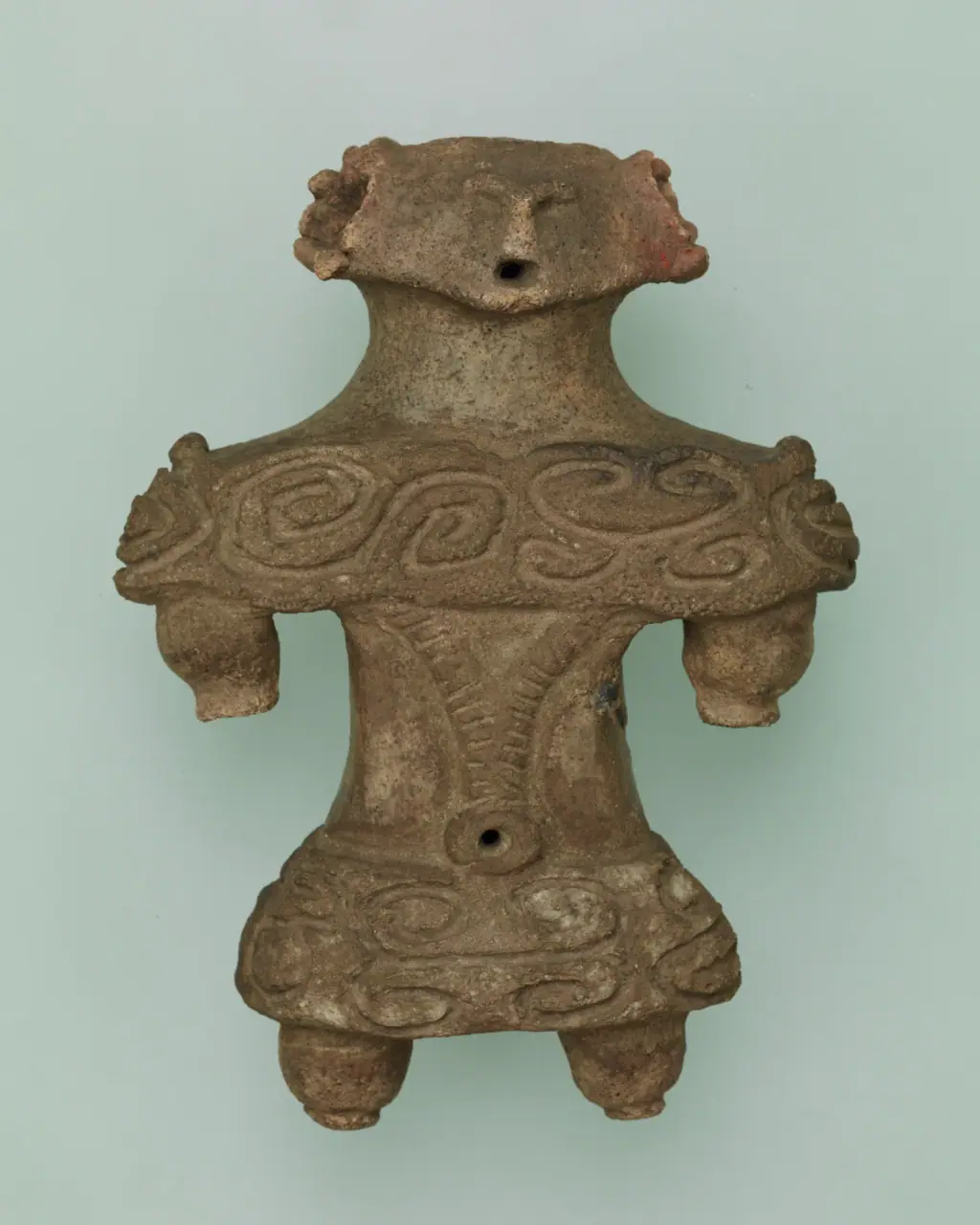
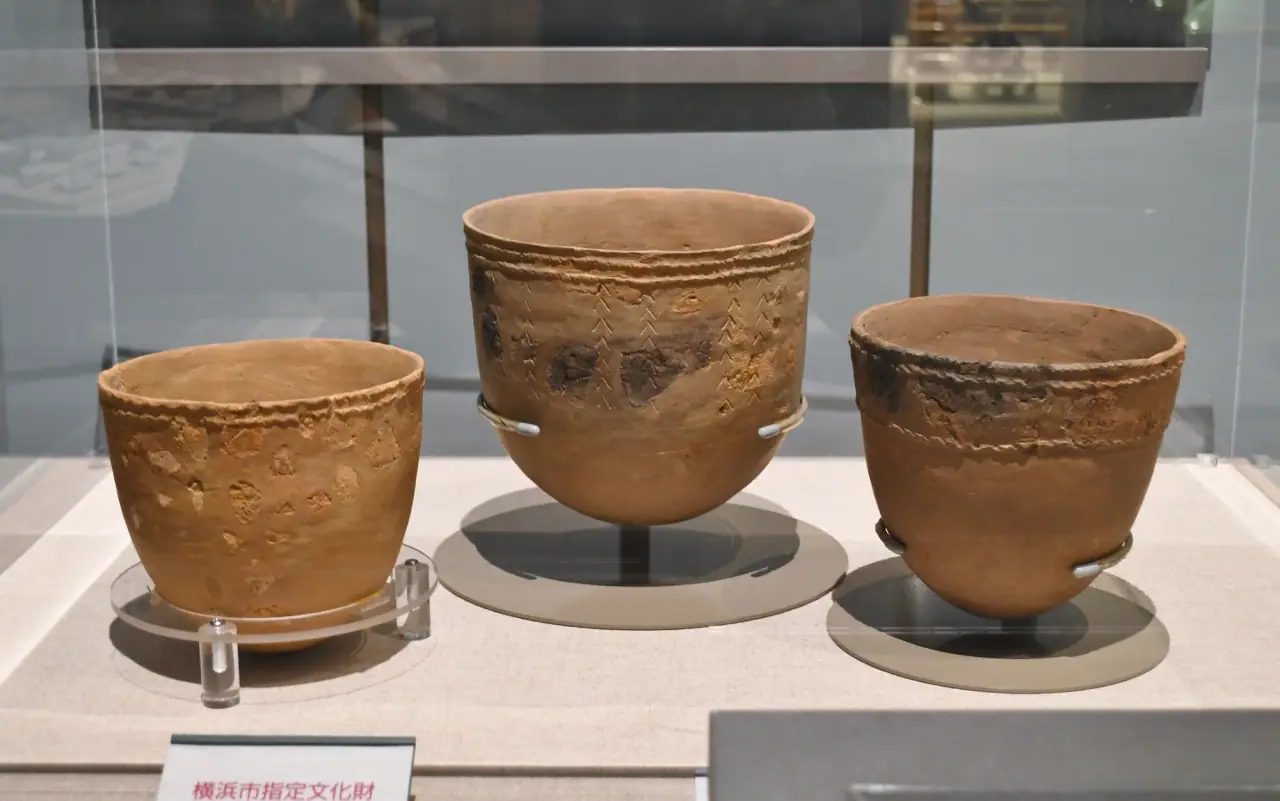
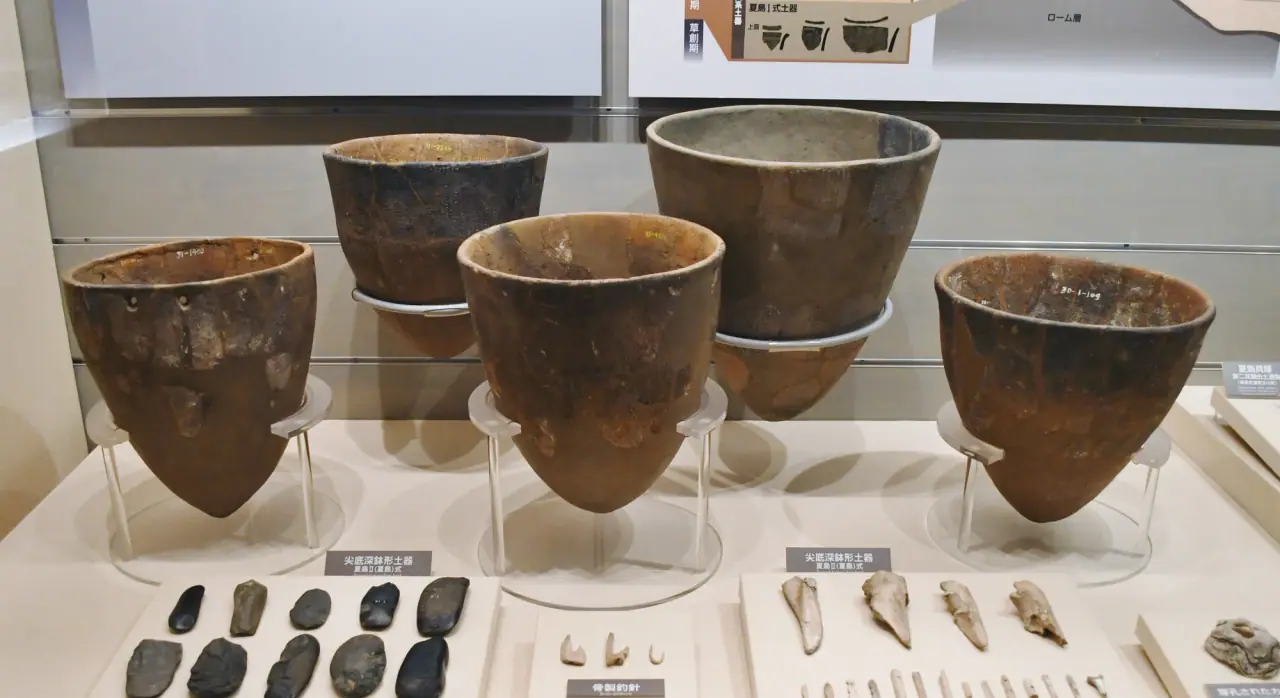
A pottery pot with smoke marks, a shell mound, and a row of postholes can restore Jomon life from the blank label of "before agriculture." Over roughly ten thousand years, people in different regions of the archipelago sustained settlements through nuts, fish and shellfish, game, and exchange, and some places developed long-term residence, cemeteries, and communal rituals. Sites such as Sannai Maruyama show that this life required technology, cooperation, and careful arrangement of the seasons. Jomon is a cultural name established by archaeology on the basis of artifacts and remains; it is not a unified ethnic group or a central state. Climate differs between north and south, and the timing of the shift to rice cultivation was also not uniform.
01 / c. 13000 BCE–300 BCE (not synchronous across regions)How this era began
Before the Jomon, the archipelago already had populations using stone tools and following animals and seasonal resources. The warming climate after the end of the Ice Age, the expansion of forests, and changes in the coastline did not automatically prescribe a single way of life, but they changed where one could fish, obtain nuts, and build houses. Archaeological periodization starts from the artifacts left behind; the appearance of a pottery type at one point cannot be written as the year when all populations suddenly stopped moving.
Why did this era begin?
Pottery gave cooking and food processing new containers, while storage, house construction, and the use of diverse seasonal resources supported one another. Northern site clusters record the gradual deepening of sedentism and the differentiation of living and burial spaces; the house pits and postholes at Sannai Maruyama are especially concrete. Sedentism did not require everyone to stay in the village year-round; gathering, fishing, and exchange may still have involved travel over considerable distances.
02 / c. 13000 BCE–300 BCE (not synchronous across regions)Who held power
Large stone circles, public earthworks, and cemeteries show that people could organize labor beyond a single household, but they are not sufficient to prove that a single chief ruled the entire archipelago. Differences in settlement size and burial treatment can reflect differences in relationships, but later court or feudal hierarchies cannot be directly applied. Who decided rituals and how food was distributed often cannot be asked of texts; only comparisons across multiple remains allow limited judgments.
What tensions existed within the era?
Long-term residence bound people more closely to nearby resources and also made settlements directly affected by harvests, catches, and environmental change. Storage and diversified livelihoods may have spread risk, while migration and exchange remained options. Broken clay figurines, cemeteries, or food traces can raise questions about disease, death, and ritual, but a single unusual artifact cannot be used to invent stories of famine, war, or a fixed matrilineal society.
03 / c. 13000 BCE–300 BCE (not synchronous across regions)How society worked
Food came from a combination of forests, rivers, and coasts; nuts required harvesting, processing, and storage, and the use of fish and shellfish changed with the environment. Lacquerware, stone tool materials, and ornaments show craft skills and regional connections; exchange was not a modern currency market, but it could link different resource zones. A site preserving many fish bones does not mean nearby residents ate only fish; preservation conditions also change the visible proportions.
How did ordinary people live?
The rhythm of life can be approached through hearths, pottery, grinding stones, and food residues: cooking, repairing houses, making tools, and caring for young children all required continuous labor. The child jar burials and adult burials at Sannai Maruyama suggest that people made different arrangements for different stages of life. On-site models of pit dwellings help visualize space, but roof forms and indoor activities involve interpretation; photographs of models cannot be used as direct evidence of what prehistoric houses actually looked like.
04 / c. 13000 BCE–300 BCE (not synchronous across regions)Where change began
When wet-rice paddy cultivation began earlier in northern Kyushu, many northern communities still continued gathering, fishing, and hunting, and different practices may even have coexisted in neighboring areas. The Sannai Maruyama settlement ended around 2200 BCE, but that does not mean Jomon culture ended at the same time. The boundary of about 300 BCE adopted at the end of the chapter is a general one; the time range represented by the northern World Heritage sites ends at about 400 BCE, and periodization must be explained region by region.
Milestones that changed direction
c. 13000 BCE: Starting point of northern sedentism
The time range represented by the northern site clusters begins here; pottery and later, more durable residential facilities show gradual change, not the establishment of a state.
c. 3900 BCE: Formation of the Sannai Maruyama settlement
The site management authority dates the Early and Middle Jomon settlement to c. 3900–2200 BCE; house pits, postholes, and burials must be understood by different phases.
c. 3000 BCE: Craft production and exchange in the settlement
Pottery, stone tools, and wooden objects from the long-term settlement at Sannai Maruyama show multiple kinds of labor coexisting; the date is an observation point within the settlement's duration, not the exact year of an invention.
c. 2200 BCE: End of the Sannai Maruyama settlement
The main settlement phase at this location ended, but this cannot be expanded into the simultaneous disappearance of all northern communities; the end of a site and cultural periodization are different scales.
After c. 1000 BCE: Local traditions of late clay figurines
Late objects such as goggle-eyed clay figurines show visual and ritual practices in different regions; their specific uses still require cross-verification with discovery contexts.
c. 400 BCE: Time boundary of the northern site clusters
The northern series listed by UNESCO continues to about 400 BCE; other regions of the archipelago had already developed rice cultivation, and cultural transformation was not synchronous.
What we know
House pits, postholes, animal bones, shells, plant remains, and radiocarbon dating must be cross-verified within the same stratigraphic context. Waterlogged environments preserve wood more easily, while ordinary organic matter elsewhere may have long since disappeared; both presence and absence require consideration of preservation bias. UNESCO descriptions distinguish buried original structures from interpretive models, and museum photographs of artifacts should also verify restoration, supplementation, and replicas; one cannot rely only on the name of the exhibition hall.
Questions still debated
Debates include how to define sedentism, the intensity of different resource uses, and why clay figurines were made and destroyed. The northern sites can support one local developmental process but cannot replace the entire prehistoric experience of Kyushu, Kanto, or Ryukyu. Calling clay figurines uniformly fertility goddesses, concluding that all their makers were women, or directly equating Jomon with a particular contemporary ethnic group all go beyond what the evidence read in this chapter can confirm.
Legacies for later generations
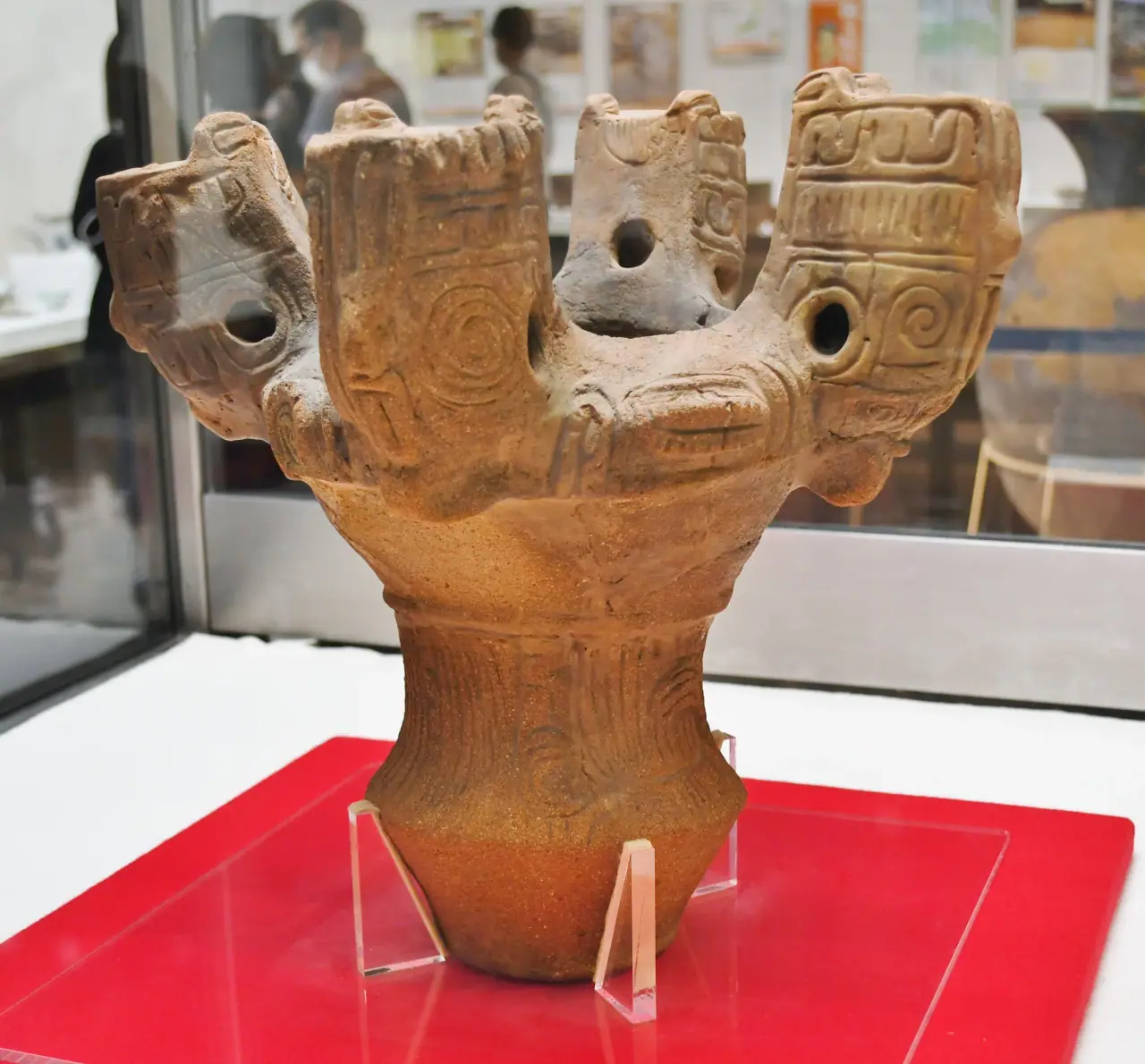
Jomon remains show that the history of complex societies does not begin only with states and paddy fields, and they also make cooking, storage, and care visible as technologies. Clay figurines and flame-style pottery were later repeatedly selected by museums and modern design, forming new cultural symbols. These contemporary identities have their own history and cannot be used to infer backward that prehistoric populations already possessed today's nationality, language community, or fixed ethnic boundaries.
References and evidence
These materials support this page's account. Check the purpose, perspective and accessible scope of each source. Notes identify the evidential limits of excerpts, summaries and timelines.
- Jomon Prehistoric Sites in Northern JapanUNESCO World Heritage Centre · Specialist reference
The northern site group covers sedentary hunter-gatherer-fisher societies from about 13000 BCE to 400 BCE; it is not a unified periodization for the entire archipelago.
- Jomon culture: pottery, settlements, and ritualThe Metropolitan Museum of Art · Museum research
Actually read the main body of the 2002 full text and the object catalogue; its periodization of 10500–300 BCE is older, and the northern scope of this text is checked against UNESCO and site institutions' starting point of about 13000 BCE. General judgments such as "all potters were women" that are not supported by direct evidence are not adopted.
- Sannai-Maruyama Site English GuidebookSannai-Maruyama Site management body, Aomori Prefecture · Primary source
Checked the settlement of roughly 3900–2200 BCE, postholes, timber, and children's jar burials; the publication date of a modern guidebook is not the date of the ancient site. On-site interpretive models must be distinguished from buried original features.
- The Start Date of the Yayoi Period: The Role of AMS Radiocarbon DatingSakamoto Minoru / National Museum of Japanese History, 2007 · Academic research
Actually read the 4-page article text; it discusses the 10th century BCE in northern Kyushu, regional coexistence, sample contamination, and the marine reservoir effect. The old art-historical starting point of 300 BCE cannot be applied as the sole conclusion for the entire archipelago.
- Jomon period: artifacts, resources, and settlementsOfficial body for the Jomon sites of Hokkaido and northern Tohoku · Primary source
Read the main description of culture and remains, and check around 13000 BCE, cooking, burials, and the use of diverse resources; the 400 BCE starting point of the late Yayoi is not treated as the sole conclusion for the entire archipelago. Generalizations about physical appearance or value rankings such as 'most mature culture' are not adopted.
At the end, bring this chapter to a close.