Yayoi: Paddy Fields Transform Villages
How did a paddy field requiring shared irrigation change relations among people?
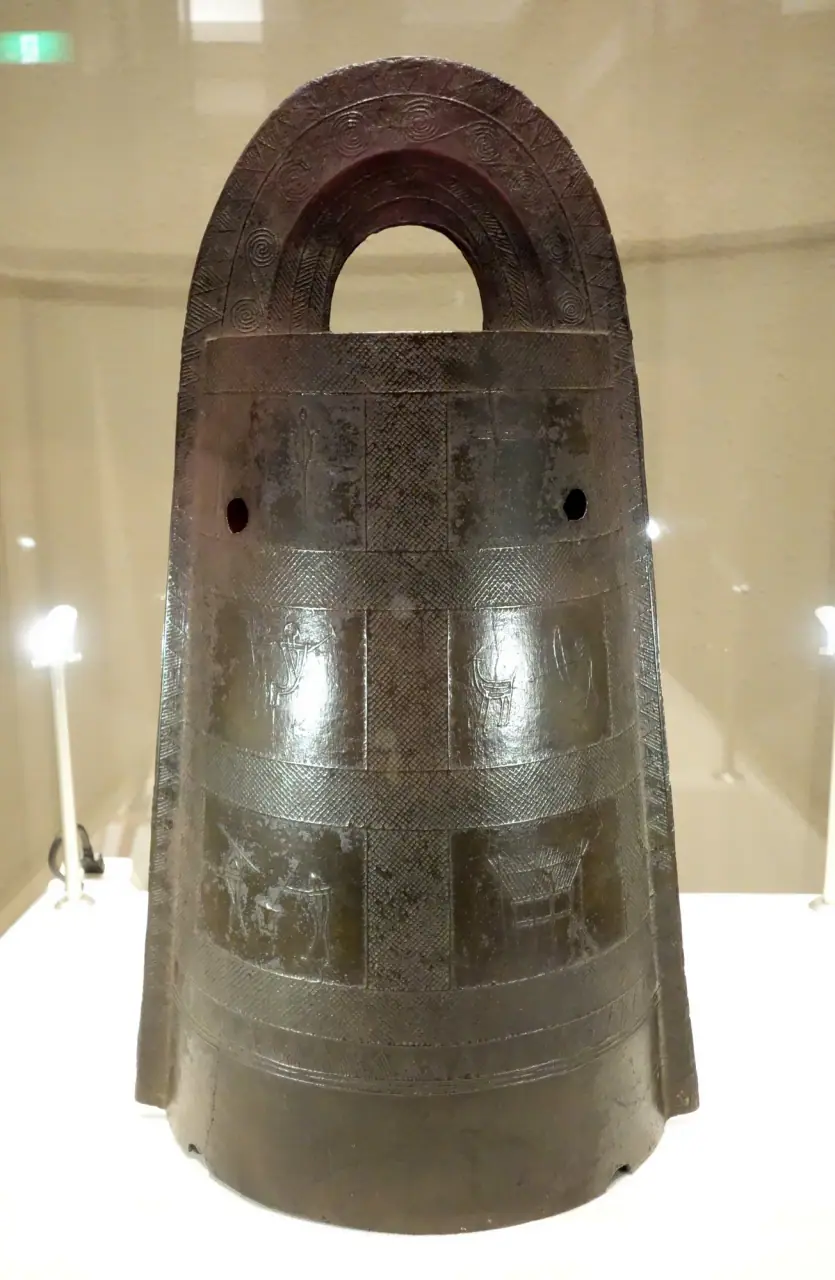
Paddy fields tightly linked a season's rainfall, labor, and harvest. Rice cultivation in northern Kyushu, populations and technologies from the continent and the peninsula, and the choices of existing communities together changed life across the archipelago; grain storage, irrigation cooperation, and metal objects also brought new differences in wealth. Yayoi is not the story of one foreign ethnic group replacing the Jomon in a single stroke. New dating pushes the beginning of rice cultivation in parts of northern Kyushu back to around the 10th century BCE, while older art history materials still often begin in the 4th or 3rd century BCE. Different chronological frameworks and local coexistence must be explained; a single starting point cannot be treated as a calendar for simultaneous transformation across the entire archipelago.
01 / c. 10th century BCE–250 CE (dates differ by region and dating method)How this era began
Jomon communities already possessed pottery, sedentism, and regional exchange; complex technology did not begin only with the arrival of rice cultivation. Northern Kyushu, close to the Korean Peninsula, was an area where maritime contacts easily converged, and the existing inhabitants still had their own food and craft traditions. A livelihood centered on paddy fields changed the organization of labor, but it was not a leap from complete disorganization directly into a state, nor did it mean that other resources ceased to matter from then on.
Why did this era begin?
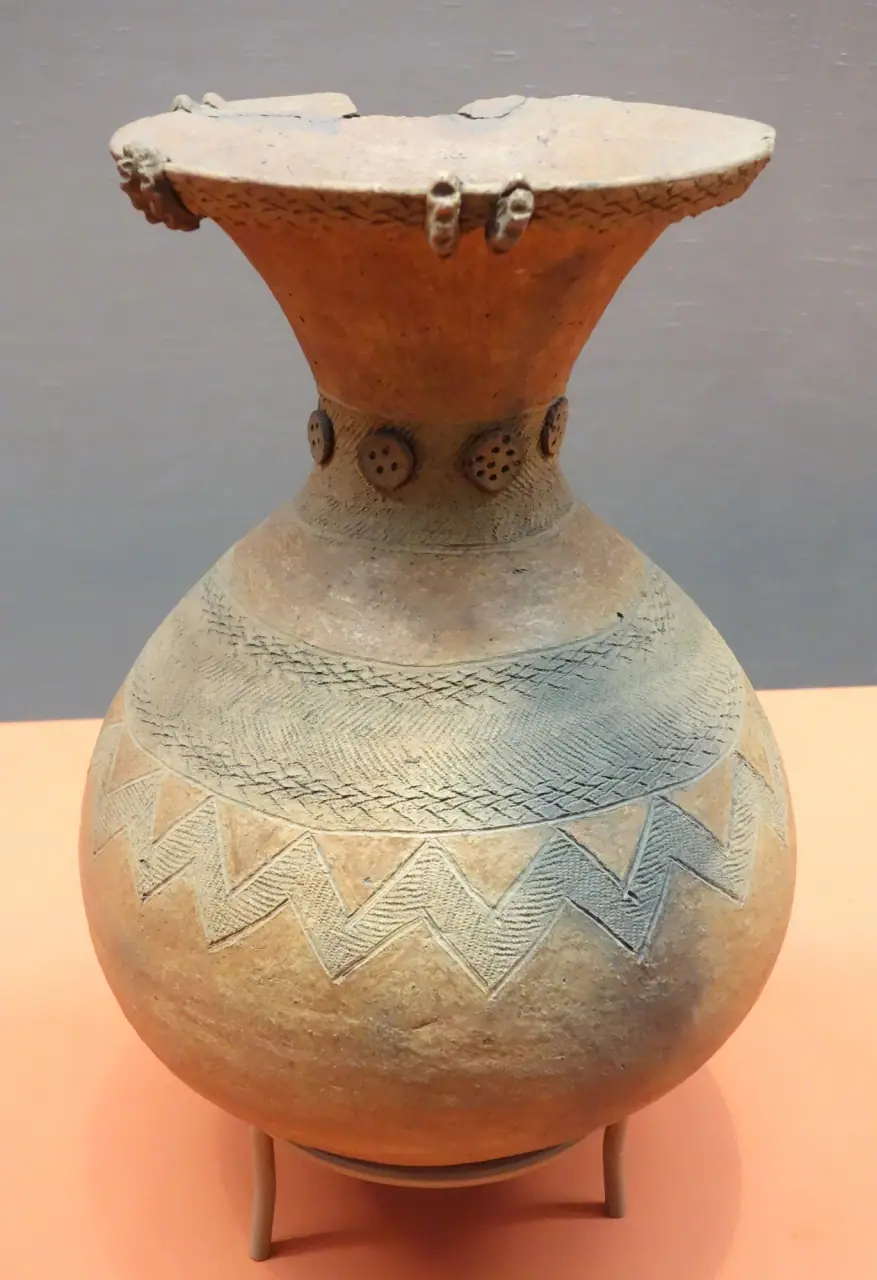
Rice cultivation, land improvement, and waterway maintenance required cooperation among families and neighbors; migrants and transmitters of technique took part in this change. Pottery forms show both connections with the continent and local continuities, and the ancestry of a user cannot be judged from a single pot. AMS dating stretches out part of the process, suggesting that the gradual adoption of rice agriculture coexisted with Jomon practices, which fits the available material better than a single tidy cultural replacement.
02 / c. 10th century BCE–250 CE (dates differ by region and dating method)Who held power
Grain could be stored, and the arrangement of paddy fields and water sources could also become a basis of power; settlement size, moats, and differences among burials make it possible to ask about hierarchical differentiation. The "Wa" and the queen Himiko recorded in Chinese histories belong to political contacts observed by foreign envoys and compilers. A name and tribute missions do not mean that a modern state had already unified the archipelago, and historical records certainly cannot be filled directly into every archaeological site.
What tensions existed within the era?
Moated settlements and weapons make defense and violence important questions, possibly linked to competition over grain, land, and alliances, but not every ditch proves year-round warfare. Differences in harvests and control of storage could also divide households' circumstances. Explaining rice agriculture as necessarily bringing peaceful cooperation, or necessarily creating a despotic state, both skip over regional scale, resource conditions, and actual evidence of conflict.
03 / c. 10th century BCE–250 CE (dates differ by region and dating method)How society worked
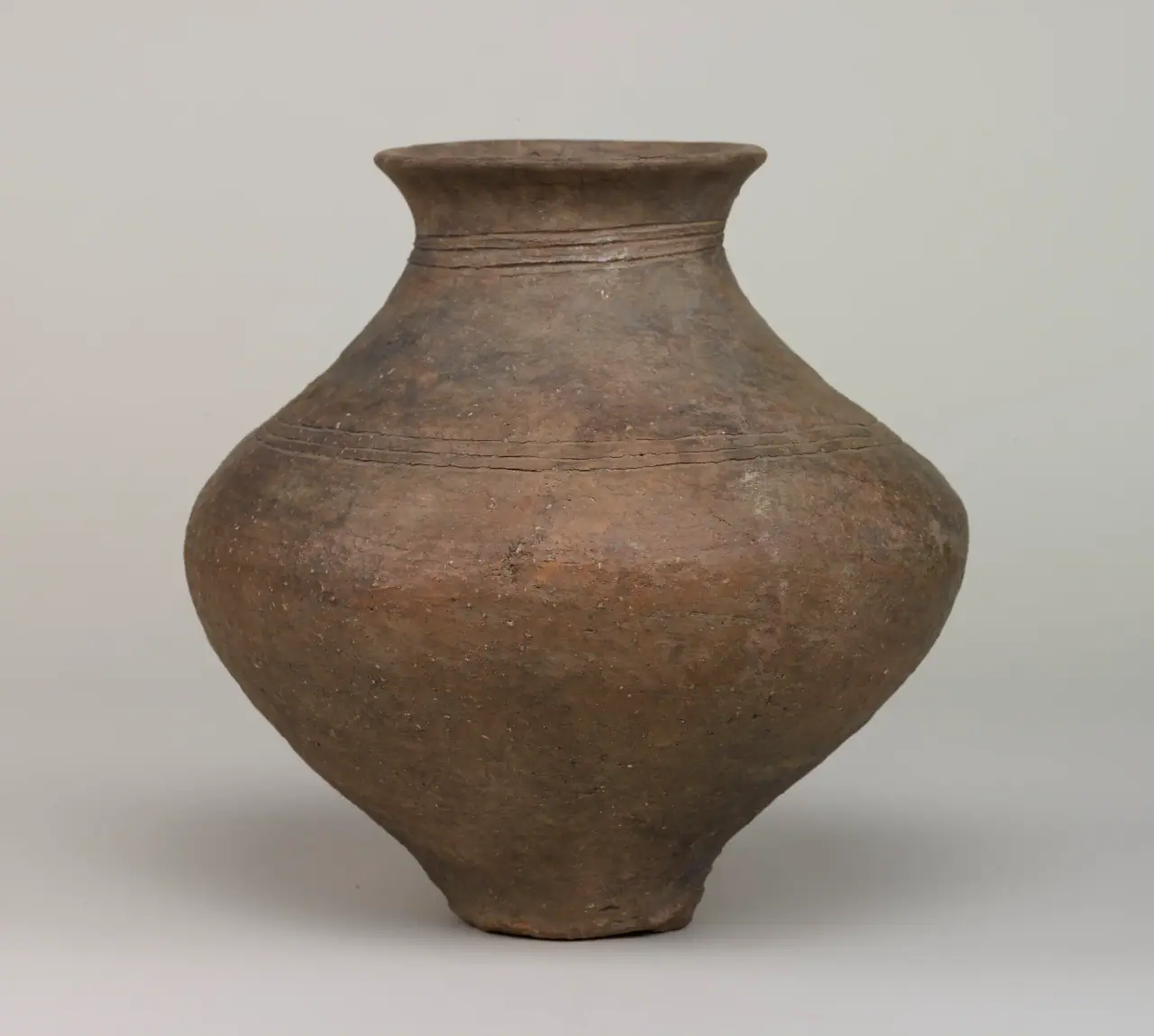
Rice agriculture added an accumulable source of food while requiring sustained investment in opening fields, irrigation, weeding, and harvesting. Bronze and iron entered through cross-sea contacts; tools, weapons, and bronze bells had different uses and cannot all be taken as proof of rising production efficiency. Pots and storage facilities can indicate a need to preserve food, but what was actually stored and who controlled the grain must still be judged from residues, location, and burials together.
How did ordinary people live?
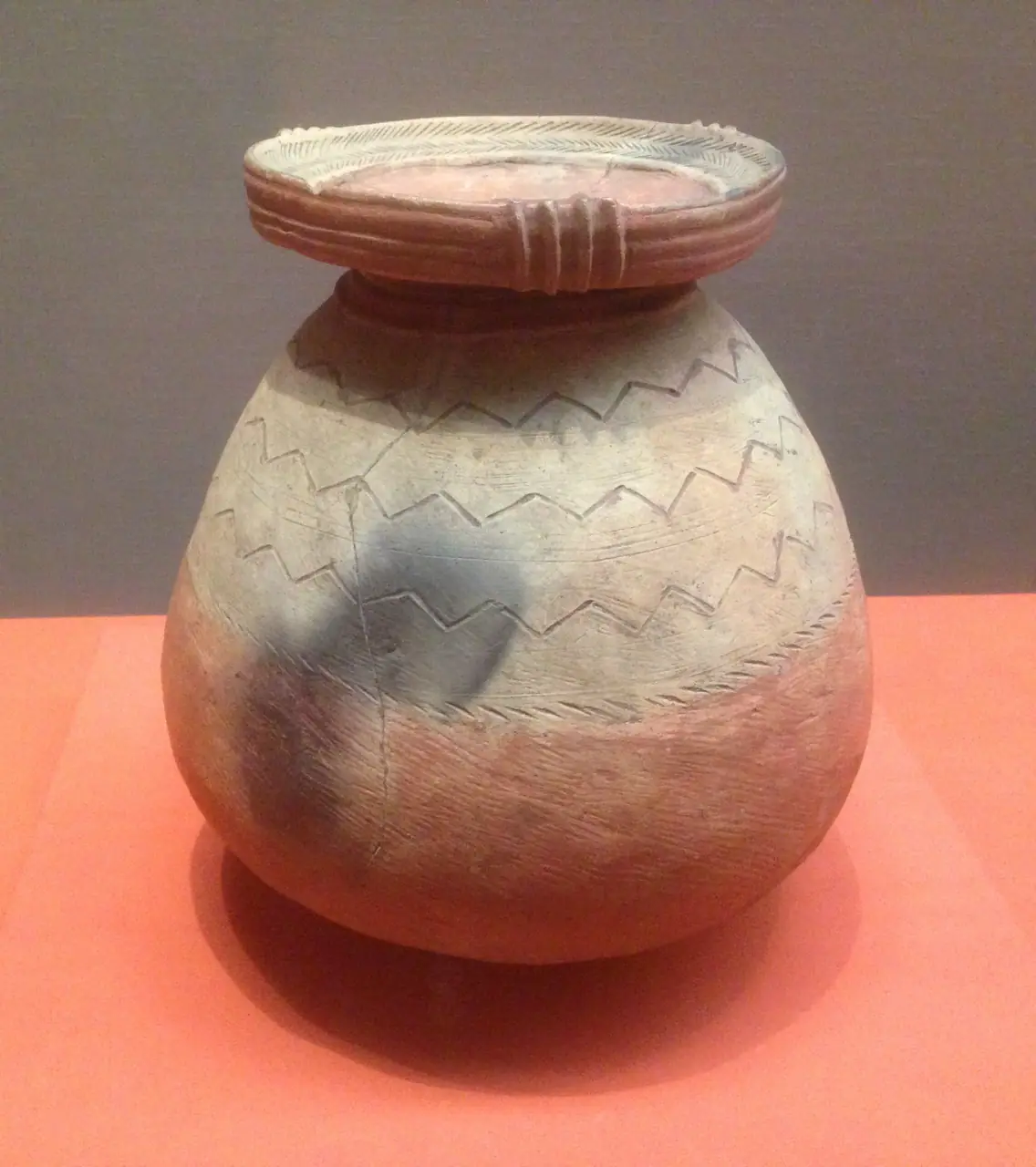
Households had to organize labor around paddy fields while continuing to use fish, mountain forests, and other foods; local combinations differed. Burnished surfaces, red paint, and incised patterns on pottery reveal choices in production, but one cannot assert from vessel form alone which gender made them. Dwellings, carbonized rice, and tools are closer to ordinary life than court narratives, yet they usually leave no names of laborers and cannot fully reconstruct negotiation within a household.
04 / c. 10th century BCE–250 CE (dates differ by region and dating method)Where change began
Around the third century, large burials and political alliances in the western archipelago gradually changed the display of power, and the archaeological narrative begins to move into the Kofun period. Yayoi objects and livelihoods did not disappear in a single year, and regions such as Hokkaido do not fit the same paddy-field periodization. Here about 250 is taken as a reading transition point, without claiming that all places at this time accepted Yamato rule or the same agricultural system.
Milestones that changed direction
About the 10th century BCE: new dating of rice agriculture in northern Kyushu
AMS radiocarbon research pushes some early rice agriculture material in northern Kyushu to around this time; this is an interpretation of regional samples, not a unified starting point for the whole archipelago.
About 500 BCE: different practices still coexisted
The dating paper compares material from Kyushu with other regions, showing that the pace of adopting paddy-field rice agriculture varied; the approximate year is used to show a process of coexistence.
About 300 BCE: starting point of the older art-historical periodization
A 2002 article from the Metropolitan Museum still used a later starting point; this node presents differences in periodization knowledge rather than claiming that rice was first cultivated only in this year.
About the 1st century BCE: links between metal objects and pottery
Bronze bells, weapons, and pots show different technologies and uses coexisting; the dating of Chinese mirrors once served as a reference for pottery chronology, but burial date still must not be confused with production date.
About the 1st–2nd centuries CE: settlements and external accounts
External histories record many political units of "Wa," but this does not allow all sites to be regarded as one state; moats and burials provide another kind of local evidence.
Around 239 CE: the account of Himiko's envoys
The diplomacy between the queen recorded in Chinese histories and Wei provides a clue to third-century political networks; the location of her capital cannot be determined from tribute records alone.
About 250 CE: transition to Kofun culture
Large burials and new expressions of alliance gradually appeared; the periodization summarizes a transition, while paddy fields and older object traditions continued.
What we know
Carbonized rice, field surfaces, waterways, pottery types, and human bone material each answer different questions. Sakamoto Minoru's dating paper explains sample contamination, calibration curves, and the marine reservoir effect; one cannot simply subtract a radiocarbon BP value from 1950 to get a calendar year. The production date, period of use, and burial date of metal objects also differ; political names in foreign histories must be checked separately from stratigraphic evidence.
Questions still debated
The start date, the speed of rice agriculture's spread, and the proportion of population movement still need to be discussed region by region. Older museum articles placed the start of Yayoi later, and new dating cannot erase the testing of pottery types and burial contexts. Questions such as the location of Yamatai remain disputed; this chapter does not pin the center of Himiko's activity to a particular site, nor replace the complex range of cross-sea movement at the time with modern national borders.
Legacies for later generations
Paddy fields, stored grain, and regional cooperation became important conditions for later political economy, but they were not yet the tax state of the Nara period. Bronze bells and pots are often used today as symbols of agricultural origins, and the findspot and date of each object must be retained. Yayoi research also shows how historical knowledge changes: measurement methods can revise existing stories, and a new starting point does not automatically prove any ethnic origin or a single migration route.
References and evidence
These materials support this page's account. Check the purpose, perspective and accessible scope of each source. Notes identify the evidential limits of excerpts, summaries and timelines.
- Yayoi culture: rice and metalThe Metropolitan Museum of Art · Museum research
Actually read the main body of the 2002 full text, which supports links among coil-built pottery, metal, and rice cultivation; the old starting point of 300 BCE and linear "more advanced" wording are not copied, and the dates are cross-checked separately against the full text of Minoru Sakamoto's AMS study.
- The Start Date of the Yayoi Period: The Role of AMS Radiocarbon DatingSakamoto Minoru / National Museum of Japanese History, 2007 · Academic research
Actually read the 4-page article text; it discusses the 10th century BCE in northern Kyushu, regional coexistence, sample contamination, and the marine reservoir effect. The old art-historical starting point of 300 BCE cannot be applied as the sole conclusion for the entire archipelago.
- Japan: A Country Study (1992 edition), Historical Background chapterFederal Research Division, Library of Congress; edited by Ronald E. Dolan and Robert L. Worden · Specialist reference
Actually read the relevant passages of the 1992 edition's historical chapter: PDF pages 49–62, 64–80, and 81–110, and sampled the social environment section on PDF pages 129–132; the research mainly runs through 1990. The book's old Yayoi dating, some ethnic classifications, and several dates are clearly outdated or erroneous; errors such as the atomic bomb in 1941/August 8 and Kwantung Army losses of 80,000 were not adopted; precise dates and causation were checked against updated archaeology, NDL, and institutional materials. Makes no claim to have read all 670 pages or to treat old statistics as 2024 current conditions.
- Kofun period and Yamato powerThe Metropolitan Museum of Art · Museum research
Actually read the full main text and checked haniwa, burial goods, fifth-century Sue ware, and Korean Peninsula kiln technology; the museum's art-history heading of about 300–710 is not used as the sole periodization of tomb culture and is cross-checked separately against UNESCO's third- to sixth-century tomb groups.
- Mozu-Furuichi Kofun Group: Statement of Outstanding Universal ValueUNESCO World Heritage Centre · Specialist reference
Actually read the text on value, integrity, and authenticity; tombs of the 3rd–6th centuries, hierarchy, and civil engineering. Current imperial tomb management and traditional tomb-attribution names do not equal archaeological confirmation of the tomb occupant.
At the end, bring this chapter to a close.