01 / CONTEXT & CONSEQUENCEBefore the event
After Reconstruction, local segregation, terror and administrative evasion obstructed Black residents' constitutional rights. Voting restrictions protected exclusionary local power. Churches, women, lawyers and mutual-aid networks had organized communities long before 1954; demands for equality did not suddenly begin that year. Postwar social and international circumstances changed opportunities but did not replace the capabilities accumulated by these organizations.
Local white-supremacist authorities controlled policing, employment and administrative access. People with rights on paper could still be prevented from exercising them by registration barriers, threats of job loss and violence. Existing federal enforcement tools were inadequate, and individual court cases took time. Litigation, organization and legislation were consequently interconnected. The movement sought protection capable of changing power relations, rather than abstract tolerance alone.
02 / CONTEXT & CONSEQUENCEHow change unfolded
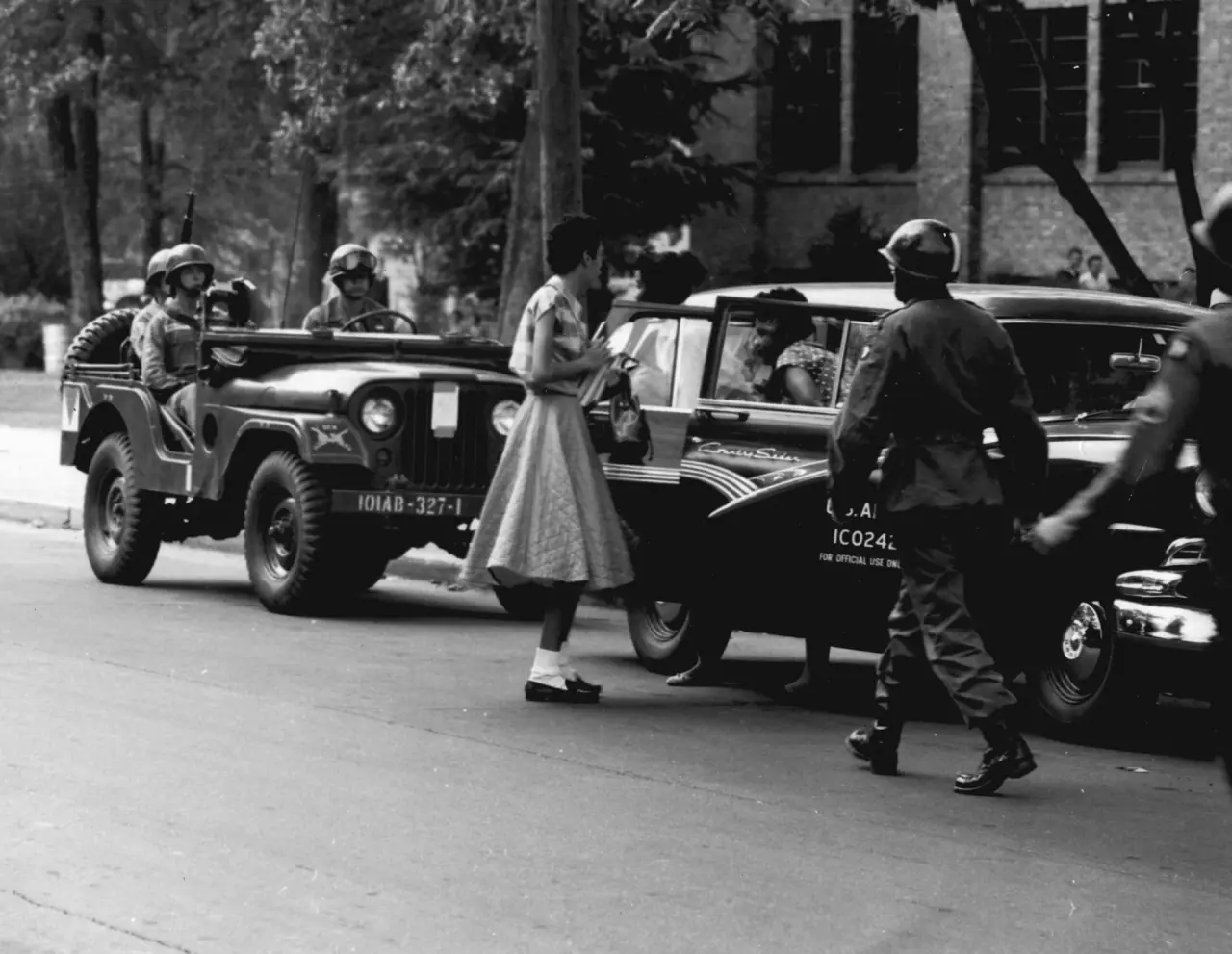
After Brown rejected segregation in public schools, local resistance exposed the difficulties of enforcement. Bus boycotts and sit-ins expanded direct action. In 1965 the voting-rights campaign in Selma met violent repression and drew national attention. This was an escalation within a long registration movement, not a television image that suddenly caused government and society to discover inequality.
Local organizations sustained boycotts, school campaigns and voter registration, while national groups, lawyers and media increased pressure. The 1963 March on Washington joined jobs with freedom. The 1964 Civil Rights Act created protections in public accommodations, employment and other areas. After Selma in 1965, the Voting Rights Act strengthened federal intervention. Local timetables differed, and legislation did not replace further litigation, enforcement and mobilization.
03 / CONTEXT & CONSEQUENCEPeople, institutions and alternatives
Women provided transportation, money and communications. Student organizations bore the risks of sit-ins and registration. Local leaders had worked long before national media arrived. King's and Johnson's roles depended on these networks and institutional opportunities, and they could disagree with other activists over strategy. Centering ordinary participants explains how the movement persisted amid violence and scarce resources; it does not diminish leaders' contributions.
Litigation, gradual local negotiation, nationwide direct action and electoral intervention had different supporters. Hindsight should not make one route the sole correct choice from the outset. Judgments without enforcement had demonstrated their limits; direct action also had to address participants' safety. Routes must be evaluated through local circumstances and aims. One legislative success does not render all earlier strategic disagreements meaningless.
04 / CONTEXT & CONSEQUENCEAfter the turning point
The 1964 act changed formal rules in public accommodations, employment and other areas. The 1965 act supplied stronger federal mechanisms against racial barriers to voting. Residents still needed administration, litigation and organizing to realize protections. Other economic and housing problems continued. Statutory rights and actual outcomes cannot be conflated, and passage of legislation does not establish that every demand of the movement was achieved.
Civil-rights laws and organizing experience became important resources for subsequent equality movements, while individuals and communities gained new opportunities to participate. Laws remained subject to interpretation and revision; the original 1965 text did not remain completely unchanged in every later period. Assessing historical impact requires distinguishing institutional breakthroughs from continuing inequality. Legislation was not equality's endpoint, but unresolved problems do not negate its concrete achievements.
How the event unfolded
A breakthrough through litigation
Brown rejected racial segregation in public schools. Local resistance made enforcement and safety priorities for further action. A judicial declaration did not immediately realize its terms nationwide.
A national agenda of jobs and freedom
The March on Washington paired jobs with freedom. The visibility of a national gathering depended on sustained local organizing, logistics and contributions by unnamed participants.
The Civil Rights Act
The Civil Rights Act provided federal tools for public accommodations, education, employment and other areas. Residents still needed administration and litigation to realize them. Legislation did not end questions of equality.
Selma and the Voting Rights Act
Selma's registration campaign and police violence helped bring about the Voting Rights Act. The original act established mechanisms of federal intervention and must be distinguished from later amendments and judicial changes.
Facts supported by evidence
- Brown rejected racial segregation in public schools in 1954. Enforcement continued to face local resistance.
- The Civil Rights Act was signed on July 2, 1964, establishing new federal protections in public accommodations, employment and other fields.
- Police used violence against Selma marchers in 1965. Local voter-registration action had preceded national media attention.
- The Voting Rights Act was signed on August 6, 1965, establishing federal intervention in specified jurisdictions and nationwide rules against racial discrimination. This describes the historical scope of the original act.
Major historical interpretations
- Major legislation arose from interactions among grassroots organization, litigation, nationwide mobilization and state institutions.
- The pairing of jobs and freedom shows that the movement sought more than formal equal treatment. It also concerned economic life and the capacity to decide local affairs.
Questions still discussed
- The relative roles of local and national organizations, media and federal support require comparison across places and phases.
- Voting, public accommodations, employment and wealth are different dimensions of equality. Passage of one law does not represent fulfillment of every demand.
Ella Baker
Grassroots organizer and advocate of participatory leadershipShe emphasized helping ordinary people develop their own organizations and judgments, connecting community resources with youth action. Leadership involved more than speaking at rallies: it included communication, training and sustaining the conditions for ongoing action. This perspective explains how the movement extended beyond the personal influence of a few national leaders.
Dolores Huerta
Farmworker organizer and voter mobilizerShe brought labor, family, gender and immigrant circumstances into organizing, helped establish a farmworkers' association and supported the Delano strike. Filipino workers' preceding action was an important starting point for this coalition. The movement should not be reduced to a wage dispute initiated by one ethnic group or one leader.
References and evidence
These materials support this page's account. Check the purpose, perspective and accessible scope of each source. Notes identify the evidential limits of excerpts, summaries and timelines.
- The Civil Rights Act (1964)U.S. National Archives · Primary source
Statutory protections in public accommodations, employment and other areas. Legislation must be distinguished from enforcement.
- The Voting Rights Act (1965)U.S. National Archives · Primary source
Federal enforcement mechanisms and statutory provisions. This account concerns historical enactment and does not assert that every provision remained unchanged in force through 2026.
- The Selma MarchesU.S. National Archives · Archive
Connections among the local voting-rights movement, police violence and federal legislation.
- Milestone Documents in American HistoryU.S. National Archives · Archive
A thematic navigation entry for locating materials. Specific dates and institutional conclusions are cross-checked against documents, collections and substantive entries listed in this chapter. A directory does not establish an account of an entire period.
- Brown v. Board of Education (1954)U.S. National Archives · Primary source
The institution that produced a source and the nature of its text must be distinguished from what it describes. A source link does not mean that every related archive has been made public.
- Women Organizers in the African American Civil-Rights MovementU.S. National Park Service · Specialist reference
The institution that produced a source and the nature of its text must be distinguished from what it describes. A source link does not mean that every related archive has been made public.