01 / CONTEXT & CONSEQUENCEBefore the event
Russia's railways, ports, and military presence in Northeast China conflicted with Japan's policy of treating Korea as a sphere of strategic interest, while great-power alliances and trade further changed both sides' calculations. The Anglo-Japanese Alliance improved Japan's diplomatic position, while Russia's Far Eastern policy involved Eurasian transport and imperial prestige. Korea and China had their own claims to sovereignty and were not merely map space for Russia and Japan to exchange with each other.
Railways, ports, bases, and trade rights were interconnected with ideas of strategic buffer zones, and the imperial government feared that concessions would damage its prestige. Long-distance transport, financial loans, and army and navy organization determined how long the war could continue, and industrial output did not automatically translate into frontline advantage. Both sides' measures to pursue security expanded control over third parties, and this unequal structure meant that compromises over spheres of influence could not guarantee local autonomy.
02 / CONTEXT & CONSEQUENCEHow change unfolded
Before the war the two sides negotiated over arrangements concerning Korea and Northeast China but failed to reach a mutually acceptable formula. In February 1904 Japan launched military attacks and subsequently declared war, turning a diplomatic dispute into land and naval war. The declaration date in the timeline and the initial attack must not be written as the same action; attributing the war to a single failed negotiation is also insufficient to explain why both sides believed force and occupation could achieve security.
The war began with military operations at Port Arthur and off the coast of Korea; Japanese forces besieged Port Arthur, fought a large-scale land battle at Mukden, and defeated the Russian relief fleet at the 1905 Battle of Tsushima. Casualties, logistics, and financial pressure made peace talks more attractive, and U.S. President Roosevelt promoted mediation. The treaty was signed on September 5, and military victory was converted into territorial and rights arrangements rather than being negotiated equally by all affected societies.
03 / CONTEXT & CONSEQUENCEPeople, institutions and alternatives
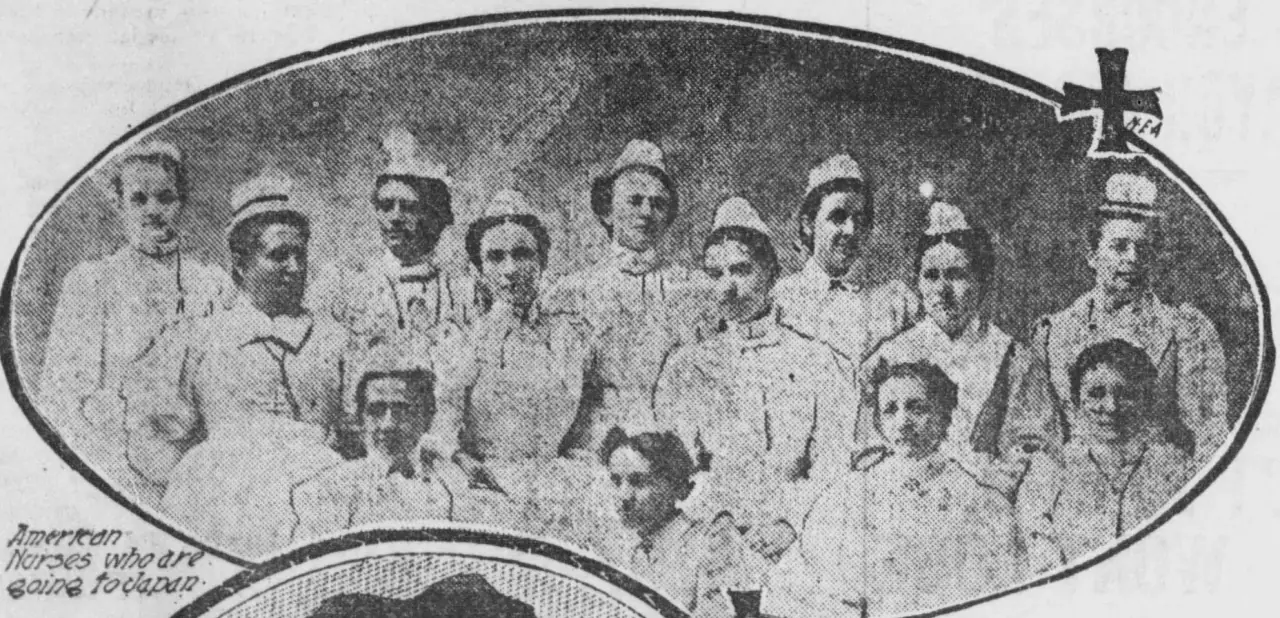
The government and military made decisions on attacks, sieges, and continuing the war, while diplomats and financial lending networks affected the sustainability of operations, and soldiers and medical personnel bore casualties and provided care. Chinese and Korean residents faced requisitions for transport, combat, and changes in political control. Newspapers portrayed the war as a national and racial contest, and historical accounts should recognize their propaganda role rather than adopting anthropomorphic cartoons to judge real people.
Before the war there had been discussion of a compromise mutually recognizing spheres of influence in Korea and Northeast China, and during the war there were also different moments and conditions for a ceasefire. Diplomatic possibilities must be assessed in light of the interests and political costs acceptable to both sides, and it cannot be asserted that all negotiations were a sham simply because war later broke out. Yet schemes among the great powers to avoid war could still sacrifice the sovereignty of Korea and China and should not automatically be regarded as a fair peace.
04 / CONTEXT & CONSEQUENCEAfter the turning point
The treaty confirmed Japan's dominant position in Korea, the transfer of some Russian leasehold and railway rights, and the cession of southern Sakhalin, but gave the Japanese public no indemnity of the kind they expected. Japan subsequently strengthened its control over Korea, and Russia's military defeat interacted with its internal crisis of rule. Domestic celebration, protest, and international reactions were not the same experience, and local societies at the front also had to endure changes in military and economic power after the war.
Japan's victory was symbolically inspiring to some anti-colonial thinkers, and international imaginations of racial and imperial hierarchy were thereby shaken; Japan itself, however, did not abandon colonial rule. The loss of power by Korea and external control over Northeast China mean that the war's legacy cannot be summarized simply as the rise of Asia. Studying its impact requires observing the diplomatic situation, fiscal and military systems, and local people's lives separately, and then explaining how they were connected.
How the event unfolded
February: attack and declaration of war
After diplomatic negotiations failed, Japan launched an attack and declared war on Russia on February 10; the dates of military action and legal declaration of war must be distinguished.
Siege of Port Arthur
The siege and trench warfare caused severe costs, and soldiers, medical personnel, and logistics cannot disappear from the picture of victory.
Land battle at Mukden
Large-scale land warfare took place in Northeast China, where third-party residents bore the effects of combat and military occupation of space.
Battle of Tsushima
The Russian fleet sent as reinforcements from afar was severely damaged, and Japan gained naval superiority, but both sides still had to face the ongoing costs of war.
September: Treaty of Portsmouth
US mediation produced arrangements over rights and territory; Japan received no indemnity, and the treaty also did not give Korea and China equal standing to decide.
Protests and colonial control after the treaty
In Japan there was dissatisfaction with the treaty terms, while Korea faced deepening protectorate rule; the two kinds of discontent must not be conflated into a single national experience.
Facts supported by evidence
- The Russo-Japanese War took place in 1904–1905, and the fighting involved Korea, Northeast China, and adjacent waters.
- The siege of Port Arthur, the land battle at Mukden, and the Battle of Tsushima were important military phases, while logistics, casualties, and loans simultaneously affected the ability to continue the war.
- The Treaty of Portsmouth was signed on September 5, 1905; Japan obtained some Russian rights and southern Sakhalin but did not receive a war indemnity.
- Japan's control over Korea continued to deepen after the treaty; the 1905 protectorate arrangement and the 1910 annexation were different but connected stages.
Major historical interpretations
- Victory and defeat were the result of interaction among military organization, industry, finance, transport, and diplomatic conditions, and national will or a single battle is insufficient to explain the entire course.
- The symbolic significance of defeating a European great power and the fact that Japan strengthened colonial expansion can exist at the same time, and the impact should be judged according to specific societies rather than an abstract "Asia."
Questions still discussed
- The causal weight of the 1905 Russian Revolution relative to the war defeat must be analyzed together with pre-existing conflicts among workers, peasants, and political opposition forces, and the revolution cannot be described solely as a result of defeat.
- The degree to which the war inspired anti-colonial activists in various places differed according to intellectual networks and circumstances; it cannot be inferred from a few words of praise that all Asians supported the Japanese Empire.
Korean residents under Japanese colonial rule
The ruled, independence activists, and those who bore daily lifeThe protectorate arrangement and the 1910 annexation deprived Korea of sovereignty, and residents experienced unequal treatment under police, education, and economic systems while also seeking independence through organizations, demonstrations, and overseas connections. The March First Movement archives present anti-colonial voices but do not cover every village or political position. The fact that the colonial government built schools, railways, and so on cannot be explained as equal cooperation apart from the purposes of control and the deprivation of rights.
Civilians in East Asian war zones
Residents in occupation, displacement, resistance, and rescueResidents of war zones in Korea, Northeast China, and Nanjing faced military occupation, killing, displacement, and loss of livelihood at different stages, and also took part in rescue, mutual aid, and resistance. Peace treaties between states or battle maps cannot replace their experiences. The letter from the Nanjing Safety Zone to the Japanese side shows negotiations to protect civilians and soldiers who had laid down their weapons; when materials were formed by foreigners present, it is all the more necessary to preserve the boundary that Chinese residents' voices are not yet fully represented.
References and evidence
These materials support this page's account. Check the purpose, perspective and accessible scope of each source. Notes identify the evidential limits of excerpts, summaries and timelines.
- Treaty of Portsmouth and the Russo-Japanese WarOffice of the Historian, U.S. Department of State · Specialist reference
American mediation perspective; the series has stopped updating and is suitable for checking diplomatic facts from 1904 to 1905.
- Chronology of modern Japanese archivesNational Diet Library of Japan · Archive
Checked political nodes from 1853 to the postwar period and can link to individual archival items. Lunar and Gregorian dates are listed together; this draft uses Gregorian years.
- Japan: A Country Study (1992 edition), Historical Background chapterFederal Research Division, Library of Congress; edited by Ronald E. Dolan and Robert L. Worden · Specialist reference
Actually read the relevant passages of the 1992 edition's historical chapter: PDF pages 49–62, 64–80, and 81–110, and sampled the social environment section on PDF pages 129–132; the research mainly runs through 1990. The book's old Yayoi dating, some ethnic classifications, and several dates are clearly outdated or erroneous; errors such as the atomic bomb in 1941/August 8 and Kwantung Army losses of 80,000 were not adopted; precise dates and causation were checked against updated archaeology, NDL, and institutional materials. Makes no claim to have read all 670 pages or to treat old statistics as 2024 current conditions.
- Signing and promulgation of the 1910 Japan–Korea Annexation TreatyNational Archives of Japan · Primary source
Read the museum description of the treaty and distinguish the signing on August 22 from its promulgation and entry into force on the 29th; the colonial power's wording of sovereignty transfer is an official claim and does not prove the consent of the Korean people or rule out coercion.