01 / CONTEXT & CONSEQUENCEBefore the event
The 1939 treaty divided spheres of influence, yet Nazi war aims against the USSR always included ideological and racial conquest. Soviet-German cooperation and expansion arrangements did not mean the two sides shared long-term goals; Nazi racial and resource plans for the Soviet Union continued to exist. Purges, military reorganization, and strategic judgment affected Soviet military preparation, while industrial expansion provided the basis for later conversion to war production. Treating any single factor as the whole cause omits other verifiable conditions.
Living space, racial policy, continental hegemony, and resource goals determined the nature of the war; the aggression cannot be explained as an accidental miscalculation equally shared by both sides. Plans to seize agricultural, industrial, and settlement space bound the war economy tightly to racial policy. The extermination of Jews and the large-scale sacrifice of Soviet prisoners of war and civilian lives were not merely temporary loss of control at the front. When explaining the background of the European order, resources, and leadership decisions, this well-documented nature of the war must be preserved.
02 / CONTEXT & CONSEQUENCEHow change unfolded
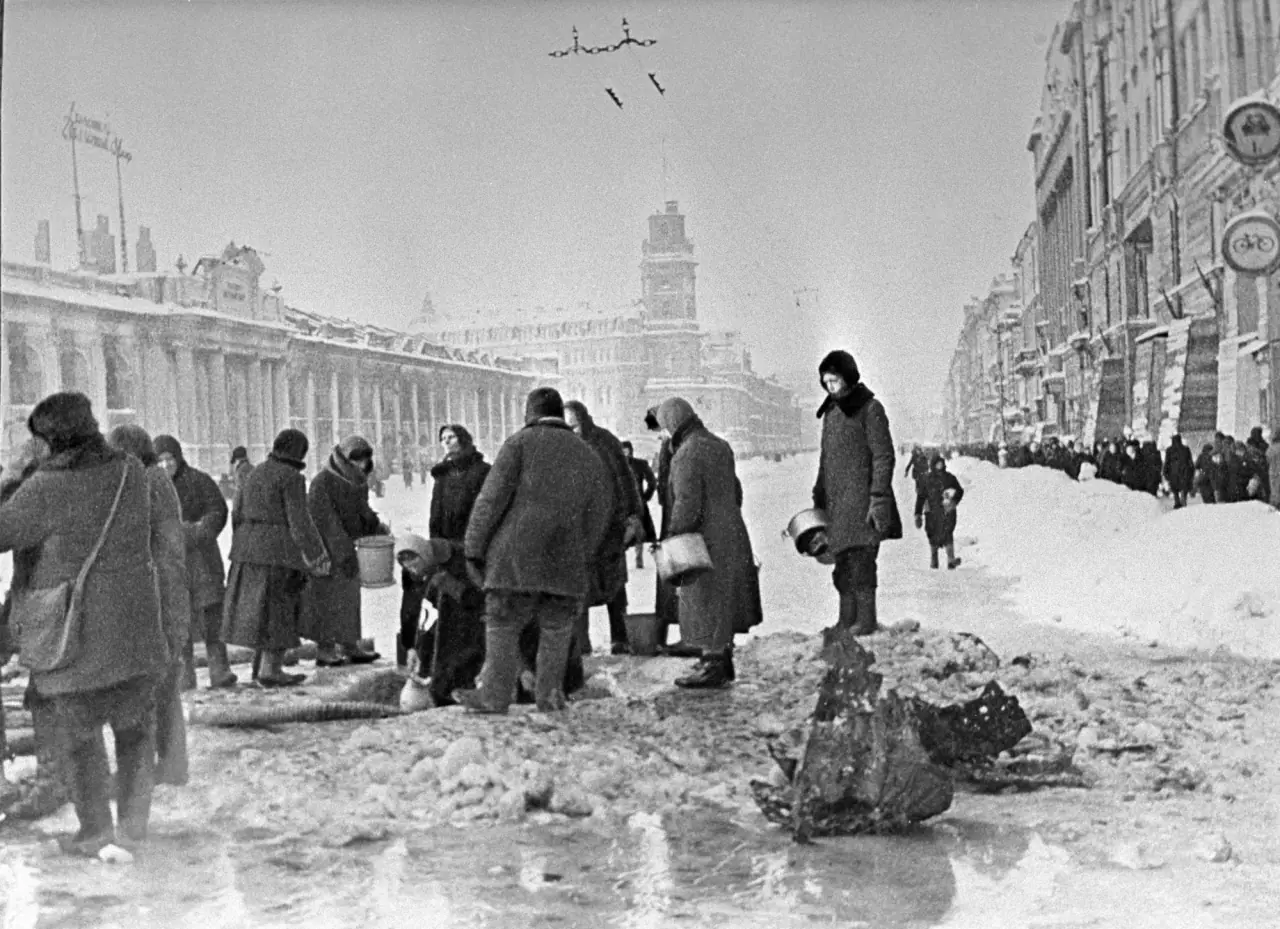
On June 22, 1941, Germany and its allied forces launched the attack. Once military operations began, encirclement, occupation, and evacuation crises quickly took shape, and the existing borders and diplomatic commitments could not protect residents. The direct attackers, the allied forces taking part, and the invaded country must be clearly distinguished. Later research on prewar security failures must not be turned around to diffuse responsibility for launching the aggression into an abstract shared tension.
After the initial disastrous defeats, the Soviet Union maintained its state and industry; Moscow and Stalingrad and other battles changed the course of the war; the Allies' multi-front operations drained the Axis; and the Red Army eventually entered Berlin. Changes in the war situation depended on many battles and rear-area adjustments; Moscow or Stalingrad alone cannot be treated as the sole decisive point of the entire war. Factories, transport, and the relocation of personnel required sustained organization, and Allied coordination also had disagreements. After victory in Europe, the Soviet Union still fought against Japan, and demobilization and reconstruction then opened another difficult period; a battlefield ceasefire did not mean everything was over.
03 / CONTEXT & CONSEQUENCEPeople, institutions and alternatives
The high command made decisions, while soldiers, medical personnel, workers, partisans, and residents of occupied areas each had agency, and many came from republics other than Russia. The Soviet military included soldiers from multiple republics, and women, medical personnel, and railway and industrial workers in the rear sustained its operations. Residents of occupied areas faced flight, hiding, resistance, and extreme coercion, and hindsight must not be used to label everyone simplistically. Leadership decisions must be linked to these actual actions and constraints in order to assess contributions and responsibility.
Deployment, rescue, retreat, and civilian policy involved concrete choices; cruel measures cannot all be described as necessary, nor can an easy victory plan be invented. The evidence and available resources for a given deployment, evacuation, or civilian policy should be examined, acknowledging that different options and insufficient information existed at the time. Counterfactuals must not use later-known German plans to assume the Soviet side knew everything everywhere, nor may harsh collective punishment be described as necessary for victory. Responsibility to protect prisoners and civilians still exists.
04 / CONTEXT & CONSEQUENCEAfter the turning point
Catastrophic losses coexisted with great-power status; the Soviet Union expanded control in Eastern Europe, and refugees and deported communities bore long-term consequences. Cities, agriculture, and families suffered long-term destruction; disabled veterans, orphans, refugees, and returning prisoners needed resettlement, and some faced political suspicion. The Soviet Union's position in Eastern Europe expanded, and Allied disagreements over postwar arrangements deepened. The experiences of survival, liberation, and renewed control among different groups cannot all be represented by a single map of victory.
Commemoration should accommodate multi-ethnic contributions and different experiences of victimization; the state narrative cannot replace a full social history. State commemoration, family stories, and survivor testimony together shape war memory, yet Jews, deported peoples, and other victims did not receive equal space for expression in different eras. Acknowledging the Red Army's key contribution to defeating the Nazis does not require ignoring the state's own violence. Full memory also needs to preserve the roles of the Allies and the non-Russian republics.
How the event unfolded
Invasion and occupation violence
The offensive brought massacres, prisoner deaths, and sieges.
The battle of Stalingrad
The city and transport lines became the battlefield.
Coordination and counteroffensive
Allied cooperation drove strategic change.
Forced deportation
Some ethnic groups were relocated on charges of collective disloyalty.
Victory and reconstruction
The end of the war brought enormous resettlement and reconstruction tasks.
Facts supported by evidence
- On June 22, 1941, the Axis powers invaded the Soviet Union.
- Occupation policy included massacres of Jews, the killing of prisoners of war, and starvation and forced labor targeting civilians.
- Germany surrendered in 1945, and in August the Soviet Union went to war against Japan.
Major historical interpretations
- Industrial relocation, military learning, social resistance, and Allied aid together explain the war's resilience.
Questions still discussed
- Casualty definitions, command, and memory remain debatable, but the facts of aggression and genocide have ample evidence.
Joseph Stalin
Principal leader of the Soviet party and stateLed collectivization, industrialization, and large-scale repression, and commanded the state in wartime. State achievements cannot erase responsibility for policy disasters and violence.
Georgy Zhukov
Soviet military commander, MarshalParticipated in key operations including Moscow and Berlin; his contribution must be understood within the context of other commanders, soldiers, rear-area laborers, and Allied cooperation.
References and evidence
These materials support this page's account. Check the purpose, perspective and accessible scope of each source. Notes identify the evidential limits of excerpts, summaries and timelines.
- June 1941: Nazi Germany invades the Soviet UnionUnited States Holocaust Memorial Museum · Museum research
Read the full text and check the invasion date, the war of extermination's objectives, and the experiences of Jews, prisoners of war, and civilians.
- Revealing the Russian Archives: The Soviet Union and the United StatesLibrary of Congress · Archive
Check documents on aid, alliance, the Cold War, and nuclear crises; do not use old statistical ratios that have not been independently reviewed.
- Revealing the Russian Archives: Inside the Soviet UnionLibrary of Congress exhibition in cooperation with Russian archives · Archive
Provides documents and translations on grain requisition, repression, censorship, deportation, and reform; the 1992 general introduction's period stance must be read against other research.
- Soviet territorial annexations, 1939–1940Seventeen Moments in Soviet History, a university history-source teaching project · Academic research
Read the feature and check the secret protocol, entry into Poland, the Winter War, and the annexation of the Baltic states.
- The double burden: wage labor and houseworkSeventeen Moments in Soviet History, a university history-source teaching project · Academic research
The feature discusses the gap between employment, housework, and the promise of socialist gender equality.