The Eighteenth Century: The Price of Reunification
Why do military victories not necessarily build a stable state?
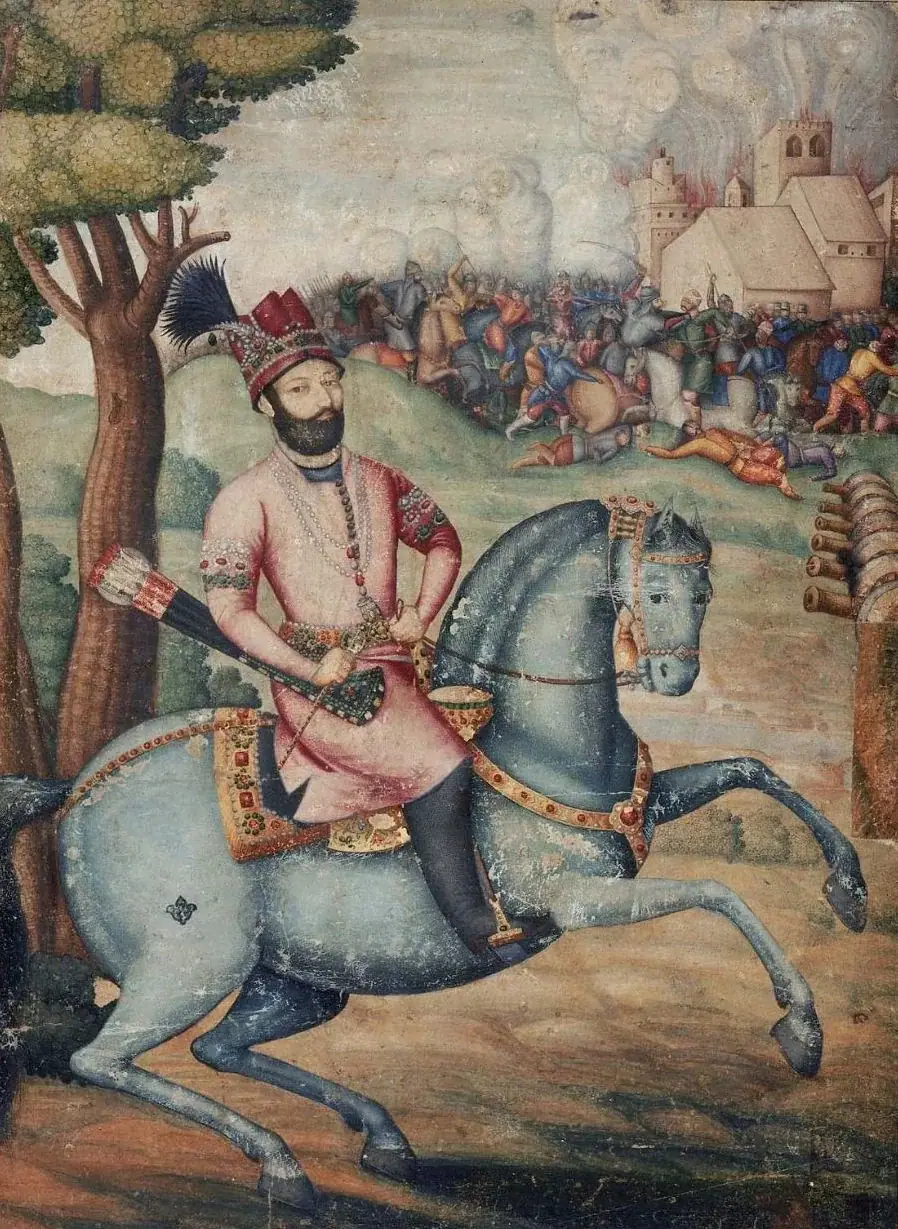
Wealth brought back by armies can adorn a court, but it may also come from everything the residents of another city have lost. After the Safavid collapse, Nader reasserted control over many regions through continuous warfare, took the throne directly in 1736, and in 1739 campaigned to Delhi and seized enormous plunder. Military spending, taxation, and ever-expanding military commitments made rule difficult to stabilize, and after his assassination in 1747 various regions contended again. Karim Khan cultivated the city, trade, and local alliances in Shiraz, forming a different political practice. The eighteenth century was not a blank leading to the Qajar dynasty: residents had to maintain fields, markets, and households amid repeated mobilization, and later images of the benevolent ruler and the conqueror each show only one side of it.
01 / 1722–1796How this era began
The siege of 1722 and the dynasty's breakdown drew many regions into contention, while Afghan forces, the Ottomans, and the Russians also expanded their influence in their respective directions. The Safavid name could still be used to rally followers, but local military chiefs held more actual resources. The fall of the capital did not create an uninhabited political space; residents and local elites continued to seek partners who could protect production or change their status.
Why did this era begin?
Nader first defeated his rivals in the name of restoring Safavid rule, then established his own kingship in 1736. His armies regained territory and campaigned in India; military victories expanded his prestige and resources and also made continuous warfare a key pillar of the regime. The new dynasty's legitimacy also required religious and diplomatic arrangements; a coronation or a batch of loot cannot prove that a stable shared identity had formed across all regions.
02 / 1722–1796Who held power
Nader organized control through command, troops, and local submission, but conquest did not automatically translate into sustainable civilian governance. Religious policy and succession arrangements also served his political goals. After his death, soldiers and tribal chiefs competed again; Karim Khan preferred the title of agent of the subjects and ruled in Shiraz through the city and local alliances, yet still needed military strength and cannot simply be equated with a modern elected representative.
What tensions existed within the era?
Armies demanded pay, local residents bore taxation, and distrust existed between commanders and successors. Nader's harsh measures in his later years further eroded support, but explaining everything by his personal cruelty is insufficient; years of war and the organization of resources were equally important. Zand rule was also constrained by family rivalry and regional forces, and the memory of milder rule does not mean political conflict had ended.
03 / 1722–1796How society worked
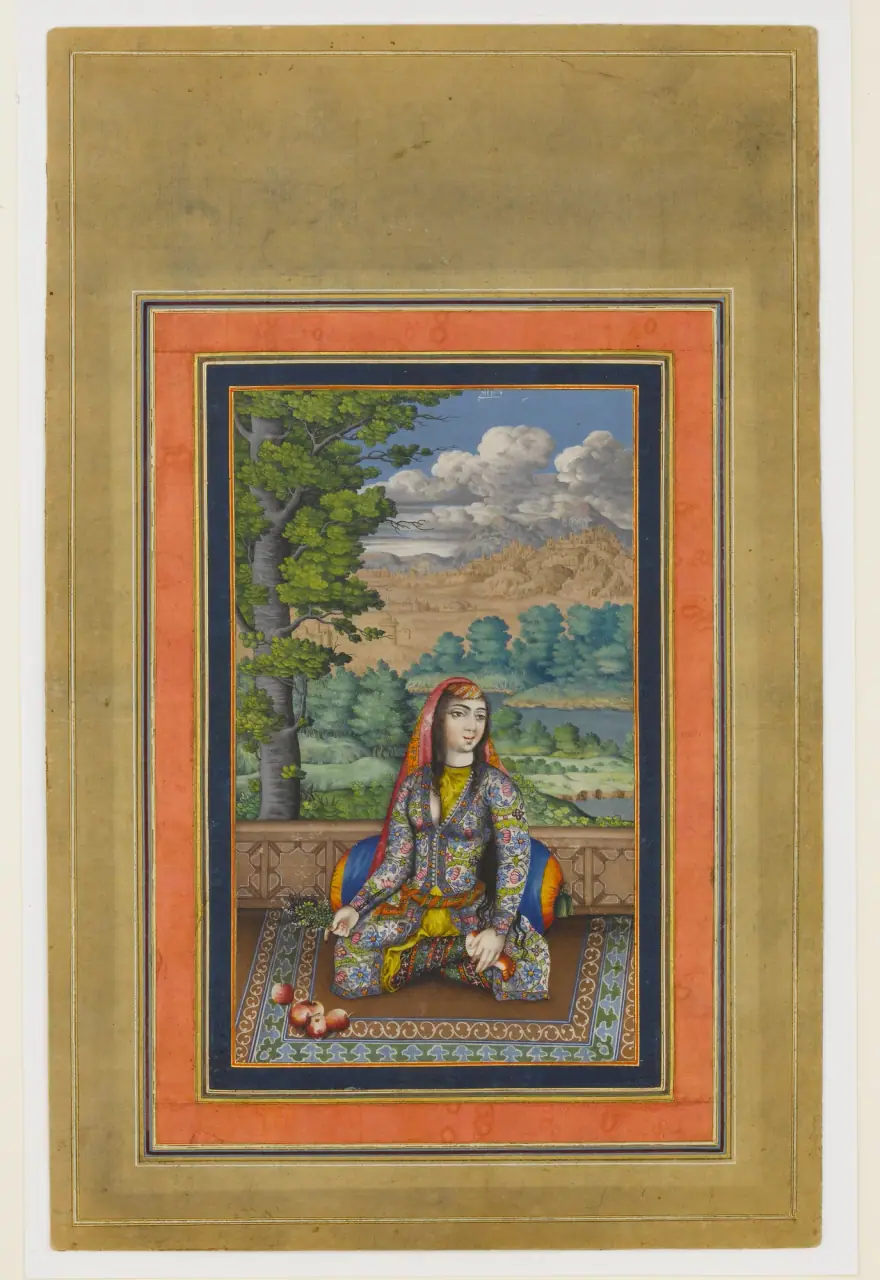
Campaign plunder brought great wealth for a time, but continuous war and taxation also consumed population, livestock, and production. For peasants and merchants, whether taxes were stable and roads passable mattered more directly than the treasures stored by the court. During the Zand period, Shiraz's markets and buildings were cultivated in an effort to restore exchange, but recovery varied by region; the prosperity of one city cannot be taken as proof that the entire plateau had emerged from a long crisis.
How did ordinary people live?
Conscription, transport, flight, and changes in harvests entered family life; city residents might supply the army or be plundered when control changed hands. The victims of the Delhi campaign belong to this cross-regional history, not to the background of a victory narrative. The markets and public works of Shiraz left a more visible legacy, but the pay, care, and losses of ordinary laborers still need to be cautiously recovered from limited sources.
04 / 1722–1796Where change began
After Nader's assassination in 1747, his controlled territories quickly fragmented, and the relative stability Karim Khan achieved was again shaken by succession struggles after his death in 1779. The Qajars gradually prevailed over the Zands and other rivals; Lotf Ali Khan was defeated and killed in 1794, and Agha Mohammad Khan was crowned in 1796. The new dynasty's formation involved war and repression and cannot be written as a natural succession peacefully accepted nationwide at a single moment.
Milestones that changed direction
The Safavids lose their capital
Afghan forces took Isfahan, the dynasty's governing space fragmented, and other regional forces and neighboring states acted on their own. The fall of the capital did not mean residents lost all organization and political choice.
Nader defeats Afghan forces
Nader defeated his main Afghan rivals and sought legitimacy by invoking the restoration of the Safavid name. Military victory expanded his actual power and also made the relationship between the nominal monarch and the commander more unstable.
Nader takes the throne
Nader no longer ruled only through a Safavid heir and took the throne directly in 1736. The coronation confirmed his political position but could not automatically resolve local obedience, religious legitimacy, and the problem of continuous military spending.
Campaign in India
Nader invaded Delhi, seized enormous plunder, and brought disaster to local residents. Figures for the loot and estimates of deaths need independent verification; this campaign cannot be viewed only through the Iranian royal collections.
The ruler is assassinated
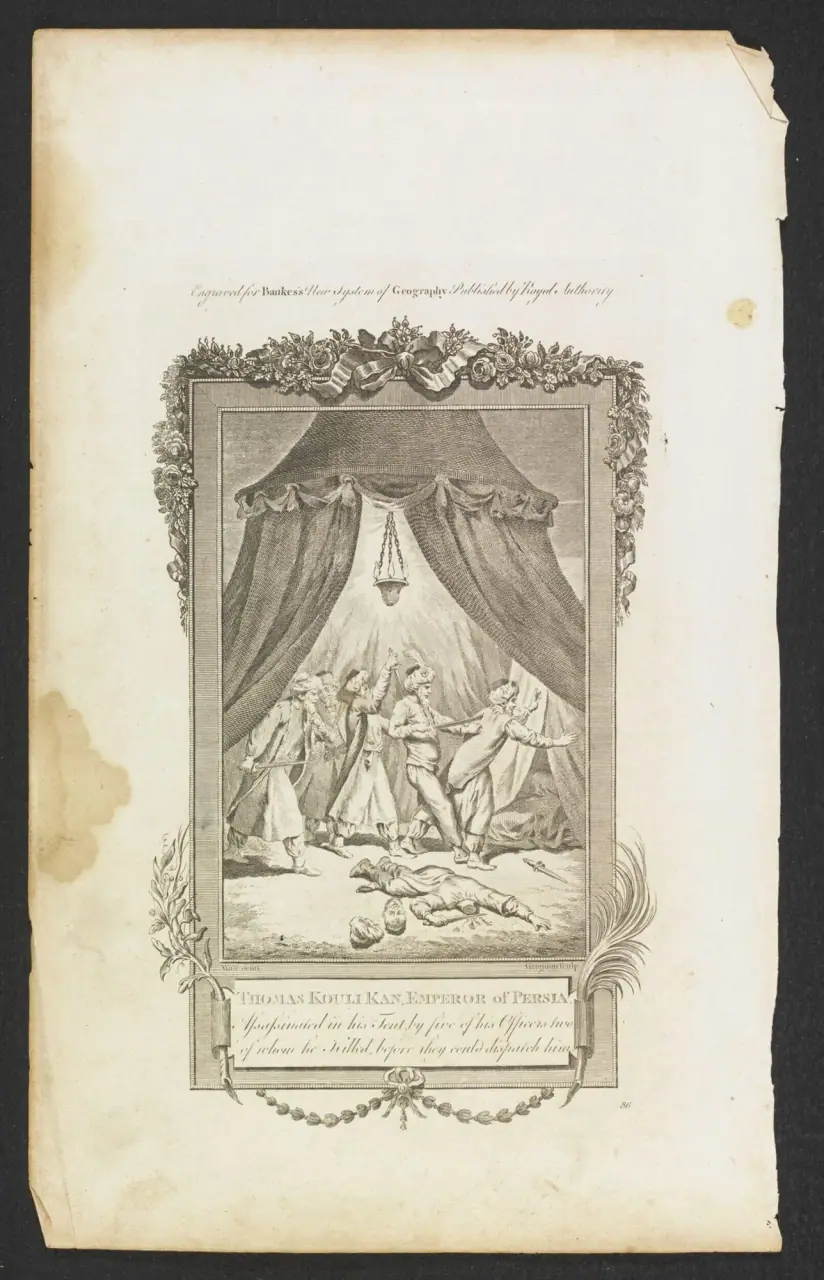
Nader was killed by his subordinates, and his controlled territories quickly split. The ruler's personal harshness interacted with military spending, taxation, and crises of local support; the assassination should not be written as a moral ending that needs no institutional explanation.
Shiraz becomes a center
Karim Khan made Shiraz an important center, cultivating markets, public buildings, and local alliances. The city's recovery offers another experience of rule but does not prove that all regions were equally stable and prosperous.
The late Zand period
Lotf Ali Khan was defeated and killed, and the Qajars gained the main competitive advantage. The Zand decline involved war and repression; the rise of the new dynasty cannot be written as a calm, voluntary handover completed everywhere.
The new dynasty takes the throne
Agha Mohammad Khan was formally crowned, and the framework of the Qajar dynasty took further shape. The coronation is an observation point; military-political consolidation and local negotiation still spanned many years before and after it.
What we know
Chronicles, diplomatic materials, coins, architecture, and artworks preserve clues about military and political affairs and patronage, but court authors often emphasized victories and the virtues of rulers. Figures for the treasure plundered at Delhi and for war deaths vary widely among accounts, so unverified totals are not used. Later portraits of Nader also cannot pass as wartime scenes; the date of production, the person depicted, and the narrative stance must be kept separate.
Questions still debated
Whether Nader's military achievements could form a stable state, and how prosperous the Zand period really was, depends on the region and the indicator observed. Restoring territory, increasing royal revenue, and improving residents' lives are not the same outcome. Calling the eighteenth century purely disorderly overlooks local recovery, while writing it as heroic unification erases the victims of war; both claims need to be tested against specific institutions and household burdens.
Legacies for later generations
Nader became both a symbol of restored military strength and a memory of taxation, campaigns, and violence; assessments in India and neighboring regions especially cannot be omitted. Karim Khan and the buildings of Shiraz, by contrast, are associated with an ideal of milder rule. Both images involved later selection of materials; understanding them helps distinguish the concrete practices of historical regimes from the political models modern people hope to draw from the past.
References and evidence
These materials support this page's account. Check the purpose, perspective and accessible scope of each source. Notes identify the evidential limits of excerpts, summaries and timelines.
- SAFAVID DYNASTYEncyclopaedia Iranica / Rudi Matthee · Academic research
State founding and long-term Shi'ization; not equivalent to a modern nation-state.
- NĀDER SHAHEncyclopaedia Iranica · Academic research
Military reconstruction, Indian campaigns, and the collapse of the regime.
- ZAND DYNASTYEncyclopaedia Iranica / John R. Perry · Academic research
Tribes, urban alliances, and succession crises.
- Iran: A Country Study, fifth edition (2008)Library of Congress, Federal Research Division; Glenn E. Curtis and Eric Hooglund, eds. · Academic research
The official LOC full-text OCR was obtained, and body paragraphs on history, women, education, and government politics were read; this was not merely reading the table of contents or a summary, nor is any claim made of having read all 416 scans. The study has limitations of period and national-studies framework; errors in the history chapter such as Chaldiran 1524 and Gulistan 1812 are not carried over, and 1514 and 1813 are adopted respectively per specialized research; the internal discrepancy in the history and education chapters over Tehran University 1935/1934 is likewise not copied directly.
At the end, bring this chapter to a close.