Constitutionalism: who can restrain royal power?
How did a constitution change power, and why could it not automatically deliver equality?
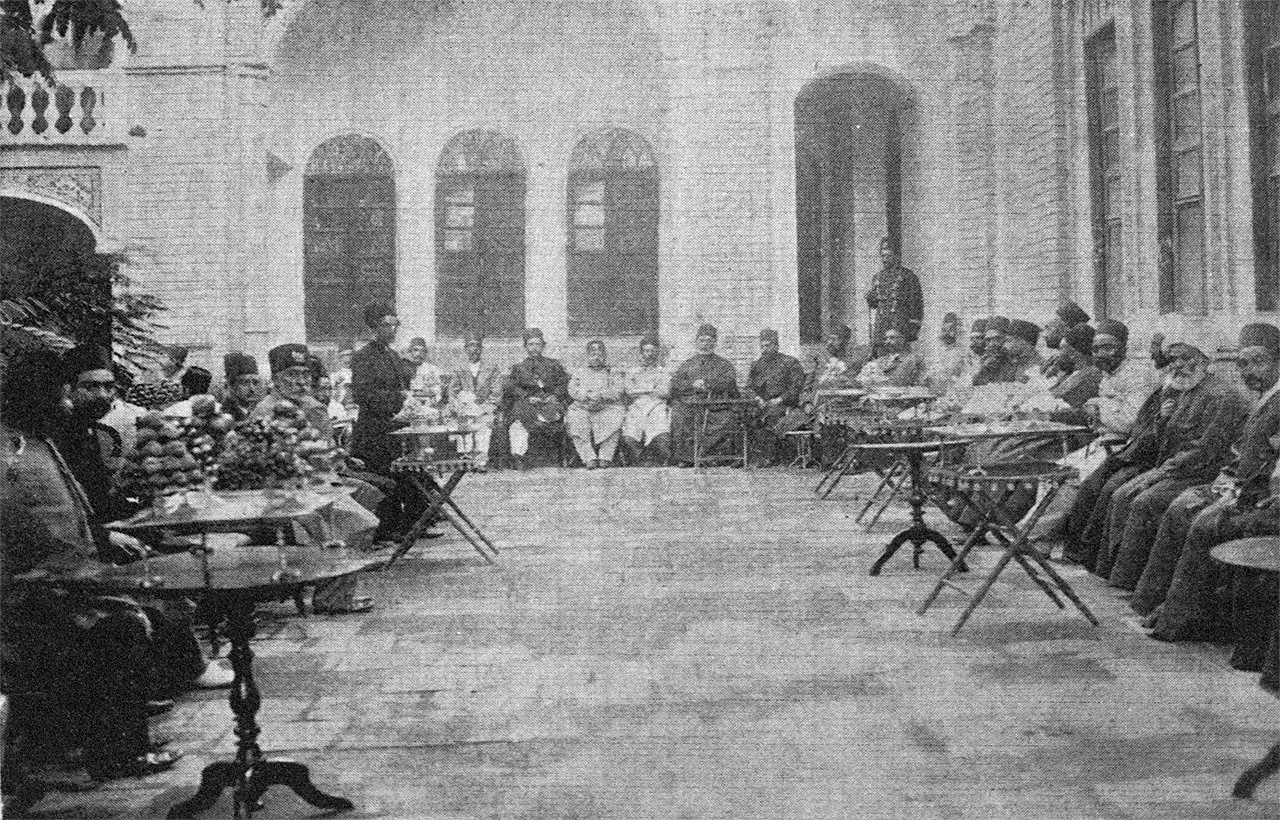
Punishments of merchants, prices, and judicial injustice gradually became the question of who could restrain royal power. After 1905, the constitutional movement brought together clerics, merchants, intellectuals, local councils, armed forces, and many people without the right to vote, and parliament and law turned public demands into new institutions. The 1906 Fundamental Law and the 1907 Supplementary Law defined powers and rights while retaining clerical oversight and eligibility restrictions. The bombardment of parliament, local resistance, Russian-British intervention, and fiscal crisis repeatedly interrupted the institutions, and women's participation did not mean they had gained equal political status. Reza Khan's military rise eventually remade the dynasty, but the questions and public language left by constitutionalism did not disappear with it.
01 / 1905–1925How this era began
Discontent over court borrowing, concessions, and governance by local officials had built up for years, while newspapers, translation, and cross-border contacts spread different visions of reform. When people demanded impartial institutions, they did not necessarily already share the same concepts of parliament and sovereignty. Religious networks, market closures, and sanctuary petitions provided ways to organize, so that specific conflicts in daily life could gradually connect into a larger issue of limiting arbitrary rule.
Why did this era begin?
In 1906 the shah agreed to establish a parliament; the first parliament convened and took part in drafting the Fundamental Law, and the 1907 Supplementary Law further defined powers and rights. The texts turned public demands into contestable rules, but implementation still depended on finance, force, and political cooperation. A revolution is not an event completed by promulgating laws; local councils and street action continued to shape institutions and could also diverge from politics in the capital.
02 / 1905–1925Who held power
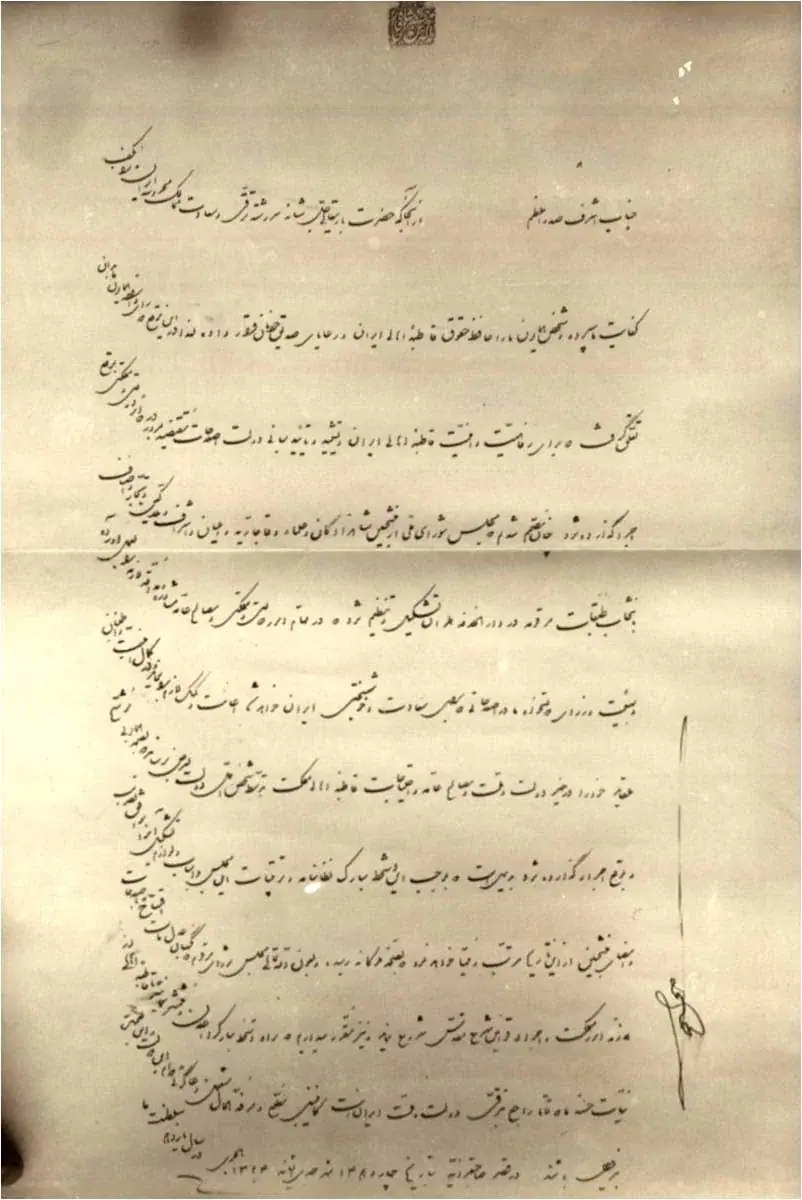
A new arrangement of power took shape among the parliament, the cabinet, the monarchy, and clerical oversight, yet eligibility to vote retained property, gender, and other exclusions. The scholar-oversight clauses in the Supplementary Law show how rule of law, popular will, and religious authority were placed within a single system. The powers recognized by law differed from the resources actually available; the royal army and foreign backers could still directly determine whether the parliament could meet.
What tensions existed within the era?
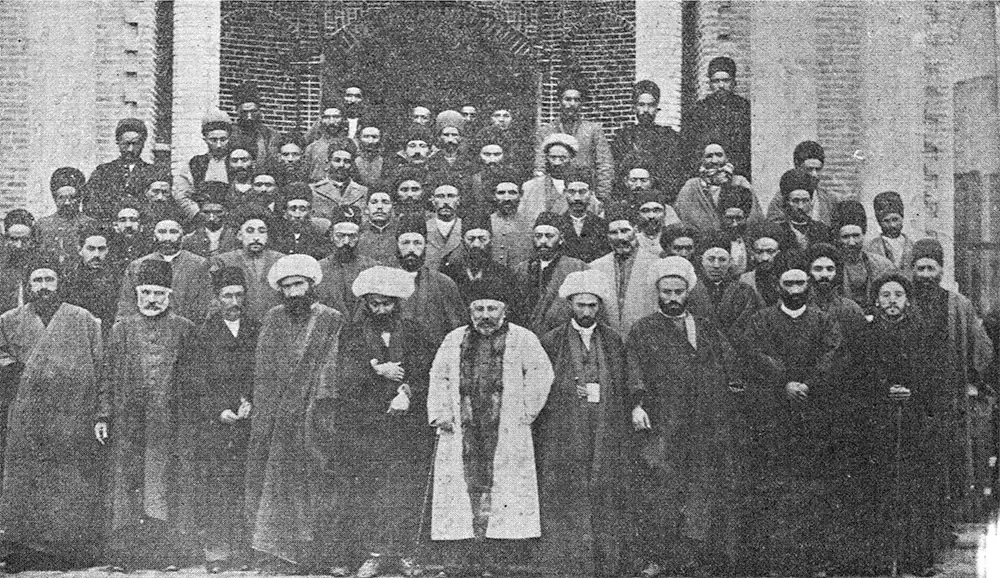
Within the constitutional camp there were disagreements over religion, royal power, the pace of reform, and local interests, and opponents too were not driven by a single motive. The 1907 Anglo-Russian demarcation of spheres of influence and the 1908 shelling of the parliament by royal forces show that external powers and domestic force could together weaken the new order. A spheres-of-influence agreement was not a formal annexation of the whole country, but its pressure genuinely constrained Iran's political and financial autonomy.
03 / 1905–1925How society worked
The constitutionalists hoped to oversee finances, loans, and concessions, but tax collection and debt repayment had to be carried out amid political turmoil. Merchants both supported limits on arbitrary court action and cared about roads, exchange rates, trade, and public security. Hiring financial experts could bring expertise, yet it still disturbed local powers under foreign protection; without tax sources and enforceable collection, paper oversight of the budget could hardly turn automatically into stable public services.
How did ordinary people live?
Newspapers, associations, fundraising, and local councils brought more people into public discussion, and women too founded schools, wrote, and organized support. Their participation in the movement did not mean they had obtained the vote, still less that a few urban schools amounted to equal opportunity nationwide. Closures, sieges, and fighting likewise affected families' food and safety; the constitutional movement is a history of legal texts and also a history of residents who paid with labor and risk for political change.
04 / 1905–1925Where change began
In 1909 the constitutional forces returned to Tehran and deposed the shah, yet the restoration of institutions remained constrained by finances and foreign intervention. The Russian ultimatum of 1911 and the closure of the parliament again interrupted politics, and the World War turned officially neutral Iran into a battlefield. Reza Khan's rise in 1921 and the transfer of the throne in 1925 were processes of the army and civil officials re-centralizing power, and should not be written as the complete failure of constitutional ideas from then on.
Milestones that changed direction
Protests converge
Protests over prices, punishments of merchants, and judicial injustice converged, with market and religious networks providing organization. Demands for a house of justice gradually turned toward limiting royal power, and participants did not all initially hold the same constitutional blueprint.
Parliament and the Fundamental Law
The first parliament convened, and the Fundamental Law was signed at the end of the year, turning public demands into a contestable institution. Legal establishment differs from implementation; taxation, military force, and eligibility restrictions still affected actual participation.
Supplementary Law
The Supplementary Law set out rights and the division of powers, and also arranged oversight by clerical scholars. Rule of law, popular will, and religious authority all entered the system at once, while women and other groups remained excluded from equal electoral eligibility.
Shelling of the parliament
The monarchy used Cossack forces, with Russian officers taking part in command, to shell the parliament, and political conflict became armed. The parliament's legal status could not by itself withstand military force and external support.
Constitutional forces return to Tehran
Constitutional forces from the provinces entered Tehran, restored the constitutional order, and deposed the shah. Victory did not automatically resolve finances, local interests, and foreign intervention, and disagreements within the coalition continued.
Dissolution of the second parliament
The Russian ultimatum and domestic pressure led to the dissolution of the second parliament, and the dispute over financial experts and tax collection exposed limits on sovereignty. Politics was interrupted again, but that does not mean all the experience of associations, schooling, and newspapers disappeared.
Rise of military force
Military action began Reza Khan's rise from commander to the core of the state, and demands for order and reform were reorganized. The fact that he later became monarch does not mean there were no other institutional choices at the time.
Pahlavi replaces Qajar
The constitution and the arrangement of the throne were amended, and the Pahlavi replaced the Qajar. The change of dynasty strengthened military and civil centralization, while the language of constitutionalism and unresolved rights questions continued to affect politics.
What we know
The original legal text is best suited to confirming clauses and cannot by itself prove actual implementation. Newspapers, petitions, memoirs, and local records can supplement participants' demands, but each carries its own camp and retrospective selection. On women's organizations and local armed forces, one should seek their own activity materials as far as possible, so that the capital elite does not speak for all of society; the same term may not point to the same political program among different participants.
Questions still debated
Whether this revolution was national sovereignty, rule of law, religious reform, or social conflict depends on the level the researcher chooses, and these are not mutually exclusive. Failure or success should also be distinguished across institutions, participation, and lived outcomes. One cannot classify all clerics as anti-constitutionalists, nor treat foreign ideas as the sole driving force; local organization, translated dissemination, and concrete economic pressures together shaped the movement's multiple paths.
Legacies for later generations
Parliament, constitution, press, and civil rights became a political language repeatedly invoked by later generations, and different camps would give them different meanings. Women's schools and public writing also left effects beyond the formal electoral system. The movement failed to establish a stable democracy, but that cannot be used to deny all institutional and organizational change; conversely, celebrating the beginning of rule of law cannot erase those excluded or the residents devastated by war.
References and evidence
These materials support this page's account. Check the purpose, perspective and accessible scope of each source. Notes identify the evidential limits of excerpts, summaries and timelines.
- CONSTITUTIONAL REVOLUTION i. Intellectual backgroundEncyclopaedia Iranica · Academic research
Political thought and factional divisions in 1905–1911.
- CONSTITUTIONAL REVOLUTION iii. The ConstitutionEncyclopaedia Iranica · Academic research
The 1906 constitution, the 1907 supplementary law, and later amendments.
- FEMINIST MOVEMENTS i. INTRODUCTION, ii. IN THE LATE QAJAR PERIODEncyclopaedia Iranica / Janet Afary · Academic research
Women's participation, education, and political exclusion.
- ADMINISTRATION in Iran vii. Pahlavi periodEncyclopaedia Iranica · Academic research
Bureaucracy, the military, and centralization.
- Iran: A Country Study, fifth edition (2008)Library of Congress, Federal Research Division; Glenn E. Curtis and Eric Hooglund, eds. · Academic research
The official LOC full-text OCR was obtained, and body paragraphs on history, women, education, and government politics were read; this was not merely reading the table of contents or a summary, nor is any claim made of having read all 416 scans. The study has limitations of period and national-studies framework; errors in the history chapter such as Chaldiran 1524 and Gulistan 1812 are not carried over, and 1514 and 1813 are adopted respectively per specialized research; the internal discrepancy in the history and education chapters over Tehran University 1935/1934 is likewise not copied directly.
At the end, bring this chapter to a close.