Elam: Between the Highland and the Plain
Before 'Persia' became the name of an empire, who linked the Iranian Plateau and Mesopotamia?
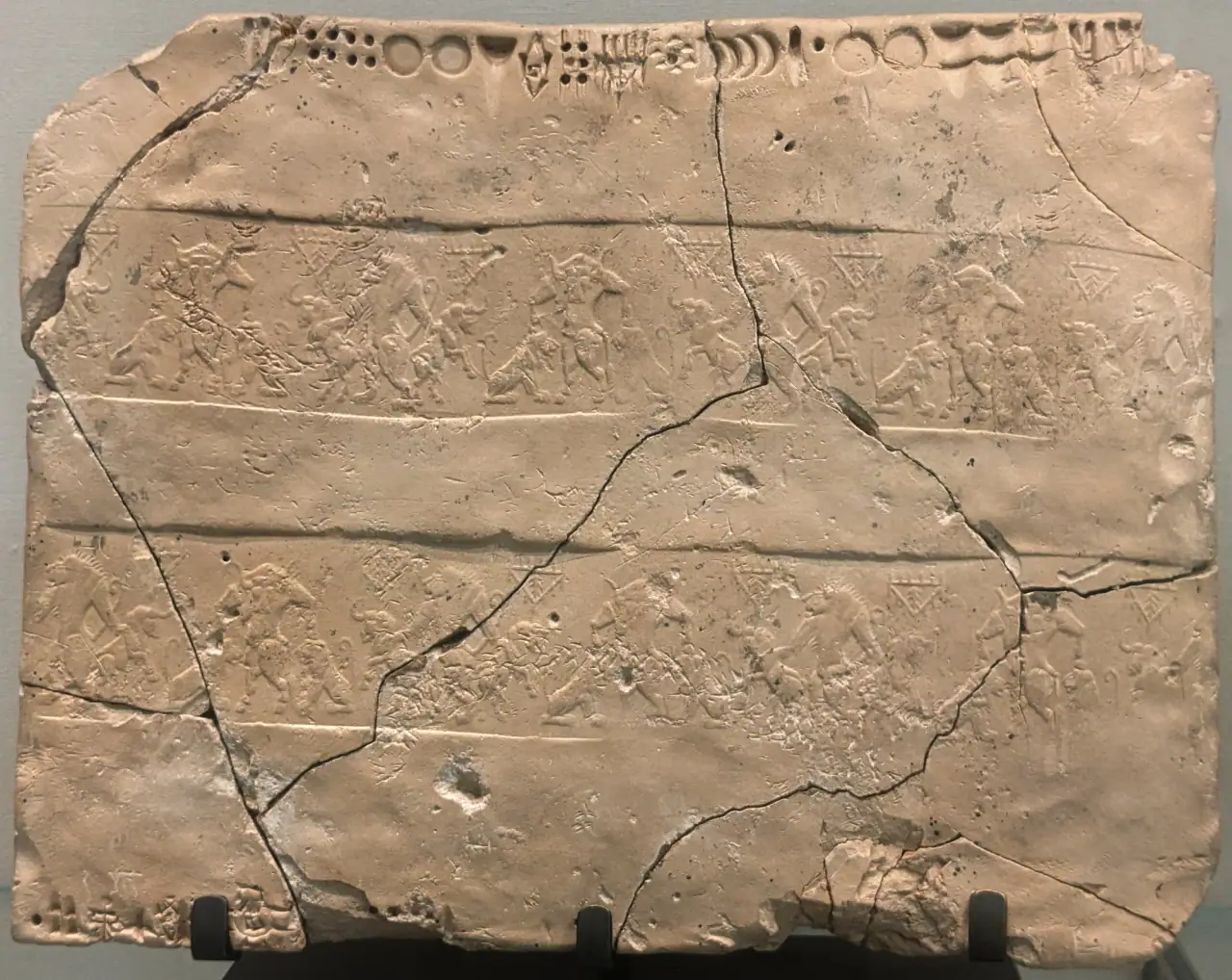
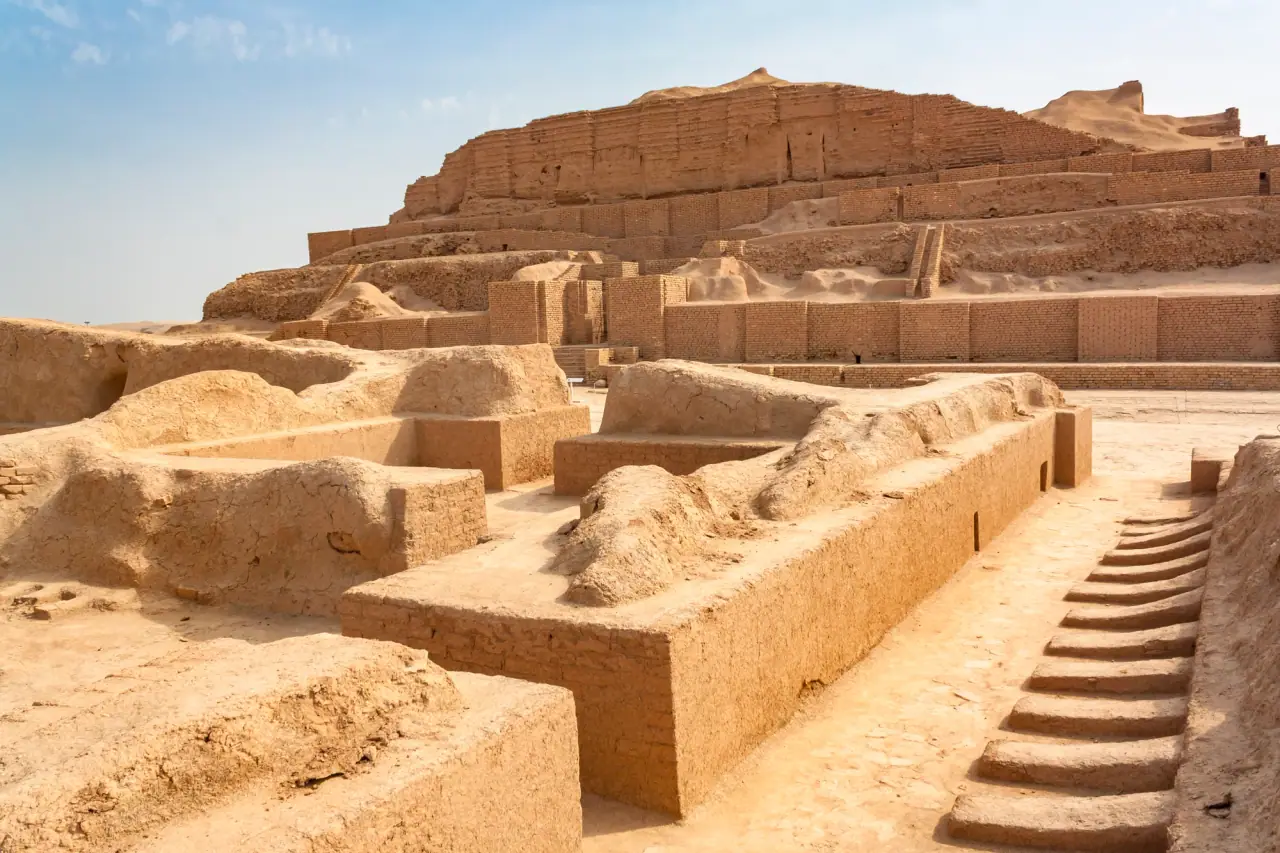
A clay tablet recording grain and livestock connects the Susiana lowlands with production and transport on the plateau. Multiple political centers existed here before the Achaemenid Empire, and Elam was not an early namesake state of modern Iran. Anshan, Susa, and Mesopotamian dynasties continuously reorganized their relations through marriage, war, ritual, and exchange, and the extent of rule changed with period and recorder. Monumental ziggurats show that royal power could mobilize resources, while legal accounts preserve family property, land, and everyday transactions. Understanding this history requires looking at both lowland irrigation and highland products, and cannot turn several thousand years of different dynasties into a single ethnically unified state that was always unified.
01 / c. 3200–539 BCEHow this era began
The settlement, pottery, and urban life of Susa predate the Elamite royal names familiar to us. The Mesopotamian lowlands and the Zagros highlands had different resources; the plains needed timber, stone, and metal, while highland residents also took part in exchanges of grain and crafts. Similar artifact styles can suggest contact, but they are not enough to prove that incoming groups had conquered everywhere, still less to map an archaeological culture directly onto a modern ethnic group.
Why did this era begin?
Proto-Elamite accounting materials that appeared around 3200 BCE left traces of quantities, goods, and administrative activity. Thereafter powers such as Awan and Shimashki repeatedly combined with or separated from Susa, and royal authority did not grow along a single straight line. Controlling a city also required cooperation from roads, fields, and local leaders, so dynastic titles both described power and expressed the status rulers hoped to hold.
02 / c. 3200–539 BCEWho held power
Royal power was distributed through relatives, officials, and temples, and structures differed by period. The royal titles and kinship terms in the documents have been interpreted in different ways; a few titles alone cannot be used to imagine a fixed federal system. Middle Elamite monarchs emphasized a shared royal title for Anshan and Susa, precisely showing that combining highland and lowland required continuous effort, rather than that a central bureaucratic machine covering the whole territory had long existed.
What tensions existed within the era?
The interests of Susa and highland centers did not always align, and the monarchy also faced succession and local loyalty problems. Mesopotamian dynasties obtained goods through marriage and exchange, but also launched campaigns, seized divine statues, and took cities. External inscriptions often describe victories as total, while local records show that rule and life could continue; a city's destruction therefore cannot automatically be written as the disappearance of an entire culture.
03 / c. 3200–539 BCEHow society worked
Agriculture around Susa depended on plain irrigation, while the highlands provided different livelihoods such as pastoralism and minerals. Legal and economic tablets record land, debts, loans, and goods exchanges, allowing taxation and household transactions to enter history together. External dynasties also plundered resources, but war revenue cannot be equated with sustained production; a group of fine metal vessels is even less sufficient to show that ordinary households were generally prosperous.
How did ordinary people live?
Grain, livestock, land, and inheritance disputes occasionally brought people outside the palace into the documents. Scribes turned specific transactions into records that could be checked, while families had to arrange life around harvests, loans, and kinship obligations. These materials mostly survive from better-preserved cities and administrative institutions; the experiences of villages, mobile highland populations, and those who did not use writing remain harder to see equally.
04 / c. 3200–539 BCEWhere change began
Assyrian wars and the growth of Persian power in the first millennium BCE changed regional power. The severe destruction of Susa around 646 BCE was a major turning point, but it did not immediately end all Elamites, settlements, and scribal traditions. Achaemenid expansion incorporated some old centers into a larger empire, and local administrative knowledge and languages thus entered a new royal system; political endings and cultural disappearance are different questions.
Milestones that changed direction
Accounts Before Empire
Around this time, Proto-Elamite accounting materials appeared at Susa and several places on the plateau, leaving traces of quantities and goods management. The writing has not been fully deciphered; the name of a writing system is not treated as directly equivalent to a confirmed language.
The Fall of Ur
Elam and forces from Susa formed an alliance and took part in the fall of Ur; royal captives and transfers of resources changed relations between Mesopotamia and the plateau. Statements of victory in war documents cannot be taken to mean that every locality was from then on completely controlled.
Middle Elamite Kingship
Around this time, royal titles and religious relations between Anshan and Susa were reorganized, and links between the lowlands and the highlands became more prominent. Royal titles can show political claims, but they must still be compared with actual documents and the distribution of sites.
Temple City
Around this time, the ziggurat and religious buildings at Chogha Zanbil concentrated royal resources and also brought together deities from different places. The site shows mobilization and patronage; it cannot directly prove that all labor was voluntary.
Susa Is Destroyed
The Assyrian wars severely destroyed Susa, and external victory inscriptions emphasize the destruction of the enemy. The city's suffering must be kept separate from the continuity of language, local inhabitants, and other centers; this year should not be treated as the day all culture disappeared.
A New Imperial Network
Achaemenid expansion incorporated old centers into a larger network of rule, and Elamite and scribal experience continued to be used. Using imperial takeover as an observation point does not equate political change with the wholesale replacement of the population.
What we know
Tablets, seals, royal inscriptions, and architecture must be read against one another. Susa's materials are relatively abundant, but many political dates depend on Mesopotamian records, and victors' accounts are clearly selective. Proto-Elamite writing has not been fully deciphered, so accounting signs cannot be treated directly as already confirmed linguistic evidence; archaeological stratigraphy can support sequence but can hardly by itself recover every ruler's motives and inhabitants' attitudes.
Questions still debated
To ask what Elam refers to, one must first ask who wrote the texts and when. Mesopotamian authors' general term for the east does not entirely match the geographical concepts used by highland inhabitants. There is also room for revision regarding royal kinship terms, the ordering of kings, and forms of political alliance. Different interpretations need to state the strength of their evidence and cannot fill the large gaps left by ancient sources with today's ethnic maps.
Legacies for later generations
Achaemenid administration still used Elamite, showing that the new dynasty could absorb long-existing scribal and managerial experience. Chogha Zanbil and Susa are also incorporated into national heritage narratives today, but modern borders and identities cannot be projected back onto antiquity. What truly persisted was a set of connections among languages, places, and institutional practices, not a single dynastic bloodline unchanged for thousands of years.
References and evidence
These materials support this page's account. Check the purpose, perspective and accessible scope of each source. Notes identify the evidential limits of excerpts, summaries and timelines.
- ELAM i. The history of ElamEncyclopaedia Iranica / François Vallat · Academic research
Scholarly overview of Elamite territory, dynasties, and tablets; must not be equated with a modern state.
- Tchogha ZanbilUNESCO World Heritage Centre · Specialist reference
Description of a Middle Elamite religious site; the page does not constitute an open license for the images.
- Iran: A Country Study, fifth edition (2008)Library of Congress, Federal Research Division; Glenn E. Curtis and Eric Hooglund, eds. · Academic research
The official LOC full-text OCR was obtained, and body paragraphs on history, women, education, and government politics were read; this was not merely reading the table of contents or a summary, nor is any claim made of having read all 416 scans. The study has limitations of period and national-studies framework; errors in the history chapter such as Chaldiran 1524 and Gulistan 1812 are not carried over, and 1514 and 1813 are adopted respectively per specialized research; the internal discrepancy in the history and education chapters over Tehran University 1935/1934 is likewise not copied directly.
At the end, bring this chapter to a close.