Iran-Iraq War: borders, mobilization, and survival
Why did a war expected to be short last eight years and change the state and families?
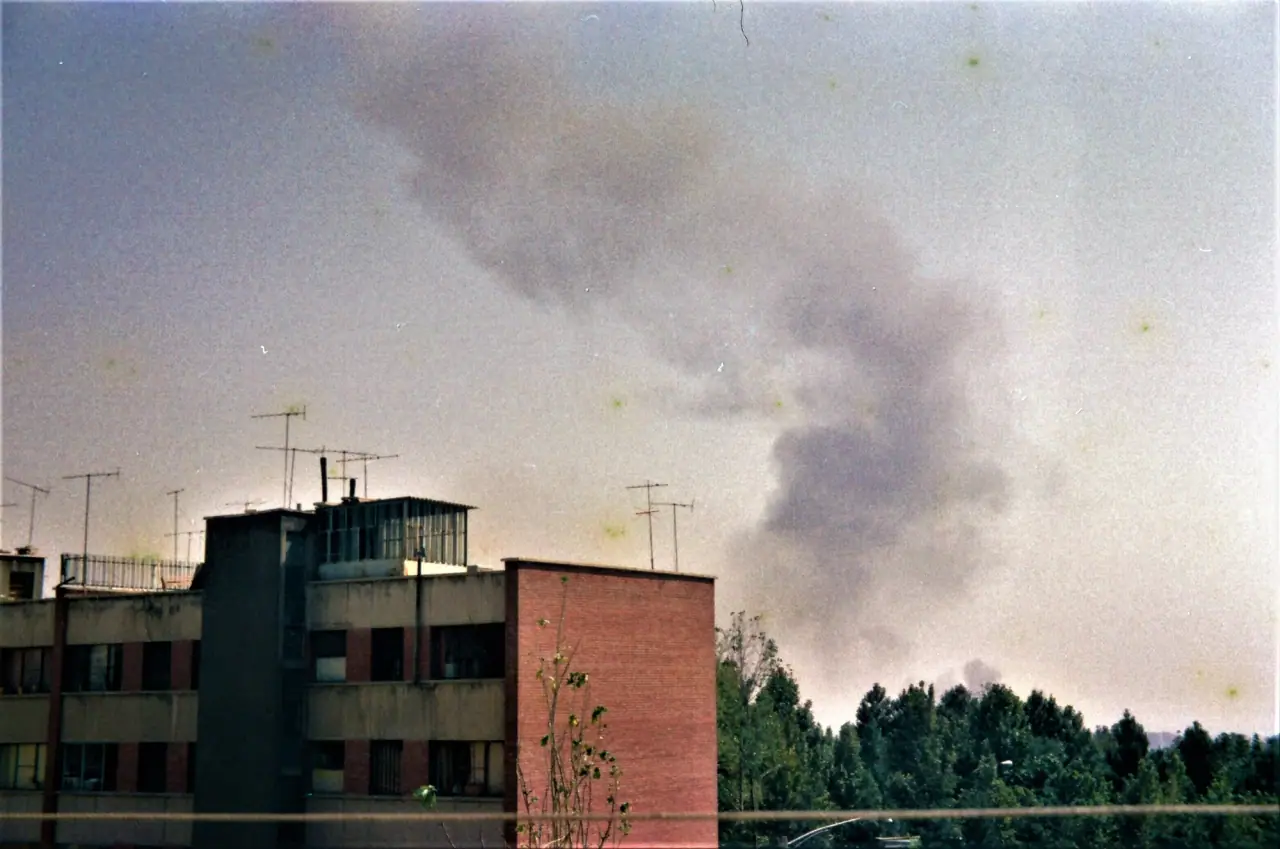
A photograph of a smoke column rising after an airstrike shows only one moment of the war; destroyed homes, lung injuries, and separated families could last for decades. Iraq launched a full-scale invasion of Iran on September 22, 1980; border disputes, regional politics, and judgments about the revolution together shaped the war. After Iran recovered its main lost territory in 1982, it continued advancing into Iraq, and the conflict turned into a prolonged war of attrition, with city bombardments, attacks on shipping, and chemical weapons expanding the harm. UN Security Council Resolution 598 of 1987 demanded a ceasefire, but the formal ceasefire did not take effect until August 20, 1988. Responsibility for the invasion and later decisions to prolong the war need to be analyzed separately, and civilians and survivors cannot serve merely as background to front-line achievements.
01 / 1980–1988How this era began
Borders, navigation on the Shatt al-Arab, and regional status had long affected relations between the two countries, and the 1975 Algiers Agreement had made arrangements. The 1979 revolution and Iran's military and political reorganization led Iraq's leadership to judge that it might gain an advantage, and border clashes escalated. These conditions help explain decisions, but they do not make the full-scale invasion a natural outcome without choices, nor can religious differences in themselves be written as the inevitable cause of the war.
Why did this era begin?
The airstrikes and ground invasion of September 22, 1980 expanded the conflict into full-scale war, and cities in Khuzestan and important oil regions became battlefields. Iran resisted and gradually counterattacked; after recapturing Khorramshahr and other places in 1982, it faced the choice of whether to stop at the border. Continuing into Iraq changed the objectives and conditions of the war, and subsequent offensives cannot all be described indiscriminately as recovery of original territory.
02 / 1980–1988Who held power
The regular army, the Revolutionary Guard, volunteer organizations, and state agencies all took part in mobilization, and coordination was accompanied by competition. Leaders, the government, and military commanders made strategic choices, while families and local institutions bore recruitment, supply, and caregiving. The war increased the resources of security institutions and organizational networks, but unity in state propaganda cannot substitute for research on refusal to serve, political dissent, and experiences in different regions.
What tensions existed within the era?
There was a conflict between the goal of military victory and prolonged attrition, and the costs of continuing the war after 1982 need separate assessment. Iraq's use of chemical weapons and attacks on cities caused serious harm, and Iran's retaliation, domestic political control, and international support for each side should also have their own evidence. Pointing out one side's unlawful violence does not constitute grounds for exempting other acts from scrutiny, and still less can the needs of war explain away all coercion as reasonable.
03 / 1980–1988How society worked
Oil fields, ports, refineries, and transport were attacked, and export revenue, imports, and finances were all constrained by the war. Rationing, subsidies, and state distribution helped maintain some basic supplies, but shortages and price pressures still entered households. Gulf shipping and foreign arms sales connected the conflict to the international economy; the support and resources each side received were not the same, and the burden of war cannot be measured only by domestic production figures.
How did ordinary people live?
Residents experienced bombardment, displacement, the death of relatives, and disability; women, medical staff, and families carried out a great deal of labor beyond the front lines. After the chemical attack on civilians at Sardasht, some survivors continued to face respiratory and other injuries. Life history needs to examine how treatment, income, education, and caregiving were affected, not just total casualty figures; returning to a city did not mean that housing, work, and psychological trauma were immediately restored.
04 / 1980–1988Where change began
Resolution 598 was adopted on July 20, 1987, demanding a ceasefire and withdrawal, and it did not end the fighting that day. After changes in battlefield and economic conditions, Iran accepted the resolution in July 1988, and the ceasefire formally took effect on August 20, supervised by UN observers. Acceptance of the resolution, the cessation of major fighting, withdrawal, and the return of prisoners of war each had different rhythms and should not be combined into a single instantaneous peaceful outcome.
Milestones that changed direction
Full-scale invasion
On September 22 Iraq launched airstrikes and a full-scale ground invasion, and Khuzestan and important oil regions faced threats. Background disputes cannot cancel responsibility for the specific military decision to launch the invasion.
Turning point of Iran's counteroffensive
After Iran recaptured Khorramshahr and other main lost territories, it decided to advance into Iraqi territory. Resisting invasion and continuing a cross-border war belong to different decision stages, and objectives and costs must be assessed separately.
Attacks on cities and the Gulf
Bombardment of cities and attacks on Gulf shipping expanded risks, drawing civilians and regional trade into the war. Belligerents' announcements about targets and results need to be checked against independent materials and cannot be used directly as complete loss statistics.
Chemical attack on Sardasht
On June 28 civilians at Sardasht were attacked with chemical weapons, and survivors faced long-term health and livelihood difficulties thereafter. Commemorative materials can verify harm but do not replace household-by-household medical and demographic statistics.
UN Resolution 598
On July 20 UN Security Council Resolution 598 demanded a ceasefire and withdrawal, providing a framework for subsequent arrangements. Adoption of the resolution did not mean the belligerents accepted it that day, and still less that fighting on the battlefield stopped immediately.
Acceptance of Resolution 598
Iran accepted the ceasefire framework in July, and its leadership changed course under battlefield, financial, and political conditions. There was a time gap between acceptance of the resolution and the formal ceasefire of August 20, and the two cannot be combined into the same date.
Formal ceasefire
The ceasefire formally took effect on August 20, with UN observers monitoring implementation. Ceasefire, withdrawal, the return of prisoners of war, and family reconstruction each had different rhythms and cannot be combined into an instant disappearance of the war's consequences.
What we know
UN resolutions and observer records are suitable for checking ceasefire procedures, OPCW materials supplement the record of harm at Sardasht, and military and economic studies explain the course of the war and resources. Belligerent announcements and memoirs each have their own positions, and wartime reporting was also subject to censorship. Death estimates must state definitions and methods; without sufficient cross-verification, seemingly precise totals should not be used, and still less can a single photograph prove responsibility for all events.
Questions still debated
The full-scale invasion has a clear date and responsibility, but why Iran continued the war after 1982 and when feasible opportunities for a ceasefire existed require separate analysis. Judging every early choice solely by the final ceasefire easily produces retrospective determinism. Military, political, and social explanations each have their own scale, and changes at the front, leadership decisions, international support, and the long-term costs borne by civilians should be compared together.
Legacies for later generations
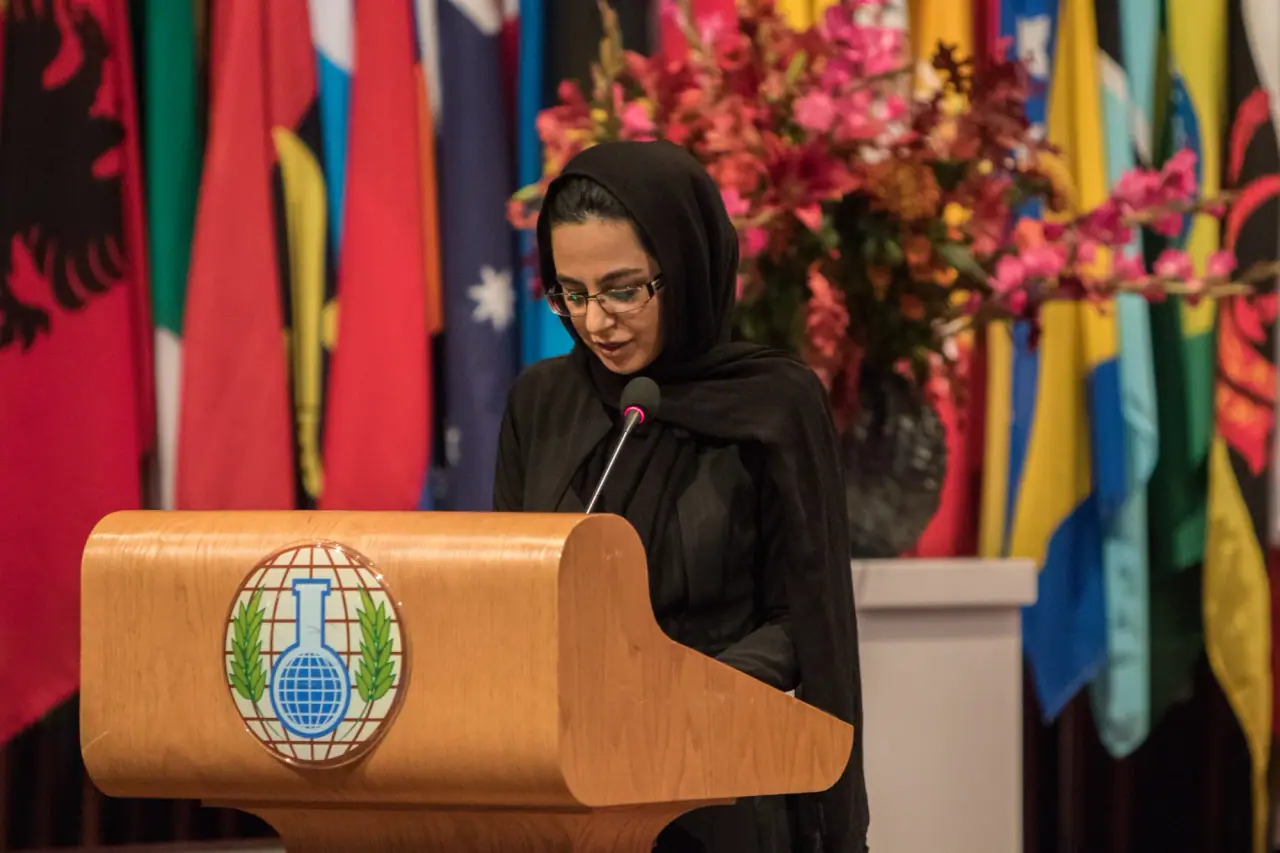
The war shaped state organization, commemorative rituals, and family memory, and disability, the aftereffects of chemical weapons, disappearance, and displacement continued to enter postwar life. Survivor groups spoke in international settings, showing that victims can also actively organize public memory. Memorial halls, ruins, or advocacy meetings photographed later are not the scene of the 1980s, and when interpreting such images both the historical subject and the date of photography should be noted.
References and evidence
These materials support this page's account. Check the purpose, perspective and accessible scope of each source. Notes identify the evidential limits of excerpts, summaries and timelines.
- IRAQ vii. IRAN-IRAQ WAREncyclopaedia Iranica / Saskia M. Gieling · Academic research
Specialist entry on the war; its opening conflates acceptance of the resolution with the end, so this article's actual ceasefire date is corrected to the United Nations record and does not follow its claim of ending on July 20.
- Security Council Resolution 598 (1987)United Nations Security Council · Primary source
Read the text of Resolution 598 in the United Nations public 2-page compilation: adopted on July 20, 1987, it called for a ceasefire, withdrawal, observers, and the return of prisoners of war; the date of adoption must be kept separate from the actual ceasefire of August 20, 1988.
- UNIIMOG: BackgroundUnited Nations Peacekeeping · Specialist reference
The official index verifies the ceasefire of 20 August 1988; direct reading of the old page was limited in this instance, and no claim is made that a complete web capture succeeded.
- Statement on the 30th Anniversary of the 1987 Chemical Weapon Attack on SardashtOrganisation for the Prohibition of Chemical Weapons · Primary source
The 2017 statement verifies the attack on civilians on June 28, 1987 and the long-term harm.
- INDUSTRIALIZATION iii. The Post-Revolutionary Period, 1979–2000Encyclopaedia Iranica · Academic research
Historical mechanisms of war, oil prices, and industrial policy.
- Iran: A Country Study, fifth edition (2008)Library of Congress, Federal Research Division; Glenn E. Curtis and Eric Hooglund, eds. · Academic research
The official LOC full-text OCR was obtained, and body paragraphs on history, women, education, and government politics were read; this was not merely reading the table of contents or a summary, nor is any claim made of having read all 416 scans. The study has limitations of period and national-studies framework; errors in the history chapter such as Chaldiran 1524 and Gulistan 1812 are not carried over, and 1514 and 1813 are adopted respectively per specialized research; the internal discrepancy in the history and education chapters over Tehran University 1935/1934 is likewise not copied directly.
At the end, bring this chapter to a close.