Postwar Iran: reconstruction and public life
After the war ended, how did expectations for economic reconstruction and social participation intertwine?
A ceasefire does not immediately repair a single home, nor does it automatically resolve who may speak in public. After the 1989 leadership succession and constitutional amendment, the government placed reconstruction, investment, and employment at the center, and state and quasi-state institutions, private enterprises, and households adapted together to the postwar adjustment. Education, urban life, and occupations continued to change, and the new experiences gained by women and youth in turn widened public discussion. The 1997 reform politics and the rise of the press were constrained by supervisory bodies, the judiciary, and security forces; the disputed 2009 election again exposed the tension between participation and accountability. The 2015 nuclear agreement opened another diplomatic and economic path, but the conclusion of the agreement and the improvement of daily life remain outcomes that must be examined separately.
01 / 1989–2015How this era began
When the war ended, industry, housing, infrastructure, and family care had all suffered years of damage, and the problems of prisoners of war, the disabled, and displacement remained unresolved. Wartime rationing and state distribution sustained part of daily life, but recovery required funds, equipment, and political cooperation. The succession and institutional debates of Khomeini's late period added further uncertainty; reconstruction was not merely a list of engineering projects but also involved who would allocate opportunities and bear the costs.
Why did this era begin?
In 1989 Khomeini died, Khamenei succeeded as Supreme Leader, and the constitutional amendment and Rafsanjani's election reorganized power. The government promoted five-year plans, investment, and partial market adjustment, hoping to shift from a wartime economy to restored production. Opening imports, adjusting exchange rates, and enterprise reform were not completed smoothly in one stroke; fiscal pressures, foreign debt, and institutional interests would prompt policy reversals, and announced reforms cannot be taken directly as implementation results.
02 / 1989–2015Who held power
Institutions such as the Supreme Leader, the president, the parliament, the Guardian Council, and the judiciary hold different powers, and election results alone cannot determine all policy. Revolutionary organizations and quasi-state foundations also control resources, and the reform camp and conservative forces are not entirely homogeneous. After 1989 political competition unfolded within this framework; to understand why a reform was blocked, one must examine the specific proposal, veto, implementation, and role of security institutions.
What tensions existed within the era?
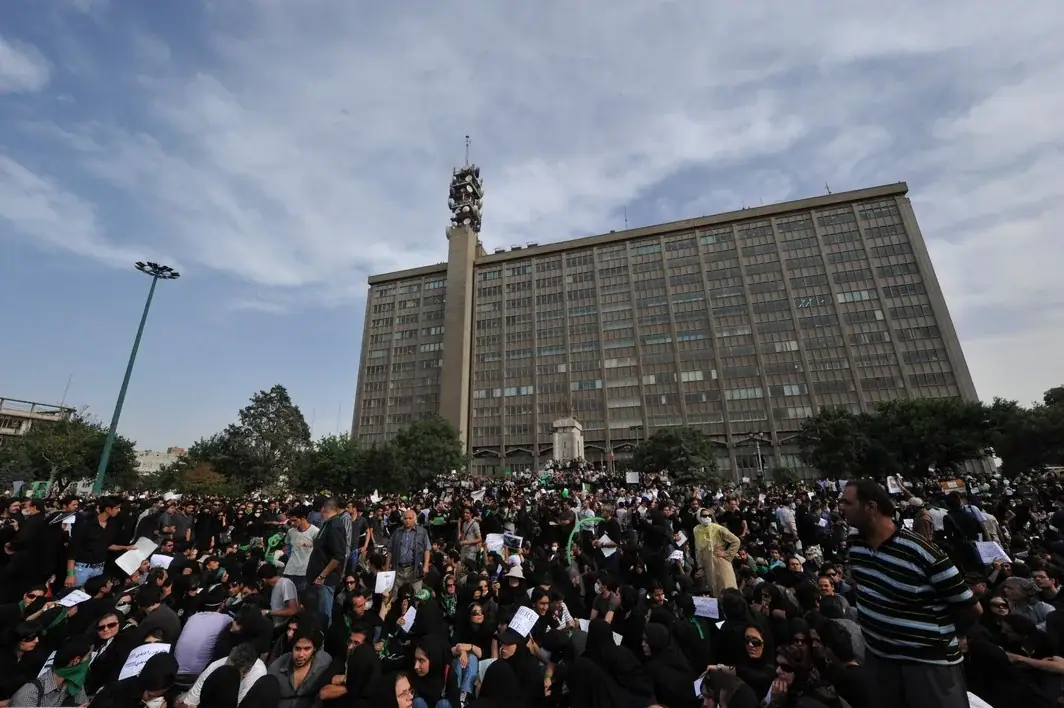
The electoral support for reformists in 1997 expanded the press and public discussion, while judicial closures, the detention of journalists, and institutional vetoes constrained change. The 2009 presidential election result was questioned, and street protests and repression brought political representation, transparency, and rights into focus. The existence of dispute does not mean a nationwide recount has been independently conducted, nor does the officially announced result automatically erase scrutiny of evidence concerning procedure and coercion.
03 / 1989–2015How society worked
Reconstruction investment promoted the recovery of some industries, but privatization, foreign investment, and exchange-rate adjustment ran into institutional interests, foreign debt, and fiscal pressure. Oil still affected revenue, and sanctions and international relations limited some cooperation. Households faced a combination of employment, subsidies, prices, and housing, with benefits differing by region and class; aggregate growth, the number of enterprises sold, and residents' sense of security are not directly interchangeable measures.
How did ordinary people live?
Schools, universities, occupations, and urban services changed daily life, while families continued to care for disabled and elderly members. Women and youth entered public space through study, work, literature, and media, though actual opportunities remained shaped by gender, income, and region. Newspapers, films, and later the internet spread discussion further but did not guarantee safety of expression; the experience of the urban educated cannot substitute for the voices of rural and minority communities.
04 / 1989–2015Where change began
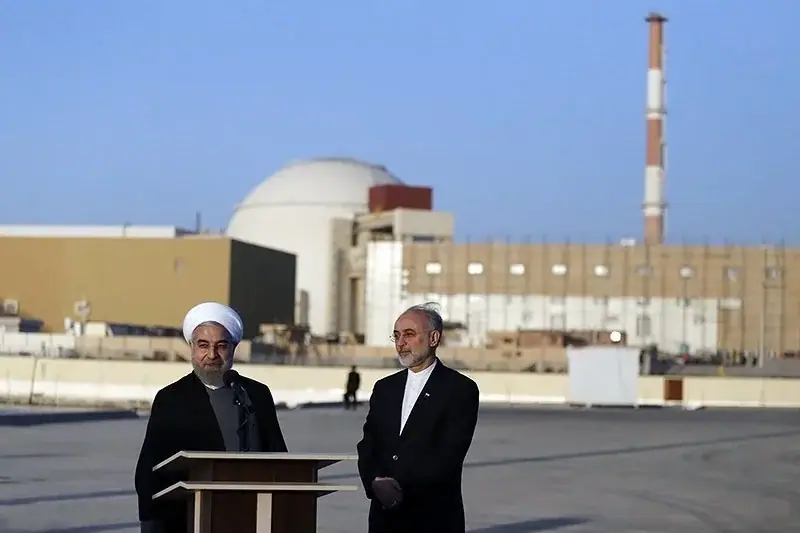
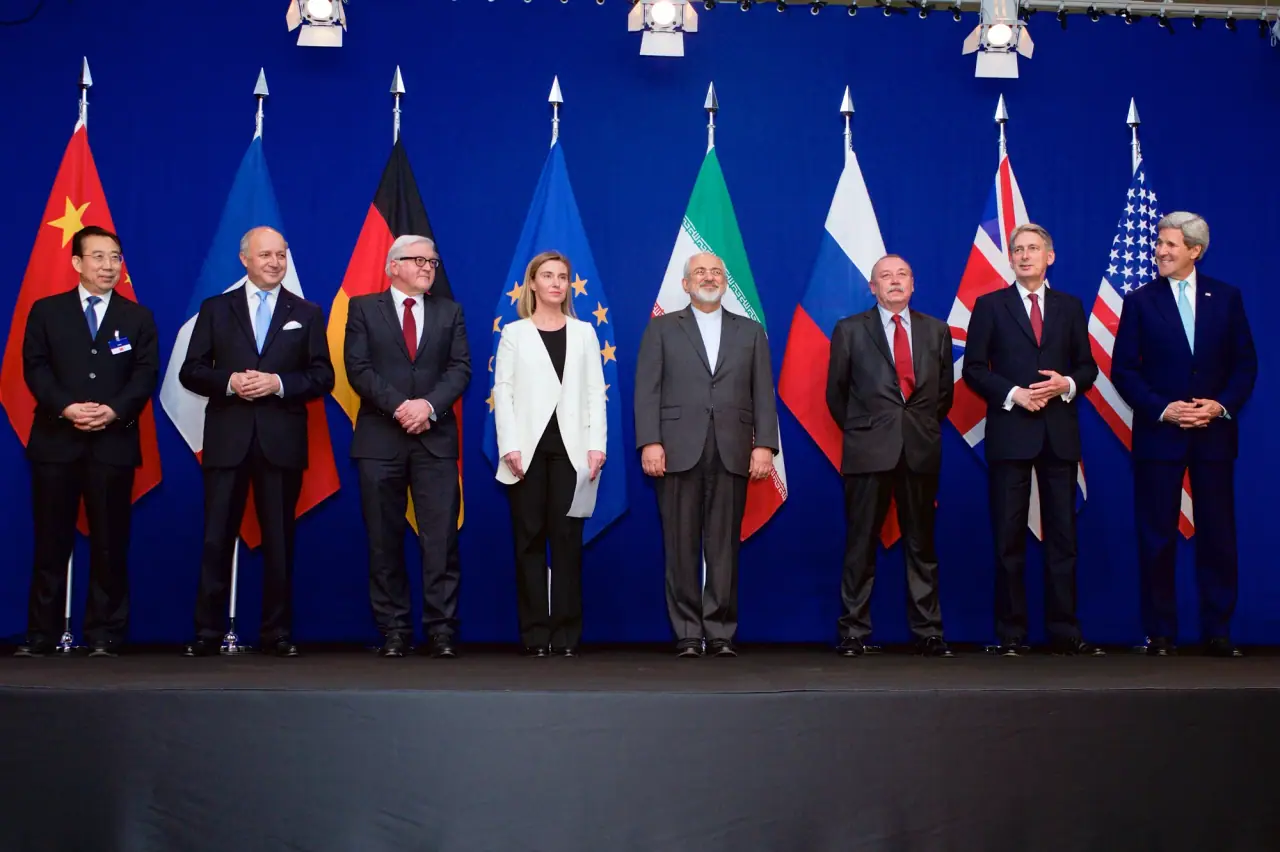
In July 2015 Iran reached a nuclear agreement with the six powers and the EU, and a subsequent UN resolution arranged verification and sanctions-related procedures. Diplomatic compromise may improve conditions for economic cooperation, but it still must pass through multiple stages of compliance, verification, policy, and markets. This chapter closes at the formation of the agreement; subsequent implementation, the US withdrawal, and Iran's reduction of commitments are analyzed separately, and the expectations of that time are not written directly as continuously fulfilled outcomes.
Milestones that changed direction
Leadership Succession and Reconstruction
Khomeini died, and the arrangements for the Supreme Leader, the presidency, and the constitutional amendment reorganized power, with postwar reconstruction becoming a priority. Leadership succession and engineering investment could not simultaneously resolve care, housing, and political participation.
Enterprise Reform Begins
During the first five-year plan, some enterprise sales and market adjustments were promoted, but existing institutions and fiscal conditions made progress slower than the slogans. Announcing privatization does not prove that resources were transferred to ordinary households or competitive markets.
The Reform Press Expands
After Khatami was elected president, the reform press and professional journalistic organizations expanded the space for discussion. Electoral support and the power of supervisory, judicial, and security institutions remained unequal, and openness and restriction could coexist.
Students, the Press, and Public Rights
Student protests and the attack on university dormitories linked press restrictions, campus space, and political accountability. Individual cases and institutional structures must be read together; the educated cannot be portrayed as having only one demand or as a group mobilized solely by political leaders.
Mass Newspaper Closures
The judiciary closed reformist newspapers on a large scale, and journalists and editors faced new professional and expressive risks. Articles, licenses, and specific cases are more explanatory than broadly labeling the national media as either completely free or completely silent.
Shirin Ebadi Wins the Nobel Peace Prize
The human rights lawyer Shirin Ebadi received the prize, bringing international attention to advocacy for women's, children's, and citizens' rights. The award records external recognition; it does not equal domestic institutional change, nor can it speak for all residents.
Electoral Dispute and Street Protests
The presidential election result was questioned, and street protests, detentions, and restrictions on expression became major public issues. UN reports and contemporaneous visual records are different levels of evidence; the existence of a dispute does not justify claiming that a nationwide recount has been independently conducted.
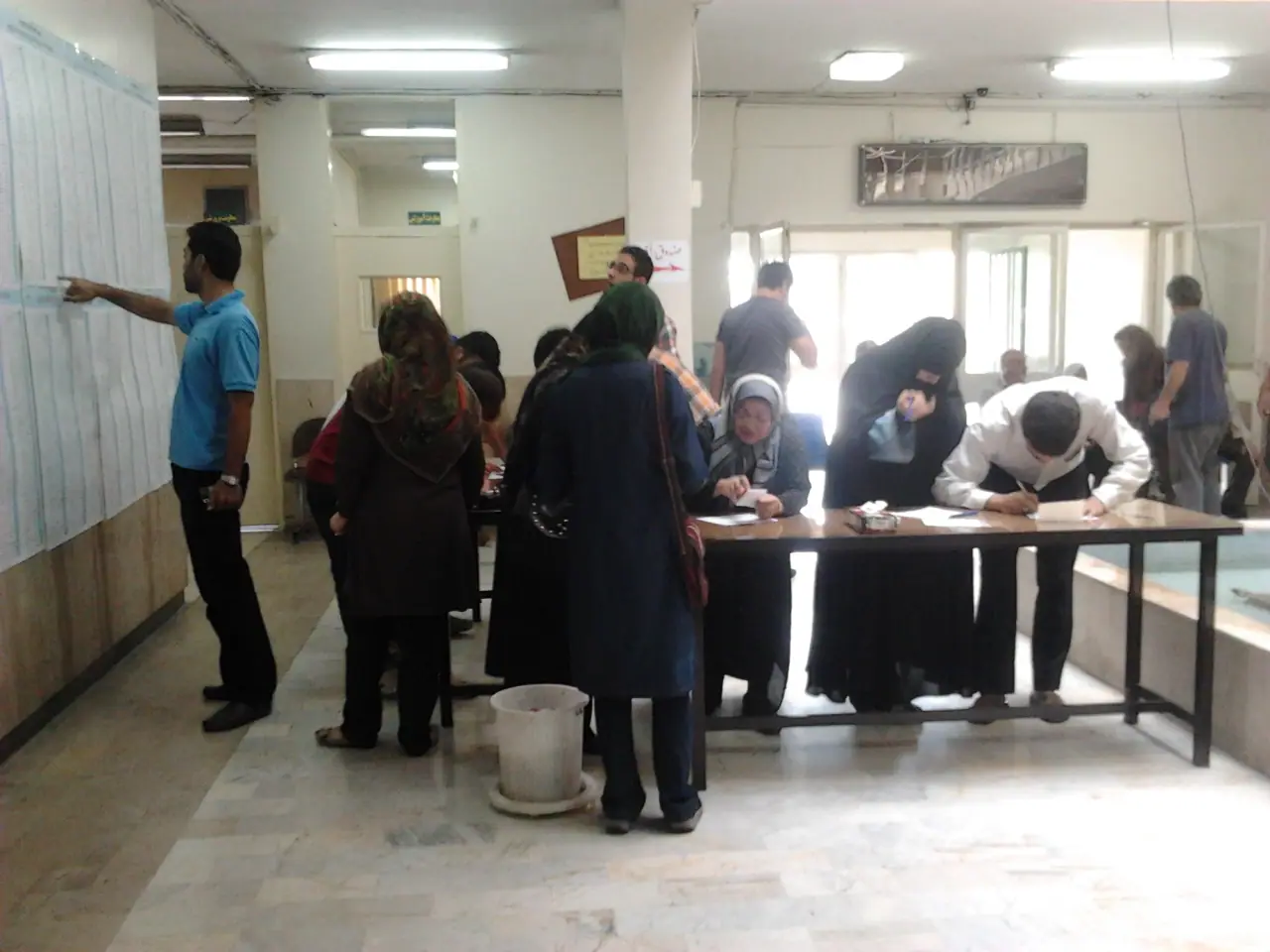
Residents Enter a Polling Station
An independent photographic record from June 14 shows residents participating in the presidential election at a polling station, and images were also captured at locations outside the capital. A photograph can prove a specific act of voting but cannot by itself verify the national vote count, candidate eligibility, or procedural fairness.
The Nuclear Agreement Is Reached
The nuclear agreement was reached on July 14, and on July 20 UN Security Council Resolution 2231 arranged verification and related sanctions procedures. The formal implementation day did not occur until 2016; reaching the agreement cannot be directly regarded as all economic benefits having been realized.
What we know
State plans, economic studies, newspapers, and education cases can be compared on reconstruction and public life, but the periods covered by sources must be kept separate. An economic entry on research up to the 1990s cannot by itself explain 2009, let alone prove present conditions. The 2009 UN report provides contemporaneous protest and human rights concerns, while the nuclear agreement and IAEA materials verify the 2015 procedures; neither can substitute for a complete public opinion survey or a family life history.
Questions still debated
Why market reforms were blocked, why reformist electoral victories did not translate into equivalent institutional change, and how much influence sanctions versus domestic governance each had all require specific mechanisms. All difficulties cannot be attributed to external factors, nor can war and international constraints be ignored. What citizens hoped to change was not uniform, and institutional elections, social initiatives, and street protests are not a simple three-step process that can be arranged into a one-way ladder of escalation.
Legacies for later generations
The generation that grew up after the war formed new experiences of education, employment, and public participation; the reform press left professional and organizational legacies, while repression also affected political trust. Reconstruction projects may persist in the urban landscape, but their distribution and long-term quality still require examination. The 2015 diplomacy showed that space for negotiation and policy adjustment existed within the system, and later reversals should not be written back to suggest that no real choices existed at the time.
References and evidence
These materials support this page's account. Check the purpose, perspective and accessible scope of each source. Notes identify the evidential limits of excerpts, summaries and timelines.
- ECONOMY x. UNDER THE ISLAMIC REPUBLICEncyclopaedia Iranica / Vahid F. Nowshirvani · Academic research
Mainly covers up to the early 1990s; the update date does not mean the content covers the present.
- INDUSTRIALIZATION iii. The Post-Revolutionary Period, 1979–2000Encyclopaedia Iranica · Academic research
Historical mechanisms of war, oil prices, and industrial policy.
- JOURNALISM iii. Post-Revolution EraEncyclopaedia Iranica · Academic research
Reformist press in the 1990s and its subsequent closure; limited to the years the article covers.
- IAEA Annual Report 2015International Atomic Energy Agency · Primary source
The 2015 JCPOA and verification mandates; does not represent the agreement's current implementation status.
- Literacy for Student’s Illiterate Parents, IranUNESCO Institute for Lifelong Learning · Specialist reference
A case study of a family literacy program; cannot independently prove actual nationwide results.
- Iran: A Country Study, fifth edition (2008)Library of Congress, Federal Research Division; Glenn E. Curtis and Eric Hooglund, eds. · Academic research
The official LOC full-text OCR was obtained, and body paragraphs on history, women, education, and government politics were read; this was not merely reading the table of contents or a summary, nor is any claim made of having read all 416 scans. The study has limitations of period and national-studies framework; errors in the history chapter such as Chaldiran 1524 and Gulistan 1812 are not carried over, and 1514 and 1813 are adopted respectively per specialized research; the internal discrepancy in the history and education chapters over Tehran University 1935/1934 is likewise not copied directly.
- A/64/357: The situation of human rights in Iran, Report of the Secretary-GeneralUnited Nations Secretary-General · Primary source
Report of 23 September 2009; paragraphs 17–21 were actually checked via the official body-text index, distinguishing government-announced results, UN concerns, protests, and detentions. The direct PDF returned 403 and the old NSF entry returned 404, so no claim is made of having obtained the full text; the current official English PDF address is used and access limitations are recorded, and the summary is not passed off as the full text.
- Independent photographic record of voting in Iran, 14 June 2013Tabarez2; original photographic record archived on Wikimedia Commons · Primary source
The original photographer's own work statement, date, and original license statement have been read; the photograph supports only the specific voting act and does not verify national vote counting, procedural fairness, or candidate eligibility. Image citation, download, and whether it is ultimately used are decided by independent image review; citing a source does not automatically equal approval of the asset.
- Security Council Resolution 2231 (2015), including the JCPOA annexUnited Nations Security Council · Primary source
The original 104-page document was actually opened, and the relevant body text of the 20 July 2015 resolution, the JCPOA arrangements, and the implementation framework was checked; no claim is made of having read every technical annex page by page. Signing, adoption of the resolution, implementation, and subsequent verification are not the same point in time.
At the end, bring this chapter to a close.