New life for Persian
Without restoring the old empire, why could Persian culture expand again?
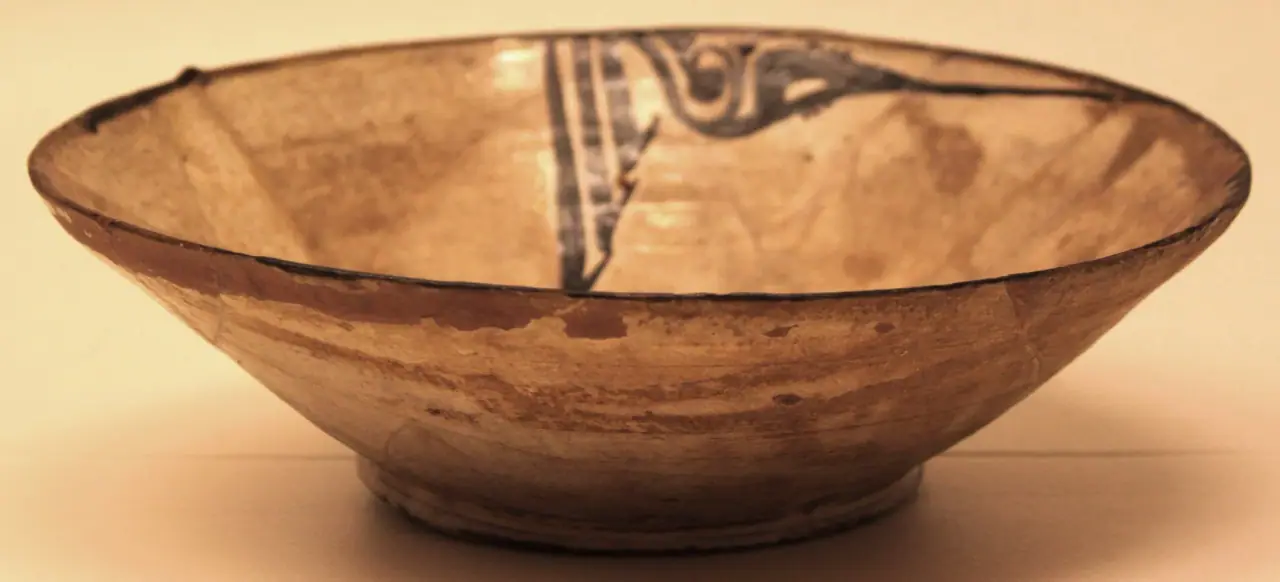
A poem recounting ancient heroes in New Persian could find new audiences in an Islamic court. The Tahirid, Saffarid, Samanid, and Buyid polities successively or concurrently managed local power, and Arabic scholarship and Persian literature developed together. Scribes, soldiers, scholars, and merchants moved among Transoxiana, Khorasan, Mesopotamia, and the cities of the plateau, and this cultural space extended far beyond the borders of modern Iran. A dynasty's local origins did not guarantee social equality, and literary flourishing also required agricultural tax revenue and patronage. The Book of Kings preserved and rewrote pre-Islamic memory; this is neither an unchanged ancient heritage nor a source that can be used to reconstruct all its historical events directly.
01 / 821–1040 CEHow this era began
The Abbasid state relied on taxation, armies, and knowledge networks across a vast region, and Khurasani commanders and local families gained opportunities to expand their influence. Arabic continued to be used for religion and scholarship, while spoken and local written traditions were never limited to a single form. The rise of local dynasties was a rearrangement of power within this shared world, not the sudden complete detachment of a long-dormant people from a foreign culture.
Why did this era begin?
The Tahirids governed Khurasan, Safarid military power expanded from Sistan, and the Samanids connected Transoxiana with the cities of Khurasan. After the Buyids entered Baghdad, the caliph's symbolic standing and military-political control became further separated. The dynasties both competed and borrowed a shared language of bureaucracy, kingship, and religion; the political map kept changing, and no single unified dynasty covered all the places and periods in this chapter.
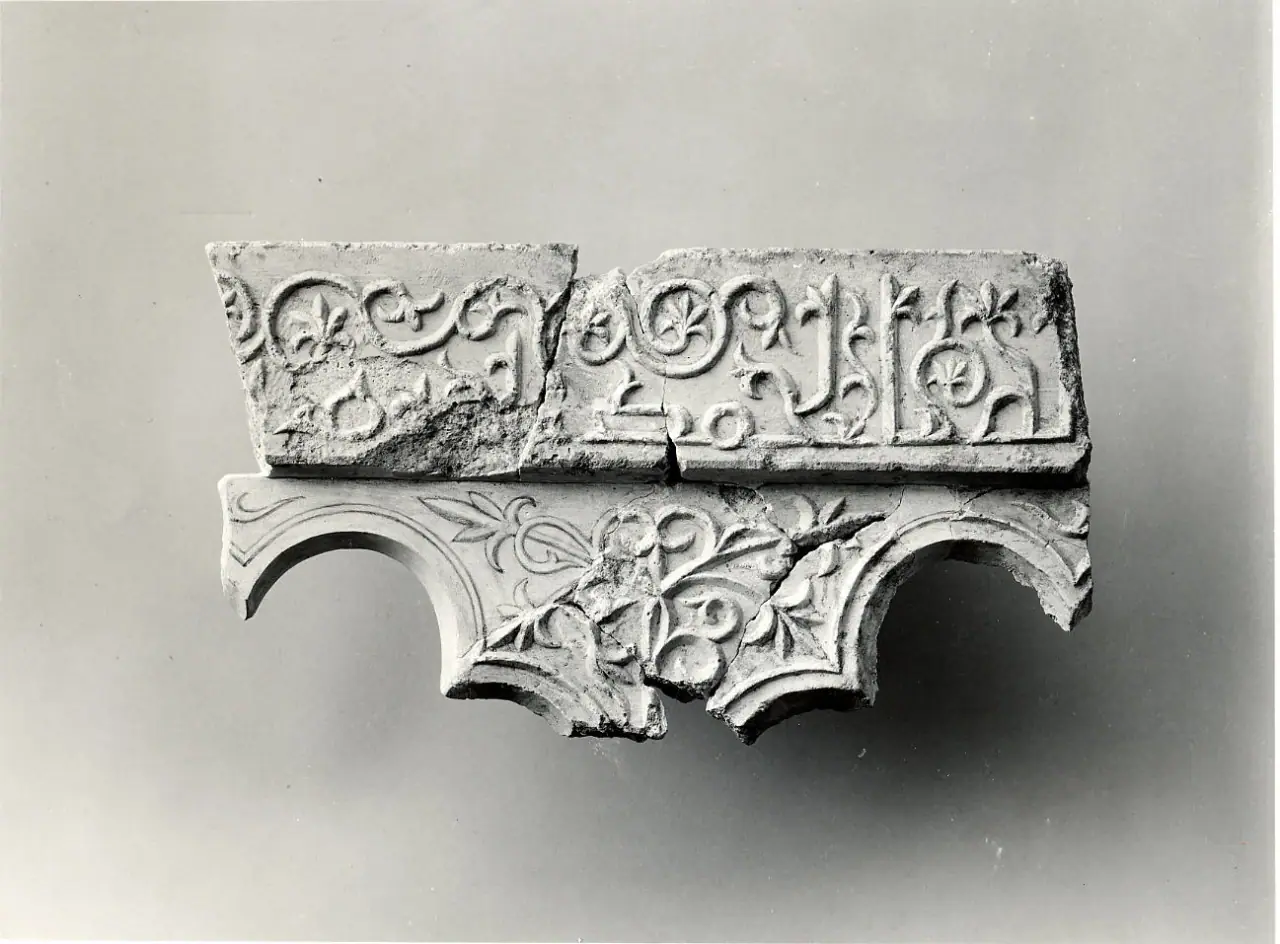
02 / 821–1040 CEWho held power
Military commanders, landed elites, civil officials, and court patrons could all shape governance. Many rulers still sought caliphal recognition, but actual collection and appointment were increasingly determined by regional power. Soldiers needed pay, and civil officials needed to sustain tax sources and order; the two both cooperated and clashed. Calling these regimes nation-states would obscure their complex combinations of family, religious, urban, and military identities.
What tensions existed within the era?
Local dynasties had to balance military expenditure, land revenue, and urban support, and succession struggles could interrupt patronage and exchange. Courts absorbed soldiers of different backgrounds and might also face these military groups seizing power in turn. Religious factions and scholarly institutions had their own interests, but the use of Persian in literature did not imply a shared political stance or faith, and cultural affinity could not automatically erase competition between cities.
03 / 821–1040 CEHow society worked
Urban markets and workshops depended on agricultural hinterlands, irrigation, and transport, while long-distance exchange connected Khurasan, Transoxiana, and the wider Islamic world. Coins, pottery, and metalwork can indicate production and consumption, and courts supported literature and art with wealth from taxation and trade. Luxury objects survive easily, but this does not mean all residents gained equally from commercial prosperity, and local losses caused by warfare must not be ignored.
How did ordinary people live?
Villagers and urban households continued farming, weaving, making objects, and buying and selling, while scholars and scribes sought positions among different courts. Language choice varied by setting, and religious scholarship, administration, and poetry might use different forms of expression. Most surviving books today belong to elite culture; women, children, and people who did not write often leave only indirect traces, and the range of literary readers cannot be inferred backward from the later fame of famous works.
04 / 821–1040 CEWhere change began
The Samanid core was partitioned at the end of the tenth century, and the Ghaznavids and other military forces absorbed its personnel and traditions. In 1040 the Seljuks defeated the Ghaznavids at Dandanqan, providing a political turning point for the next phase. Dynasties and patronage centers changed, but Persian-language civil officials and literary networks could move to new courts; cultural continuity thus depended on the actual movement of people and works, without assuming that one state continued unbroken.
Milestones that changed direction
The Tahirids govern Khurasan
The Tahirids governed Khurasan, with administration gradually becoming hereditary while relations with the Abbasid court were maintained. The expansion of local power and the persistence of central symbolism could proceed in parallel and should not be reduced to a simple either-or.
The Safarids take Nishapur
Ya'qub's Safarid army seized Nishapur and defeated Tahirid forces. The rise of a local military organization changed patronage and collection, but did not immediately turn all residents toward a single way of life.
The Samanids acquire Khurasan
Isma'il defeated the Safarid Amr, connecting the Samanids with Transoxiana and Khurasan. Cities, trade routes, and civil-official resources became objects of competition, while cultural ties still crossed later modern borders.
The Buyids enter Baghdad
Buyid forces entered Baghdad and controlled important military and political resources around the caliph. Religious symbolism and actual rule became further separated, and the caliph's title cannot be used to infer that he commanded all military action.
Military servitors establish a base at Ghazni
Alp Tegin, from the Samanid military system, established a power base at Ghazni, showing that military servitors could become local rulers. Political relations continued to change afterward, and one base should not be treated as the whole region's system having been replaced at once.
The Samanid center is partitioned
The Samanid core was partitioned by rivals, but the dynasty's decline did not end the New Persian literary and civil-official networks. Personnel and works entered new courts, and cultural continuity depended on actual transmission rather than an unchanging state.
The Shahnameh is completed
Around this time Ferdowsi completed an important authoritative version of the Shahnameh, reworking stories of ancient kings and heroes. The commonly cited commemorative date of 1010 does not settle questions about textual revision, manuscript transmission, or the year of his death.
What we know
Coins, architecture, pottery, historical writing, and poetry preserve experiences at different levels. Court histories favor rulers and warfare, while literary works employ myth, praise, and ethical allegory; neither can be used directly as a point-by-point administrative record. The surviving dates of manuscripts are also often later than their composition, so in studying the Shahnameh one must distinguish the author's era, the ancient world narrated, and later copying, illustration, editing, and state use.
Questions still debated
Scholars disagree on whether the so-called Persian revival emphasized language, local families, or ancient memory. It was not a simple rejection of Islam, nor did all residents adopt a single identity anew. Dynastic boundaries, literary exchange, and religious affiliation each had their own scales; only by separating them can we explain why political fragmentation and cross-regional cultural flourishing could occur at the same time.
Legacies for later generations
New Persian literary and administrative traditions later spread to Central Asia, South Asia, and Anatolia, forming a Persianate cultural space across dynasties. Ferdowsi's heroic narrative offers discussions of kingship, justice, and fate, and later generations continually reinterpreted it. Its importance derives both from earlier materials and from literary creation in the Islamic era, and the shared heritage of Bukhara, Herat, and other places cannot be monopolized by any present-day nationality.
References and evidence
These materials support this page's account. Check the purpose, perspective and accessible scope of each source. Notes identify the evidential limits of excerpts, summaries and timelines.
- KHORASAN vi. History in the Taherid and Samanid PeriodsEncyclopaedia Iranica / Elton L. Daniel · Academic research
Irrigation, trade, slave trading, and Persian-language culture.
- IRAN ii. Islamic period (page 2)Encyclopaedia Iranica · Academic research
Local dynasties such as the Saffarids, Samanids, and Buyids.
- Court and Cosmos: The Great Age of the SeljuqsThe Metropolitan Museum of Art · Museum research
Research catalogue; used for the Shahnameh and later image transmission, with no claim of page-by-page final review.
- FERDOWSI, ABU’L-QĀSEM i. LifeEncyclopaedia Iranica / Djalal Khaleghi-Motlagh · Academic research
Biographical and textual evidence from the Book of Kings; many later legends are unreliable.
- Iran: A Country Study, fifth edition (2008)Library of Congress, Federal Research Division; Glenn E. Curtis and Eric Hooglund, eds. · Academic research
The official LOC full-text OCR was obtained, and body paragraphs on history, women, education, and government politics were read; this was not merely reading the table of contents or a summary, nor is any claim made of having read all 416 scans. The study has limitations of period and national-studies framework; errors in the history chapter such as Chaldiran 1524 and Gulistan 1812 are not carried over, and 1514 and 1813 are adopted respectively per specialized research; the internal discrepancy in the history and education chapters over Tehran University 1935/1934 is likewise not copied directly.
At the end, bring this chapter to a close.