1979: Revolution and competition over the new system
Why did the broad coalition opposed to the Shah establish a republic under the guardianship of the jurist?
People who overthrew the monarchy could stand on the same street without necessarily wanting to live under the same system. The revolution of 1978–1979 brought together religious figures, liberals, leftists, nationalists, workers, students, and ordinary families; demonstrations and strikes deprived the monarchy of the ability to function. After the monarchical government ended in 1979, the name of the republic, guardianship of the jurist, women's rights, local autonomy, and political freedoms were still contested. The interim government and revolutionary organizations formed overlapping authorities, and the hostage crisis further changed domestic and international relations. The victory of the new system cannot be written backwards as though all participants had the same intentions from the start, and the society's diverse demands were not automatically satisfied by the fall of the dynasty.
01 / 1978–1980How this era began
Royal development projects created new occupations and expectations, while centralization, surveillance, price pressures, and uneven distribution accumulated discontent. Religious networks, universities, the bazaar, and professional organizations provided different channels of opposition, and Khomeini's statements in exile acquired an increasingly important symbolic role. Long-term conditions explain how mobilization was possible, but they still cannot treat a single doctrine, a particular social class, or foreign policy as a button sufficient on its own to trigger the entire revolution.
Why did this era begin?
In 1978, protests, repression, mourning, and strikes drove one another, and the government reshuffled several times without restoring authority. In January 1979 the Shah left the country, in February Khomeini returned, and the army's declaration of neutrality and armed clashes ended the monarchical government. Between these key dates different political plans still existed; the departure, the return, and the establishment of the new constitution cannot be compressed into a single moment, nor can the system that ultimately prevailed be seen as predetermined.
02 / 1978–1980Who held power
Bazargan's interim government had to operate alongside the Revolutionary Council, Khomeini, and new armed organizations, and the boundaries of authority were unclear. The spring referendum decided the name of the republic, and at the end of the year the constitution further set out arrangements for the leader, president, parliament, and oversight. Voting and mass participation had a real role, but there were also limits on options, organization, and freedom; the proportion of yes votes alone cannot establish that all disputes over the system had been resolved.
What tensions existed within the era?
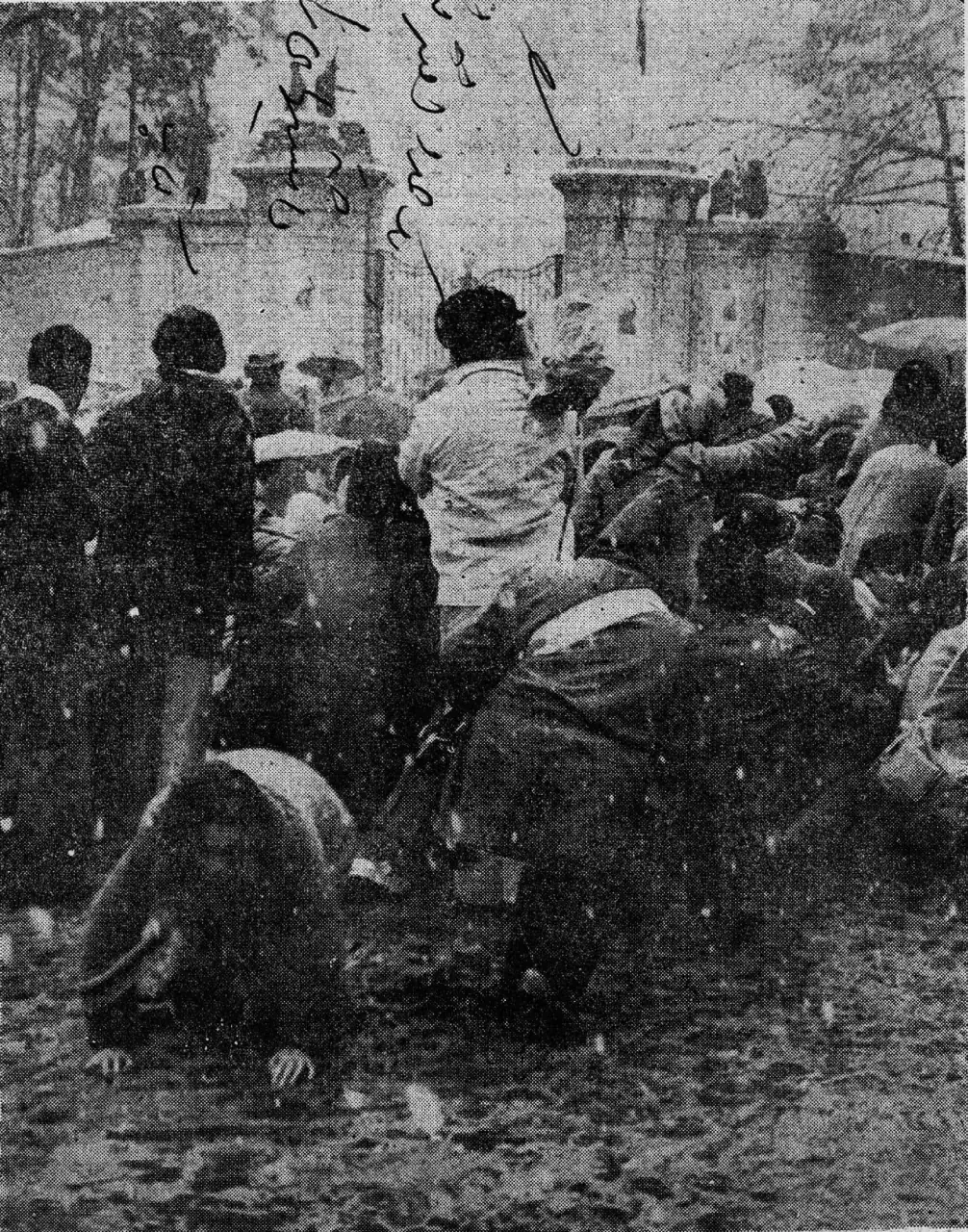
The coalition united against the monarchy quickly faced disagreements over the system, religious authority, local rights, and social policy. Newspaper closures, local armed clashes, and revolutionary courts brought coercion into the debate, and the occupation of the U.S. embassy in November further weakened the interim government. Dissatisfaction with past American intervention explains part of the context of mobilization; it does not automatically justify holding diplomats, nor can all revolution participants be assigned to the same organization.
03 / 1978–1980How society worked
Strikes affected oil exports, transport, and the operation of agencies, and after the revolution nationalization and property confiscation redistributed resources again. Workers' organizations, enterprise managers, and new political institutions held different views on management and labor rights. Short-term production interruptions and long-term structural problems overlapped, so all economic difficulties cannot be attributed to a single policy, nor can the transfer of resources to new institutions be automatically equated with ordinary workers holding decision-making power.
How did ordinary people live?
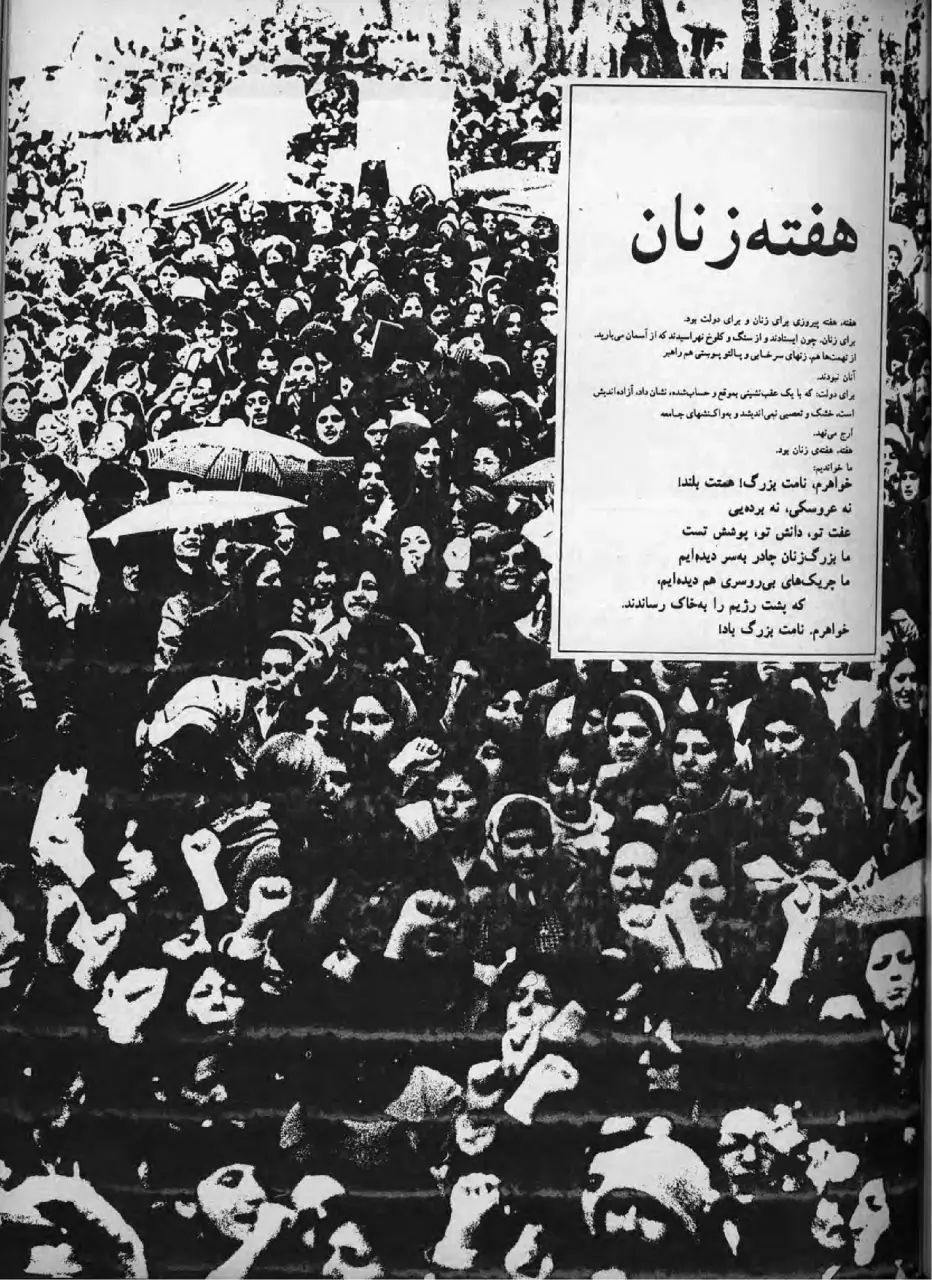
Streets, schools, factories, and homes all took part in the revolution, and women's fundraising, marches, and care work in particular must not disappear. The protests of March 1979 showed that after opposing the Shah there were still disagreements over dress and rights, and the press briefly flourished before being closed down. People did not all experience liberation or loss of space in the same way; ethnic minorities, religious communities, political dissidents, and different classes need to be seen separately.
04 / 1978–1980Where change began
At the end of 1979 the new constitution established power arrangements including guardianship of the jurist, and the elections and institutional competition of 1980 continued to determine how it actually operated. Iraq's full-scale invasion strengthened military mobilization and the logic of security, and political concentration developed further afterward. The chapter turns to the next stage at the start of the war and does not mistake 1980 for the boundary at which all internal revolutionary disagreements had ended.
Milestones that changed direction
Demonstrations keep expanding
Protests in Qom, mourning gatherings, demonstrations in various cities, and strikes drove one another, and the government reshuffled between concessions and repression. Different networks brought different demands; the system that ultimately prevailed cannot be treated as the original common blueprint.
The Shah leaves
In January the Shah left the country, and Bakhtiar tried to maintain a government under a constitutional monarchy. Departure did not mean the republic had been formally established; for several weeks different plans and actual power were still competing.
Khomeini's return and the end of the dynasty
Khomeini returned in February; armed clashes and the military's neutrality ended the monarchical government. The leader's symbolic role was important, and the participation of workers, students, local organizations, and families likewise sustained this turning point.
Women's protests over rights and dress
Around International Women's Day in March, women protested restrictions on dress and rights in Tehran, and historical newspapers preserve images of this. Their participation in the anti-Shah revolution did not mean agreement with all subsequent policies, nor can a single march represent all women.
Republic referendum
The spring referendum supported the name of a republic, but the leader's powers, institutional relations, and rights arrangements remained contested. The referendum options and political conditions need to be explained; a decision on the name did not mean agreement with every clause of the new constitution.
U.S. embassy seizure
In November the U.S. embassy was seized and diplomats were detained; the hostage crisis affected the interim government and international relations. Dissatisfaction with past intervention does not automatically make the detention of diplomats legitimate.
New constitution
At the end of the year a constitutional referendum established a new power structure including the guardianship of the jurist, and differences in organizational resources influenced the outcome. Broad participation against the Shah cannot be directly equated with support for every subsequent institution.
War changes political conditions
Iraq's full-scale invasion further concentrated security, mobilization, and social control, while debates within the revolution continued. The start of the war provides a phase turning point; it does not mean that all institutional and social divisions had ended.
What we know
The press, constitutions, referendum materials, strike records, photographs, and memoirs offer different scales. Leader biographies are suited to examining organization and thought but cannot replace the motives of all participants; retrospective accounts also often turn uncertain choices into inevitability. For photographs, the dates of shooting, publication, and later commemoration must be distinguished, and legal texts must be read against implementation and materials on those excluded; one cannot declare social outcomes from the provisions alone.
Questions still debated
Why religious networks gained the advantage, why the state lost control, and how much weight economic and cultural changes each carried still have multiple explanations. Discussing these mechanisms should not cancel the revolution's broad social base, nor should broad participation be equated with support for every later policy. The fall of the monarchy, the establishment of the new republic, and the subsequent concentration of power are connected but distinct processes, each requiring its own evidence and causal explanation.
Legacies for later generations
The republic's institutions, political language, and war mobilization profoundly influenced later society, and the revolution is also a family memory for many different individuals. Opposing the monarchy, advocating independence, and supporting a particular arrangement of jurist rule cannot be equated. Later commemorative photographs often highlight the victors; only by comparing materials from the same year on women, workers, and local organizations can one better understand which demands were absorbed, restricted, or excluded by the system.
References and evidence
These materials support this page's account. Check the purpose, perspective and accessible scope of each source. Notes identify the evidential limits of excerpts, summaries and timelines.
- IRAN ii. Islamic period (page 6)Encyclopaedia Iranica · Academic research
The Pahlavi era and the 1978–1979 upheaval; not to be used to infer the present.
- KHOMEINI i. LifeEncyclopaedia Iranica / Hamid Algar · Academic research
Biographies must be read against social, institutional, and diplomatic sources, and value judgments should not be adopted directly.
- HOSTAGE CRISISEncyclopaedia Iranica · Academic research
The 1979–1981 hostage crisis and the internal power struggle of the revolution.
- ECONOMY x. UNDER THE ISLAMIC REPUBLICEncyclopaedia Iranica / Vahid F. Nowshirvani · Academic research
Mainly covers up to the early 1990s; the update date does not mean the content covers the present.
- Iran: A Country Study, fifth edition (2008)Library of Congress, Federal Research Division; Glenn E. Curtis and Eric Hooglund, eds. · Academic research
The official LOC full-text OCR was obtained, and body paragraphs on history, women, education, and government politics were read; this was not merely reading the table of contents or a summary, nor is any claim made of having read all 416 scans. The study has limitations of period and national-studies framework; errors in the history chapter such as Chaldiran 1524 and Gulistan 1812 are not carried over, and 1514 and 1813 are adopted respectively per specialized research; the internal discrepancy in the history and education chapters over Tehran University 1935/1934 is likewise not copied directly.
At the end, bring this chapter to a close.