Oil boom and monarchical modernization
The economy and education changed rapidly, so why did the political system find it increasingly difficult to accommodate different voices?
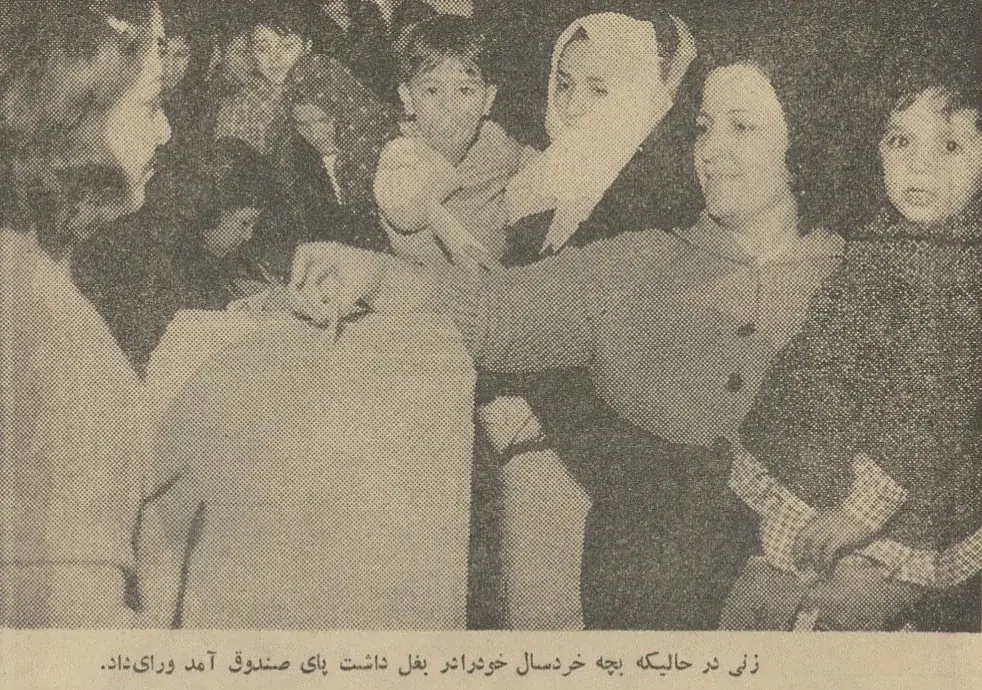
Land deeds, school textbooks, and urban factories changed the lives of many families, but the space for political expression did not expand in step. After 1953 the monarchy gradually concentrated power; land reform, women's suffrage, and family law reform brought concrete changes, and oil revenue drove industry, education, and urban services. Not all peasant households received enough land, and those who moved to cities faced pressure over housing, prices, and employment. The state called the reforms the White Revolution, but residents understood their benefits and costs according to their own circumstances. Literature, film, and women's activities displayed agency beyond official projects; the protests and strikes of 1978 came together and must be explained through both these social changes and political closure.
01 / 1953–1978How this era began
The repression of 1953 weakened the National Front, the Tudeh Party, and other opposition forces, and the monarchy established closer cooperation with the United States and Britain. The 1954 oil arrangement and aid helped restore revenue, but economic and social problems did not disappear. A formal parliament and parties continued to operate, but political competition was strictly limited, so different voices demanding land, employment, and public services lacked stable channels for expression and negotiation.
Why did this era begin?
Land reform entered implementation in 1962, and a 1963 referendum organized several measures into the White Revolution; women's political rights were also expanded during this period. The reforms served production, social support, and monarchical legitimacy at the same time and were not a technical plan containing only benevolent goals. Some religious and political opponents focused on different issues; those who supported or opposed the reforms cannot all be summarized as exactly identical progressives and conservatives.
02 / 1953–1978Who held power
The Shah, bureaucrats, the army, and security agencies continuously expanded their influence, and elections and official parties could not produce sufficient accountability. The Rastakhiz Party strengthened one-party integration in 1975, narrowing the space for legal opposition further. Policies could be pushed through quickly from the top down, but it was harder to correct errors through open competition; directly calling increased administrative and military capacity an increase in social freedom would omit the organizations and voices restricted during the reform process.
What tensions existed within the era?
Education and urbanization raised expectations, but political closure limited participation, and opportunities within economic prosperity were unevenly distributed. Price controls and anti-profiteering campaigns strained relations between some merchants and the state, and surveillance and detention by security agencies deepened opposition. Religious, liberal, and leftist critics of the monarchy overlapped and also differed significantly; the fact that they later opposed the Shah together cannot be used to assume they had already agreed on the post-revolutionary system.
03 / 1953–1978How society worked
Land distribution changed relations between some landlords and tenant farmers, but differences such as land shortage, landlessness, and insufficient credit remained. Industry, oil, and services absorbed labor, and the revenue surge after 1973 drove high-intensity spending and imports. Equipment, ports, technicians, and housing could not grow at the same speed, so inflation and bottlenecks increased; the total volume of oil wealth alone cannot show whether different families had stable work and affordable lives.
How did ordinary people live?
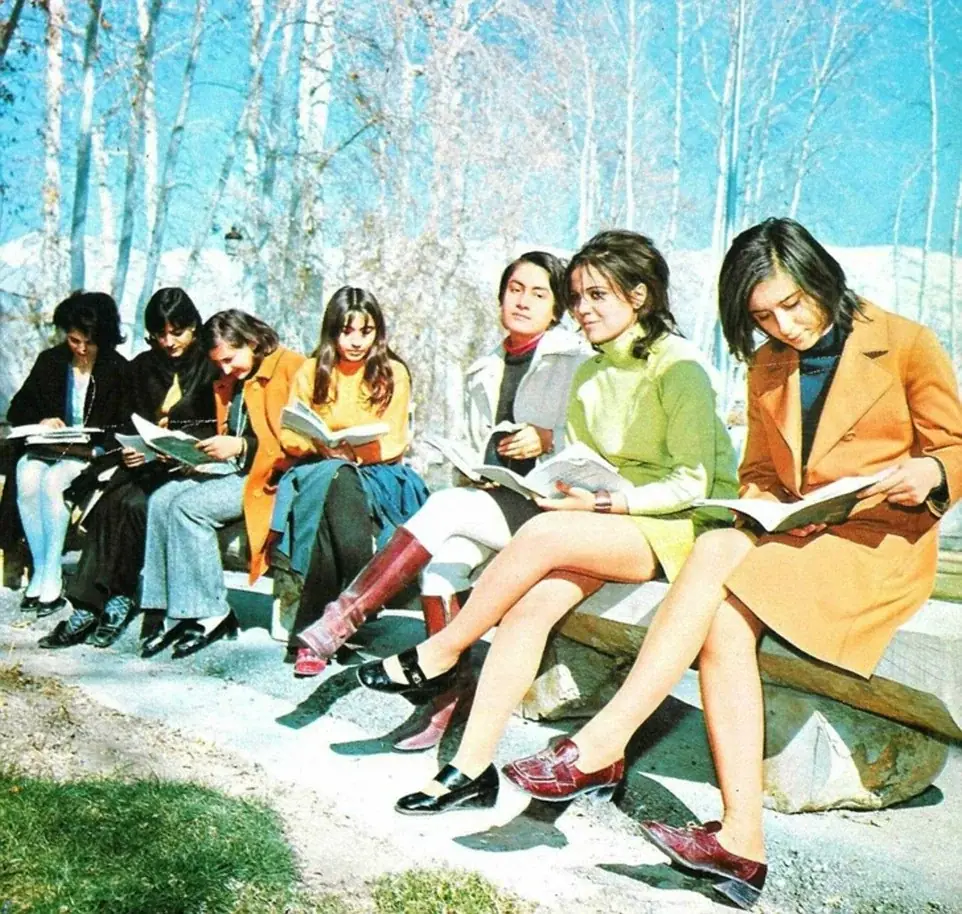
New schools, health care, transport, and occupations changed the range of action for many people, and rural-urban migration also reorganized families and neighborhoods. Women gained suffrage and certain family law rights, which does not mean that differences in employment, marriage, and public life had disappeared. Creators such as Farrokhzad spoke from the body, emotion, and everyday experience, so that residents were not merely objects of state reform but could also discuss change in their own language.
04 / 1953–1978Where change began
From 1977 to 1978, public criticism, demonstrations, commemorations, and strikes gradually connected, and the government wavered between concession and repression. Oil workers' strikes affected finances and daily operations, while universities, the bazaar, and religious networks provided different channels of mobilization. The dynasty did not suddenly collapse because of a single article or a single bout of inflation; the crisis came from the interaction of organization, policy, and decisions, and the final outcome still contained choices that were not certain at the time.
Milestones that changed direction
Concentration of royal power
The repression after the coup changed the conditions of political competition, and royal influence continued to increase. Only over many subsequent years did institutions and resources gradually become concentrated; not all centralizing measures can be written as completed on August 19 itself.
Implementation of land reform
Land reform began implementation, changing relations between some landlords and tenant farmers, but differences in landlessness, land shortage, credit, and irrigation remained. Distributing plots did not mean every farming household thereafter had a stable livelihood.
White Revolution and women's suffrage
A referendum promoted the White Revolution, women's political rights expanded during this period, and the government also repressed opposition mobilization. Formal rights, the actual space for choice, and the outcomes of each reform measure need to be observed separately.
Family law reform
The Family Protection Law adjusted some marriage and divorce arrangements and expanded certain legal rights for women. Provisions and implementation, and urban-rural and class differences, varied; one cannot declare family relations already equal merely because a law was promulgated.
Imperial commemoration and the royal image
The monarchy organized celebrations and publications on the theme of the 2,500th anniversary of the founding of the Persian Empire, linking the memory of Cyrus with modern royal authority. The display was a selective political narrative and cannot prove that the dynasty was uninterrupted for more than two thousand years or that all residents approved.
Oil revenue surge
Changes in international oil prices caused revenue to surge, and the state expanded spending on industry, armaments, and infrastructure. Ports, skilled personnel, housing, and administrative capacity could not grow in step, and inflation and bottlenecks entered residents' daily lives.
One-party rule
The Ba'ath Party promoted one-party integration, further narrowing legal opposition space. The expansion of modern schools and occupations did not bring equal political accountability, and this tension needs to be analyzed together with economic indicators.
Protests and strikes converge
Urban demonstrations, mourning gatherings, and oil workers' strikes gradually converged, affecting state revenue and daily operations. The religious, liberal, and left-wing elements of the alliance did not therefore share the same future system.
What we know
Economic statistics, land reform records, laws, the press, and cultural works each reveal part of the change. Aggregate national growth does not equal distributive fairness, and poetry and film cannot replace a population census. Family protection law and voting rights must be observed according to specific provisions and implementation, and official referendum vote counts should be distinguished from the conditions of political competition; interpretations of policy outcomes need to preserve urban-rural and class differences.
Questions still debated
Whether the revolution stemmed from insufficient modernization or from change that was too rapid, no single answer can cover the contradictions. Social development, exclusion from royal power, international relations, and cultural politics can interact, and participants in turn change strategies. Explaining all religious criticism as anti-technological, or treating development figures as sufficient proof of ruling legitimacy, would omit people's differing demands for justice, dignity, and political representation.
Legacies for later generations
Changes in infrastructure, education, and social rights continued to affect the republic, and many participants in the reforms also entered new political and cultural life. Monarchical propaganda and revolutionary criticism each emphasized different results, and evaluation requires specific comparison of land, occupations, and law. The expansion of services and opportunities can be acknowledged while also asking about political control and the costs of coercion; later failure or success cannot automatically provide a full verdict on the original policies.
References and evidence
These materials support this page's account. Check the purpose, perspective and accessible scope of each source. Notes identify the evidential limits of excerpts, summaries and timelines.
- ADMINISTRATION in Iran vii. Pahlavi periodEncyclopaedia Iranica · Academic research
Bureaucracy, the military, and centralization.
- ECONOMY ix. IN THE PAHLAVI PERIODEncyclopaedia Iranica · Academic research
Land reform, industry, and oil revenue; used only for the period it covers.
- FEMINIST MOVEMENTS iii. IN THE PAHLAVI PERIODEncyclopaedia Iranica · Academic research
Women's organizations, the 1963 suffrage, and the tensions of state reform.
- IRAN ii. Islamic period (page 6)Encyclopaedia Iranica · Academic research
The Pahlavi era and the 1978–1979 upheaval; not to be used to infer the present.
- FARROḴZĀD, FORŪḠ-ZAMĀNEncyclopaedia Iranica / Farzaneh Milani · Academic research
Literature, documentary film, and gender norms; the first-person voice of the poem is not treated as a complete biographical record.
- Iran: A Country Study, fifth edition (2008)Library of Congress, Federal Research Division; Glenn E. Curtis and Eric Hooglund, eds. · Academic research
The official LOC full-text OCR was obtained, and body paragraphs on history, women, education, and government politics were read; this was not merely reading the table of contents or a summary, nor is any claim made of having read all 416 scans. The study has limitations of period and national-studies framework; errors in the history chapter such as Chaldiran 1524 and Gulistan 1812 are not carried over, and 1514 and 1813 are adopted respectively per specialized research; the internal discrepancy in the history and education chapters over Tehran University 1935/1934 is likewise not copied directly.
At the end, bring this chapter to a close.