Safavid: formation of a Shi'i state
How did religion help unify the dynasty, and how did it change inhabitants' lives?
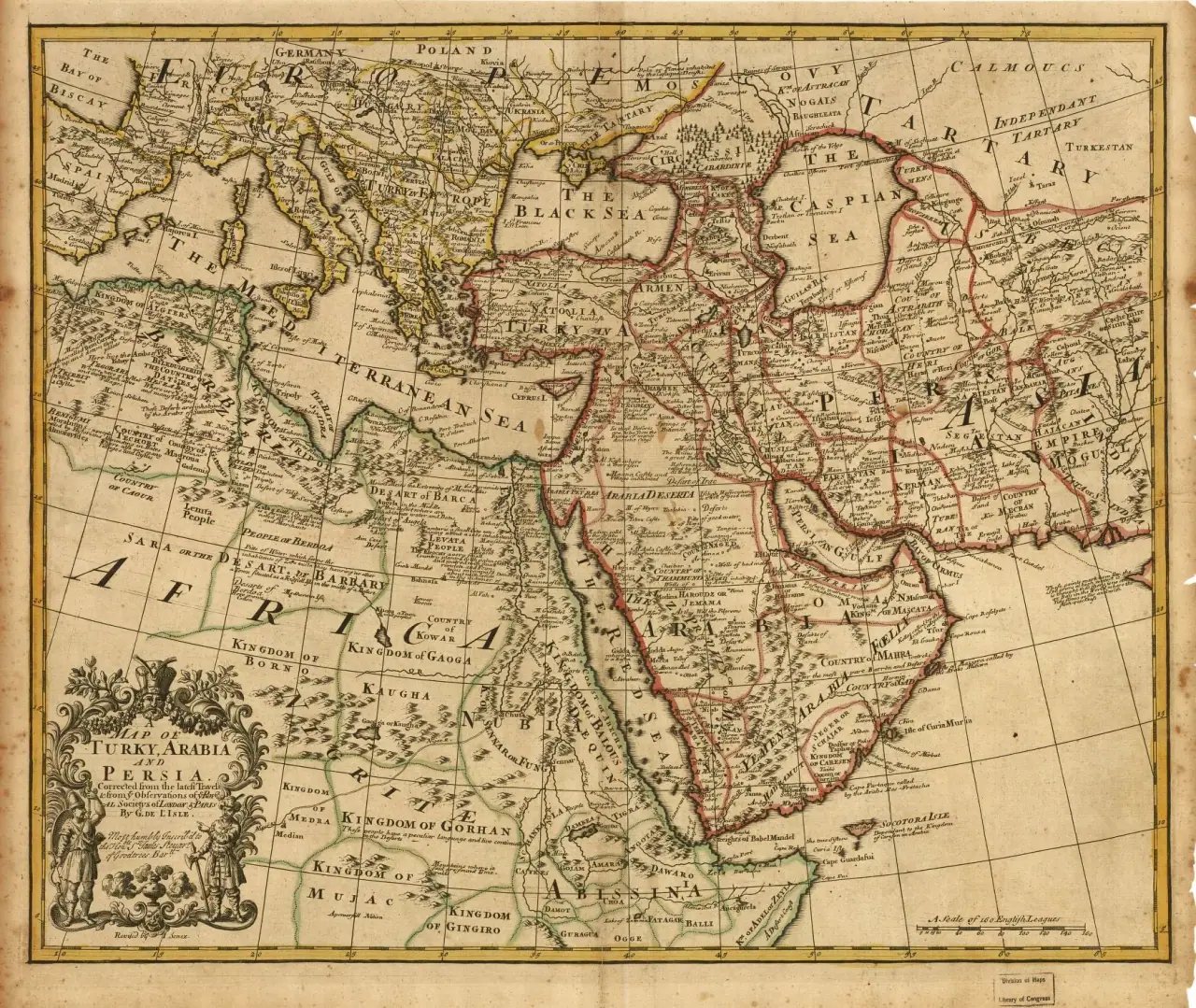
Isfahan's square places mosques, the court, and the market in a single view, but very different people and powers stand behind it. The Safavids rose from a Sufi order and the Qizilbash military network, established Twelver Shi'ism as the official faith, and then underwent long periods of missionary work, institution building, and coercion. The royal house, tribal soldiers, civil officials, and legal scholars both cooperated and competed for resources; Abbas I developed a new capital, the army, and trade, and also changed many families through war and forced relocation. Splendid architecture and the silk trade can demonstrate state capacity, but they must not obscure the costs borne by Caucasus inhabitants and religious minorities, still less imply that in 1501 the whole country had simultaneously become one community of faith.
01 / 1501–1722How this era began
Timur and the Turkmen regimes left behind armies, court workshops, and urban networks, and the Safavid order at Ardabil had followers across regions. Sufi belief, veneration of leaders, and military mobilization gradually combined, providing a basis for Ismail's expansion. Followers were not a miniature of future modern citizens, nor can the order's origin traditions directly prove that the entire subsequent dynasty had designed all its political institutions in advance.
Why did this era begin?
In 1501 Ismail was proclaimed king in Tabriz and declared the official Shi'i faith, with military victory and religious commitment supporting each other. The defeat at Chaldiran in 1514 damaged his image of invincibility but did not immediately destroy the dynasty. Subsequent rulers continually adjusted military and religious institutions, and the continuing wars were also tied to frontier competition with the Ottomans, Uzbeks, and other powers, not merely abstract doctrinal differences.
02 / 1501–1722Who held power
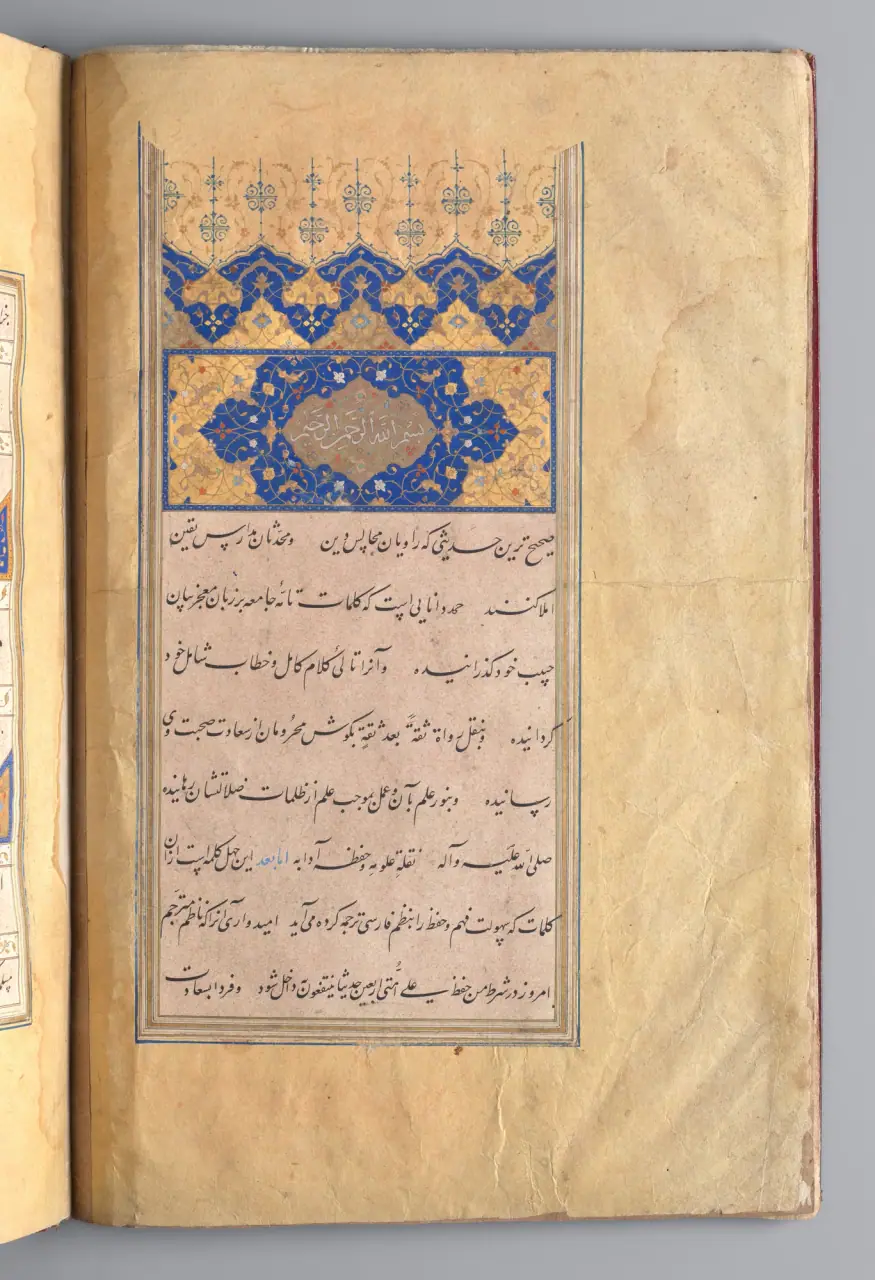
Qizilbash chiefs, Persian-speaking civil officials, the royal house, and scholars each controlled part of the resources, and their relationships changed with each monarch. Abbas I strengthened the lands and army under direct control and incorporated soldiers and court personnel of Caucasus origin to reduce dependence on some tribal chiefs. This kind of centralization increased royal capacity and also produced dependency and coercion; the relationship between religious scholars and the state did not always take the single form of obedience.
What tensions existed within the era?
Competition continually arose over the allocation of resources to the royal house, local soldiers, and religious figures, and wars with neighboring states added pressure for taxation and migration. State promotion of Shi'ization included scholarship, ritual, and institution building, and also coercion against Sunnis and other communities. Ethnic, linguistic, and sectarian boundaries did not fully overlap, and the political choice of an army cannot be explained as the natural stance of an entire modern nation.
03 / 1501–1722How society worked
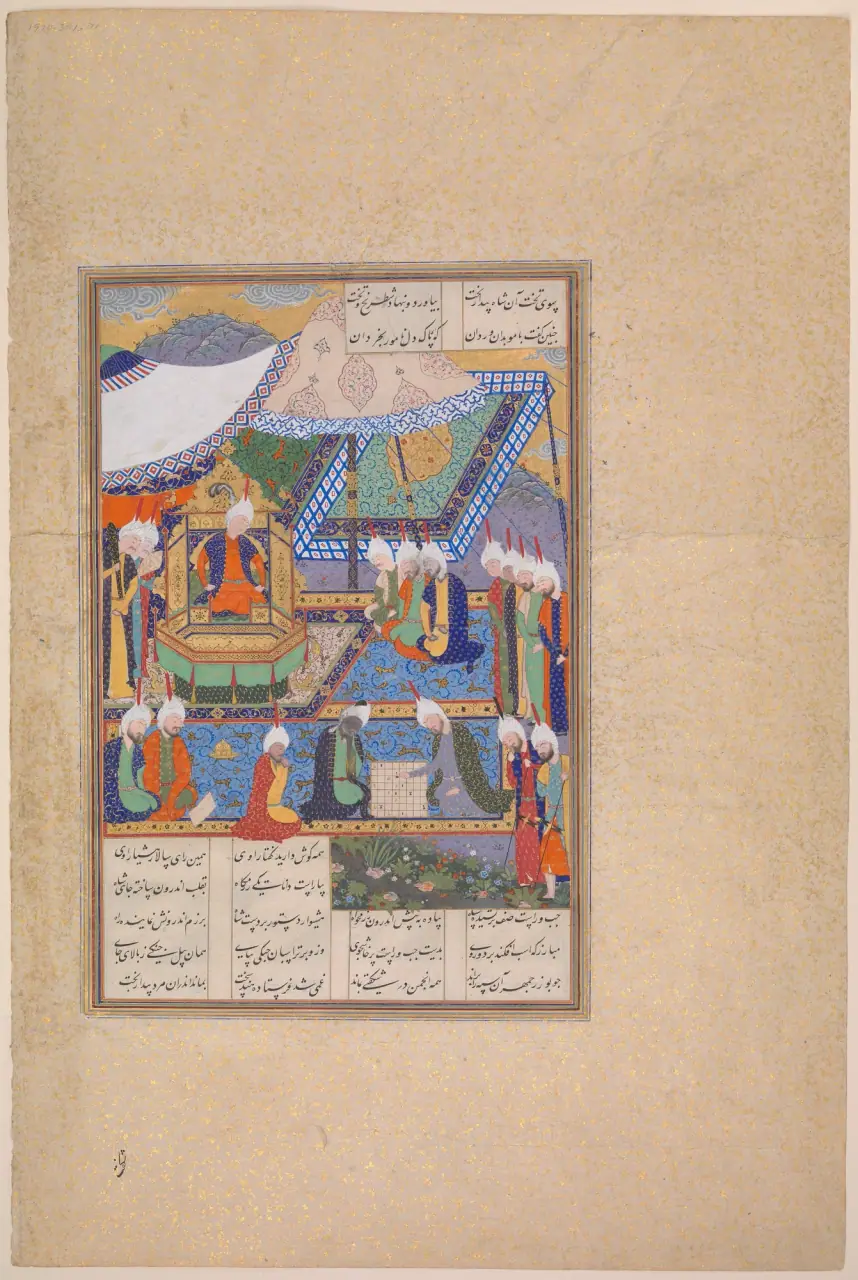
Agriculture, silk, handicrafts, and trade routes together supported the fisc, and royal management of the silk trade connected state revenue with international markets. Roads, caravanserais, bridges, and markets facilitated transport, while merchants traded with India, Europe, and farther regions. Displays of state prosperity came mostly from the court and cities, while rural taxation, war damage, and the risks of trade routes must be examined separately; export luxuries cannot be used to infer that households everywhere were prosperous.
How did ordinary people live?
Artisans, merchants, students, and families in the cities participated in market and religious life, while villages and pastoralists performed different kinds of labor. The forcibly relocated Armenians built the New Julfa trading network but experienced loss of homes and death, and later success cannot erase forced migration. Different religious groups had different opportunities and restrictions, and the splendor of the square cannot directly show the actual circumstances of servants, women, or rural inhabitants.
04 / 1501–1722Where change began
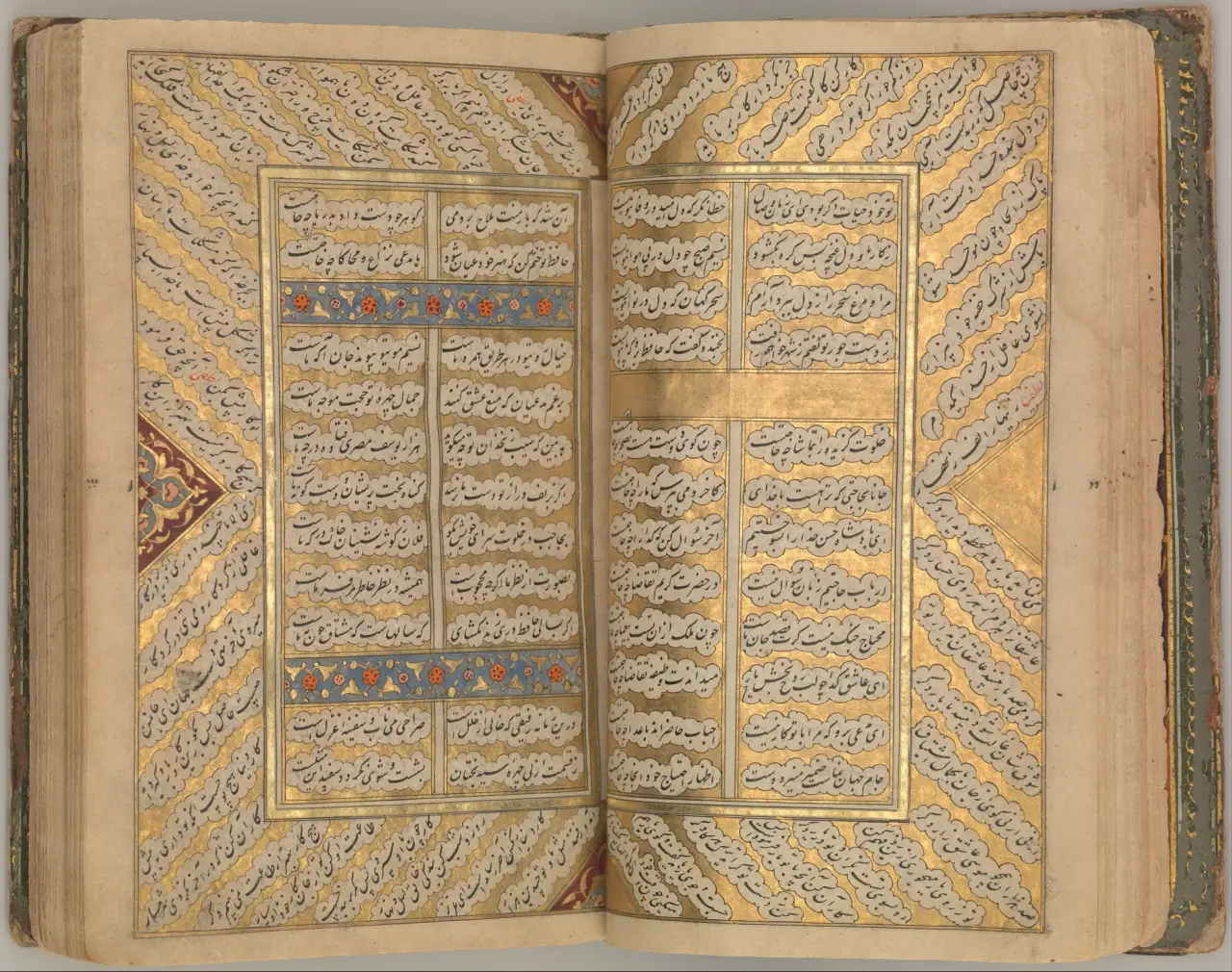
From the late seventeenth century to the early eighteenth century, difficulties in finance, local governance, border defense, and court decision-making gradually became intertwined. In 1722 Isfahan fell after a long siege, leaving the dynasty without effective control of its main political center. The crisis cannot be blamed solely on the character of a particular monarch or on women of the court; local resistance and resource problems were equally important, and the Safavid name and restoration claims did not all disappear on that day.
Milestones that changed direction
Proclaimed king in Tabriz
Ismail was proclaimed king in Tabriz and declared Twelver Shi'ism the official faith. The order changed state expression, while inhabitants' conversion and local religious practice underwent a longer process.
Defeat at Chaldiran
The Ottomans won at Chaldiran, damaging the Safavid image of invincibility and affecting civil-military relations. The date 1514 is used, not the error of 1524 found in some general histories, and the defeat is not equated with the dynasty's immediate end.
Treaty of Amasya
The Treaty of Amasya temporarily adjusted control and relations between the two states, easing some pressure of war. Diplomatic compromise shows that political choices were not determined solely by sectarian differences, and frontier inhabitants still had their own circumstances.
Accession of Abbas I
After Abbas I's accession, he weakened some tribal chiefs and reorganized the army, the royal domain, and finances. Increased state capacity came with a redistribution of resources and does not mean that all groups gained autonomy equally.
Construction of Isfahan
Around this time, construction of the new capital at Isfahan proceeded intensively, with the square linking court, religion, and market. The architecture shows the capacity to mobilize and manage resources, but questions remain about construction labor, finances, and the opportunities available to different residents.
Forced relocation of Armenians
The Caucasus wars and royal orders forcibly relocated Armenian residents, and networks such as New Julfa formed as a result. Commercial achievements and the suffering of forced displacement must be recorded together; the former cannot erase the latter.
Hormuz changes hands
With the support of English naval power, the Safavids seized Portuguese-controlled Hormuz, and trade and diplomacy were rearranged. The date 1622, verified against specialized research, is used here rather than the erroneous 1623 found in some general histories.
Fall of Isfahan
After a siege, Isfahan fell, and the dynasty lost effective control of its main center. Successors still used the Safavid title, religious institutions, and cultural traditions; the political end was not a total reset for all of society.
What we know
Court histories, religious texts, merchants' records, architecture, and objects can supplement one another, but sources are very uneven in their attention to royal achievements and ordinary people. Grand projects prove that resources could be concentrated, not that mobilization was voluntary. European travelers brought outside perspectives and also their own religious and commercial biases; the pace of Shi'ization, local resistance, and demographic change especially require comparison of different types of materials.
Questions still debated
Whether the dynasty established the foundations of modern Iran, how Shi'ization changed society, and how centralization and decline should be explained are all debated questions. Religious policy should not be compressed into a one-day conversion order, nor is the dynasty's end a moral story in which prosperity inevitably led to corruption. Discussion should specify region and period and place trade achievements, wartime forced migration, and the experiences of different communities within the same scope of evaluation.
Legacies for later generations
Shi'i religious institutions, festivals, urban spaces, and national identity gained far-reaching influence in this period, and successors continued to borrow Safavid legitimacy. Painting and calligraphy, carpets, and architecture also entered world collections and modern heritage narratives. Continuity does not mean institutions ceased to change thereafter, nor do the borders of modern Iran equal the dynasty's territory at its height; the experiences of Armenia, the Caucasus, and Central Asia should retain their own place.
References and evidence
These materials support this page's account. Check the purpose, perspective and accessible scope of each source. Notes identify the evidential limits of excerpts, summaries and timelines.
- SAFAVID DYNASTYEncyclopaedia Iranica / Rudi Matthee · Academic research
State founding and long-term Shi'ization; not equivalent to a modern nation-state.
- The Art of the Safavids before 1600The Metropolitan Museum of Art · Museum research
Early Safavid painting, carpets, and royal workshops.
- Iran: A Country Study, fifth edition (2008)Library of Congress, Federal Research Division; Glenn E. Curtis and Eric Hooglund, eds. · Academic research
The official LOC full-text OCR was obtained, and body paragraphs on history, women, education, and government politics were read; this was not merely reading the table of contents or a summary, nor is any claim made of having read all 416 scans. The study has limitations of period and national-studies framework; errors in the history chapter such as Chaldiran 1524 and Gulistan 1812 are not carried over, and 1514 and 1813 are adopted respectively per specialized research; the internal discrepancy in the history and education chapters over Tehran University 1935/1934 is likewise not copied directly.
- PORTUGAL i. Relations with Persia in the Early Modern Age (1500–1750)Encyclopaedia Iranica · Academic research
The substantive body paragraphs on Chaldiran in 1514 and Hormuz in 1622 were checked; only the diplomatic, commercial, and conflict processes that have been cross-read are used, and travelers' titles or misremembered royal names are not treated as an accurate chronology.
At the end, bring this chapter to a close.