The Sasanians: King of Kings and a Multi-Religious Society
How did kingship coexist with nobles and people of different faiths?
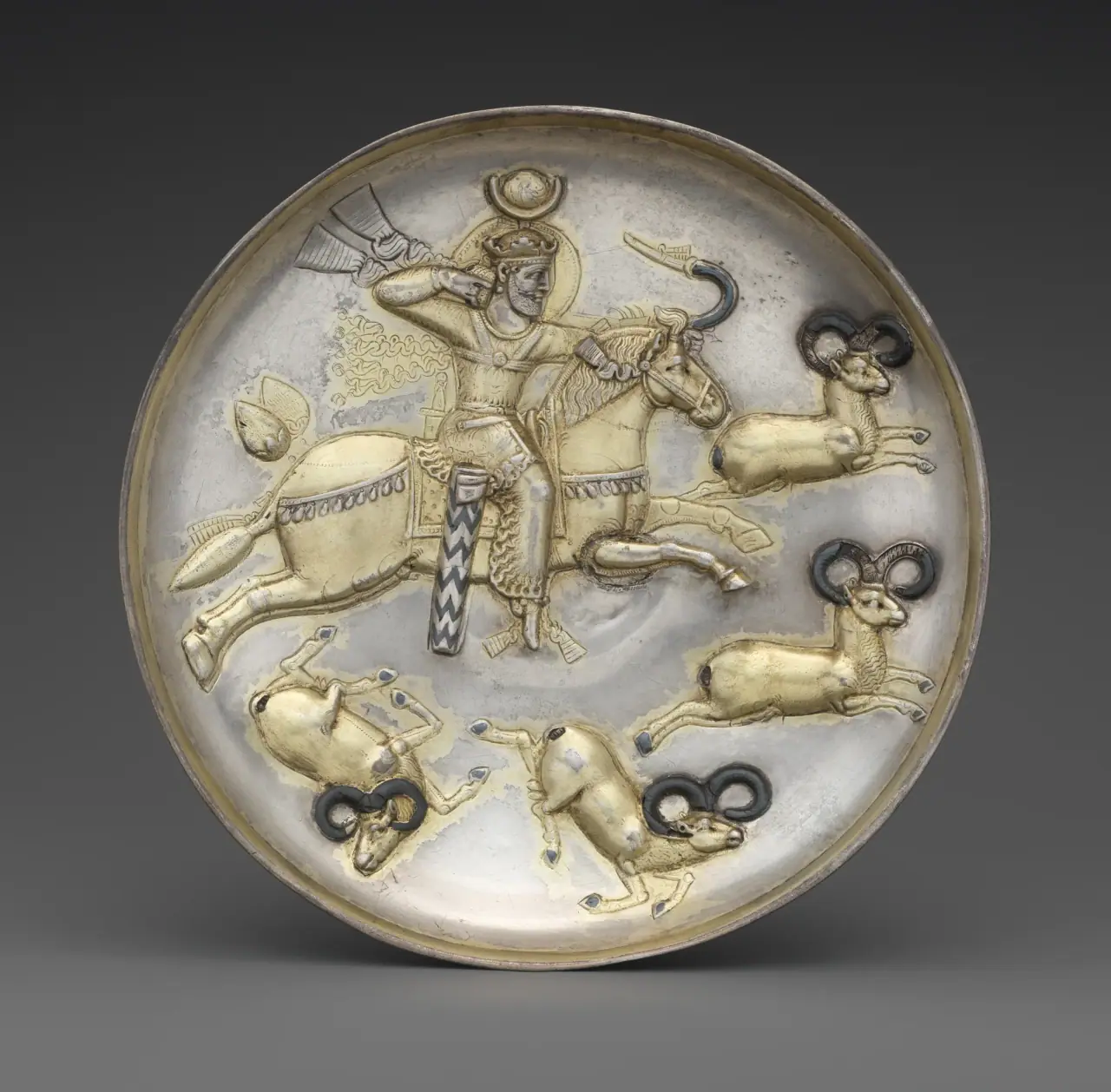
The victorious king on the rock relief and the vessels left in the soil present different scales of the Sasanian world. After Ardashir founded the new dynasty, the title King of Kings, patronage of Zoroastrianism, and the army together shaped rule, while local nobles and officials still held important resources. Christians, Jews, and other communities lived within the empire, and religious policy changed with the monarch, wars, and local conditions. Competition with Rome and Byzantium drove fiscal and military adjustments and also caused migration and destruction. The seventh-century conquest came after long wars and a succession crisis, but political end does not mean that language, technology, or all religious life disappeared at the same time.
01 / 224–651 CEHow this era began
The Arsacid dynasty and local nobles formed a complex political network, and Fars retained religious and local royal resources. Ardashir's rise required military victory and also required explaining the new dynasty's legitimacy to elites. The later language claiming to restore ancient Iranian traditions was part of this political construction and cannot directly prove that all institutions underwent complete rupture between the old and new dynasties.
Why did this era begin?
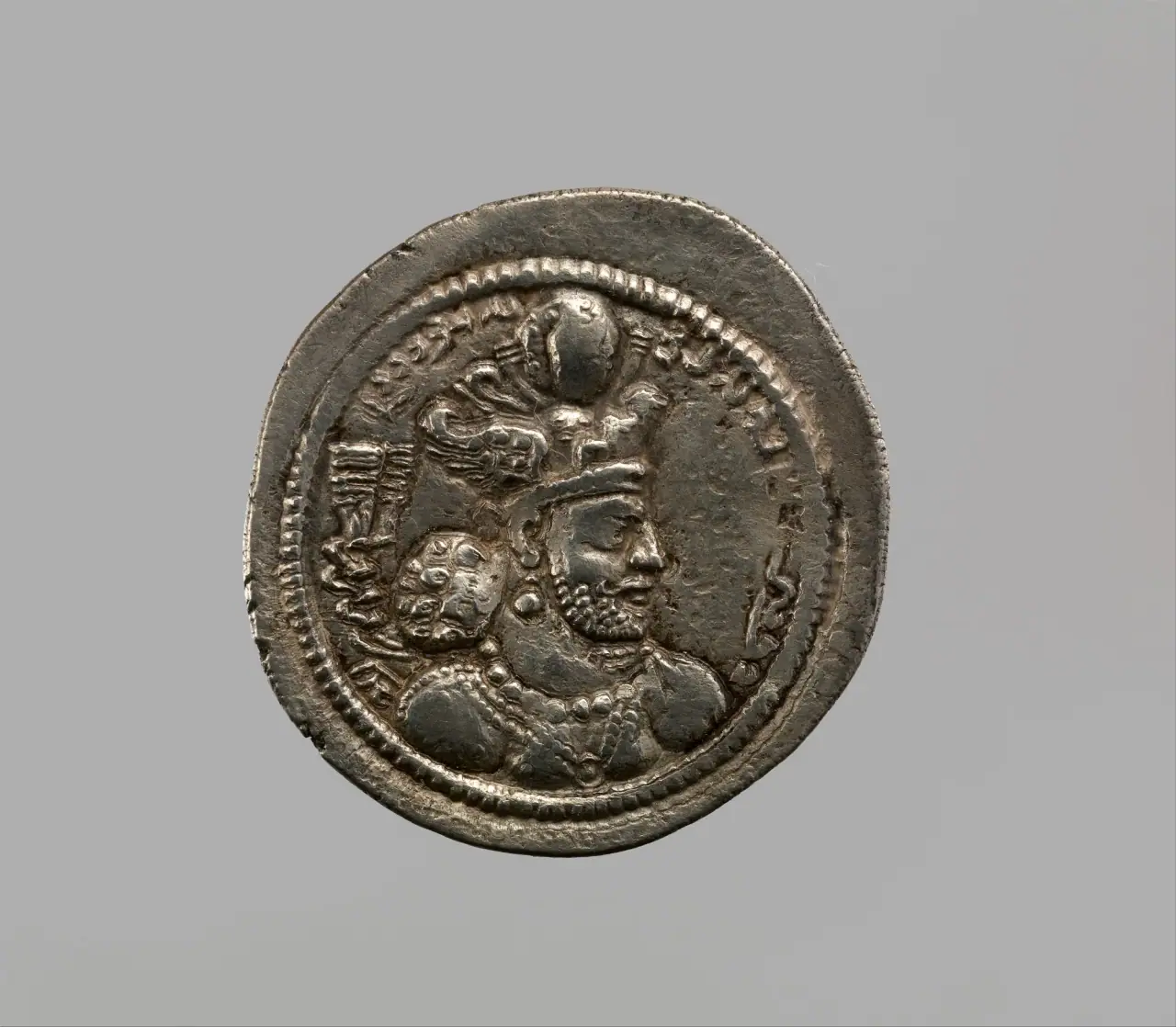
The victory of 224 gave Ardashir dynastic advantage, and subsequent rulers expressed kingship through coins, inscriptions, and rock reliefs. Shapur I's wars against Rome brought prestige and population movement. Conquest, city founding, and religious patronage supported one another, but the single victorious image of the monarch in stone carvings omits local negotiation, the labor of armies, and the costs borne by those forcibly moved.
02 / 224–651 CEWho held power
The royal house, noble families, military commanders, scribes, and religious figures all participated in rule. Important support for Zoroastrianism does not mean that every inhabitant believed in the same religion or that priests held the same power in all periods. The king had to extract taxes and soldiers and also balance local elites who controlled land and military force; succession struggles could quickly expose the center's dependence on such support.
What tensions existed within the era?
Wars against the Western empire and northeastern forces required continuous mobilization, and noble competition, taxation, and religious differences could also strain domestic order. Policy toward a particular religious community was often intertwined with diplomacy and court struggles and was not a simple precursor of modern ethnic conflict. The long war against Byzantium after 602 at first won extensive territory, but subsequent counterattacks and fiscal pressure made it hard to turn victory into stable governance.
03 / 224–651 CEHow society worked
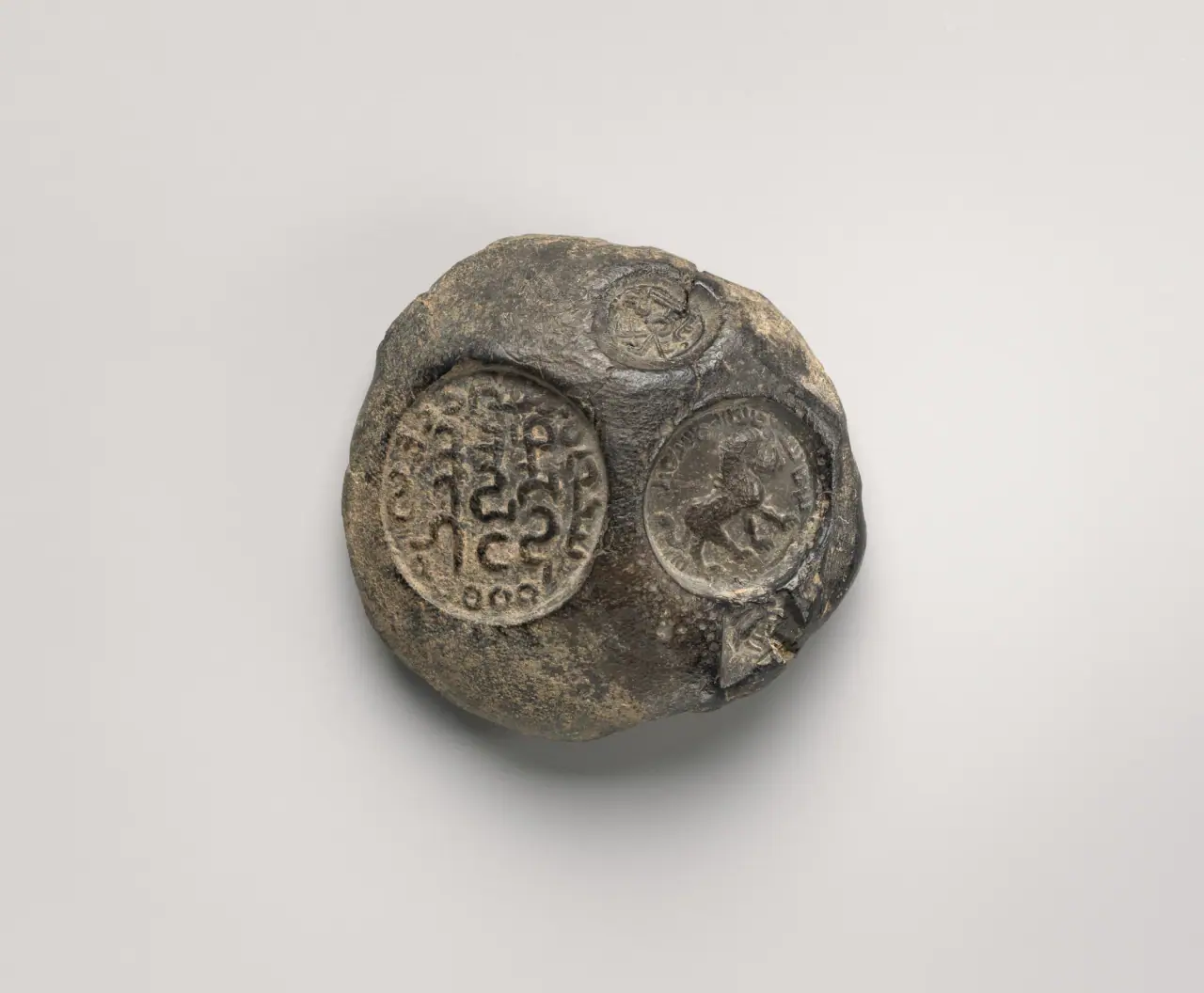
Irrigated agriculture, estates, urban workshops, and regional trade supported the treasury, and the tax system was closely tied to army supply. Silver coins circulated beyond the empire, and textiles, metalware, and glass also took part in exchange, but a small number of fine objects cannot represent the scale of production across the country. War sometimes seized wealth and artisans, but prolonged attrition could damage fields, transport, and the taxpaying population; state revenue and the population's capacity to bear burdens did not always grow in step.
How did ordinary people live?
Most households had to arrange farming, herding, weaving, and local exchange, and city dwellers also encountered festivals and institutions of different religions. Opportunities and restrictions for Christians, Jews, and other groups changed by time and place and cannot be summarized for four hundred years with a single label of tolerance or persecution. Royal gold and silver ware most easily enters collections, while everyday vessels and settlement remains help shift attention back to people who seldom left their names.
04 / 224–651 CEWhere change began
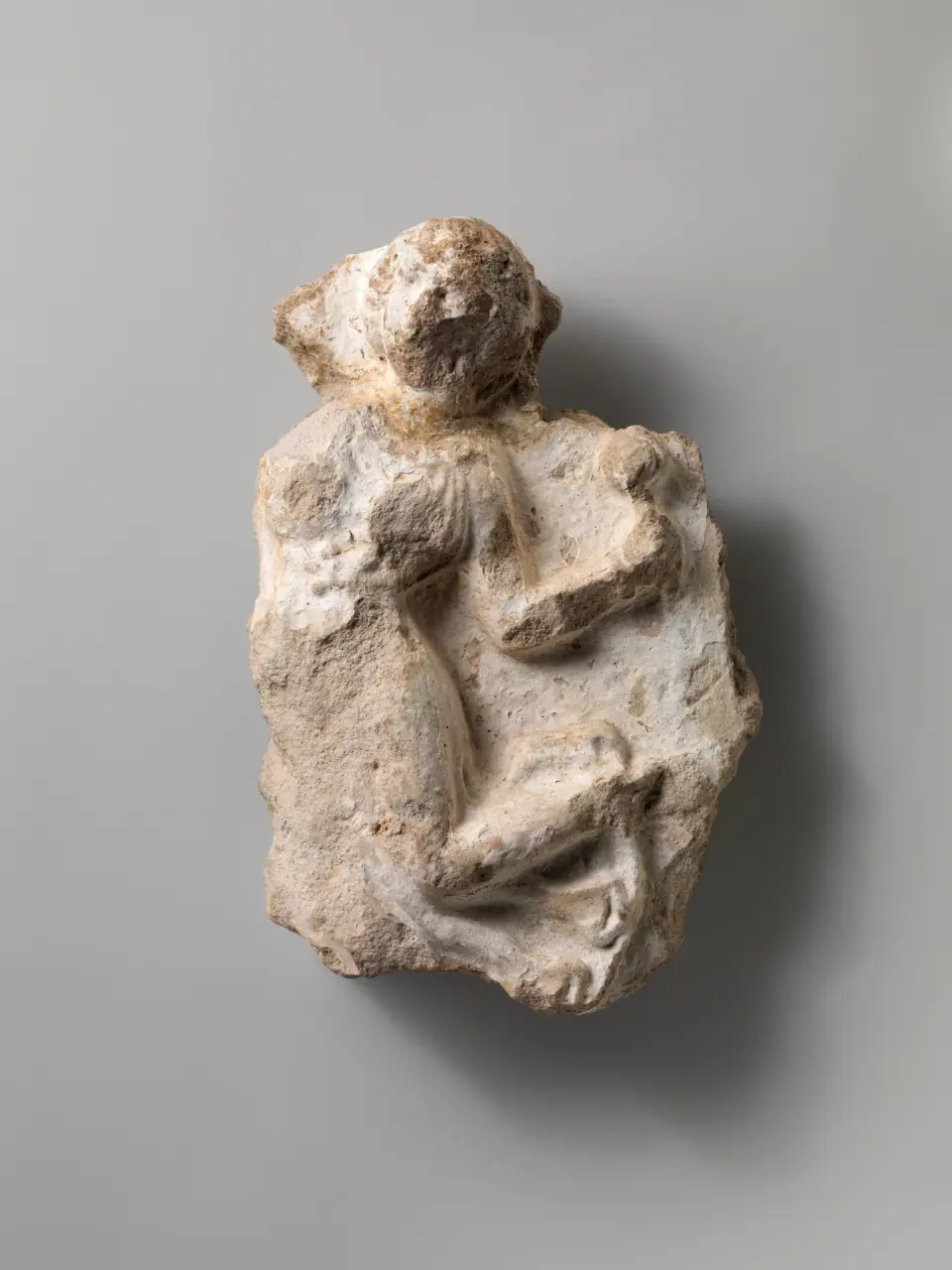
After Khosrow II was deposed in 628, rapidly changing monarchs found it difficult to maintain military-civil coordination. Arab Muslim armies gradually took cities and regions, and the death of Yazdegerd III in 651 is often used as the dynasty's endpoint. The military process was not a single battle covering the entire plateau; local agreements, garrisons, and resistance continued, nor can the defeat be attributed to all inhabitants simultaneously abandoning the old dynasty.
Milestones that changed direction
Ardashir founds the dynasty
Ardashir defeated Arsacid kingship, founded a new dynasty, and reshaped legitimacy with titles such as King of Kings. The new rule still depended on local elites and could not prove by royal titles alone that the whole country was equally centralized.
A Roman emperor is captured
Shapur I captured the Roman emperor Valerian, and the victory was carved into rock reliefs and narratives of kingship. The posture in the relief involves political and artistic arrangement and is not a neutral photograph of a moment on the battlefield.
Khosrow I accedes
Khosrow I succeeded to the throne, and his rule is associated with adjustments to taxation, the army, and the bureaucracy. The results of the reforms must be compared with the burdens on the landholding elite and on different inhabitants, and the title of just ruler must not be substituted for actual effects.
A long war begins
A long war with Byzantium begins, and each side successively captures important regions. Territorial victories require sustained manpower and supply, and the fighting also exposes local inhabitants to requisition, displacement, and destruction.
Succession crisis
After the fall of Khosrow II, monarchs succeeded one another rapidly, and coordination among court, army, and localities became more difficult. The succession crisis was intertwined with the drain of war, and the collapse cannot be attributed solely to one ruler's character.
Death of the last king
The death of Yazdegerd III is often used as the endpoint of the Sasanian dynasty. Local agreements, garrisons, resistance, and conversion continued, and the end of a polity did not cause religious communities and administrative experience to disappear at the same time.
What we know
Rock inscriptions and coins are royal self-expression, religious texts and external authors have their own purposes, and archaeological materials can supplement clues about production and habitation. Shapur's capture of Valerian is supported by several kinds of material, but the posture in the victory relief is not a photograph of the scene. Between the texts of the late period and later narratives there also lies a process of compilation, and legendary dialogue or moral evaluation cannot be taken directly as the cause of defeat.
Questions still debated
How centralized the Sasanian state actually was, how great a role local nobles played, and how religious policy changed all require period-by-period study. Neat models such as a four-class society often come from normative materials and may not fully describe the actual opportunities of every household. The collapse of the late period also has multiple explanations including war, finance, succession, and local relations, and no fixed national character or religious disposition should be used as an all-purpose cause.
Legacies for later generations
Taxation, scribal practice, court ritual, and craft experience entered subsequent Islamic polities, and several religious communities also continued to exist. Sasanian symbols appear on objects in more distant regions, often after new use and interpretation. Cultural continuity does not mean that conquest was without violence, and political change does not mean that everything in the past was reduced to zero; it is necessary to specify which tradition was continued by whom and through which institutions.
References and evidence
These materials support this page's account. Check the purpose, perspective and accessible scope of each source. Notes identify the evidential limits of excerpts, summaries and timelines.
- The Sasanian Empire (224–651 A.D.)The Metropolitan Museum of Art · Museum research
Kingship, war, and art; some objects lack a precise excavation context.
- The SasaniansThe Metropolitan Museum of Art · Museum research
Zoroastrian and Jewish and Christian scholarly centers.
- ʿARAB ii. Arab conquest of IranEncyclopaedia Iranica / Michael G. Morony · Academic research
History of the conquest; later narratives and the dates of battles must be used critically.
- Iran: A Country Study, fifth edition (2008)Library of Congress, Federal Research Division; Glenn E. Curtis and Eric Hooglund, eds. · Academic research
The official LOC full-text OCR was obtained, and body paragraphs on history, women, education, and government politics were read; this was not merely reading the table of contents or a summary, nor is any claim made of having read all 416 scans. The study has limitations of period and national-studies framework; errors in the history chapter such as Chaldiran 1524 and Gulistan 1812 are not carried over, and 1514 and 1813 are adopted respectively per specialized research; the internal discrepancy in the history and education chapters over Tehran University 1935/1934 is likewise not copied directly.
At the end, bring this chapter to a close.