Churches and Principalities
Why did a shared faith not produce a permanently unified state?
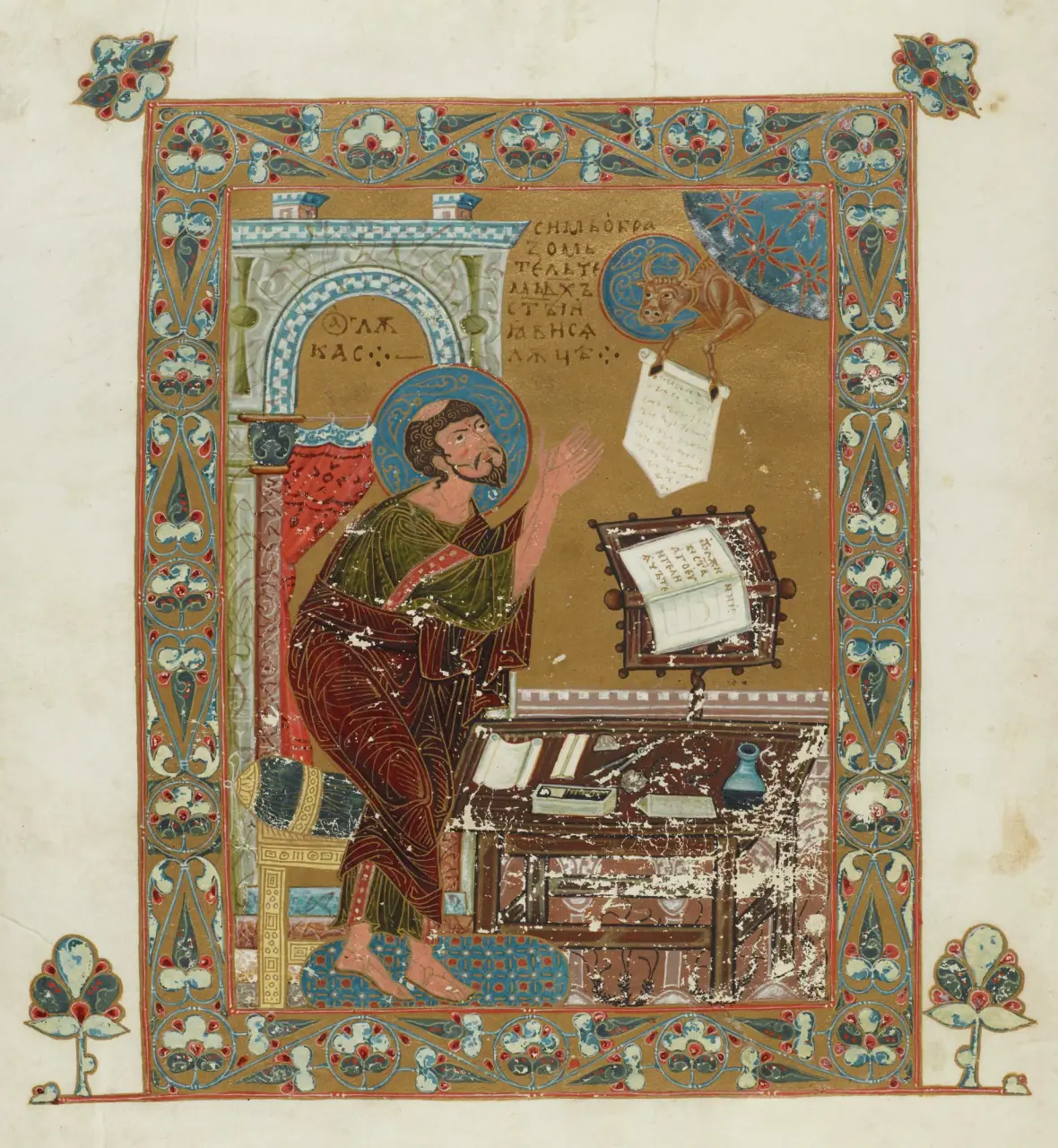
Baptism brought monasteries, Church Slavonic, and Byzantine art. Dynasty members shared the lands of Rus, and also competed over inheritance and urban resources; Kyiv's prestige coexisted with centers such as Novgorod, Polotsk, Galich, and Vladimir. Monasteries and churches not only conducted liturgy but also preserved books, managed land, and connected ruling elites. At the same time, Novgorod's markets, Galich's trade with the West, and new settlements in the northeast had different interests. The centers shared a dynasty and a faith, which did not prevent them from waging war on one another, nor did it mean that fragmentation was necessarily merely a transitional state awaiting reunification.
01 / 988–1237How this era began
Early princes already controlled important trade routes, and Kyiv's contacts with Byzantium provided the conditions for the new religion. Vladimir's turn gave Kyiv a Byzantine marriage alliance and church ties, but political power still had to be exercised through retainers, kin, and local elites. Worship of the old gods, family customs, and different languages continued to exist. The new religion first changed dynastic ritual and the urban landscape, and then entered rural life through the practices of many generations.
Why did this era begin?
The church and written culture made rule more sustainable, but the expanded dynasty needed to distribute power among many cities. Successors allocated land and cities to family members, and new local courts and bishoprics grew up accordingly. The more important local resources became, the harder it was for princes to obey only Kyiv's priorities. Councils, marriages, and cross-cutting alliances maintained a shared political space, but did not eliminate the motives of different branches to compete for primacy.
02 / 988–1237Who held power
The Rurikid princes, bishops, nobles, and city assemblies checked one another; Novgorod developed urban politics, but not a modern democracy. The prince held military and some judicial authority, while bishops, monasteries, and nobles also had land and judicial resources. City assemblies could negotiate with the prince, and Novgorod was especially prominent, but the actual weight of participation depended on wealth, family, and neighborhood organization. Calling city autonomy a modern universal-suffrage democracy would obscure social hierarchy and the political restrictions on women.
What tensions existed within the era?
Inheritance rules could not eliminate civil war, and the interests of cities and nobles differed; steppe raids and changes in trade routes added pressure. The same prince might ally with a steppe group and fight another branch of the dynasty, and religious boundaries did not always predict alliances. When Kyiv was sacked, residents, merchants, and monks all suffered. Dynastic succession arrangements also clashed with the demands of local assemblies, land, and taxation, and the costs of war were borne by people outside the political choices.
03 / 988–1237How society worked
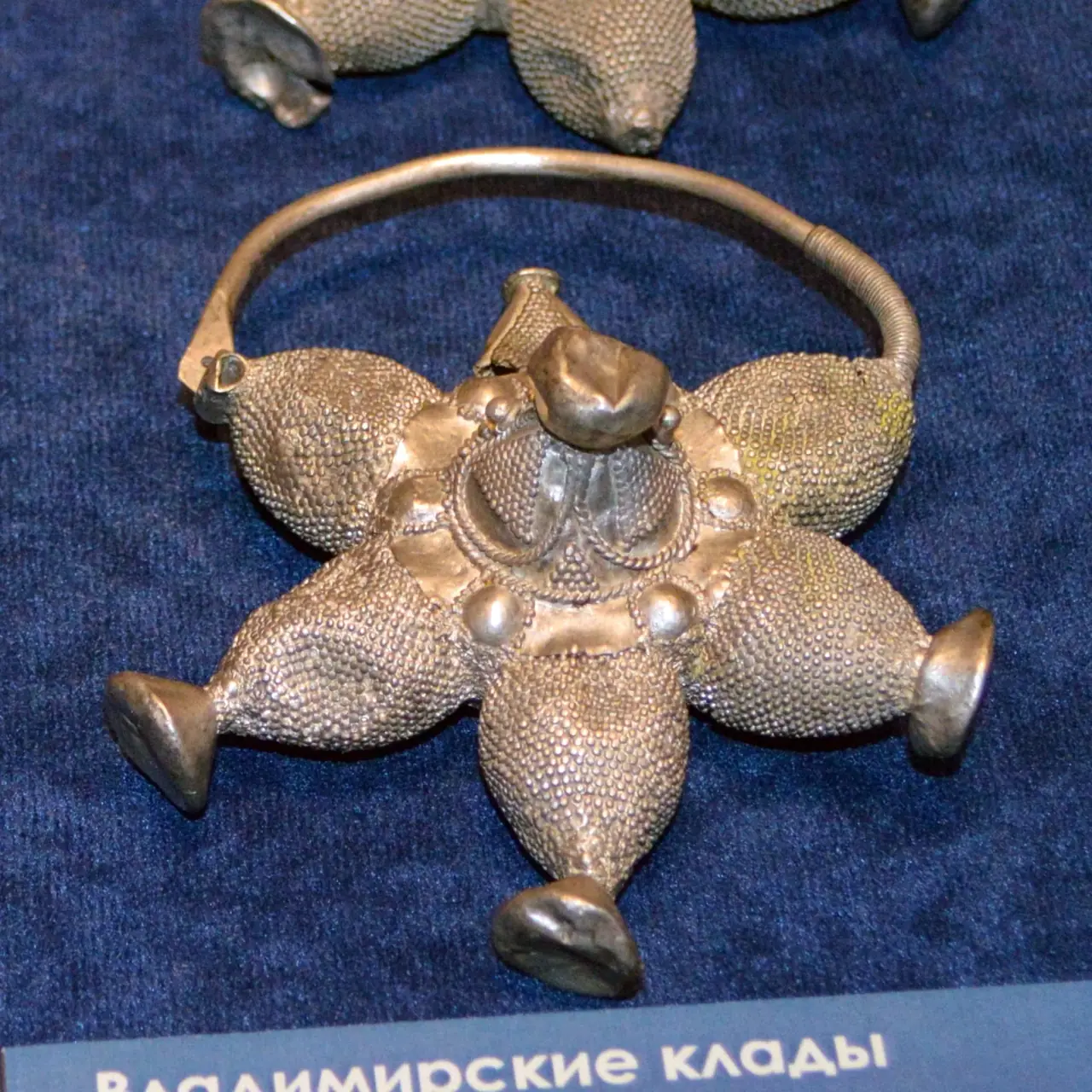
Land revenue, tribute, handicrafts, and regional trade were all important; the north was linked to the Hanseatic commercial sphere, the south to the steppe and the Black Sea. Land revenue and commodity circulation depended on each other: peasant households supplied the cities, markets sold handicraft products, and merchants connected different rivers and seas. Compensation, debt, and dependency rules in law show that transactions also brought conflict. Different regions were close to different commercial spheres, and all economic change cannot be attributed solely to the rise and fall of a single Dnieper trade route.
How did ordinary people live?
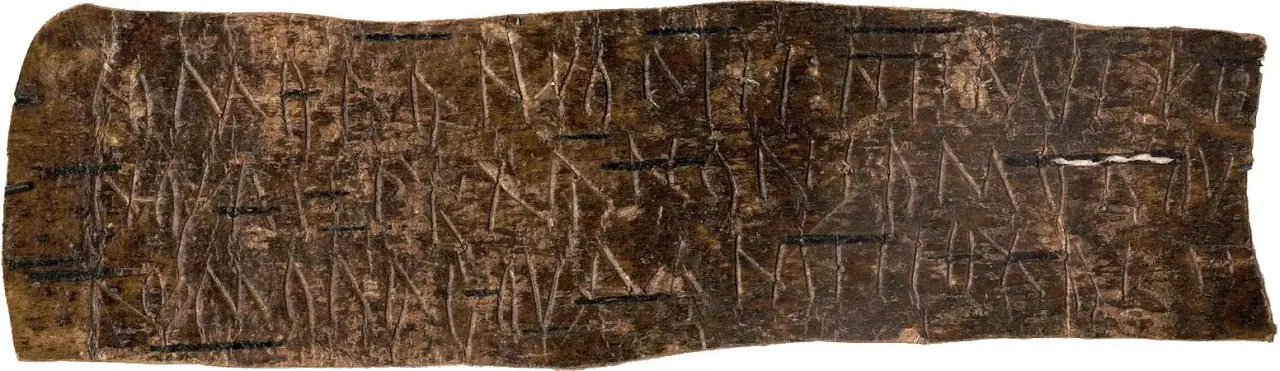
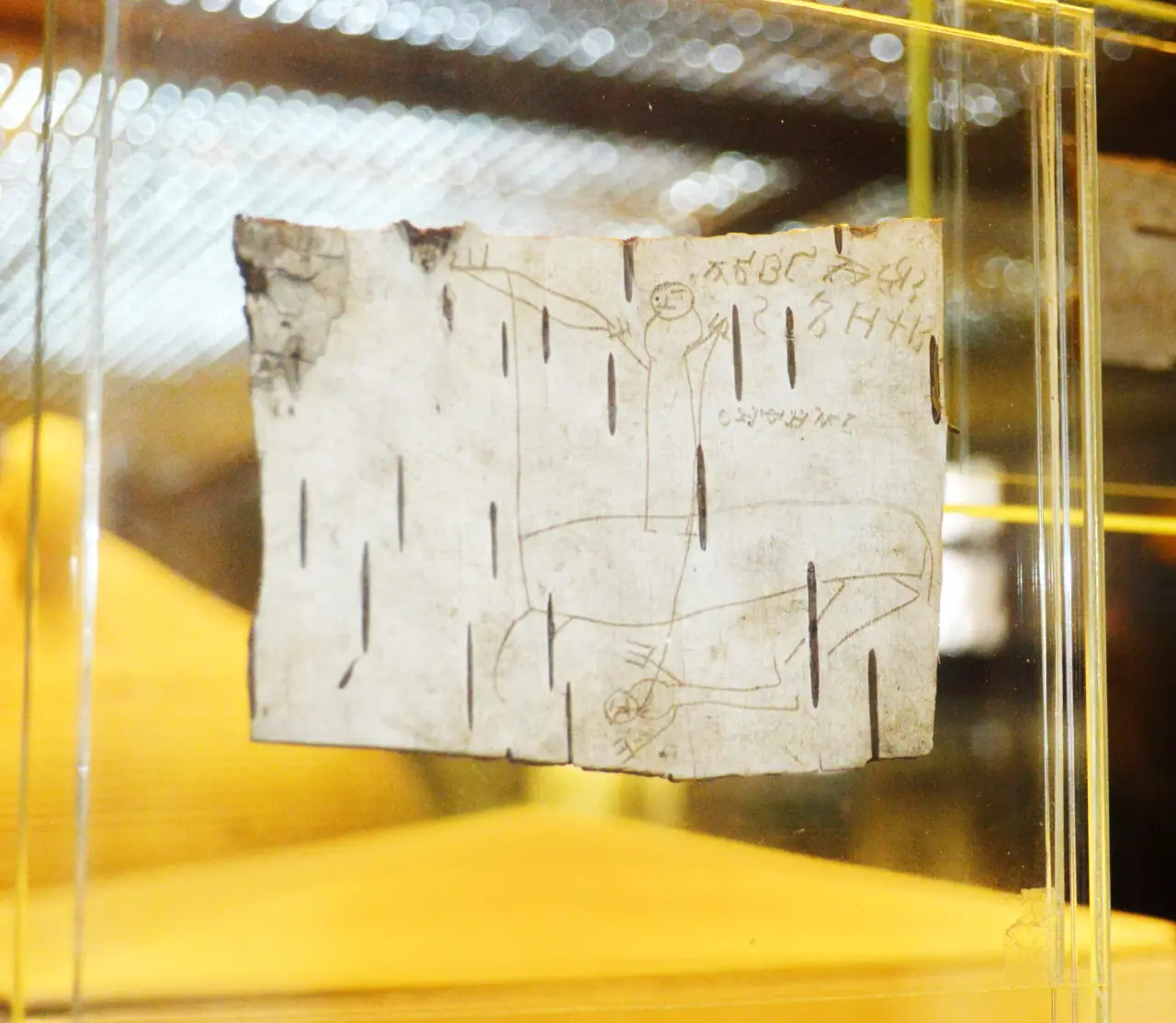
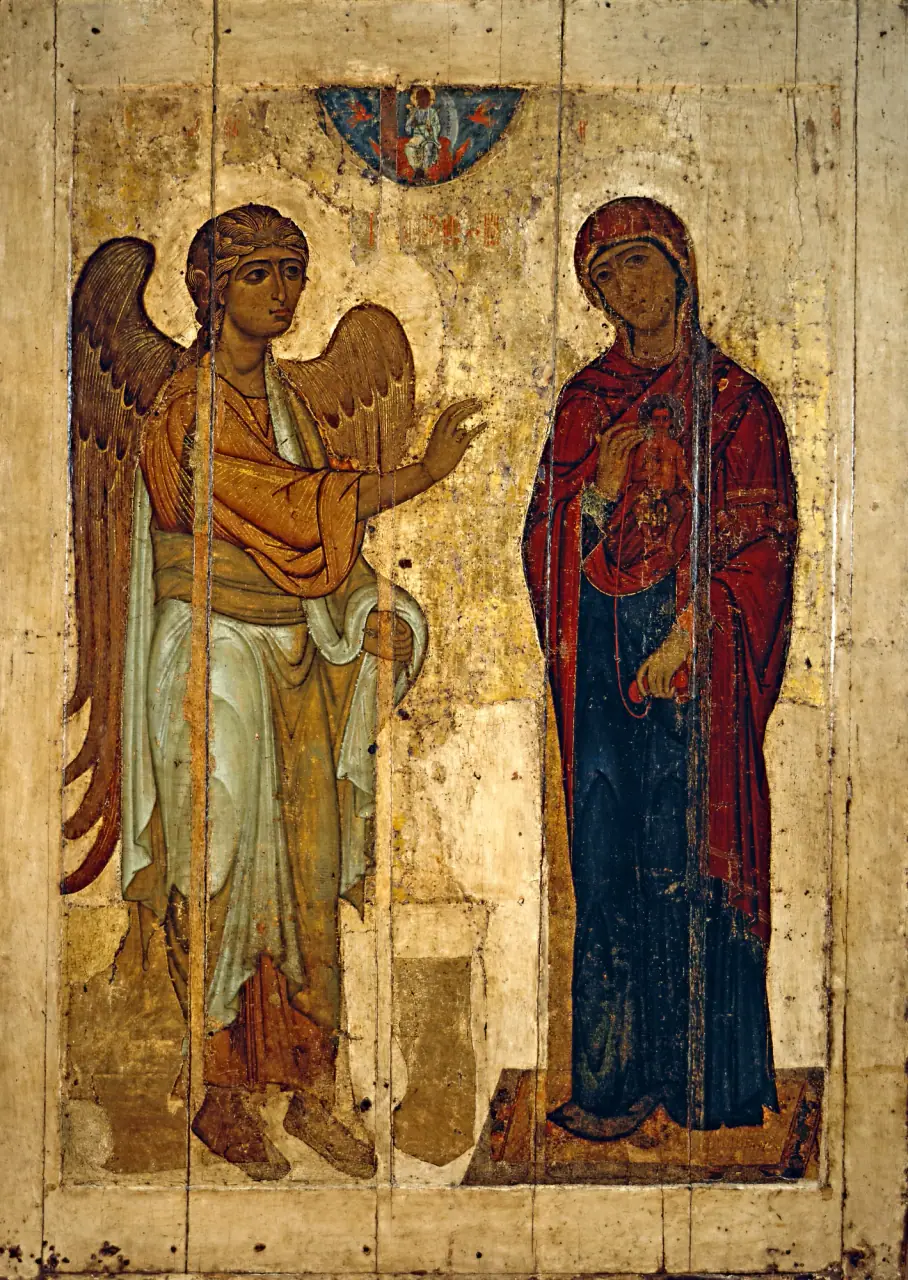
Church festivals interwove with old customs; birch-bark letters record debts, purchases, and family matters, showing that literacy extended beyond the monastery. The letters bring borrowing money, asking others to handle affairs, and family quarrels into historical view, but they cannot justify asserting that everyone was literate or that men and women had equal opportunities. Chronicles also record fires, floods, and livestock epidemics, showing the fragility of urban order. The golden backgrounds of religious art and the actual life of wooden houses, workshops, and peasant households need to be read side by side as different kinds of evidence.
04 / 988–1237Where change began
The Mongol invasion destroyed many cities and reorganized the political order, but the old culture did not vanish overnight; rather, the conditions for its continuation changed. The Mongol offensive destroyed some centers, and surviving rulers separately sought khanate patents, nearby alliances, and local reconstruction. The trajectories of the southwest, northeast, and northwest thereafter became more different, yet Kyiv still retained religious and historical prestige. Describing this process as a neat northward transfer of the capital cannot explain the connections that continued, unevenly, among the regions.
Milestones that changed direction
Christianization launches new networks
Princes and the church brought religious, diplomatic, and written transformation, while rural conversion took longer.
Traditional dating of Saint Sophia Cathedral in Kyiv
The architecture and mosaics show Byzantine connections, and the construction phases remain debated in archaeology.
Council of Lyubech
Princes recognized the hereditary domains of each branch, intending to quell internal strife, but no permanent unified rule emerged.
Monomakh takes Kyiv
Urban turmoil was linked to princely turnover, and legal tradition also addressed debt and dependency.
Novgorod expels its prince
City elites and the assembly tightened constraints, but power remained concentrated mainly among propertied groups.
Coalition forces sack Kyiv
The attack shows intensified dynastic competition, but does not mean Kyiv's cultural status immediately disappeared.
Battle of the Kalka River
Rus and Cuman forces were defeated by the Mongol army, an important contact before the large-scale invasion.
What we know
The Novgorod Chronicle records armies, market fires, floods, and urban negotiations, often explaining disasters as religious punishment; birch-bark letters preserve another kind of voice: debts, errands, and family correspondence. UNESCO's statement of heritage value distinguishes eleventh-century frescoes from later alterations, allowing material layers to be checked. The three kinds of materials differ in their subjects, preservation conditions, and the populations they cover, and none alone can represent all rural areas or prove universal literacy.
Questions still debated
The so-called golden age partly comes from the density of surviving texts; political fragmentation can also accompany local cultural flourishing and should not simply be written as civilizational decline. Appanage division can be interpreted as the fragmentation of a community, or as reorganization after local ruling resources increased. Kyiv's status, city autonomy, and the dating of legal texts must be studied region by region. The scope of the term Rus in chronicles changes, and a modern map in a single color cannot replace the dynastic, ecclesiastical, and trade relations of the time.
Legacies for later generations
Orthodox art, law, and written culture continued across later state borders; multi-centered Rus should not be compressed into a single line leading to Moscow. The eleventh-century mosaics of Kyiv's churches, northeastern architecture, and Novgorod documents testify to different faces of a shared culture. UNESCO also clearly distinguishes early Rus remains from seventeenth- and eighteenth-century Ukrainian Baroque modifications. When seeing a present-day architectural complex, one must separate its multiple chronological layers and not treat it as an intact, unchanged eleventh-century site.
References and evidence
These materials support this page's account. Check the purpose, perspective and accessible scope of each source. Notes identify the evidential limits of excerpts, summaries and timelines.
- Simon Franklin: Kievan Rus, 1015–1125Cambridge University Press · Academic research
Read the public abstract to check dynastic legitimacy and Christian culture; no page numbers of the main text were invented.
- Sean Griffin: The Liturgical Past in Byzantium and Early RusCambridge University Press · Academic research
The public book description suggests that the memory of baptism was rewritten through liturgy and politics, and that the historical process should be distinguished from later origin narratives.
- Valentin Yanin: Medieval NovgorodCambridge University Press · Academic research
The public abstract concerns archaeology, land, and urban politics; the republic cannot be equated with modern universal-suffrage democracy.
- Novgorod birch-bark letters: catalog of documents excavated 2001–2014HSE University, archaeological documentary publication project · Academic research
The catalog describes documents including nos. 916–1062 and commercial and family correspondence; no claim is made to have examined each item in person.
- The Cambridge History of Russia, Volume 1: public chronology and table of contentsCambridge University Press · Academic research
Checked against the public chronology and authors; no claim is made to have read the full paid book, and uncertainties may remain in traditional dating.
- Selected passages from a university teaching translation of the Primary ChronicleUniversity of Oregon, SAC teaching source collection · Primary source
Actually read the passages on the invitation to the Rus, Oleg's commercial treaty, Olga, and the choice of baptism; these are English translated selections with modern editorial insertions, not a complete critical edition, and miracles and dialogue between figures are not treated directly as fact.
- Selected annual entries from the Novgorod ChronicleFordham University,Internet History Sourcebooks Project · Primary source
Actually read selections including 1016–1445 and checked the narratives of cities, wars, fires, and Mongol invasions; the English text contains transcription errors, and precise dates were checked separately against scholarly chronologies.
- Saint Sophia and the Cave Monastery in Kyiv: Statement of heritage valueUNESCO World Heritage Centre · Specialist reference
Actually read the Outstanding Universal Value sections on medieval architecture, mosaics, and later alterations; used only for explaining physical remains, and did not use dynamic news on the page after 2024.
- Russia: A Country Study: body text on early historyLibrary of Congress, Federal Research Division; CountryStudies.us text mirror · Specialist reference
Read the body of the public chapter, not a summary; the research was completed in 1996, the mirror is not the main LOC site, and old formulations such as those on nation formation and linear development are read critically rather than adopted as written.
At the end, bring this chapter to a close.