Enlightenment at court, bondage in the countryside
Why did a court that preached the Enlightenment maintain serfdom and a order of conquest?
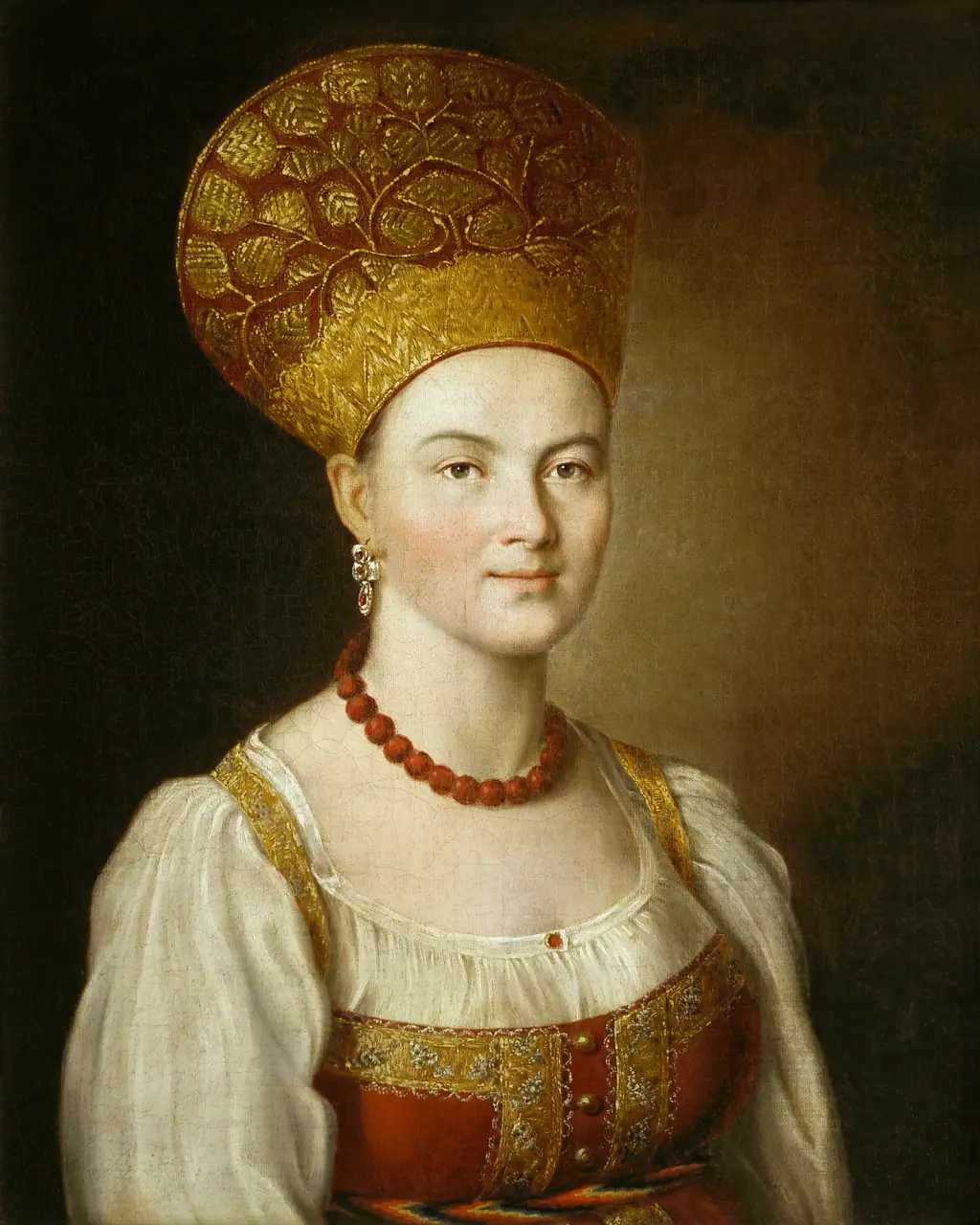
The Guards and the nobility influenced the succession to the throne, and Russia continued to take part in European wars. Catherine II advocated legal and educational reform while relying on the nobility, suppressing Pugachev's uprising, and expanding toward the Black Sea and Poland-Lithuania. The empress's letters, decrees, and collections brought the language of the Enlightenment into politics, but local governance still had to be carried out through nobles and officials. Pugachev mobilized in the name of another tsar, and participants included fugitive peasants as well as Cossacks, workers, and ethnic groups affected by expansion. The flourishing of court culture, fixed social hierarchy, and frontier conflict were therefore not three separate stories.
01 / 1725–1801How this era began
Peter left behind a powerful mobilizing state and unstable succession arrangements, and the service nobility gradually demanded more autonomy. Peter's reforms expanded military and governmental institutions and also gave the court Guards and the service nobility more political weight. When stable procedures for succession were lacking, these groups could decide who was qualified to rule. The relationship among finance, land, and service privilege continued to change, and the decades after Peter cannot be treated merely as a gap between two famous monarchs.
Why did this era begin?
Coups rearranged court alliances, and European competition and southern wars provided opportunities for imperial expansion. Catherine gained power through a coup and needed to prove to the nobility, the army, and European diplomatic circles that she could maintain order. Legislative discussion, cultural patronage, and war all served this need and also produced real institutional and social change. Enlightenment influence was not a mask concealing all her actions, nor a guarantee that her policies were necessarily humane.
02 / 1725–1801Who held power
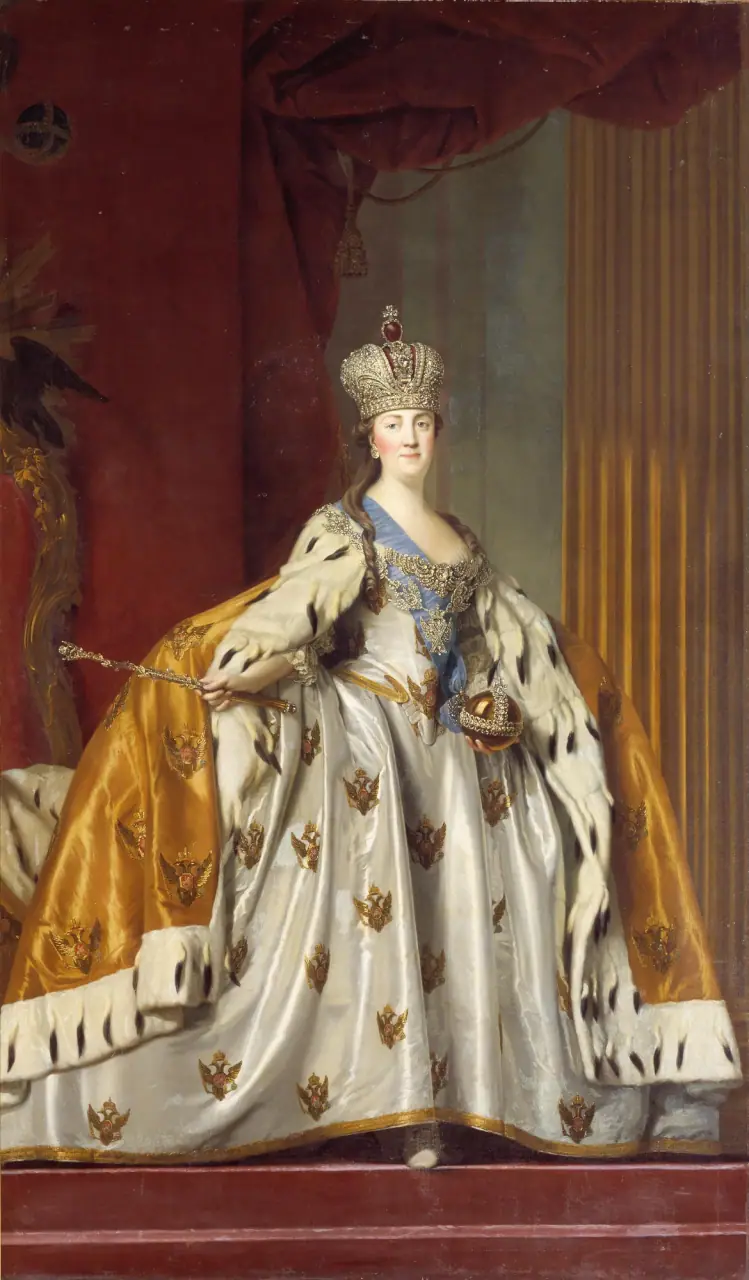
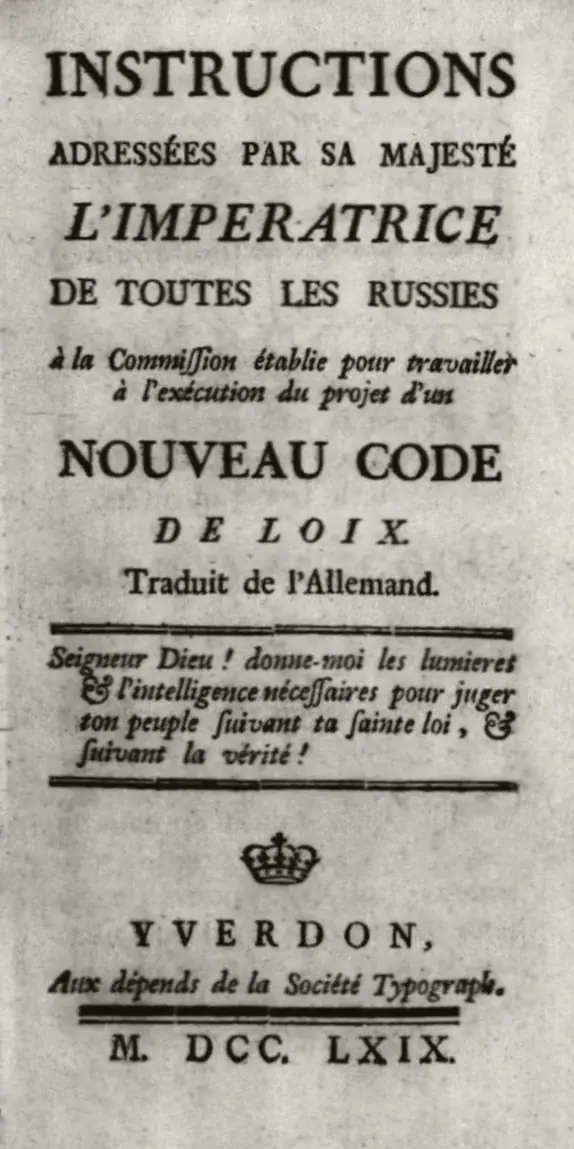
The emperor relied on noble administration and the officer corps, and privileges were confirmed; local reforms also reinforced social hierarchy. Local administrative reforms increased police and judicial bodies, enabling more detailed organization of taxation and order, yet depended on local propertied elites. Nobles, exempt from compulsory service, still retained peasants and status; their freedom differed from the freedom of peasants. The Instruction used vast territory to justify absolute monarchy, itself combining rational law with monarchical authority.
What tensions existed within the era?
Enlightenment legal language conflicted with serfdom's reality, and the grievances of Cossacks, peasants, and frontier communities erupted together. The Pugachev movement's different groups did not necessarily seek the same land or political arrangements; the language of restoring the true tsar could also express resistance. The monarch became more wary of published criticism in post-revolutionary Europe, and legal ideals clashed with censorship. In responding to protest, the state both strengthened local administration and preserved the social hierarchy that caused some of the discontent.
03 / 1725–1801How society worked
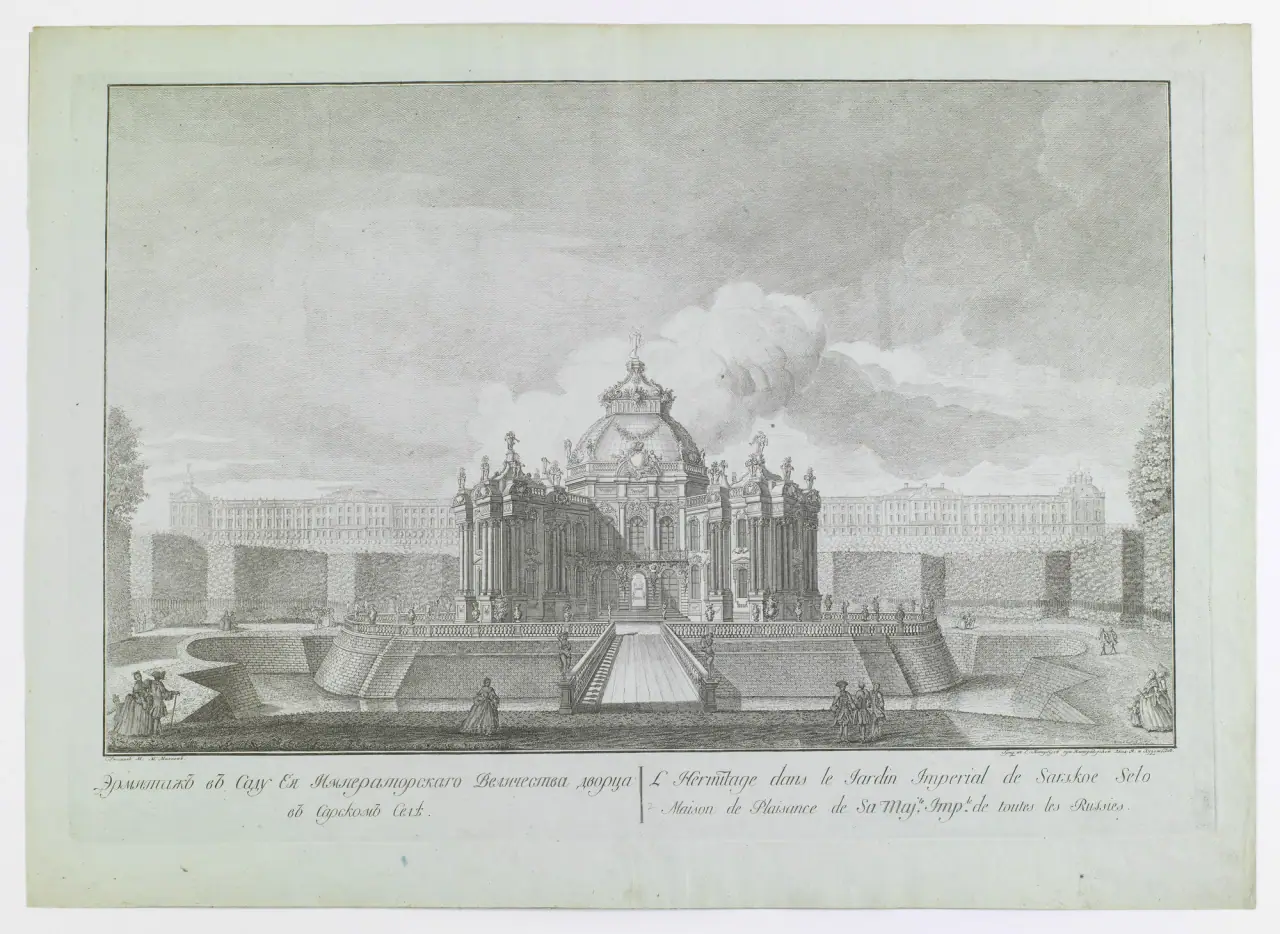
Grain, metallurgy, and overseas trade grew, and landowners extracted peasants' labor income; banks and crafts connected to court consumption. Estates converted peasant labor into rent, corvée, and market products, so commercialization could strengthen landowners' exactions rather than automatically dissolve dependence. Expansion toward the Black Sea extended ports and land, and also redistributed local resources. Court commissions drove crafts and international procurement; the fineness of objects cannot by itself prove how national income was distributed.
How did ordinary people live?
Salons, theaters, and French-language culture flourished, while many peasants remained bound by corvée, sale, and landowners; new subjects faced differentiated governance. Theaters, publishing, and art collections expanded elite public culture, and estates could also incorporate performance and craft into noble consumption. Ordinary peasant households' marriage, migration, and labor remained restricted by landowners, while frontier groups faced new administrative boundaries. Residential restrictions on Jews and other subjects show that the empire's legal status did not converge because of Enlightenment discourse.
04 / 1725–1801Where change began
Paul I tried to reorganize service and the court, was killed in a coup in 1801, and the succession passed into the Alexandrine era. Paul's policies sought to redefine the relationship among monarch, nobility, and service, yet also harmed the interests of some court factions. The violent succession of 1801 exposed the problem of dynastic stability once again. The new monarch faced not a legacy that could be accepted or discarded as a whole, but still-functioning offices, privileges, land, and foreign commitments.
Milestones that changed direction
Peter's death and the succession struggle
The court and Guards influenced succession to the throne; reforms were not wholly revoked.
Elizabeth accedes by coup
Court politics and patronage of architecture and crafts together shaped the new capital.
Catherine II accedes
A coup overthrows Peter III; a noble alliance supports the new reign.
Legislative Commission convenes
Debate exposed differences in estate interests and did not produce the envisioned complete new code.
First partition of Poland-Lithuania
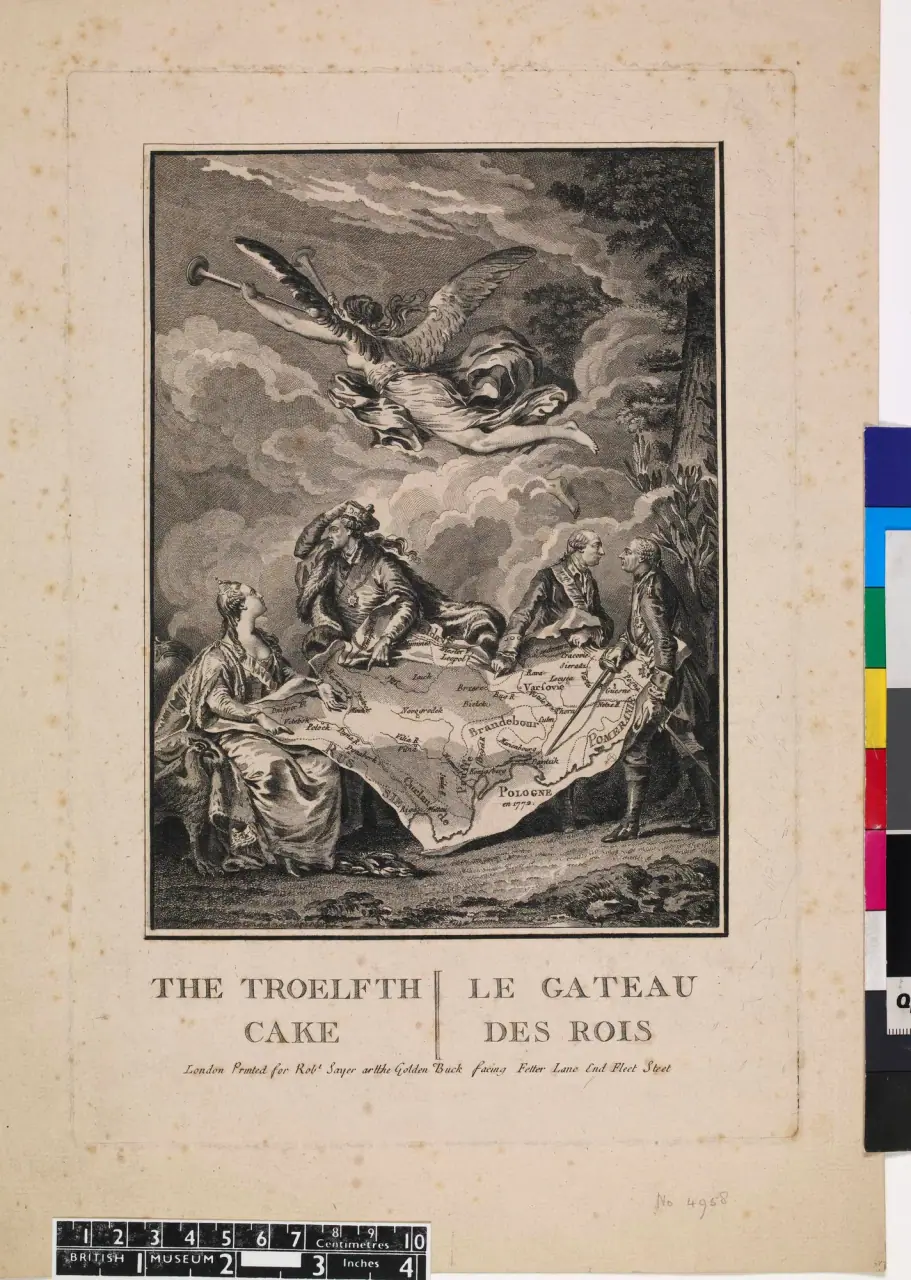
Russia, Prussia, and Austria partition a neighboring state; later partitions further expanded the ruled population.
Pugachev's Rebellion
Resistance spread from Cossack regions; the demands of different ethnic groups and peasants were not fully identical.
Annexation of the Crimean Khanate
The Black Sea's strategic position changed; the social and political situation of the Crimean Tatars was deeply affected.
Charter to the Nobility
Status and autonomous privileges were institutionalized; Enlightenment reforms did not eliminate estates.
What we know
The selected translation of the Instruction juxtaposes absolute monarchy, freedom under law, and opposition to torture; it is material for understanding governing ideas, not proof that a new code was fully implemented. Diplomatic letters carry personal and state positions, and the Met objects reflect court choices and transnational craft. Uprisings and wars must be combined with local, judicial, and fiscal materials; participants' demands cannot be inferred only from their suppressors' labels, and troop numbers require a clear statistical basis.
Questions still debated
Enlightened absolutism involved institutional experiments and self-promotion; the "golden age" mainly reflects particular estates and cultural spheres. Evaluating enlightened absolutism requires distinguishing the monarch's genuine reform intentions, the limits of elite consultation, and the gap in grassroots implementation. Some emphasize governing capacity, others serfdom and colonial expansion; both can be supported by different evidence. Attributing all contradictions to personal hypocrisy ignores institutional interests; praising only reforms conceals clear experiences of victimization.
Legacies for later generations
The empire's multiethnic structure and Black Sea arrangements became more fixed; collections and crafts left images, and could also beautify hierarchy and conquest as a golden age. St. Petersburg's collections, crafts, and architecture formed a transnational cultural network, while the partitions of Poland-Lithuania and Black Sea expansion reshaped many non-Russian-speaking communities. Later state museums preserved works and also inherited court selections. In describing these riches as a golden age, one should also explain whose property, labor, and political autonomy were rearranged.
References and evidence
These materials support this page's account. Check the purpose, perspective and accessible scope of each source. Notes identify the evidential limits of excerpts, summaries and timelines.
- The Cambridge History of Russia, Volume 2: public abstracts on the imperial periodCambridge University Press · Academic research
Checked governance, estates, women, agriculture, economy, and thought in the public abstracts; this is not a page-by-page review of the whole book.
- The Cambridge History of Russia, Volume 2: public chronologyCambridge University Press · Academic research
Publisher's public PDF, used to check dates and chapter structure; the map insert does not thereby become openly licensed.
- Wolfram Koeppe: St. PetersburgThe Metropolitan Museum of Art · Museum research
Read the article and list of works to check the founding of the city, court, and craft exchange; treated its Westernization rhetoric with caution.
- Catherine II's Instruction and selected foreign observationsFordham University,Internet History Sourcebooks Project · Primary source
Actually read provisions on absolute sovereignty, law, security, torture, and estates; this is legislative guiding thought, not a new code that had been fully implemented.
- Russia: A Country Study: body text on the early empireLibrary of Congress, Federal Research Division; CountryStudies.us text mirror · Specialist reference
Read the body text on Peter, court successions, Catherine, and the estate system; absolute assertions such as the economy being completely unable to grow under serfdom are not adopted.
At the end, bring this chapter to a close.