After the victory over Napoleon
Why did military victory not automatically bring political and social reform?
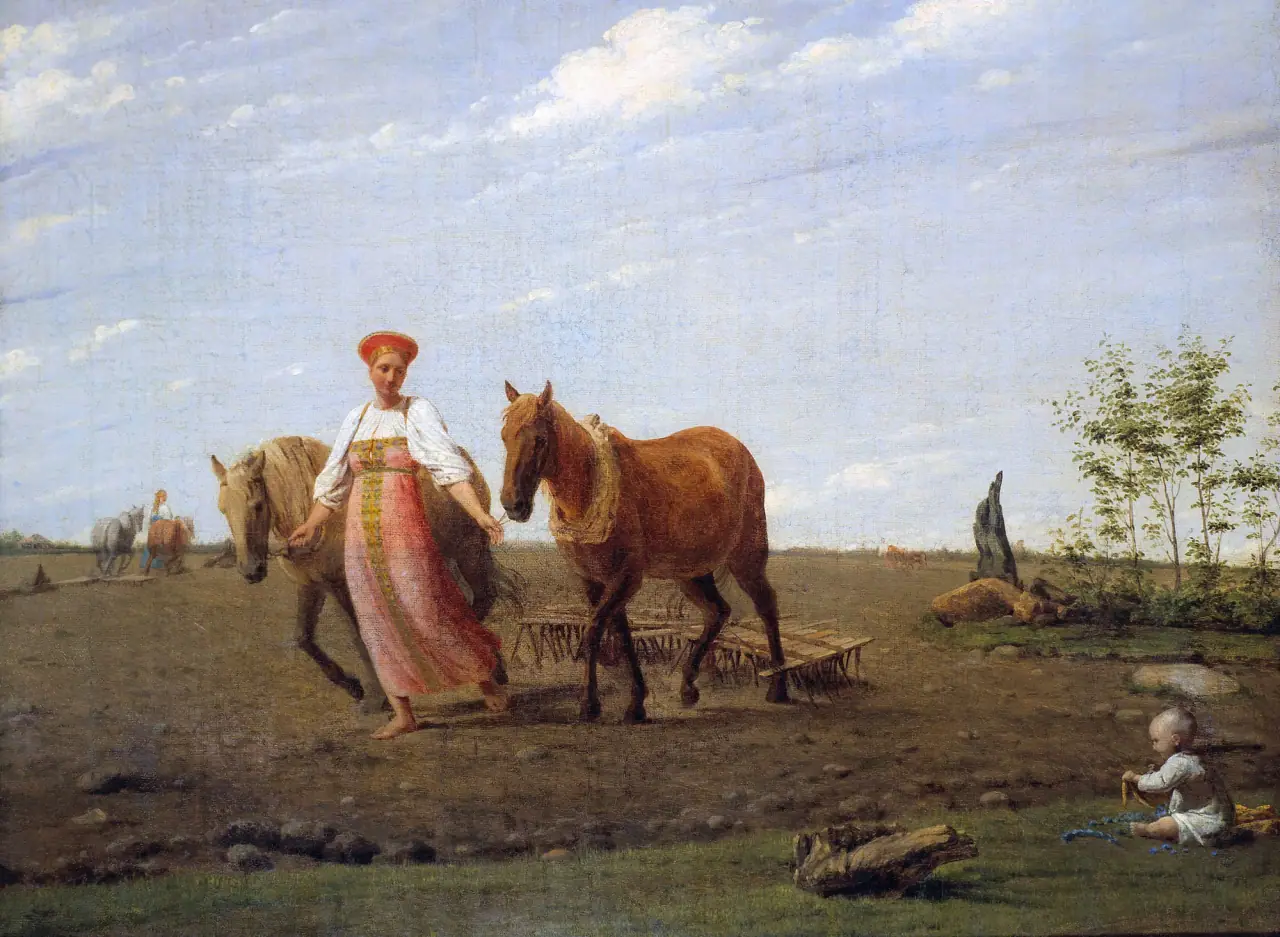
The 1812 war and the subsequent entry into Paris established great-power status. Officers brought back expectations of reform, but the Decembrist revolt failed; Nicholas I strengthened bureaucracy and censorship, and the empire continued advancing into the Caucasus while facing fiscal and technical problems. National victory increased dynastic prestige, yet also exposed servicemen to different legal and political life. The Decembrists had no unified program, and the countryside would not change its dependent relations merely because Paris was entered. Literature, administrative reorganization, and frontier wars expanded together at this time; Russian society both participated outward in the European order and argued internally about how it should live.
01 / 1801–1855How this era began
Eighteenth-century expansion and noble privileges made the state strong, while serfdom and governing reforms also involved many vested interests. The Catherine era left broad involvement in European affairs and a complex multiethnic territory; noble service and estate income remained the political foundation. The reform questions Alexander faced were therefore not only about learning foreign techniques, but also about whether the monarch was willing to limit his own power and how landowners would accept changes in labor relations.
Why did this era begin?
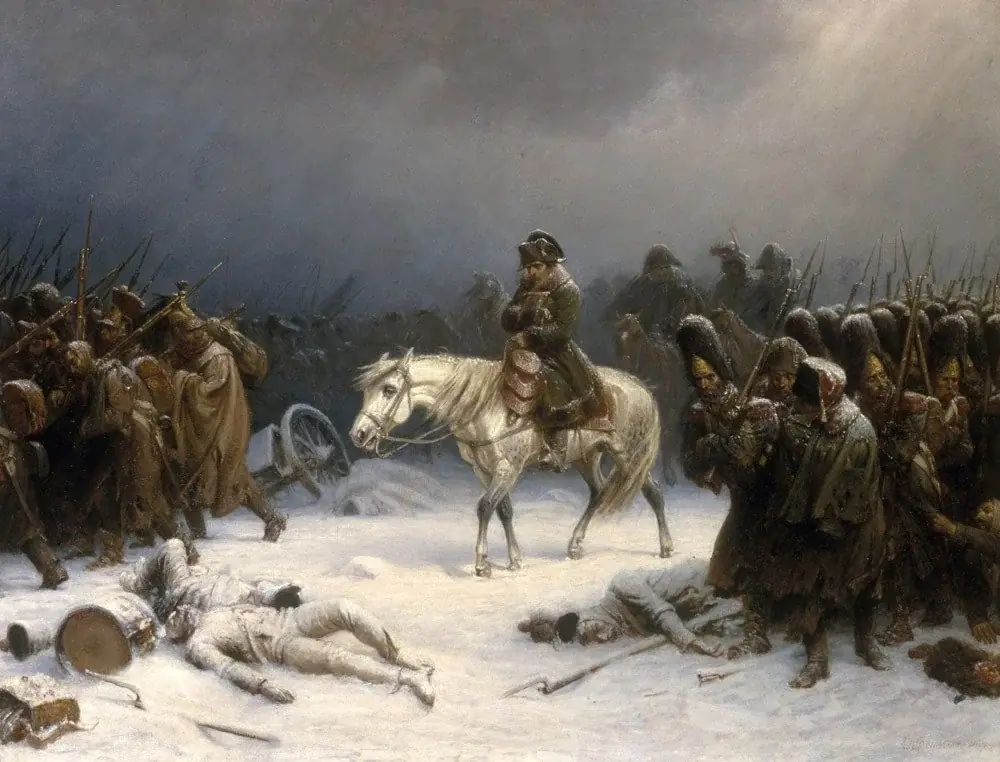
Alexander I attempted administrative reorganization, but the Napoleonic Wars then shifted the focus toward the military and European coordination. Professionalization of administrative departments helped handle the affairs of a vast empire, while war gave priority to military and fiscal matters. The strategy of 1812 was not always coherent; debates over retreat, supply choices, and battle losses constantly changed decisions. Postwar international coordination raised great-power status but did not provide institutions capable of directly resolving domestic land and representation issues.
02 / 1801–1855Who held power
Ruled by the emperor, noble officers, and ministerial bureaucracy; Nicholas I relied on political police, censorship, and legal codification to reorganize the state. Codification and administrative supervision could make rule more regular while preserving imperial discretion and police censorship. Noble officers were both pillars of the state and potential opponents, showing that the elite was not a homogeneous group. Institutional arrangements in regions such as Poland differed from core provinces, and imperial rule required constant adjustment of differentiated governance.
What tensions existed within the era?
Bureaucratic improvement and maintenance of autocracy proceeded together; Polish resistance, the Caucasus War, and divisions among the intelligentsia exposed imperial contradictions. The Decembrists' programs ranged from constitutional to more radical reorganization; their failure does not mean all demands for social reform had disappeared. Polish resistance and the conquest of the Caucasus also involved the autonomy and security of the ruled. Slavophiles and Westernizers debated the country's path, often sharing dissatisfaction with reality without necessarily agreeing on the same political solution.
03 / 1801–1855How society worked
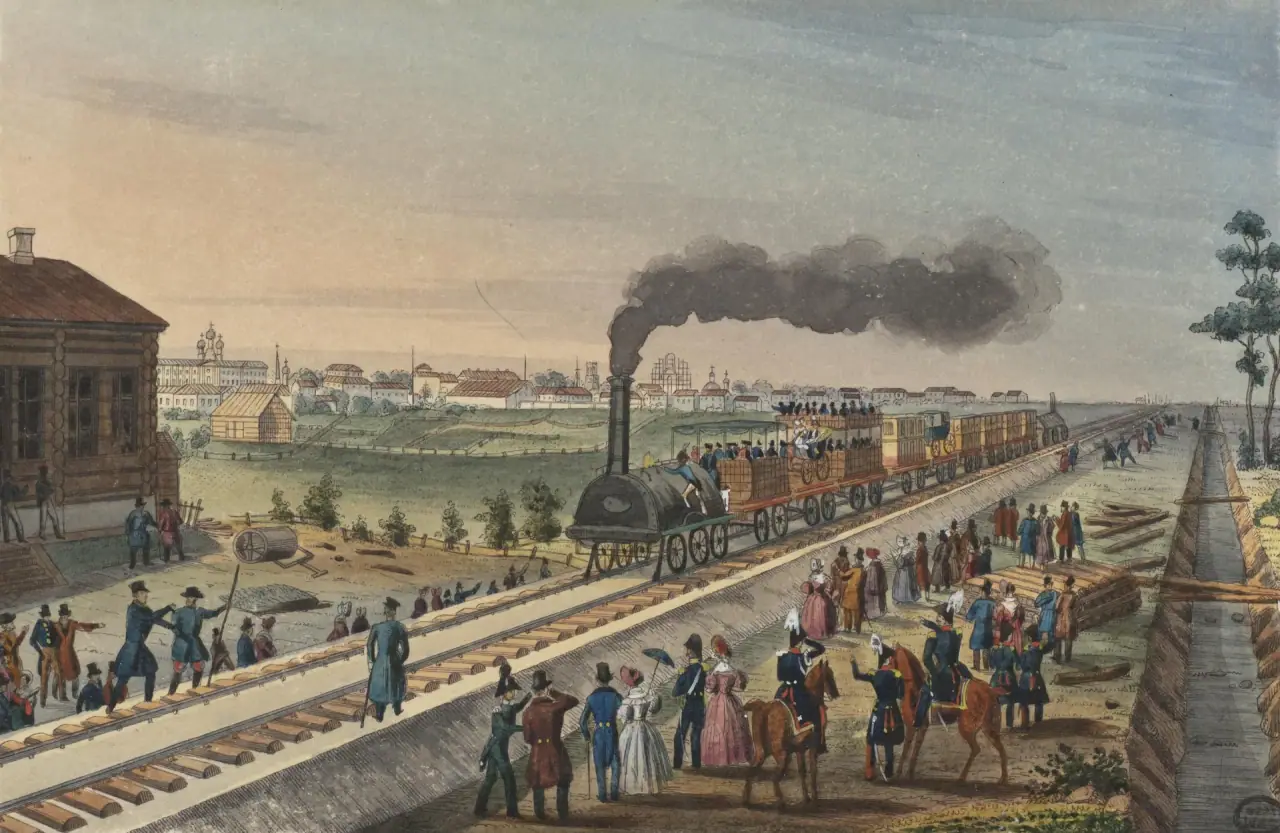
Serf agriculture predominated; market, factory, and transport investment gradually developed; the army and frontier wars consumed large resources. Estates and peasant households became increasingly linked to commodity markets, but agricultural production and labor migration remained constrained by status. Army supply depended on requisition, transport, and local cooperation; distance and road conditions affected military capability. Early industrial, financial, and transport changes were real; the later Crimean defeat does not mean the economy had not developed at all for decades.
How did ordinary people live?
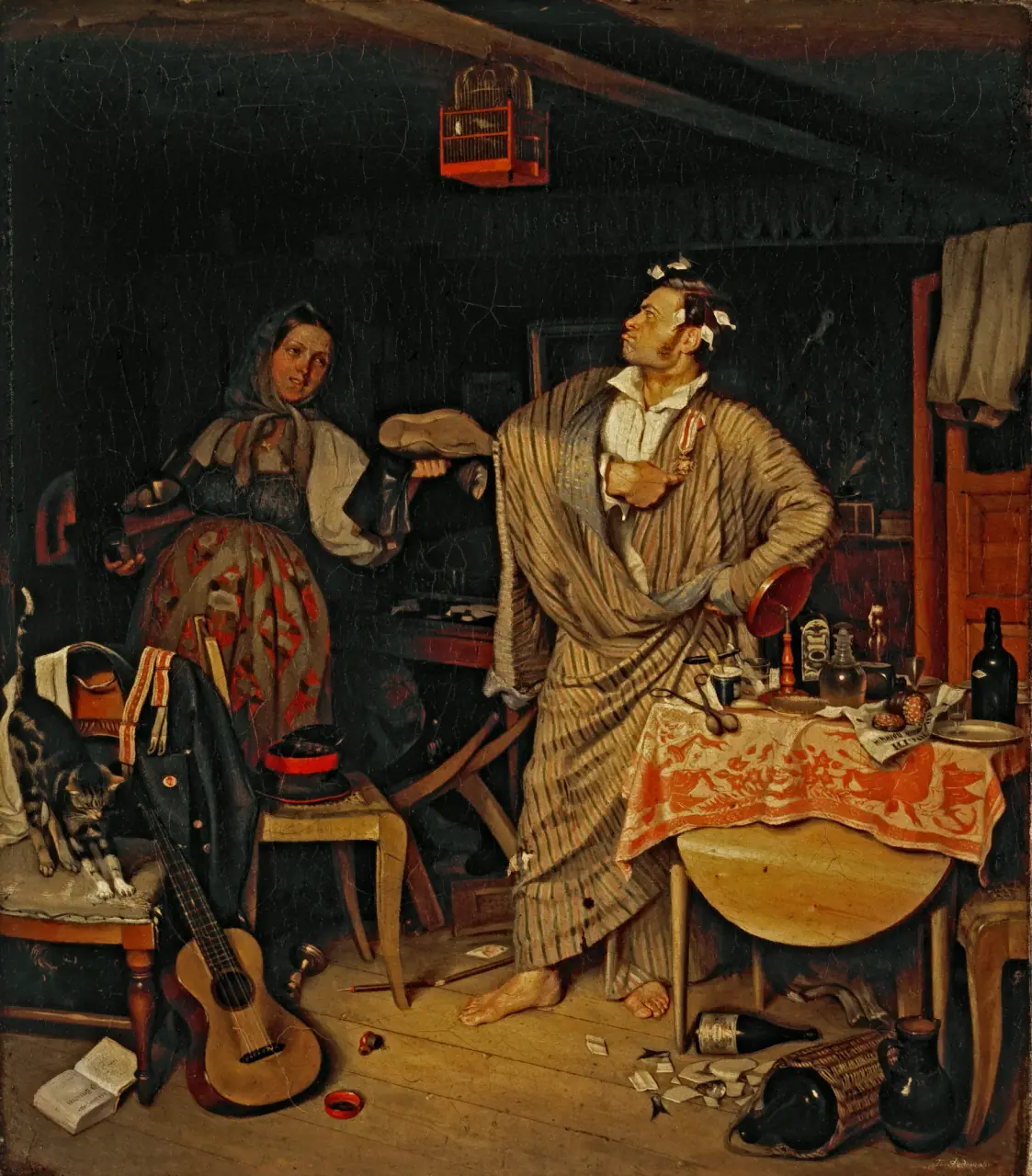
Conscription and war disrupted the countryside; the intelligentsia discussed the country's path through literature; minority groups faced residential, religious, and legal restrictions. Battlefield victories were paid for by soldiers and residents alike; evacuation, looting, and material losses affected families in different regions differently. Urban readers discussed identity through novels, poetry, and newspapers, while rural life still revolved around harvests, taxes and labor dues, and conscription. The legal situation of residents of frontier regions or the Jewish Pale of Settlement cannot be represented by the lives of capital nobles.
04 / 1801–1855Where change began
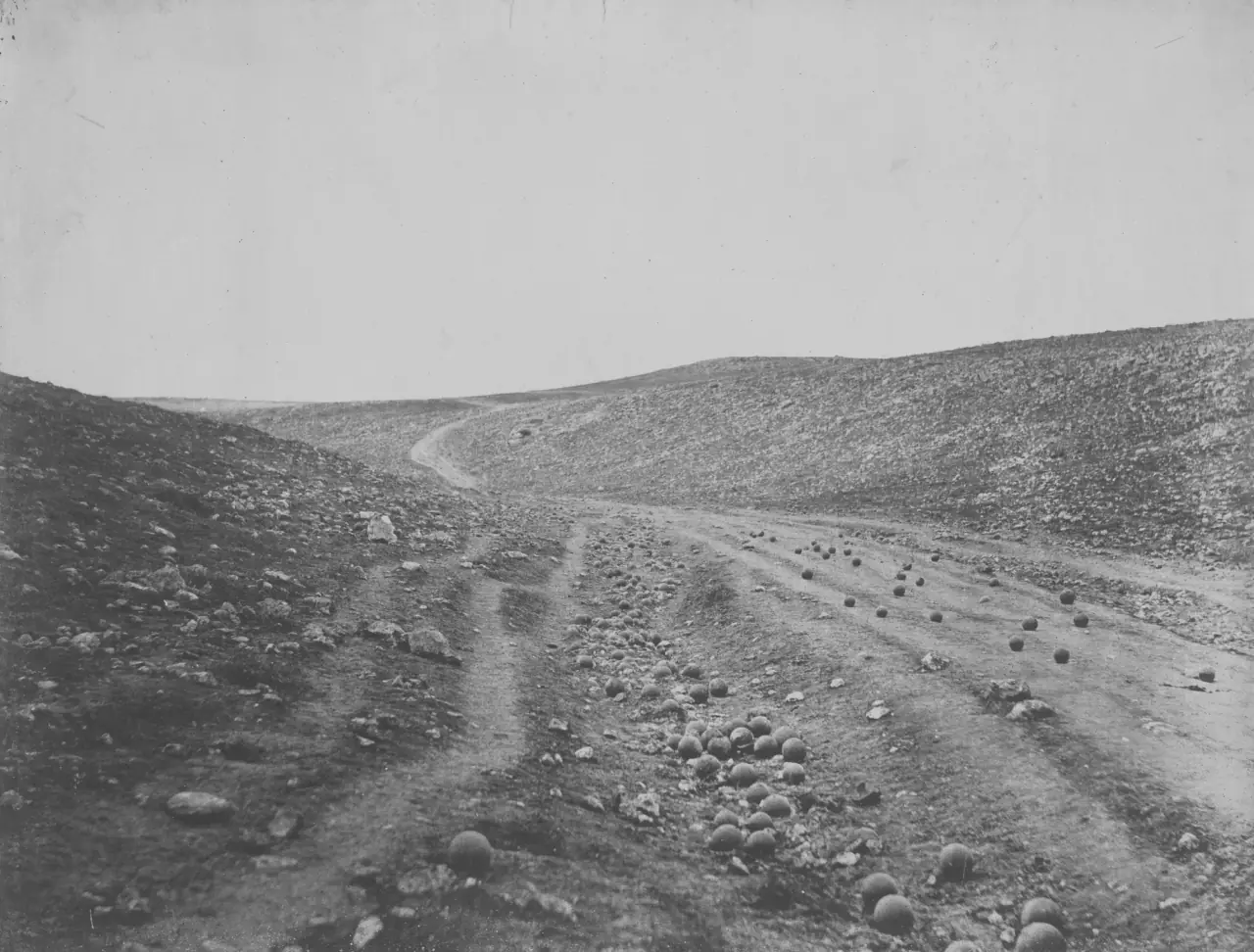
The defeat in the Crimean War exposed problems in supply, finance, and the military system, and the new monarch who came to the throne in 1855 faced pressure for reform. In the Crimean fighting, railways, military supply, command, and financial gaps interacted; the outcome cannot be attributed solely to whether soldiers were brave or not. After the death of Nicholas I, the new government chose to push forward reforms, rather than freedom arising automatically from military defeat. 1855 is therefore a turning point of political choice; the preparation and implementation of reform still required years of negotiation.
Milestones that changed direction
Establishment of the central ministries
Administrative division of labor became clearer, but ministers still answered to the monarch, and there was no system of parliamentary responsibility.
Napoleon's invasion and retreat
The Russian army's preservation of its forces, the battles, and the French army's supply difficulties together changed the course of the war; civilians bore the losses.
The Vienna order and the Kingdom of Poland
Russia gained an important position, and the relationship between the Kingdom of Poland and the tsar became a long-term contradiction.
Decembrist uprising
Some officers took advantage of the succession crisis to demand institutional change; after their defeat they were executed or exiled.
Treaty of Turkmenchay
After the war, Iran ceded further territory and paid indemnities, and power relations in the South Caucasus changed.
November Uprising in Poland
The uprising, which sought political autonomy, was suppressed, and the institutional space of the kingdom shrank.
Start of the Crimean War
The war with the Ottoman Empire drew Britain, France, and other countries into the fighting, and logistical weaknesses were gradually exposed.
What we know
The campaign narrative on the Napoleon Foundation website provides the march, the retreat, and the situation in Moscow, while military and administrative documents and residents' experiences can supplement supply and suffering. Nineteenth-century battle paintings belong to later memory and cannot be treated as on-site photographs. The imperial chronology is used to check the order of the Decembrists and the Crimean War, and specialized surveys on Russia and Iran supplement the experience on the other side of the Caucasus; the Treaty of Turkmenchay is given as 1828, supported by cross-checked evidence, noting that the webpage misdates the year.
Questions still debated
The causes of Napoleon's defeat must combine supply, disease, combat, and weather; they cannot be attributed only to winter or to a single commander. The Napoleonic Wars can be analyzed at three scales: state strategy, supply, and the suffering of families; winter was not the only cause. For the Nicholas era too, there are different interpretations, some emphasizing stagnation and others emphasizing the accumulation of administrative capacity. Later demands for reform cannot prove that all arrangements of the old society were doomed to collapse; it must be specified which resources and forms of cooperation could not be sustained.
Legacies for later generations
The memory of 1812 became a resource for identity, and the Decembrists and the literary public sphere left symbols for later opposition movements. 1812 was reshaped by painting, literature, and commemoration, which can show how sacrifice and the state were understood later, not merely reproduce the tactics of that year. The Decembrists also became a symbol used by different political movements. The relations of power and migration that formed on the imperial frontier in this period affected not only Russia but also many societies in the Caucasus and Eastern Europe.
References and evidence
These materials support this page's account. Check the purpose, perspective and accessible scope of each source. Notes identify the evidential limits of excerpts, summaries and timelines.
- The Cambridge History of Russia, Volume 2: public abstracts on the imperial periodCambridge University Press · Academic research
Checked governance, estates, women, agriculture, economy, and thought in the public abstracts; this is not a page-by-page review of the whole book.
- The Cambridge History of Russia, Volume 2: public chronologyCambridge University Press · Academic research
Publisher's public PDF, used to check dates and chapter structure; the map insert does not thereby become openly licensed.
- The 1812 campaign: from the Neman to MoscowFondation Napoléon · Specialist reference
Checked the course of the campaign and the decision to retreat; the military perspective must be complemented by civilian and Russian experiences.
- Russian-Iranian relations: to the Bolshevik RevolutionEncyclopaedia Iranica · Academic research
A specialist overview; the webpage mistakenly lists the year of the Treaty of Turkmenchay as 1826, while the body uses the cross-checked 1828 and retains the correction.
- Russia: A Country Study: body text on the nineteenth-century transformationLibrary of Congress, Federal Research Division; CountryStudies.us text mirror · Specialist reference
Actually read the main text on the Great Reforms, local governance, the judiciary, military service, and counter-reforms; cross-checked against the Yale law exhibition and academic chronologies; did not use unreviewed statistics or erroneous dates from older books.
At the end, bring this chapter to a close.