Turning the state into a war machine
Why could Western-style technology grow alongside a stronger system of servitude?
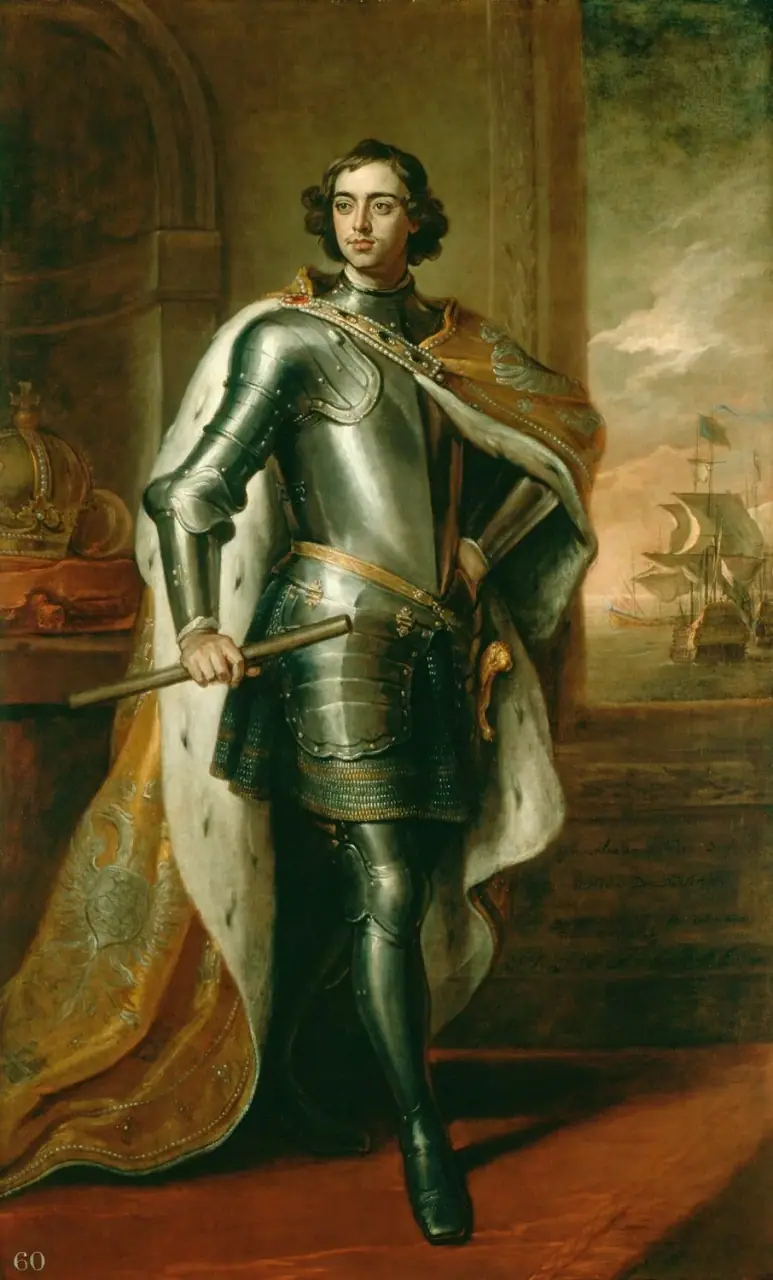
Peter I used prolonged war as pressure to transform the army, tax system, and government offices into a more centralized mobilization system. St. Petersburg and the new elite culture show a selective absorption of European knowledge; the costs of building the city, conscription, and taxation fell mainly on laborers. Behind a warship lay timber, iron, canvas, technology, and conscripted people, so reform could not stop at court dress. Peter's purpose in reorganizing the state and its results were both tied to war: new schools trained service personnel, the new tax system sustained the army, and the new table of ranks bound elites more tightly to the emperor. Absorbing foreign knowledge and strengthening domestic servitude occurred in the same process.
01 / 1682–1725How this era began
Foreign officers, new-style troops, and international trade already existed in the seventeenth century; reform did not begin from a completely closed society. The court already had foreign technicians and knowledge of European affairs, and cultural channels through Kyiv and Poland had not been cut. Peter's early life was spent amid regency and succession struggles, and new-style training was both an interest and a way to build his own power. Calling the entire seventeenth century completely stagnant cannot explain why reform was able to find personnel and institutional foundations.
Why did this era begin?
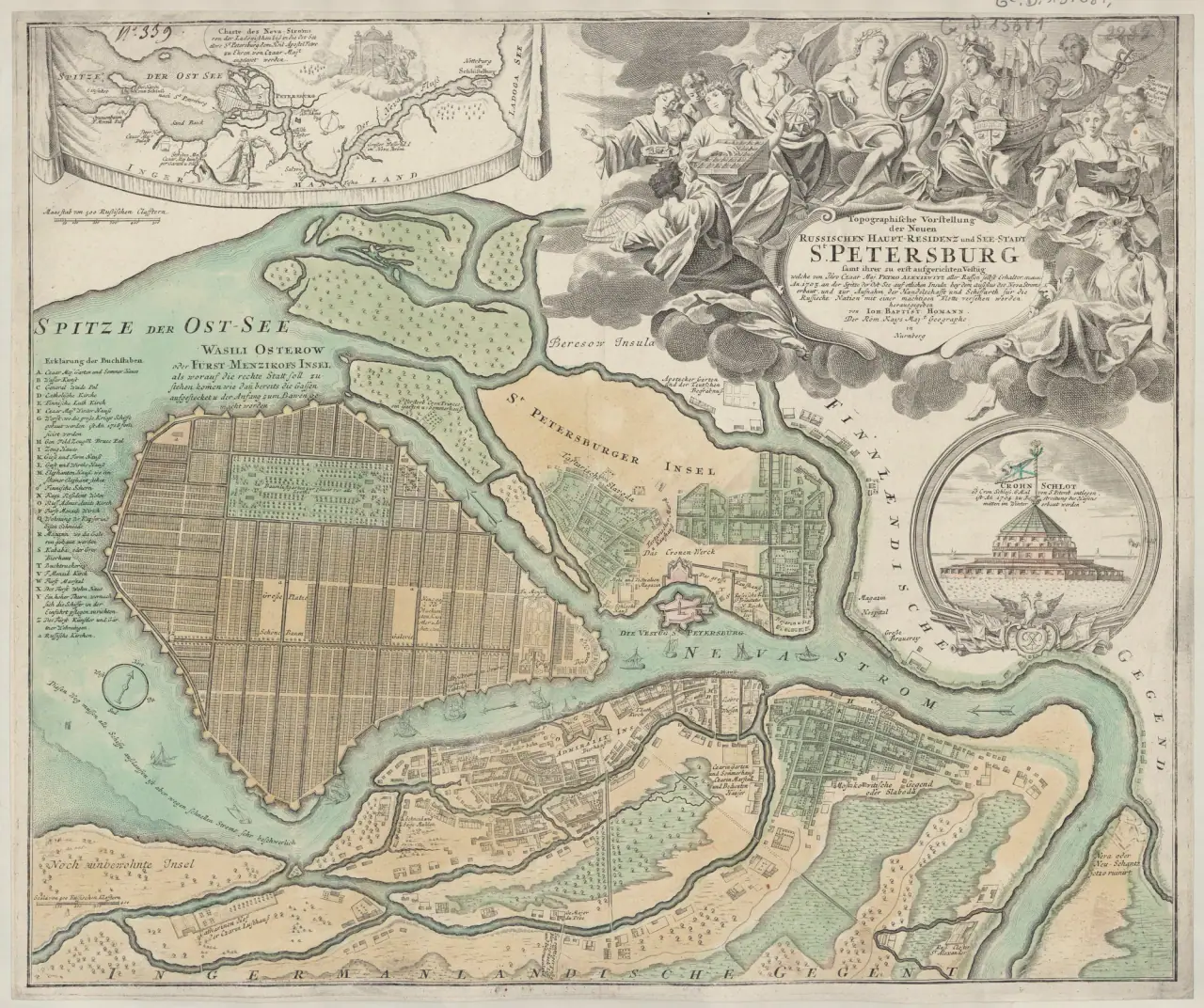
The need to gain access to the sea and defeat Sweden linked technical learning, resource extraction, and administrative reorganization. The defeat at Narva did not end the war immediately; Sweden's diversion of forces toward Poland gave Russia time to adjust. The state replenished the army, built ships, and strengthened collection, while the new capital turned a militarily occupied river mouth into an administrative and commercial site. The sequence of policies often changed with the course of the war; it was not a complete modernization blueprint written from the start.
02 / 1682–1725Who held power
The Senate, the collegia, and the Table of Ranks reorganized the service stratum; after 1721 the church was governed by a state-controlled Holy Synod. The Table of Ranks linked service rank to social status; advantages of birth remained, and promotion also required resources and connections. The Senate and collegia helped handle affairs at the scale of war but did not form a representative body accountable to the monarch. The Holy Synod changed the highest church governance; it did not mean that local belief or church land ceased to matter overnight.
What tensions existed within the era?
Mobilization brought flight, resistance, and rent-seeking, and the openness of reform to different strata was extremely uneven. Education and technology could bring advancement, but forced cultural change also stirred religious and status anxieties. The brutal suppression of the Streltsy shows that state-building could directly strike existing military groups. Foreign observers sometimes praised fiscal efficiency and sometimes sensationalized the monarch as barbaric; both need to be checked against policy implementation and the experiences of those affected.
03 / 1682–1725How society worked
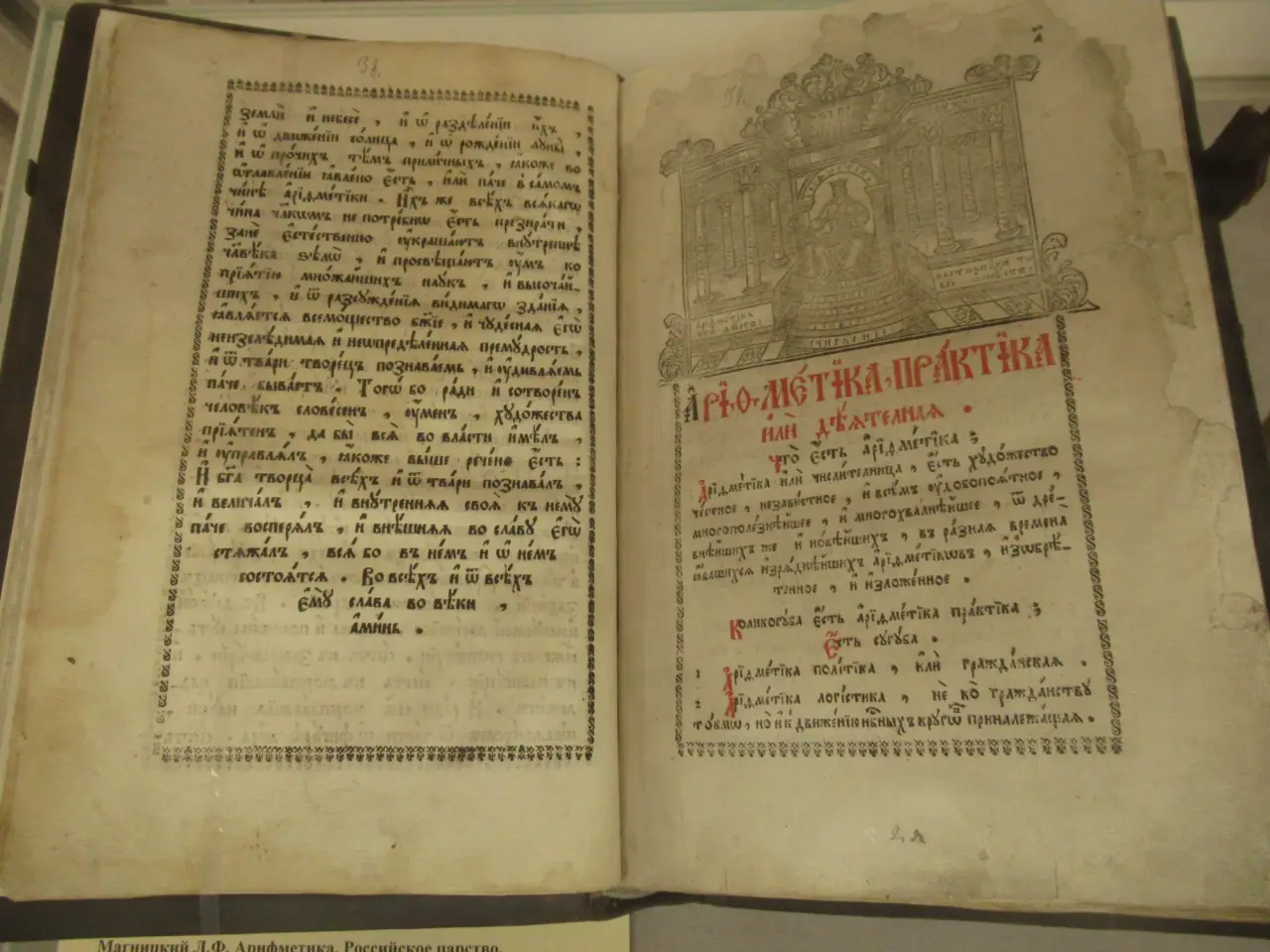
Metallurgy, shipbuilding, and textiles expanded for military needs, with orders and forced labor coexisting; the poll tax helped fix the objects of collection. The state sustained military production through orders and conscription, and the acquisition of new technology was inseparable from artisan training and imports. Increased taxation could support the army, but it also made registration, collection, and flight administrative problems. Industrial growth was not synonymous with free labor; some smelting and manufacturing still relied on dependent labor, and demand for civilian goods was not necessarily given priority.
How did ordinary people live?
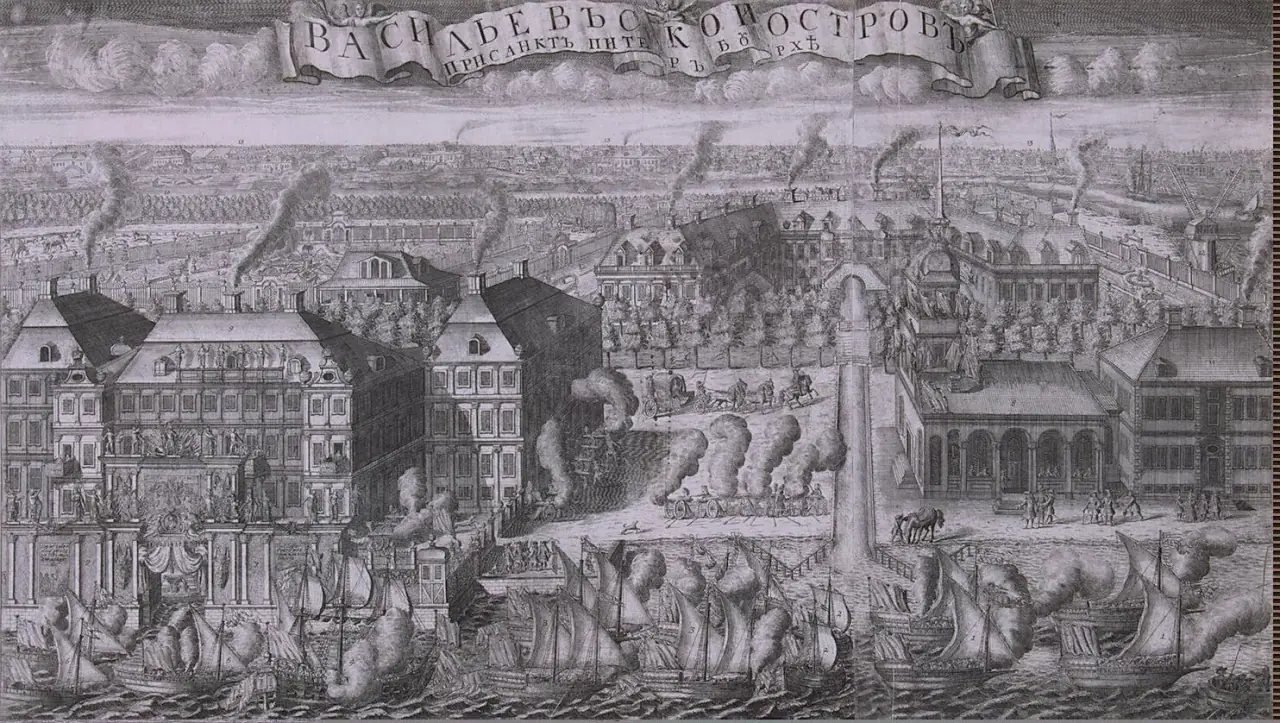
Conscription often meant years away from home, and peasants bore taxes and labor; urban elites learned new dress and social manners, and social distance widened. Upper-class families learned new norms of sociability, education, and clothing, while many ordinary families faced the loss of relatives to service, increased levies, and labor away from home. The two experiences coexisted rather than changing lifestyles nationwide in step. The palaces and collections of the new capital are suited to illustrating elite aesthetics, while labor costs must be supplied from conscription, finance, and popular materials.
04 / 1682–1725Where change began
Peter's death in 1725 without a clearly designated heir left the court, the Guards, and the nobility contending over his institutional legacy. Succession rules had allowed a monarch to designate an heir, but Peter left no arrangement sufficiently clear and accepted by all parties. His death handed the problem to the court, the Guards, and the bureaucracy, and the institutions did not therefore regress across the board. Later rulers used Peter's legacy selectively, making his image itself a resource in contests over legitimacy and the direction of reform.
Milestones that changed direction
Peter and Ivan crowned jointly
A succession crisis and Sophia's regency shaped the power environment of Peter's early years.
The Grand Embassy travels to Europe
Peter studied shipbuilding and sought technical and diplomatic resources; the visit continued until 1698.
The Great Northern War begins
Early defeats drove reform of military industry, conscription, and finance; the war lasted more than twenty years.
St. Petersburg founded
The new city at the mouth of the Neva was both a military stronghold and a symbol of the new court and maritime trade networks.
Battle of Poltava
Defeating the main Swedish force changed the war situation and raised Russia's weight in European diplomacy.
Peace treaty and imperial title
The Treaty of Nystad ended the war, Peter accepted the title of emperor, and church governance was reorganized the same year.
The Table of Ranks promulgated
Military and civil service grades were institutionalized, and opportunities for advancement and monarchical control both increased.
What we know
Fordham includes selected observations by Burnet, Korb, Gordon, and Rousset, concerning respectively European visits, the suppression of the Streltsy, finance, and customs, and their sources and tones differ. Met's city articles and object records allow examination of craft and cultural exchange, while decrees and chronologies verify institutional sequence. Elite collections cannot prove peasant household welfare, and foreigners' rumors cannot be taken directly as error-free records of a monarch's private conduct.
Questions still debated
Westernization, state-building, and military-fiscal reform are complementary explanations; the degree of novelty and the dependence on the seventeenth century remain debated. The military-fiscal explanation can show why taxation and military industry expanded together, but it cannot cover all changes in religion, culture, and court. The term Westernization may also mislead people into thinking Europe had only one institutional model, whereas Peter actually selected the parts that could strengthen the service state. Whether the reforms were worth their cost requires first specifying who benefited and who paid.
Legacies for later generations
Baltic status, technical education, and government offices endured; great-power status did not mean that all inhabitants gained freedom. Technical education, the navy, and government organization helped Russia become a European power, and the inhabitants of acquired lands were also incorporated into the new rule. Europeanization did not eliminate hierarchy and religious differences. To evaluate the reforms, one should examine military capacity, fiscal efficiency, knowledge transmission, and individual rights separately, not replace them with a single word of success or failure.
References and evidence
These materials support this page's account. Check the purpose, perspective and accessible scope of each source. Notes identify the evidential limits of excerpts, summaries and timelines.
- The Cambridge History of Russia, Volume 2: public abstracts on the imperial periodCambridge University Press · Academic research
Checked governance, estates, women, agriculture, economy, and thought in the public abstracts; this is not a page-by-page review of the whole book.
- The Cambridge History of Russia, Volume 2: public chronologyCambridge University Press · Academic research
Publisher's public PDF, used to check dates and chapter structure; the map insert does not thereby become openly licensed.
- Wolfram Koeppe: St. PetersburgThe Metropolitan Museum of Art · Museum research
Read the article and list of works to check the founding of the city, court, and craft exchange; treated its Westernization rhetoric with caution.
- The era of Peter I: accounts by four observersFordham University,Internet History Sourcebooks Project · Primary source
Actually read selections from Burnet, Korb, Gordon, and Rousset, comparing technical learning, suppression of the Streltsy, taxation, and customs; each has foreign-observer and political positions, and hearsay is not treated as eyewitness testimony.
- Russia: A Country Study: body text on the early empireLibrary of Congress, Federal Research Division; CountryStudies.us text mirror · Specialist reference
Read the body text on Peter, court successions, Catherine, and the estate system; absolute assertions such as the economy being completely unable to grow under serfdom are not adopted.
- Russia: A Country Study: body text on the Muscovite stateLibrary of Congress, Federal Research Division; CountryStudies.us text mirror · Specialist reference
Read the body text on the rise, Ivan IV, the Time of Troubles, the Romanovs, and expansion; the old survey's personality diagnoses and the claim of complete control by rulers are not used as causal conclusions in this draft.
At the end, bring this chapter to a close.