From Ruins to Space
How did superpower achievements enter ordinary families' housing and lives?
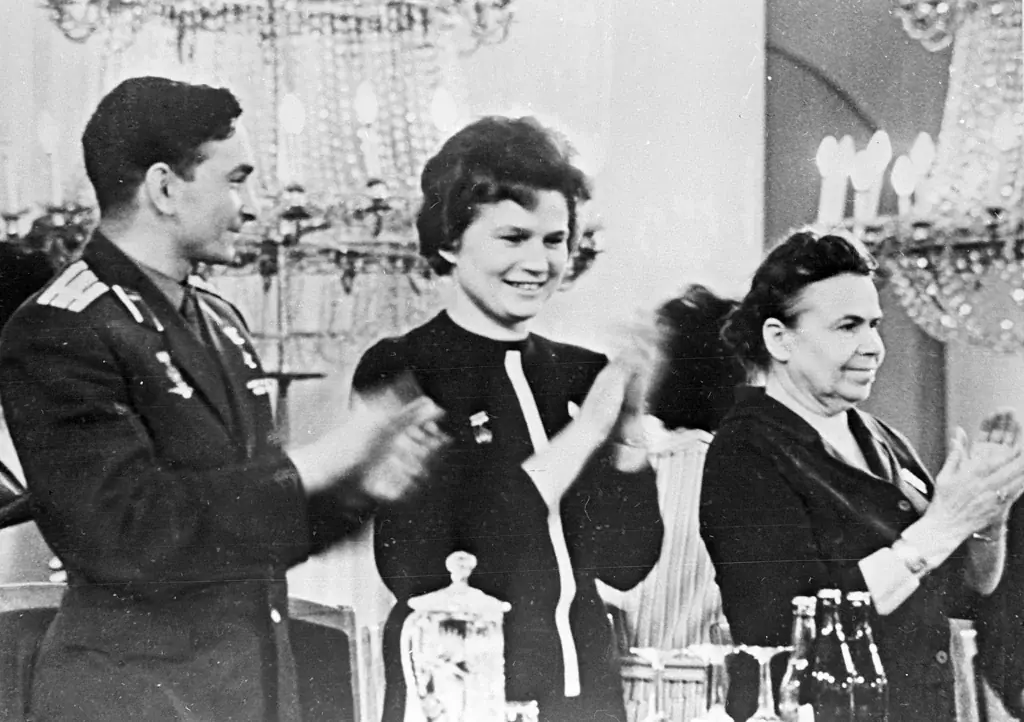
The Soviet Union prioritized industrial recovery and established a system of control over Eastern Europe, and repression did not end with victory. After Stalin's death some prisoners were released and the personality cult was criticized; housing, education, and space achievements brought hope, while the political boundaries of the thaw remained clear. Moving from a shared kitchen into a small apartment may have changed families more directly than distant diplomatic conferences; space achievements also brought science and technology and national hope into mass life. The secret speech opened part of historical discussion but did not undo the one-party system or the imperial security boundary. Reconstruction, limited thaw, and nuclear crisis must be seen side by side to see how improvement and control continued together.
01 / 1945–1964How this era began
The war destroyed housing, agriculture, and families, and demobilized soldiers and deportees faced difficult resettlement. After the war the state lacked housing, equipment, and labor, and large numbers of demobilized soldiers sought work and their families. Victory enhanced the regime's prestige but did not automatically end censorship, political suspicion, and high-intensity resource mobilization. The new control relationships in Eastern Europe and Western security policies stimulated each other, and reconstruction was embedded from the start in the gradually forming bloc competition.
Why did this era begin?
Security anxieties and ideological conflict drove bloc confrontation, and leadership change offered opportunities for internal adjustment. After Stalin's death the leadership needed to rebuild internal security and respond to social exhaustion, making it possible to reduce mass terror and improve living standards. Khrushchev's secret speech publicly assigned part of the blame within the party but also defended the party's ruling legitimacy. Rehabilitation, releases, and cultural loosening each had limits and cannot be summed up simply by a single date for the thaw.
02 / 1945–1964Who held power
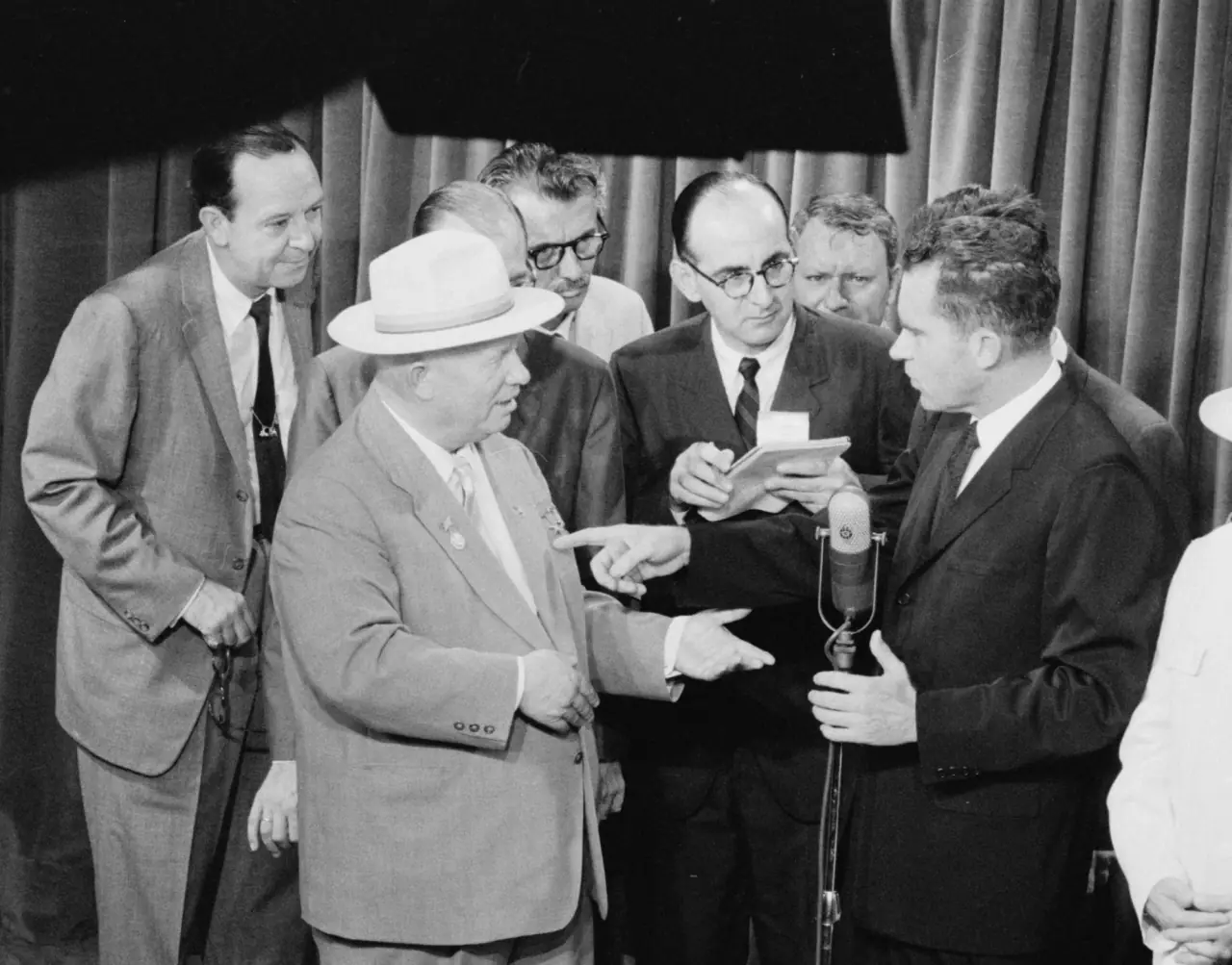
The party maintained its monopoly, Khrushchev governed through party alliances, and his reforms could also be withdrawn by the top leadership collective. Centralized decision-making still revolved around party organizations, and leaders' reform authority depended on support from colleagues, cadres, and the army. Criticism of Stalin did not give society the right to freely organize an opposition party. Limited openness at home and the maintenance of control over Eastern Europe could occur simultaneously, as the 1956 Hungarian events showed these domestic and foreign political boundaries.
What tensions existed within the era?
Discussion was both released and restricted; the Soviet army's suppression of the Hungarian uprising in 1956 showed that reform did not permit free departure from the bloc. Literature disclosed more experiences of war and repression, but power still defined what criticism was acceptable. Nuclear weapons and the space race raised prestige but also diverted resources and increased risk. The 1962 crisis led to some risk controls, but this cannot justify describing earlier decisions that came close to disaster as an easily manageable diplomatic game.
03 / 1945–1964How society worked
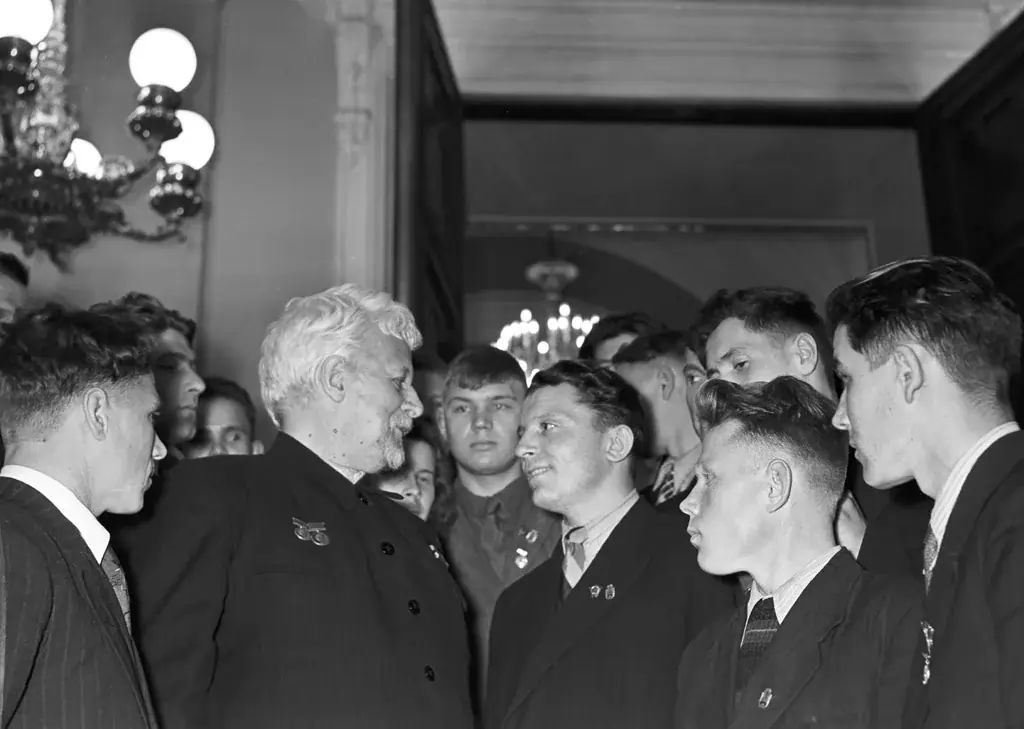
Heavy industry and the military competed with consumer needs for resources, and prefabricated housing, consumer goods, and agricultural experiments aimed to raise living standards. Rebuilding industry and the military consumed large resources, and the 1947 currency and rationing reforms affected different savers and urban and rural residents unequally. Housing construction used standardization and prefabrication to expand supply, at the cost of limited space, quality, and facilities. Agricultural experiments and administrative adjustments still tried to make up for inadequate supply through organizational mobilization.
How did ordinary people live?
Small apartments changed shared-kitchen life, education and employment expanded, most women still combined wage labor with housework, and urban and rural opportunities were unequal. Separate kitchens and doors that could close increased family privacy, but this did not mean new residents no longer faced queues or crowding. Schools, nurseries, and public services expanded, yet women were still often responsible for shopping, cooking, and care. Rural residents, deported peoples, and released prisoners had different access to opportunities, and a photograph of a new urban housing block cannot represent everyone.
04 / 1945–1964Where change began
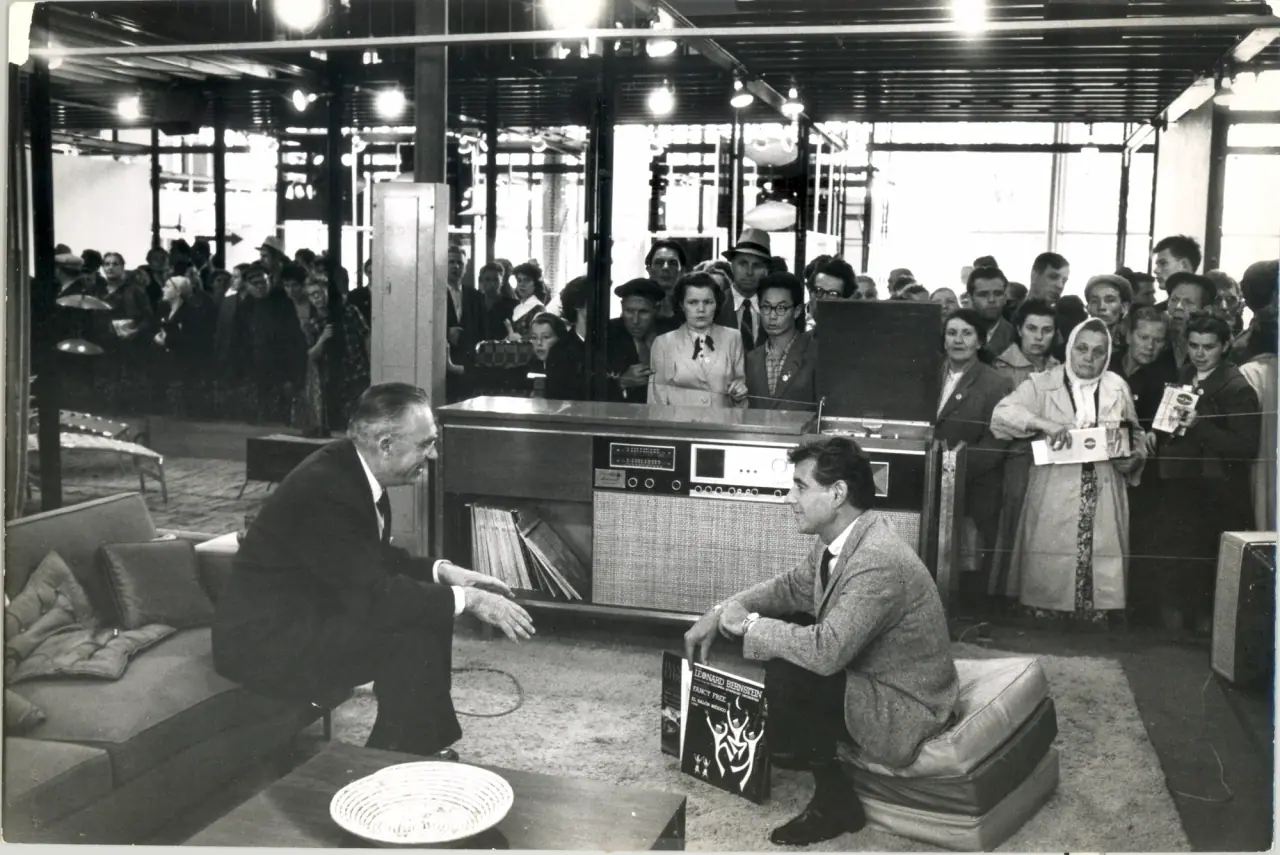
After unstable reforms, foreign adventures, and worsening leadership relations, Khrushchev was removed in 1964. Frequent reforms reorganized administration and agriculture, results were unstable and affected cadre support, and foreign-policy risks also became grounds for criticism. The 1964 removal was an exercise of intra-party power, not a nationwide competitive election. The new leadership inherited promises of housing, consumption, and welfare while trying to reduce policy swings to stabilize the ruling group.
Milestones that changed direction
Currency reform and the end of rationing
Economic management was rebuilt, and residents' savings and access to goods were affected unevenly.
First atomic bomb test
The American nuclear monopoly ended, and the arms race and security risks entered a new phase.
Stalin's death
Power struggles and limited loosening began, and releases and rehabilitation continued for several years.
The secret speech and the Hungarian crisis
Criticism of the personality cult and the use of force to maintain rule in Eastern Europe occurred in the same year.
Sputnik enters orbit
The display of scientific and military capability changed international competition and popular imagination.
Gagarin flies into space
The crewed orbital flight was the result of teamwork, industry, and long-term investment.
Cuban Missile Crisis
After coming close to nuclear war, it was resolved through diplomatic compromise, and risk control gradually developed.
Khrushchev removed
Intra-party succession turned toward a style emphasizing stability and collective coordination.
What we know
Housing, the 1947 end of rationing, the secret speech, and the space feature respectively explain living improvements, political adjustment, and state science and technology, while LOC diplomatic documents explain the nuclear crisis. Housing design and construction promises are not the same as residents' actual floor space, and family novels can reveal time pressures but are not national statistics. The secret speech exposed part of the violence while preserving the party's orthodox framework, and materials on releases and rehabilitation must also note the groups not included.
Questions still debated
The origins of the Cold War involved choices by both sides and also the demands of Eastern European societies themselves; the people of the region cannot be written only as pawns of the two powers. Whether de-Stalinization was an institutional break or an adjustment to preserve party power has evidence at different levels; a reduction in mass terror and the continuation of the one-party system are not contradictory. The causes of the Cold War should also include the agency of Eastern European societies and colonial independence. Treating the two-power relationship as the sole cause everywhere would obscure the histories of many local conflicts themselves.
Legacies for later generations
Housing and education shaped several generations' daily life, nuclear deterrence and space established global influence, and political rehabilitation opened questions of memory and responsibility. The housing and education paths formed in this period long affected families, and Sputnik and Gagarin also became cultural symbols beyond Soviet borders. The secret speech and rehabilitation brought memories of victims into public life, but some groups were still omitted. The boundaries of the thaw themselves later became questions that dissidents and reformers continued to pursue.
References and evidence
These materials support this page's account. Check the purpose, perspective and accessible scope of each source. Notes identify the evidential limits of excerpts, summaries and timelines.
- Revealing the Russian Archives: Inside the Soviet UnionLibrary of Congress exhibition in cooperation with Russian archives · Archive
Provides documents and translations on grain requisition, repression, censorship, deportation, and reform; the 1992 general introduction's period stance must be read against other research.
- Revealing the Russian Archives: The Soviet Union and the United StatesLibrary of Congress · Archive
Check documents on aid, alliance, the Cold War, and nuclear crises; do not use old statistical ratios that have not been independently reviewed.
- Khrushchev's secret reportSeventeen Moments in Soviet History, a university history-source teaching project · Academic research
Read the body of Lewis Siegelbaum's feature; citations are limited to the content, omissions, and political boundaries of the 1956 criticism; no claim is made to have read the full original Khrushchev report, and the webpage's day-level date was not used as a sole basis.
- The double burden: wage labor and houseworkSeventeen Moments in Soviet History, a university history-source teaching project · Academic research
The feature discusses the gap between employment, housework, and the promise of socialist gender equality.
- The 1947 abolition of rationing and monetary reformSeventeen Moments in Soviet History, a university history-source teaching project · Academic research
Read the complete signed text and check the December 1947 reform and the costs borne by different social groups.
- The Sputnik launch and the space raceSeventeen Moments in Soviet History, a university history-source teaching project · Academic research
Read the complete feature; the webpage places it in the 1956 section, but the historical event clearly occurred in 1957, so the content is ordered by event year.
- Gagarin flies into spaceSeventeen Moments in Soviet History, a university history-source teaching project · Academic research
Read the signed feature and check the April 12, 1961 orbital flight and the team and military-industrial background.
- Housing construction in the Khrushchev eraSeventeen Moments in Soviet History, a university history-source teaching project · Academic research
Actually read the feature main text, checking prefabricated housing and changes in domestic privacy; rudimentary conditions, overcrowding, and regional differences were not obscured by total new housing figures.
At the end, bring this chapter to a close.