The Boundaries of the Promise of Stability
Why did a society with more stable living conditions find it increasingly difficult to promote institutional change?
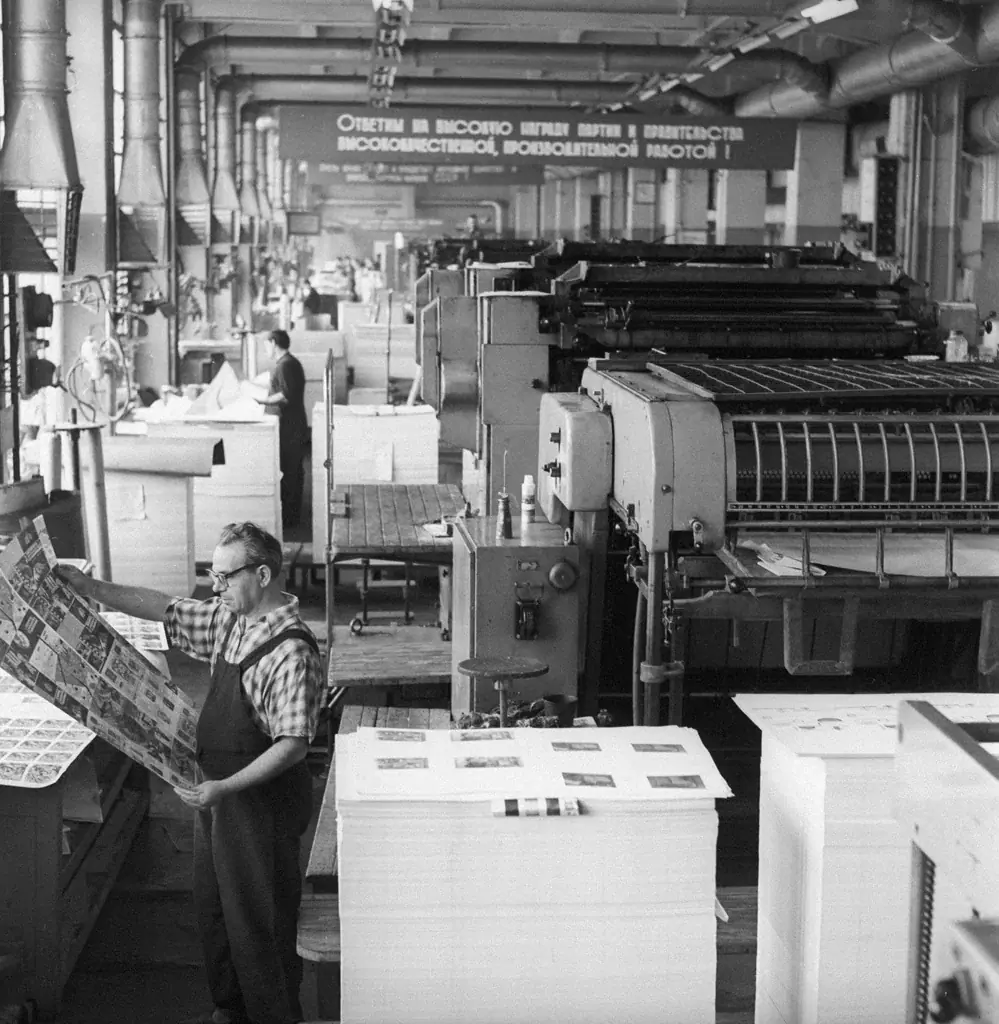
Urban life, education, and welfare continued to expand, and many families obtained housing and durable goods. The planned system encountered problems in innovation, agriculture, and quality, and personal connections made up for shortages; the suppression of dissent and foreign military interventions increased costs. For some families, stability meant having a job, being able to plan education, and gradually buying household appliances; for others, it meant boundaries on expression and long waits. Informal exchange both helped the system function and made relationships a hidden resource. Only by connecting these experiences with cadre appointments, enterprise targets, and foreign interventions can we explain why stability simultaneously accumulated pressure for reform.
01 / 1964–1985How this era began
The Khrushchev era left behind reform fluctuations and expectations for improved living standards, and the new leadership valued predictability. Earlier housing, education, and rehabilitation had led residents to expect continued improvement, and cadres also hoped to avoid frequent administrative reorganizations. The Brezhnev leadership chose to maintain elite predictability; this was neither a comprehensive social freeze nor a simple return to Stalinist terror. Existing urbanization, consumer demand, and professional groups were still changing the society that the regime faced.
Why did this era begin?
Adjusting the economy under a one-party system and maintaining social stability through employment and limited consumer improvement. Economic reform attempts gave enterprises more profit incentives, but ministries, plan targets, and political priorities limited their effect. For ordinary families, the legitimacy of the system became increasingly linked to livelihood security and consumption. Studying the so-called little deal is precisely a way to explain this tacit understanding: it describes a relationship and does not mean that the government signed the same contract with every citizen.
02 / 1964–1985Who held power
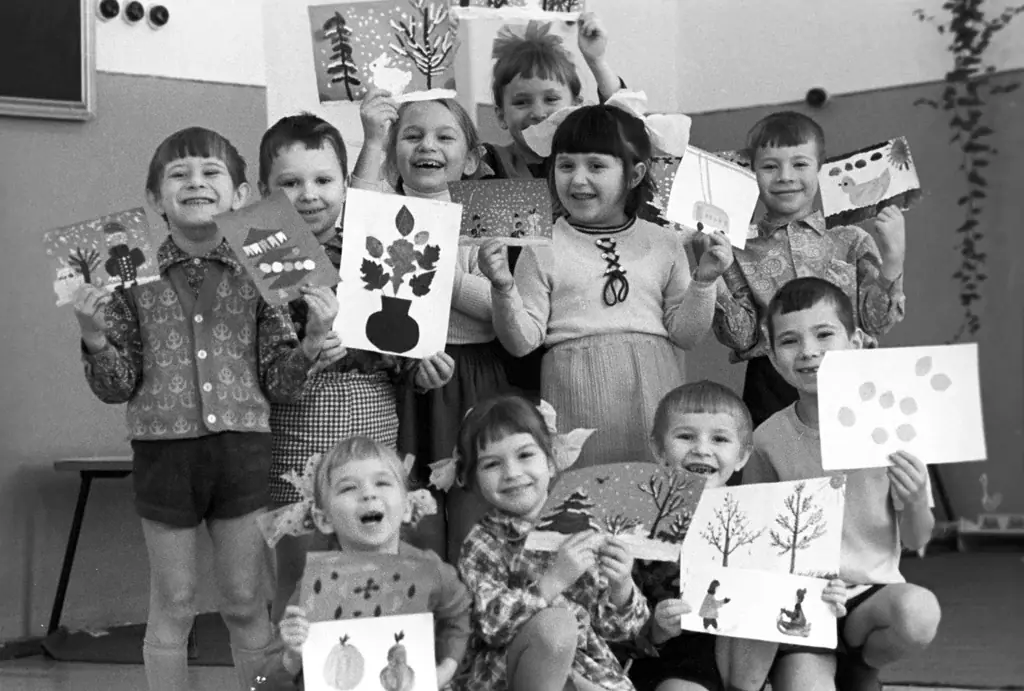
Party and state cadres controlled appointments and distribution, the leadership grew older, and trade unions and soviets found it difficult to hold power independently accountable. The influence of cadres over appointments, housing, and resource allocation combined formal positions with informal relationships. Some localities could negotiate upward for investment, and citizens also wrote letters of complaint, but these channels did not amount to organized competitive accountability. Leadership stability could reduce sudden political risk, but it could also prolong ineffective arrangements and avoidance of responsibility.
What tensions existed within the era?
The educated demanded autonomy, censorship suppressed dissent, and ethnic and religious demands as well as urban-rural and regional gaps persisted. Official criticism of materialism coexisted with promises of more durable goods, a tension that reflected how needs had already changed. Dissidents demanded expression, human rights, or ethnic and religious freedom, while most residents did not necessarily openly resist. The absence of protest cannot prove that everyone sincerely believed, and private jokes and withdrawal into family life cannot be directly converted into a unified proportion of opposition.
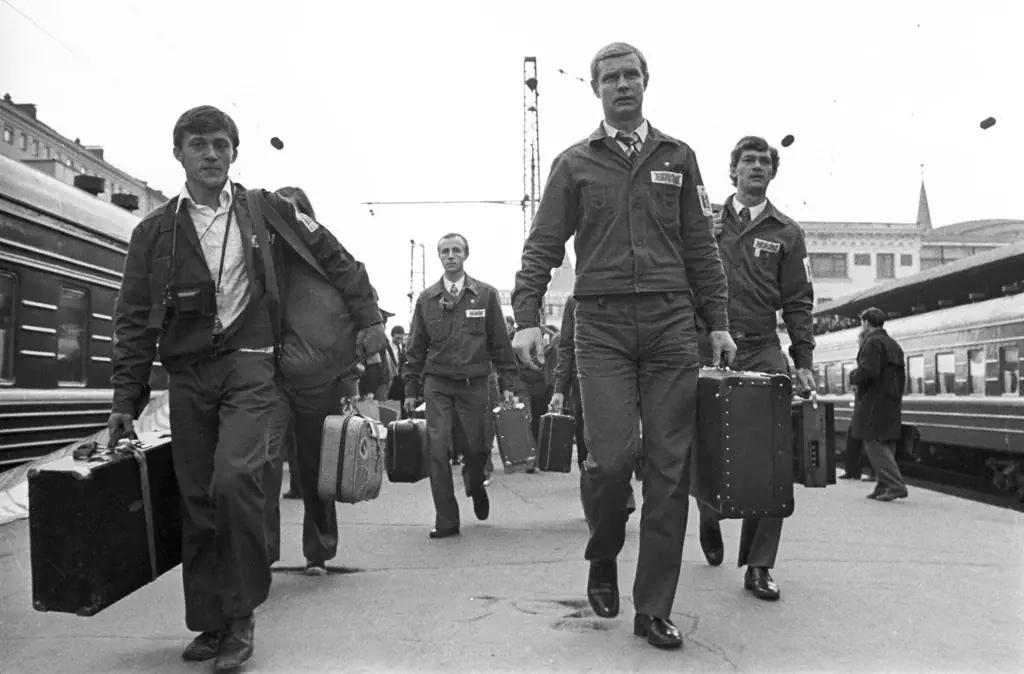
03 / 1964–1985How society worked
Targets constrained enterprises, and oil exports supported grain and technology imports while also reducing pressure to change resource allocation. To meet easily assessed targets, enterprises might neglect quality and genuine demand, and shortages in turn made repair, supply, and exchange through personal connections form another order. Oil and gas revenue buffered some supply and import pressure but did not automatically solve productivity problems. Slowing growth and continued improvement in living standards could coexist; one indicator alone cannot represent the whole experience.
How did ordinary people live?
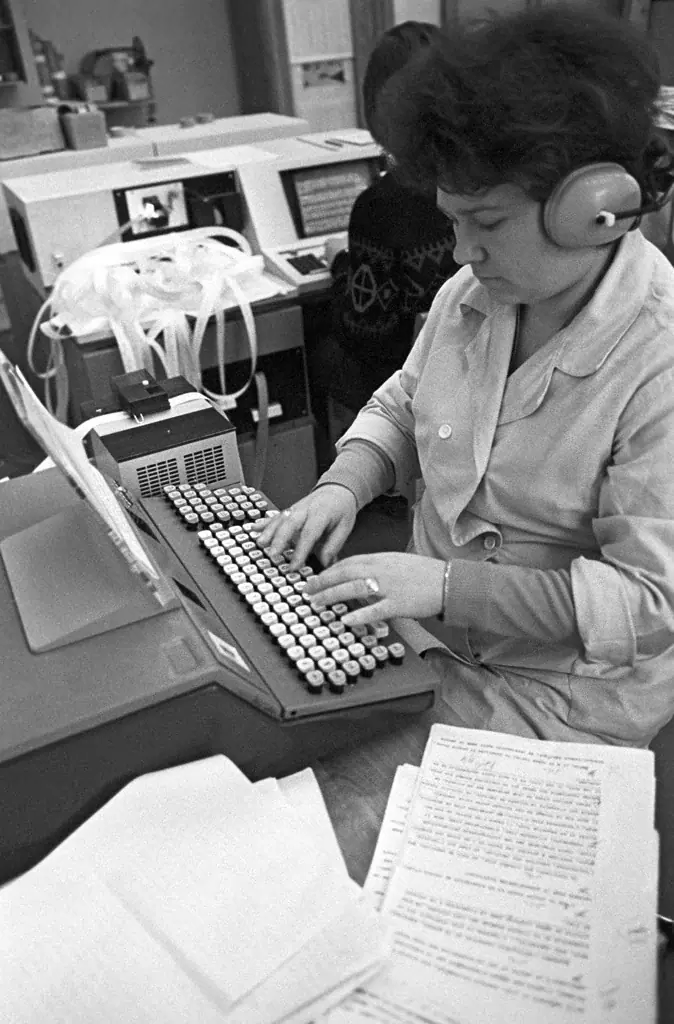
Families queued, exchanged information, and drew on personal connections; television, cars, and dachas changed life, and women's double burden persisted. Television, imported records, and gatherings at home expanded private culture, and separate apartments also gave people more controllable space. Finding goods, repairing appliances, and arranging child care still consumed time, and women often bore most of the shopping and housework. Differences in resources among republics, between urban and rural areas, and across occupations determined who found it easier to turn the system's promises into actual life.

04 / 1964–1985Where change began
Slowing growth, dependence on agriculture, the Afghanistan War, and frequent leadership turnover compounded one another, and reform was launched in 1985. In the early 1980s, leadership turnover did not immediately address the gap between production and social expectations, and foreign military spending and the Afghanistan War continued to exert pressure. The new reform demands came from different problems inside and outside the system; it was not a single variable such as oil prices that automatically overthrew the system. When Gorbachev was selected in 1985, the leadership still expected adjustment rather than the dissolution of the union.
Milestones that changed direction
Economic management reform
Kosygin attempted profit and enterprise incentives but remained constrained by planning and ministries.
Warsaw Pact troops enter Czechoslovakia
The Soviet Union led the suppression of reform, consolidating control and provoking domestic and international protest.
Strategic Arms Limitation agreements
Détente reduced some risks but did not end the arms race and regional conflicts.
Helsinki Final Act
Security was linked to human rights commitments, providing a public basis for citizen monitoring.
Soviet troops enter Afghanistan
The intervention turned into a long war, increasing casualties and international confrontation.
Sakharov placed under internal exile
The scientist and human rights advocate was taken to the city of Gorky and placed under surveillance.
Death of Brezhnev
Andropov and Chernenko held power in succession, and renewal did not immediately solve structural problems.
What we know
The special topic on the little deal uses James Millar's interpretation to discuss security, consumption, and political quiet; the double burden and housing materials show inequality within families; LOC documents and the Sakharov archives are used to cross-check foreign policy and individual persecution. Films, jokes, and household objects can illustrate experience and imagination but cannot be converted into a nationwide approval rating. Regional, occupational, and generational differences in consumption statistics and recollections should all be preserved; stability was not the same life for everyone.
Questions still debated
Stagnation is a later political and historiographical label; slowing growth does not mean that twenty years passed without social change, nor should it obscure repression. The little deal emphasizes an exchange of security for political quiet, while other interpretations stress organizational routines, welfare dependence, or everyday adaptation; all are frameworks that require testing. Growth in private consumption may strengthen approval, but it may also expose shortages and differences in relationships. When speaking of stagnation, one should specify whether the discussion concerns growth, political renewal, or culture; a single label cannot smooth over everything.
Legacies for later generations
Memories of stability and security coexist with experiences of shortage and repression and vary by class, region, and stage of life. Later nostalgia for the Soviet Union often connected to career, housing, and a stable life, while criticism focused on censorship, shortages, and inequality; both could be based on real experiences. Different generations and regions chose different memories. Analyzing this period of history requires preserving these differences rather than using nostalgia to prove universal happiness or using stagnation to deny all improvement.
References and evidence
These materials support this page's account. Check the purpose, perspective and accessible scope of each source. Notes identify the evidential limits of excerpts, summaries and timelines.
- Revealing the Russian Archives: Inside the Soviet UnionLibrary of Congress exhibition in cooperation with Russian archives · Archive
Provides documents and translations on grain requisition, repression, censorship, deportation, and reform; the 1992 general introduction's period stance must be read against other research.
- Revealing the Russian Archives: The Soviet Union and the United StatesLibrary of Congress · Archive
Check documents on aid, alliance, the Cold War, and nuclear crises; do not use old statistical ratios that have not been independently reviewed.
- Small deals: consumption and tacit agreements in the late Soviet UnionSeventeen Moments in Soviet History, a university history-source teaching project · Academic research
This round read the complete feature body at the original URL, signed Lewis Siegelbaum and James von Geldern; James Millar's small deals are used as an interpretive framework, not as a formal nationwide agreement.
- The double burden: wage labor and houseworkSeventeen Moments in Soviet History, a university history-source teaching project · Academic research
The feature discusses the gap between employment, housework, and the promise of socialist gender equality.
- Sakharov: exile in Gorky, 1980–1986American Institute of Physics · Archive
Read the complete historical exhibition page and the autobiographical materials cited therein, and check the 1980 exile and surveillance; no direct quotations from the person are used.
- Housing construction in the Khrushchev eraSeventeen Moments in Soviet History, a university history-source teaching project · Academic research
Actually read the feature main text, checking prefabricated housing and changes in domestic privacy; rudimentary conditions, overcrowding, and regional differences were not obscured by total new housing figures.
At the end, bring this chapter to a close.