A war of survival
How can the victory of resistance, the experience of civilians, and state coercion be explained together?
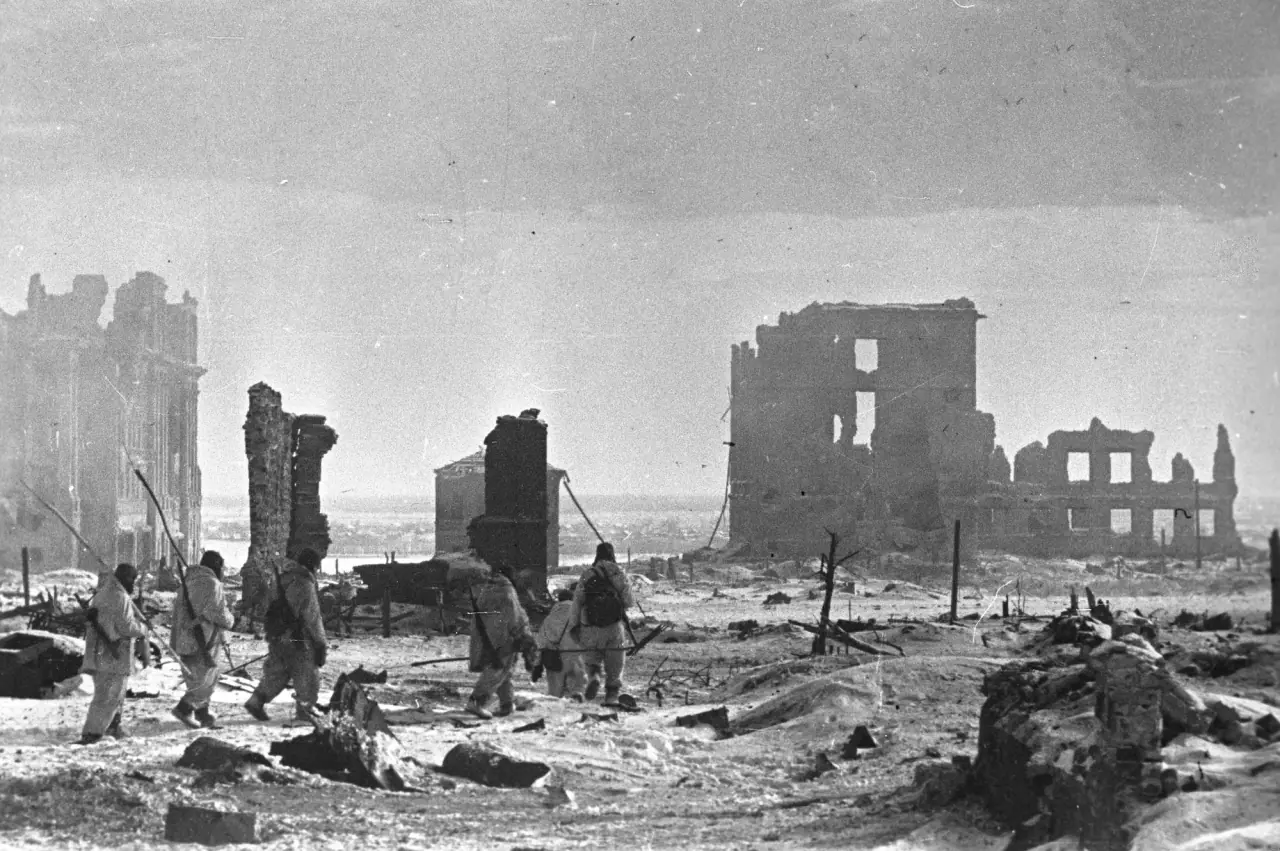
The Nazi attack brought large-scale war and genocide to the Soviet Union. The resistance of the Red Army, rear-area workers, and a multiethnic society, together with Allied aid and other fronts, contributed to victory; siege, massacre, hunger, and deportation meant that different groups had very different experiences. Factory evacuations, separated families, and survival under occupation were also part of the war. Jews were systematically murdered as a racial target, prisoners of war and besieged residents were starved, and rear-area labor was borne in large part by women. Placing the Soviet victory within the alliance and a multiethnic society can explain wartime resilience while avoiding reducing all decisions and sacrifices to a leader's biography.
01 / 1941–1945How this era began
The Soviet Union already had industrial capacity, but was also affected by the Great Purge, military reorganization, and expansion after 1939, and the treaty was not a reliable security guarantee. The 1939 treaty and the subsequent territorial annexations changed the Soviet Union's western borders, but did not eliminate the Nazi goal of seizing living space and destroying so-called Jewish Bolshevism. The army underwent expansion, reorganization, and purge, and strategic warnings were not converted into adequate preparation. The aggression did not become an unforeseeable natural catastrophe merely because the treaty existed.
Why did this era begin?
The invasion began on June 22, 1941, with goals including destroying the state, seizing land, and killing Jews and other persecuted people. The large encirclements and losses in the early invasion threatened the state's survival, and evacuating industry and population and replenishing the army became urgent tasks. German occupation plans incorporated food deprivation, prisoner-of-war deaths, and racial massacre into rule. The war was therefore not merely two armies contesting positions; whether residents could survive was itself a result of military and occupation policy.
02 / 1941–1945Who held power
The State Defense Committee and the Supreme High Command concentrated resources, but the initiative of soldiers and civilians cannot be swallowed by a leader narrative. Stalin's centralized leadership, changes in the military command, and local organizations all operated at once, and orders had to be carried out concretely by soldiers, engineers, and families. The state used discipline and punishment, and also mobilized patriotic and religious resources. Different peoples and republics participated together in the forces and the rear, and Soviet soldiers and civilians cannot be uniformly called Russians.
What tensions existed within the era?
Patriotic mobilization coexisted with discipline, the state suspected the loyalty of prisoners of war and some ethnic groups, and deportations in 1944 imposed collective punishment. Labeling an entire ethnic group as disloyal incorporates women, children, and the elderly into punishment, which is not the same as investigating individual acts of collaboration. The Allies also disagreed over the second front and the postwar order, and cooperation did not eliminate distrust. The legitimacy of resisting aggression cannot be used to exempt any party from responsibility to protect civilians and prisoners.
03 / 1941–1945How society worked
Factories moved east, and women and young people filled the labor force; rationing and military needs took priority, and British and American aid supported transport, food, and equipment. Relocated equipment could resume production only with housing, transport, food, and skilled personnel, so rear-area families bore long pressure. Allied vehicles, food, and equipment helped the army conduct mobile operations, while Soviet production and battlefield learning were equally crucial. There is no need to explain the entire victory with a single aid ratio or a single industrial product.
How did ordinary people live?
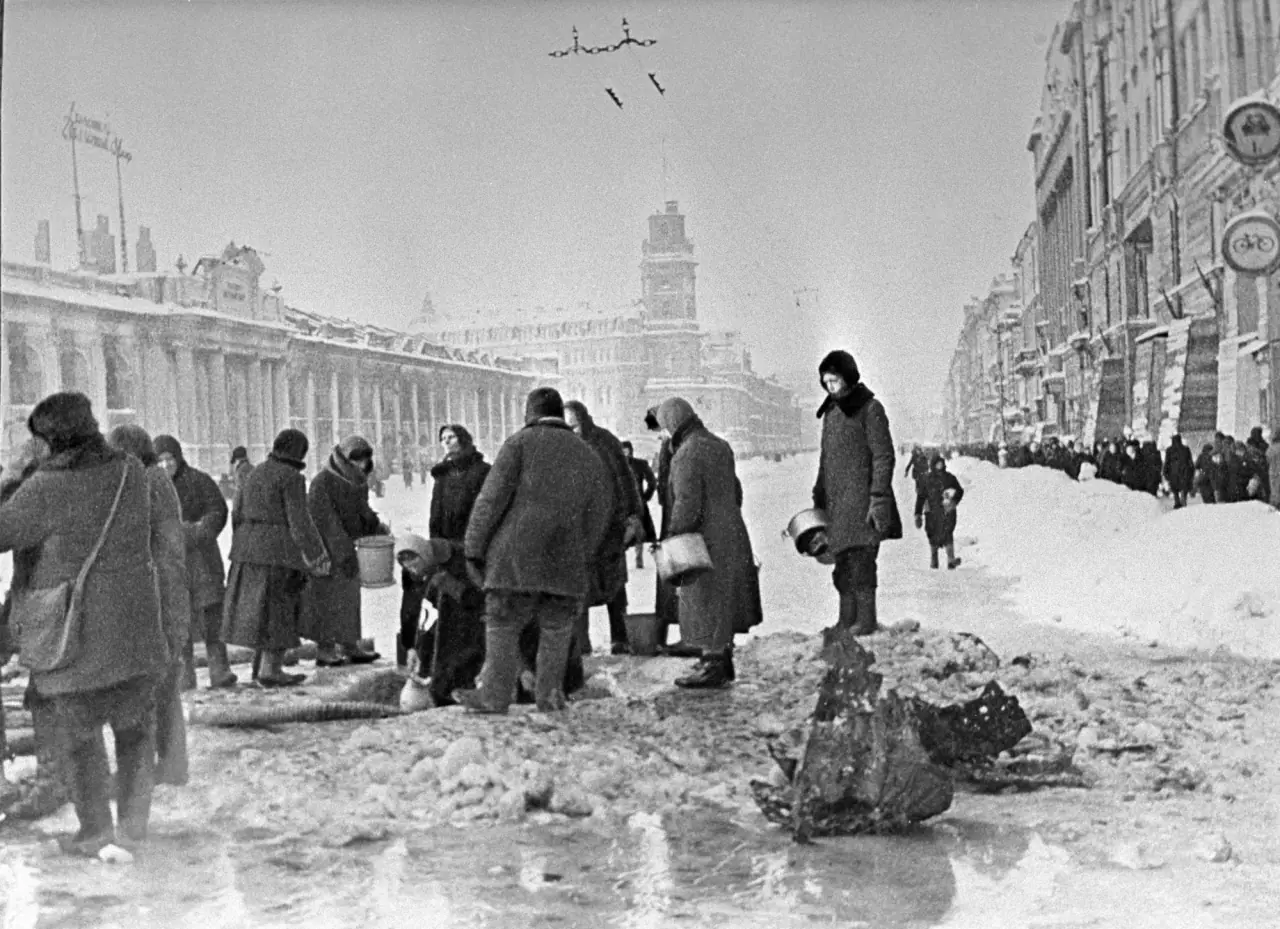
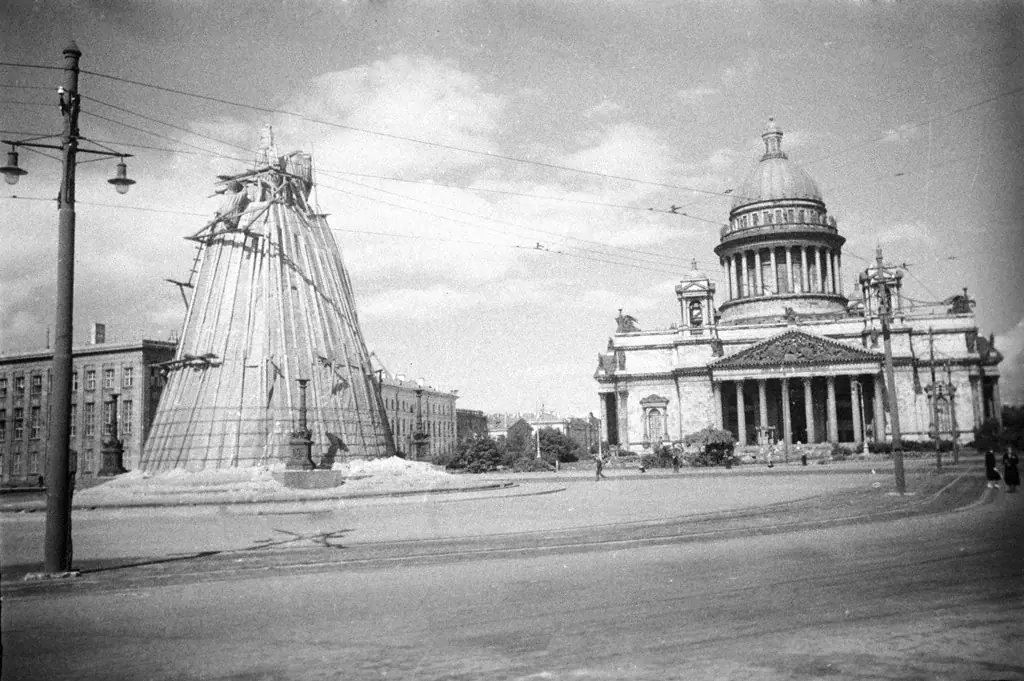
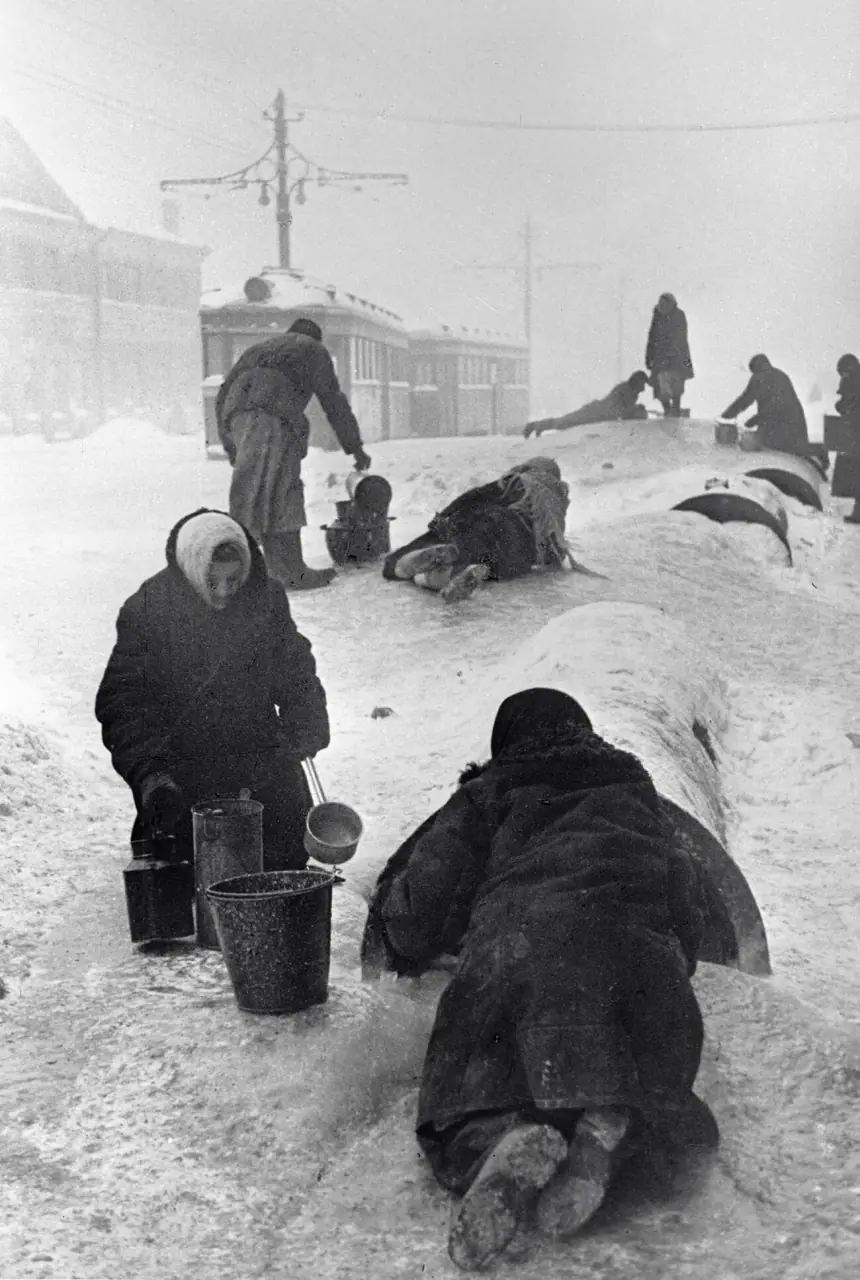
Besieged residents starved, occupied areas faced massacre, forced labor, and guerrilla war, and rear-area families labored under prolonged overload. The hunger of Leningrad, the massacres and guerrilla conflict in occupied areas, and rationing and overtime labor in the rear were different worlds of life. Prisoners and those sent to forced labor could face state scrutiny after returning. Children, the elderly, and families that lost income found it hard to escape by migrating, and the costs of war continued after demobilization and the search for relatives.
04 / 1941–1945Where change began
After Germany's surrender the Soviet Union also fought against Japan; great-power status remained alongside enormous destruction of population, housing, and agriculture. After the European war ended there were still the wounded, the homeless, and agricultural recovery, and the Soviet war against Japan also helped decide postwar arrangements in Northeast Asia. The entry of the army into Eastern Europe brought the chance to escape Nazi rule and also formed new relations of political control. The end of the war was a series of turning points for different regions and different groups, not an immediate return to normal life for all.
Milestones that changed direction
Operation Barbarossa
On June 22, Germany and its allies invaded, and the Soviet army suffered heavy initial losses.
The Siege of Leningrad and the Defense of Moscow
The siege caused mass civilian starvation, and the Moscow counteroffensive prevented Germany from ending the war quickly.
The Battle of Stalingrad
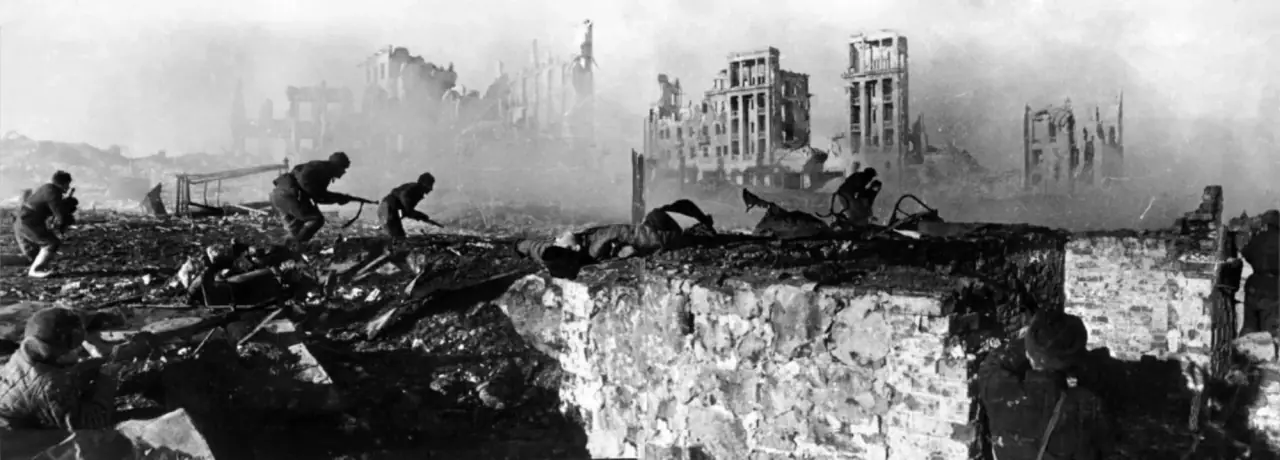
The city and transport lines became the battlefield, and the Soviet counteroffensive forced the encircled German troops to surrender in 1943.
Allied coordination at Tehran
Military cooperation coexisted with postwar disagreements, and Iran was also an important supply corridor.
Deportation of Crimean Tatars and others
Deportations justified by collective disloyalty caused families to suffer severe losses en route and in places of resettlement.
German surrender
Victory depended on the alliance and multiple fronts; the May 8 and May 9 commemorative dates have textual and time-zone contexts.
Soviet war against Japan
In August, Soviet forces entered Manchuria and other areas, hastening Japan's defeat and changing the postwar order in Northeast Asia.
What we know
The USHMM main text links the 1941 invasion to extermination policy, while LOC documents add records of the alliance, aid, and internal deportations. Military archives, occupation orders, diaries, survivor testimony, and photographs each address different questions; photographs should also specify the conditions of their taking and publication. Propaganda claims of success and later memoirs may compete over credit, and casualty figures are inconsistent; a single total without source notes cannot replace the reconstruction of different groups' experiences.
Questions still debated
Victory factors, casualty figures, and battle decisions remain open to research; Nazi aggression and extermination policy are not opinions to be balanced against denialism. Military preparations, command learning, and aid contributions can be compared across different evidence, but discussion must not be equated with denying who launched the aggression. Memories of a battle may compete over credit, and declassified documents are not necessarily complete. Attributing victory to unanimous popular support or to total coercion is too thin; different people could act at once out of patriotism, fear, duty, and concern for family.
Legacies for later generations
Memory connects many families and should include the contributions of the multiethnic Red Army, the Jewish Holocaust, deportees, and Eastern European experiences. Wartime sacrifice and resistance became family and state memory, yet the Jewish Holocaust, ethnic deportations, and prisoner-of-war experiences gained different spaces of expression in different eras. Commemoration can sustain shared feeling, but it can also exclude victims who do not fit the victory narrative. A complete history acknowledges the Red Army's contribution while also preserving the place of the Allies and the non-Russian republics as subjects.
References and evidence
These materials support this page's account. Check the purpose, perspective and accessible scope of each source. Notes identify the evidential limits of excerpts, summaries and timelines.
- June 1941: Nazi Germany invades the Soviet UnionUnited States Holocaust Memorial Museum · Museum research
Read the full text and check the invasion date, the war of extermination's objectives, and the experiences of Jews, prisoners of war, and civilians.
- Revealing the Russian Archives: Inside the Soviet UnionLibrary of Congress exhibition in cooperation with Russian archives · Archive
Provides documents and translations on grain requisition, repression, censorship, deportation, and reform; the 1992 general introduction's period stance must be read against other research.
- Revealing the Russian Archives: The Soviet Union and the United StatesLibrary of Congress · Archive
Check documents on aid, alliance, the Cold War, and nuclear crises; do not use old statistical ratios that have not been independently reviewed.
- Soviet territorial annexations, 1939–1940Seventeen Moments in Soviet History, a university history-source teaching project · Academic research
Read the feature and check the secret protocol, entry into Poland, the Winter War, and the annexation of the Baltic states.
- The double burden: wage labor and houseworkSeventeen Moments in Soviet History, a university history-source teaching project · Academic research
The feature discusses the gap between employment, housework, and the promise of socialist gender equality.
At the end, bring this chapter to a close.