Colonies: Land, Labor, and the Atlantic
When a ship carried tobacco to Europe, who owned the profits, and who bore the labor?
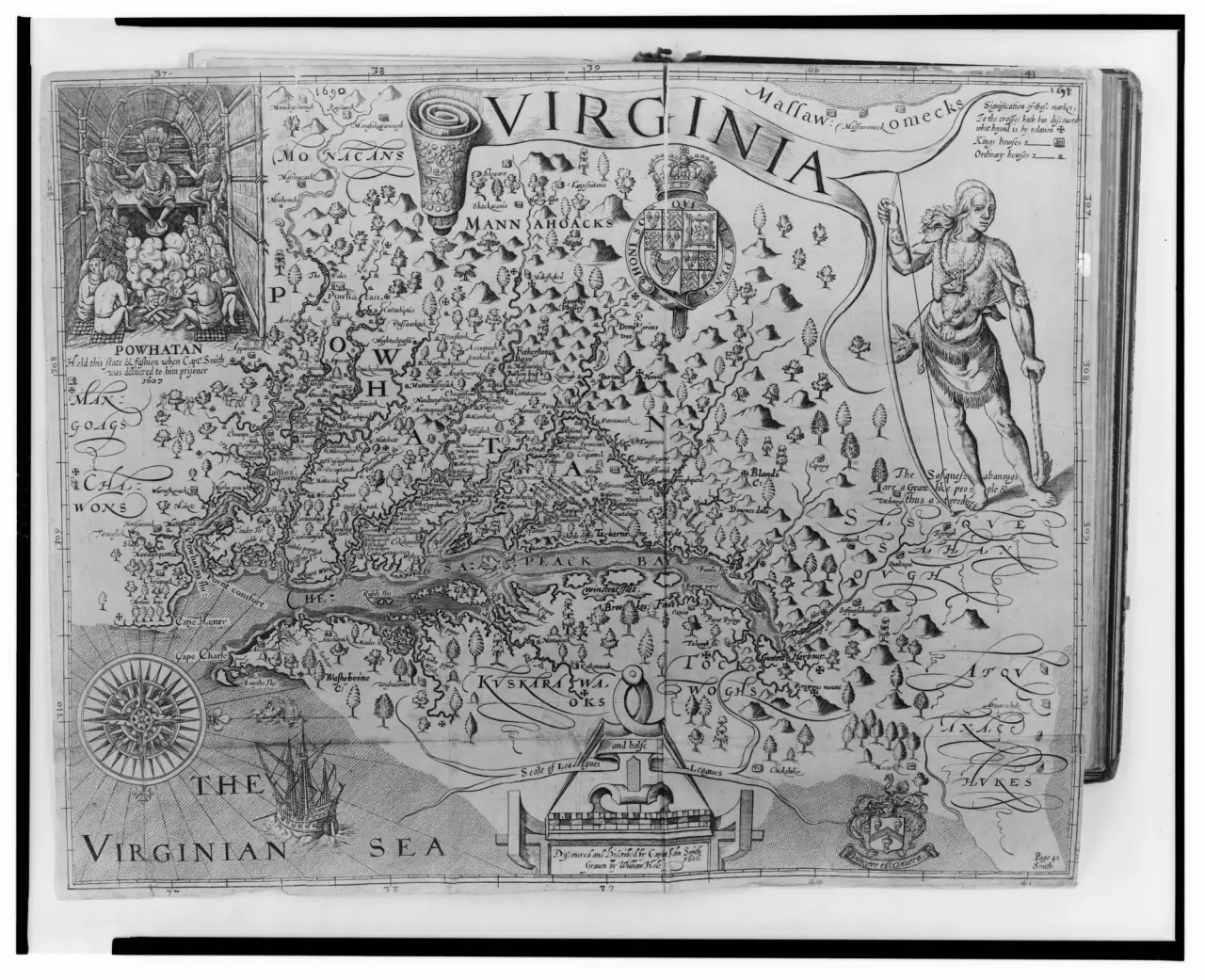
After 1607, English settlements expanded within existing Indigenous political and trading worlds. Tobacco cultivation, transatlantic goods, and immigration drove colonial growth, and also made land possession and labor control central to power. Trafficked Africans, indentured laborers, and European immigrants with different resources had different experiences; the hereditary establishment of slavery was a process gradually shaped by law and violence. Local assemblies and religious communities developed practices of self-government, but did not provide equal rights to all residents. After the imperial wars ended in 1763, Britain's adjustments to fiscal and frontier administration brought these colonial societies into sharper political disputes.
01 / 1607–1763How this era began
Before the English arrived, the Powhatan Confederacy had already organized agriculture, politics, and diplomacy in the Tidewater region; settlers entered land that was managed and used by people. The colonial company sought opportunities for profit, while European empires competed with one another for ports, routes, and resources. Understanding Jamestown's difficulties requires looking at maritime supply, the local environment, and the agency of Indigenous peoples to negotiate or refuse.
Why did this era begin?
Jamestown depended on Indigenous food and transatlantic supplies, and famine and conflict brought the settlement close to failure. After tobacco gradually became a source of profit, the demand for expanded farmland and labor grew stronger. Colonial society changed from a fragile outpost into a sustainable network of agriculture and trade, not because the land was uninhabited, but through negotiation, seizure, and new arrangements of rule.
02 / 1607–1763Who held power
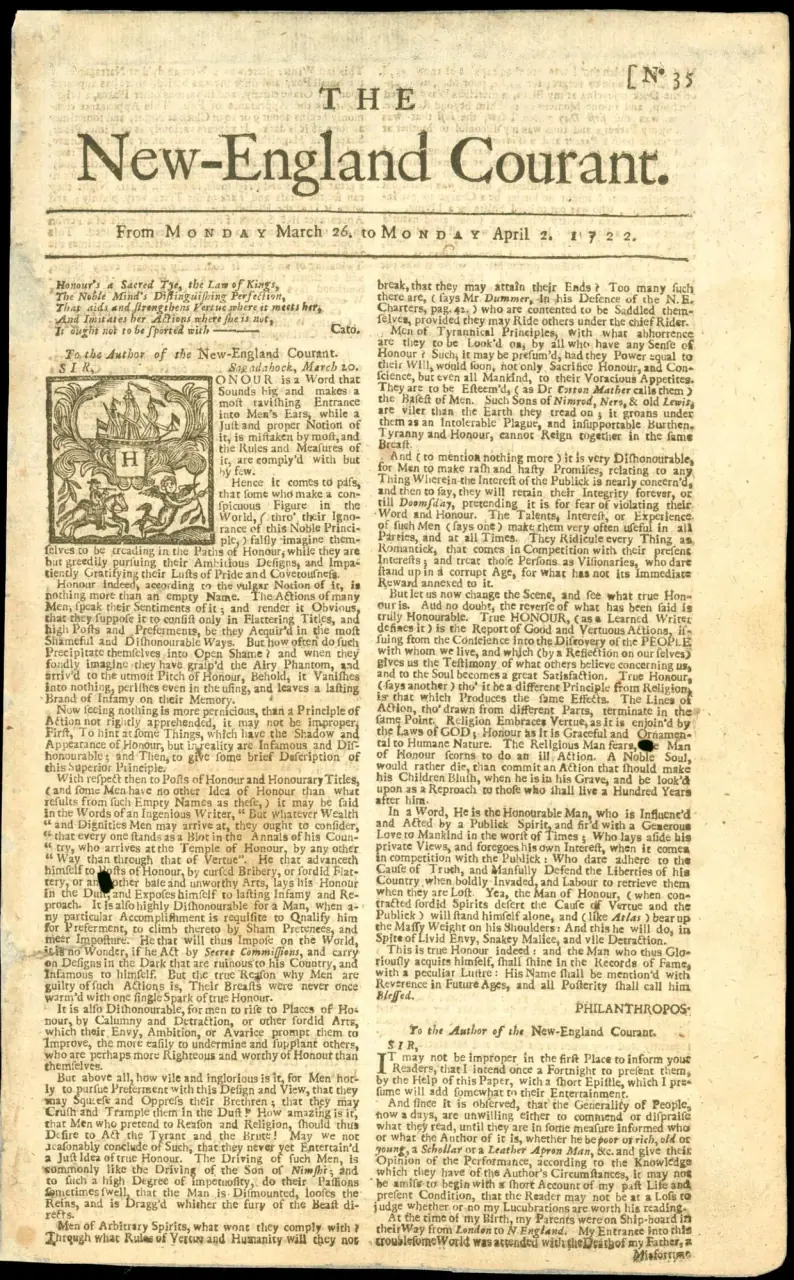
The Crown, colonial companies, governors, and local assemblies shared and contested governing authority, and propertied men generally had more influence over decisions. Indigenous leaders conducted their own diplomacy, while enslaved people and many women had difficulty entering colonial representative institutions. The appearance of an assembly can be an institutional change, but it cannot be directly called the moment all American residents gained democracy, still less erase the foundations of royal authority and land possession.
What tensions existed within the era?
Expansion continually encroached on Indigenous territories and political arrangements, while the colonies themselves were divided over taxes, tobacco prices, and trade privileges. Bacon's Rebellion included elite power struggles and violence against Indigenous peoples and must not be written in advance as an inevitable prelude to an independence revolution. Resistance by enslaved people further showed a sharp contradiction between the colonists' claimed freedom and the labor system they maintained.
03 / 1607–1763How society worked
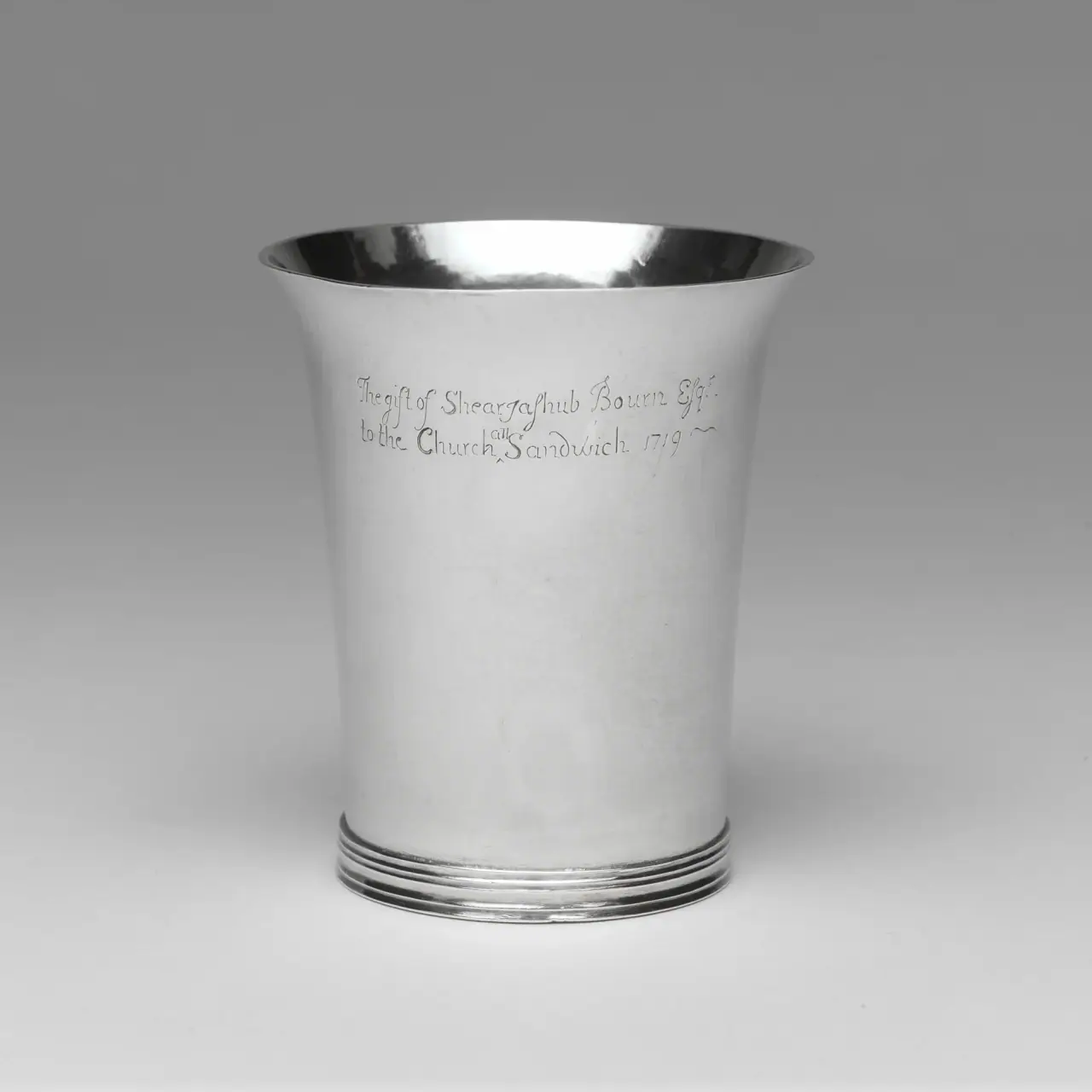
Tobacco and other export crops connected the colonies to European markets and the transatlantic slave trade, while ports, merchants, and small farmers formed different spheres of life. Workers' legal status was not identical from the start, and racialized hereditary slavery was gradually consolidated. Market demand and coerced labor thus reinforced each other; plantation wealth cannot be explained solely by fertile soil or individual diligence.
How did ordinary people live?
Settler families faced disease, food, and labor pressures, while African-descended families also endured sale, separation, and personal control. People maintained relationships through religion, marriage, mutual aid, and resistance; women's labor supported households and markets but is often not fully represented in political records. Daily rhythms differed among towns, plantations, and frontiers, and no single elegant dwelling can represent colonial daily life.
04 / 1607–1763Where change began
The end of the war in 1763 changed Britain's position in North America and also made debt, garrisons, and frontier administration more important. London and the colonial assemblies came into conflict over who had the authority to raise revenue and set rules, yet responses varied from place to place. Independence was not thereafter a goal everyone had already agreed on; trade boycotts, reform of imperial relations, and loyalty to the Crown remained paths people could choose.
Milestones that changed direction
1607: Jamestown established
The English Virginia settlement was established within the Powhatan world and depended in its early years on local food and transatlantic supplies; settlement did not mean the land had previously been unused or ungoverned.
1619: Trafficked Africans arrive in Virginia
Trafficked Africans arrived in Virginia in a clearly forced condition, while their specific legal status was still changing; this record must not be taken as the first arrival of Africans anywhere in the Americas.
1620: Plymouth settlement
Religious migrants established a settlement at Plymouth, connected with dealings with Indigenous peoples, land use, and mutual aid; later holiday memories cannot summarize the full relationship between the two sides.
1676: Bacon's Rebellion
Economic pressure, trade privileges, and local elite power struggles intertwined, accompanied by violence against Indigenous peoples; the rebellion must not be written in advance as the beginning of a freedom revolution based on the later outcome of independence.
1739: Stono Rebellion
Enslaved people in South Carolina launched a collective uprising and sought a way out, and were subsequently suppressed; this episode shows that the slave order was always resisted by those it controlled.
1763: End of the Seven Years' War
The end of the Seven Years' War changed imperial finances and frontier administration, and disputes between Britain and the colonies over taxation and governing authority widened; at this point independence was still not a shared goal of all residents.
What we know
Jamestown archaeology and National Park Service historical accounts can be cross-checked for the 1607 settlement, famine, tobacco, and land conflict; the 1619 records on Africans point to the limits of identity and documentation. Research on Bacon's Rebellion, in turn, distinguishes later patriotic narratives from the power struggles of the time. Colonists' writings survive in greater quantity and must be read alongside Indigenous explanations, laborers' experiences, and material remains; a one-sided record cannot be treated as a neutral panorama.
Questions still debated
How slavery, class, and racial law shaped one another, and how much self-government practices contributed to the later revolution, are comparable questions. Religious and productive systems differed greatly among the colonies, and Virginia cannot represent all of British North America. Explanation must acknowledge transatlantic structures while also attending to local action, and must not project the outcome of later independence as the shared intention of early residents.
Legacies for later generations
The colonial period left behind local self-government, property institutions, religious organizations, and Atlantic connections, and also left deep structures of enslavement, land seizure, and political exclusion. These legacies later provided the republic with both institutional resources and contradictions. The origins of the nation cannot be traced only through the genealogies of successful settlers; how Indigenous peoples and enslaved people understood and changed these institutions is equally part of the history of state formation.
References and evidence
These materials support this page's account. Check the purpose, perspective and accessible scope of each source. Notes identify the evidential limits of excerpts, summaries and timelines.
- Colonial settlement, the 1600s to 1763Library of Congress · Archive
A thematic navigation entry for locating materials. Specific dates and institutional conclusions are cross-checked against documents, collections and substantive entries listed in this chapter. A directory does not establish an account of an entire period.
- Native Knowledge 360°: Essential UnderstandingsSmithsonian National Museum of the American Indian · Museum research
An educational framework developed with Indigenous participation, emphasizing social diversity, sovereignty, continuity and contemporary life.
- A Brief History of JamestownU.S. National Park Service · Specialist reference
The institution that produced a source and the nature of its text must be distinguished from what it describes. A source link does not mean that every related archive has been made public.
- Wahunsenacawh and the Powhatan Political AllianceU.S. National Park Service · Specialist reference
The institution that produced a source and the nature of its text must be distinguished from what it describes. A source link does not mean that every related archive has been made public.
- Records of African Arrivals in Virginia in 1619U.S. National Park Service · Specialist reference
The institution that produced a source and the nature of its text must be distinguished from what it describes. A source link does not mean that every related archive has been made public.
- Bacon's Rebellion: Context and Changing HistoriographyU.S. National Park Service · Specialist reference
The institution that produced a source and the nature of its text must be distinguished from what it describes. A source link does not mean that every related archive has been made public.
- Liberty and Slavery: The Stono Rebellion and a Colonial-Era TimelineMuseum of the American Revolution · Museum research
Dated entries explain enslavement, resistance and choices during the revolutionary era. A timeline does not represent the experience of every colony.
- Plymouth Settlement and Reconsidering the Memory of 1620U.S. National Park Service · Specialist reference
Verification of the 1620 voyage and settlement. Commemorative traditions are read alongside Wampanoag communities and colonial relations. Later reconstructions are not presented as images of the event.
- Timeline of the American RevolutionU.S. National Park Service · Specialist reference
A specialist chronology of the imperial crisis after 1763, the Stamp Act, Tea Party, war and independence.
At the end, bring this chapter to a close.