The Cold War: How Security Entered the Home
How did a global security system change wages, schools, and the politics of other countries?
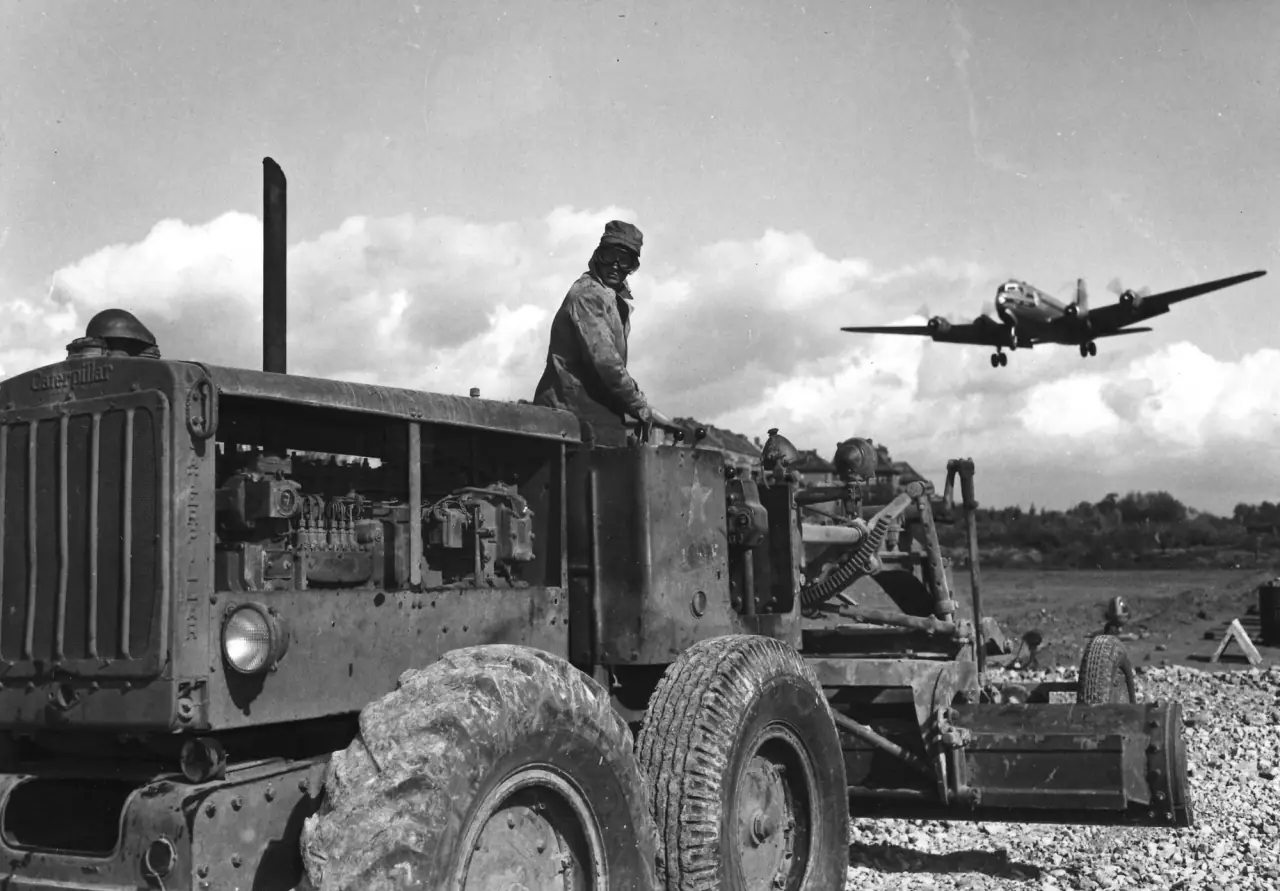
After 1945, competition between the United States and the Soviet Union gradually became institutionalized in military alliances, aid, intelligence, and nuclear armament, and it also affected local societies in Korea, Iran, and other regions. U.S. economic growth and national security investment were interconnected; veterans' education, housing, and suburban development expanded opportunities for some families but did not eliminate racial disparities. Anti-communist politics narrowed the space for certain dissent and organizing, while desegregation of the military and schools showed that pressure for rights was growing. The Cold War was not a chess game between two great powers on a blank map; allies, revolutionaries, Indigenous peoples, and overseas civilians all had goals of their own. The danger of the 1962 missile crisis especially showed that competition had to coexist with negotiation and crisis control.
01 / 1945–1968How this era began
Victory in war left the United States with powerful industry and nuclear capacity, while many parts of Europe and Asia faced destruction, demobilization, and reconstruction. Allied cooperation could not eliminate disagreements over security, political order, and spheres of influence. Understanding the origins of the Cold War requires distinguishing the structures left by the war from specific policy escalations, and one must not assume that in 1945 everyone already regarded long-term hostility as inevitable.
Why did this era begin?
The Truman Doctrine and the Marshall Plan combined security with economic aid, and national security institutions and NATO gave long-term overseas commitments organizational form. Reactions from the Soviet Union and other countries in turn shaped U.S. choices, and competition kept expanding. Aid could support reconstruction and also serve strategic goals; it cannot be called unconditional charity, nor can the real needs of recipient societies for restoring production be denied.
02 / 1945–1968Who held power
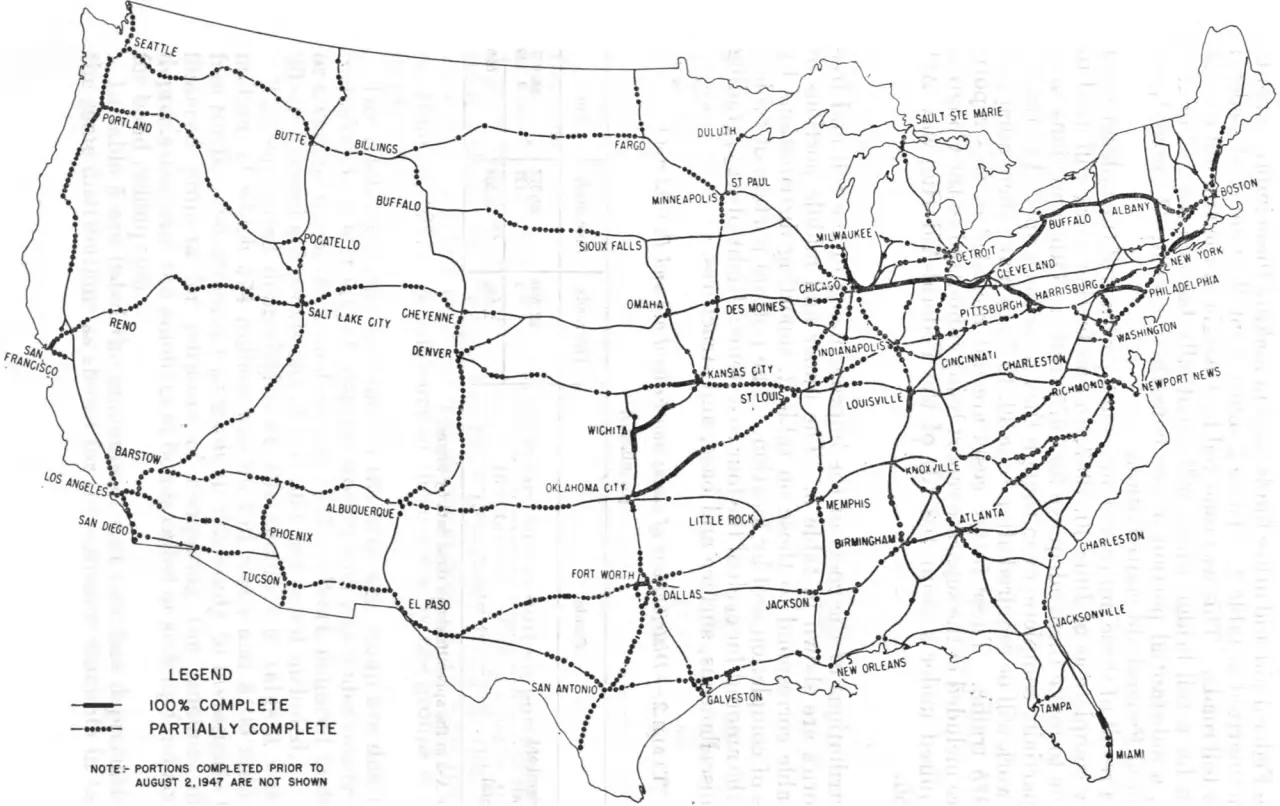
Presidents, security agencies, Congress, and military alliances controlled substantial resources, while covert operations increased spaces of power that the public could hardly oversee. Domestic anti-communist scrutiny affected careers and organizations, while courts and social movements kept challenging exclusion. Overseas policy must distinguish U.S. decisions from local actors; interventions such as those in Iran can neither be justified by Cold War rationales in the archives nor erase local political divisions.
What tensions existed within the era?
The state explained security policy as the defense of freedom, yet covert intervention, anti-communist scrutiny, and racial exclusion created obvious contradictions. Allies also had their own interests in U.S. policy, and containment cannot be understood as a single shared program for all participants. The military's 1948 desegregation order provided formal change, but implementation still took time, showing that international competition and domestic rights change, though related, cannot be directly equated.
03 / 1945–1968How society worked
The military-industrial sector, scientific research, and public construction mutually supported consumption growth, and veterans' education and housing aid expanded assets and skills for many people. Black veterans, however, could be blocked by banks and residential exclusion; eligibility under the law did not guarantee equal opportunity. Postwar prosperity was therefore both a story of production and income and a question of how public investment was distributed to different families through local markets.
How did ordinary people live?
Some families moved to the suburbs, received higher education, and bought durable goods, while others still faced housing segregation and low-wage work. Women's household care and paid labor sustained the consumer society, and fears of nuclear war entered schools and public propaganda. The deaths and displacement of Korean War soldiers and overseas civilians also belong to this history; the picture of domestic comfort in the United States must not be allowed to cover the costs of war.

04 / 1945–1968Where change began
The 1962 missile crisis pushed the risk of nuclear war to a dangerous level, and negotiation and mutual concessions showed that adversaries could still limit escalation. Competition did not disappear afterward, and the Vietnam War and domestic protest further challenged the national security consensus. The year 1968 serves as a transition in this chapter and should be read alongside the thematic chapter on civil rights, rather than claiming that the Cold War or social prosperity suddenly ended that year.
Milestones that changed direction
1947: The Truman Doctrine and the National Security System
Truman proposed aid to Greece and Turkey to Congress, combining security and economic support; policy speeches can show government goals but cannot by themselves prove that threat assessments were entirely objective.
1948: Implementation of the Marshall Plan
The Economic Cooperation Act supported European recovery, linking aid, trade, and strategy; recipient societies also had their own choices and needs, and reconstruction cannot be explained only from the perspective of U.S. policymakers.
1948: Order to Desegregate the Military
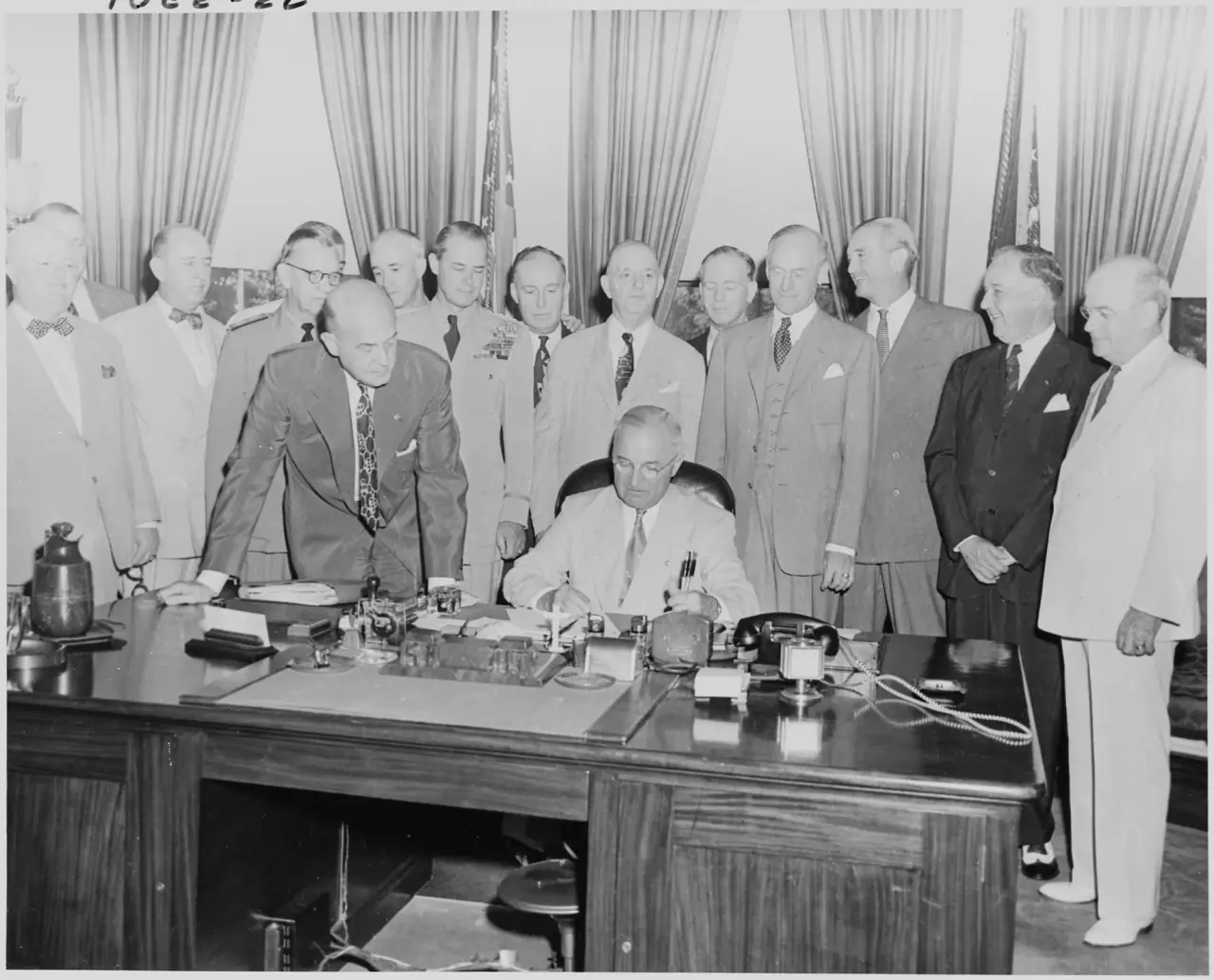
Executive Order 9981 established the principles of equal treatment and opportunity in the military; actual reform of the forces proceeded in stages, and one cannot infer from the signing date that all segregated arrangements disappeared that day.
1949: Founding of NATO
The United States, Canada, and Western European countries signed the North Atlantic Treaty, creating a long-term security commitment; the alliance's legal basis, organizational operation, and each member's motives must be understood separately.
1950: The Korean War
The Korean War broke out, the United States led UN-authorized forces into combat, and China later intervened; regional politics and civilian experiences cannot be compressed into a single narrative of direct confrontation between two great powers.
1953: British and U.S. Involvement in the Iran Coup
The TPAJAX plan and reports from the Tehran station can verify U.S. involvement in planning and operations; the texts remain redacted and contain the actors' self-assessment, and Iran's internal military and political forces cannot be omitted.
1962: The Cuban Missile Crisis
After the United States discovered Soviet missile deployments in Cuba, naval blockade, threats, and open and secret negotiations intertwined; Cuba's security demands and U.S. missiles in Turkey were also part of the background.
What we know
The Truman speech, the aid act, and Executive Order 9981 present formal policy, while the Iran action plan and station reports reveal covert intervention. The latter are the actors' own accounts and remain redacted; they alone cannot summarize all forces in Iran. Materials on the GI Bill and housing implementation supplement domestic distributional differences, and intelligence photographs from the Cuban crisis must be read together with diplomatic records; adversary intentions cannot be judged from images alone.
Questions still debated
Cold War responsibility, alternative forms of containment, and the consequences of intervention have different interpretations, and one must compare periods, regions, and archival perspectives. U.S. and Soviet actions were not necessarily symmetrical, and acknowledging local agency does not mean ignoring the resource gap between powerful states. On domestic growth and the role of military spending, institutional, technological, and household labor factors must be considered together; no single factor should be written as the source of all prosperity.
Legacies for later generations
Cold War alliances, scientific research, and security institutions long shaped the United States and the world, while housing, education, and defense investment changed regional development and family wealth. The nuclear crisis left an urgent need for communication and arms control, and covert intervention left questions of accountability and archival openness. Evaluating the legacy requires observing both U.S. capacity and consequences for other societies, and one cannot reason backward from which side ultimately prevailed to conclude that all choices were reasonable.
References and evidence
These materials support this page's account. Check the purpose, perspective and accessible scope of each source. Notes identify the evidential limits of excerpts, summaries and timelines.
- The Early Cold War, 1945–1952Office of the Historian, U.S. Department of State · Specialist reference
A thematic navigation entry for locating materials. Specific dates and institutional conclusions are cross-checked against documents, collections and substantive entries listed in this chapter. A directory does not establish an account of an entire period.
- Access to Cuban Missile Crisis ArchivesU.S. National Archives · Archive
Crisis chronology, aerial photographs and presidential-library materials. Intelligence images must be read alongside diplomatic records.
- Foreign Relations of the United States: Supplement on Iran, 1951–1954Office of the Historian, U.S. Department of State · Archive
A thematic navigation entry for locating materials. Specific dates and institutional conclusions are cross-checked against documents, collections and substantive entries listed in this chapter. A directory does not establish an account of an entire period.
- Native Knowledge 360°: Essential UnderstandingsSmithsonian National Museum of the American Indian · Museum research
An educational framework developed with Indigenous participation, emphasizing social diversity, sovereignty, continuity and contemporary life.
- The Truman Doctrine Speech (1947)U.S. National Archives · Primary source
The institution that produced a source and the nature of its text must be distinguished from what it describes. A source link does not mean that every related archive has been made public.
- The Economic Cooperation Act and Marshall Plan (1948)U.S. National Archives · Primary source
The institution that produced a source and the nature of its text must be distinguished from what it describes. A source link does not mean that every related archive has been made public.
- Memorandum of the TPAJAX Planning Meeting, June 6, 1953Office of the Historian, U.S. Department of State / FRUS · Primary source
The meeting discussed specific military, Shah-related and propaganda arrangements. Redactions remain. Planning does not establish that every proposal was implemented.
- Tehran Station Chief's TPAJAX Operational Report, August 28, 1953Office of the Historian, U.S. Department of State / FRUS · Primary source
Public paragraphs 1–7 record agent mobilization and military roles. This is an account by participants in the operation, subject to self-crediting and redaction limitations.
- FRUS Editorial Note on TPAJAX Authorization RecordsOffice of the Historian, U.S. Department of State / FRUS · Archive
Distinguish memoirs, operational chronologies and formal records that have not been found. Do not invent a written presidential order.
- Executive Order 9981 (1948)U.S. National Archives · Primary source
The institution that produced a source and the nature of its text must be distinguished from what it describes. A source link does not mean that every related archive has been made public.
- The GI Bill (1944)U.S. National Archives · Primary source
The institution that produced a source and the nature of its text must be distinguished from what it describes. A source link does not mean that every related archive has been made public.
- Collection Notes on the North Atlantic Treaty of 1949National Archives Museum · Archive
The original treaty collection and information about its signing in 1949. Later membership numbers on the website are not projected back onto 1949.
- The Korean War and Japan's RecoveryOffice of the Historian, U.S. Department of State · Specialist reference
Diplomatic context for war in 1950 and the armistice of 1953. This is an official American retrospective, not a substitute for Korean, Chinese and civilian experiences.
- The Cuban Missile Crisis: Public and Secret NegotiationsOffice of the Historian, U.S. Department of State · Specialist reference
The October 1962 crisis, missiles in Turkey and a pledge not to invade. Official interpretations require comparison with records from the different parties.
At the end, bring this chapter to a close.