Constitution-making and the early republic: How was liberty to be organized?
How could a capable government be built while preventing power from spinning out of control?
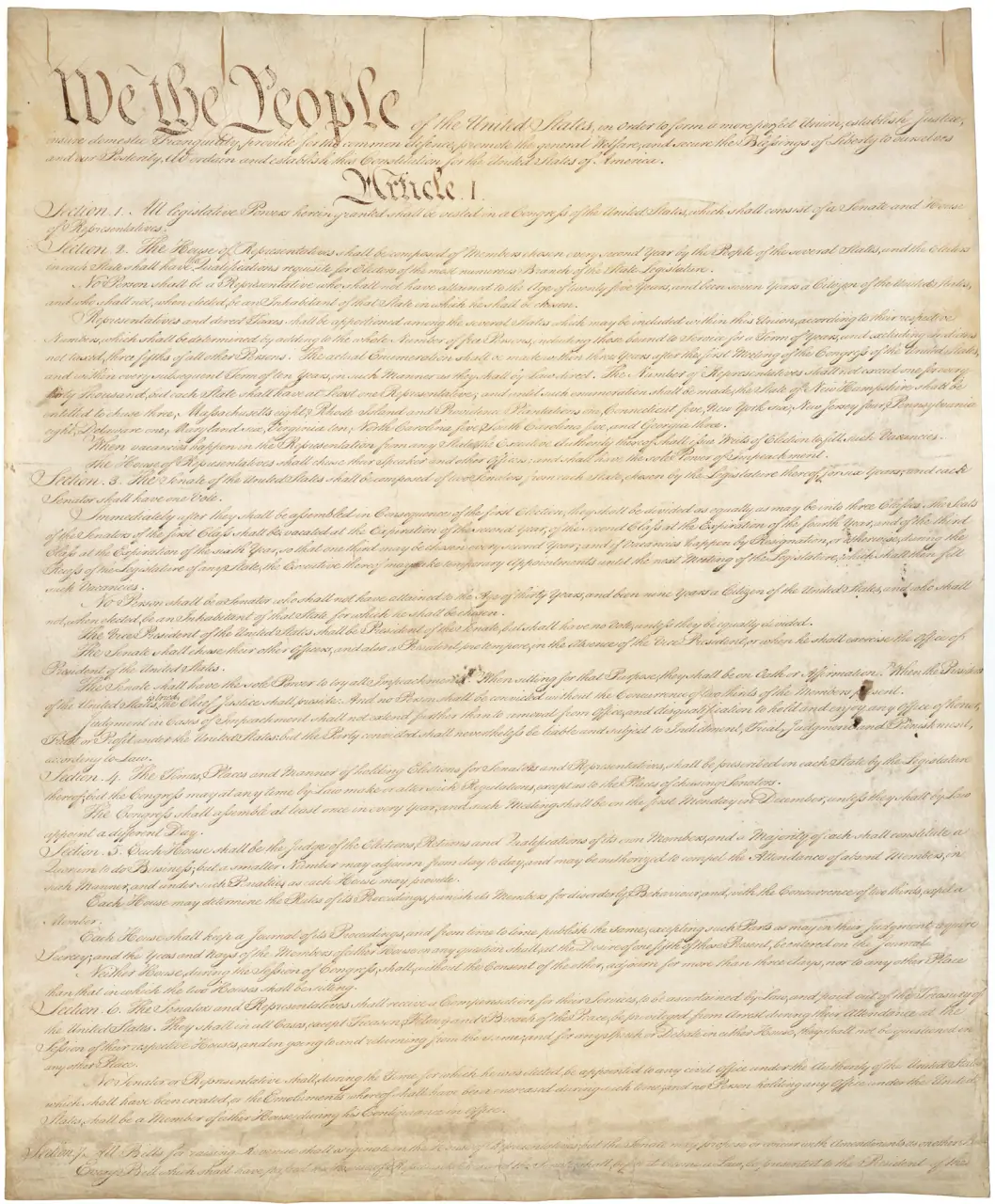
After independence, the states cooperated under the Articles of Confederation but clashed repeatedly over finance, trade, and foreign affairs. The 1787 Constitutional Convention proposed a more capable federal government, and the Bill of Rights that followed responded to fears of concentrated power. The new Constitution simultaneously protected and made use of slavery compromises, and citizenship and political participation were not opened equally. Finance, political parties, and the courts gradually established working conventions, while the Louisiana Purchase expanded the nation's territorial claims without obtaining the general consent of Indigenous nations. By the War of 1812 and its end, the republic's state capacity was clearer, and the tensions among liberty, land, and federal power had become more enduring.
01 / 1783–1815How this era began
The relationship between the Continental Congress and the state governments that formed during the war did not disappear immediately with independence, and the Confederation's financing depended on cooperation from the states. Veterans, creditors, and traders wanted a government capable of honoring its commitments, while others were wary that a new central authority would replicate royal power. The political difficulty was not that residents lacked institutional ideas, but that different interests had no consensus on what the nation should do or whom it could tax.
Why did this era begin?
The Constitutional Convention began in the context of reforming the Articles of Confederation and ultimately proposed new executive, legislative, and judicial structures. The ratification process in the states was accompanied by debate, and supporters promised limits on power and added protections for rights. The government beginning operations in 1789 and the Bill of Rights being ratified in 1791 marked a negotiated set of arrangements entering practice; this should not be understood as the nation suddenly eliminating political disagreement.
02 / 1783–1815Who held power
The Constitution established separation of powers and federalism, constraining and supporting national action through the distinct authorities of Congress, the president, and the courts. There was a compromise between equal state representation in the Senate and population-based representation in the House, yet the rule counting enslaved people gave them no vote. The system both expanded governmental capacity and embedded existing inequalities in representation and property relations; the constitutional text cannot be praised solely by today's values.
What tensions existed within the era?
Disagreements over central versus state authority, finance, and foreign relations formed early party competition, and whether political opposition was legitimate was still being worked out. Slavery and territorial expansion repeatedly brought the nation's language of liberty up against its limits. The Louisiana Purchase was a transfer of claims between empires; a purchase agreement cannot be used to infer that the land was previously empty or that the rights of all inhabitants had been protected.
03 / 1783–1815How society worked
The new government dealt with war debt, taxation, and public credit, and debates over fiscal policy connected commercial interests, farmers' burdens, and national authority. Foreign trade remained affected by European wars, while the domestic market gradually expanded. Land sales and territorial expansion provided resources but extended colonial dispossession into the Indigenous world, so the republic's economy cannot be written simply as the natural growth of a free market.
How did ordinary people live?
Most households still relied on agriculture and family labor, while ports and cities developed different manufacturing, service, and commercial lives. Women participated in the household economy but were constrained by marital property law and political eligibility; free Black people and enslaved people faced different forms of exclusion. Daily life in the republic included both an expansion of newspaper reading and political participation and the burden of taxes, labor, and war borne by those unable to vote.
04 / 1783–1815Where change began
In 1812 the United States again went to war with Britain, with trade, sailors' rights, and conflicts on the North American frontier intertwined. The war did not easily resolve disputes as either side expected, and the postwar narrative of national identity and development obscured some of the losses of Indigenous allies. The year 1815 as this chapter's boundary marks the close of the war and state-building phase; it does not mean that later expansion and political crises were predetermined.
Milestones that changed direction
1787: The Constitution is signed
The Constitutional Convention proposed a stronger federal government, and representation rules and slavery compromises were written in together; signing the Constitution still required state ratification and did not mean all residents gained the vote.
1789: The federal government begins operations
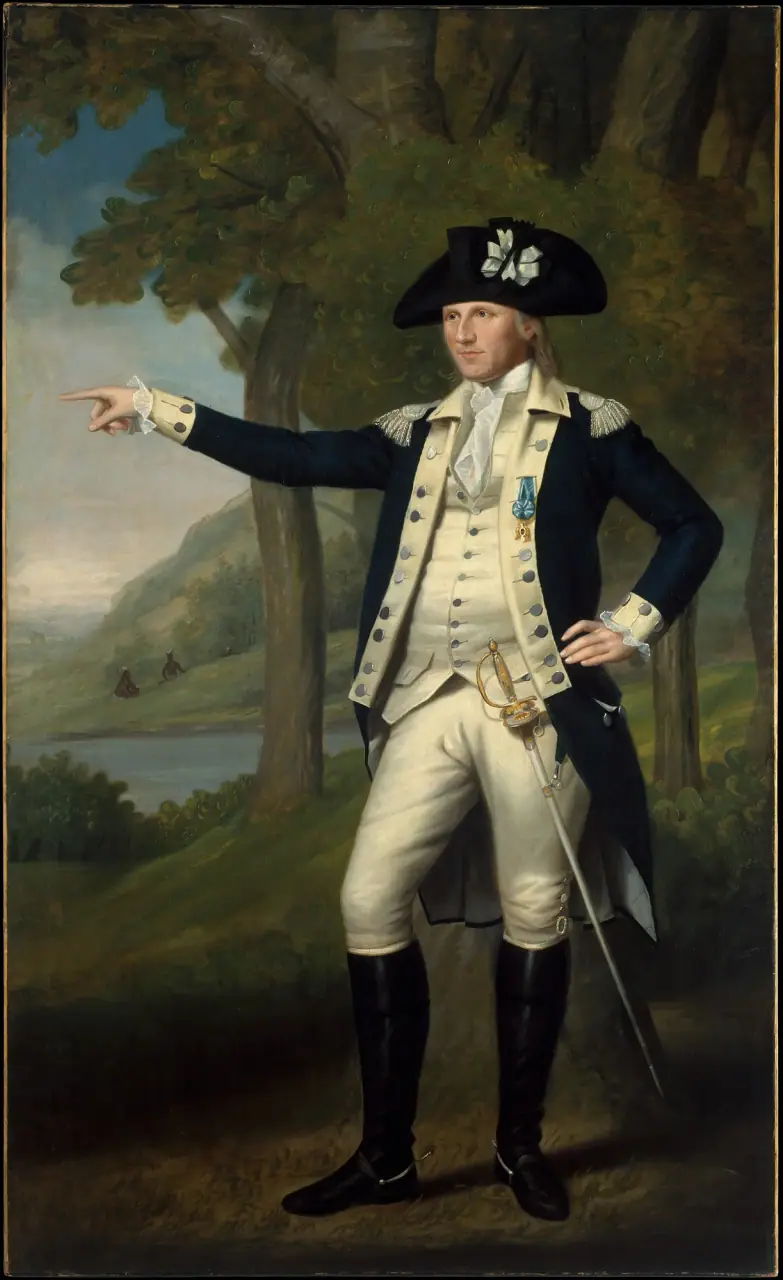
Washington is inaugurated, and Congress, the presidency, and the judiciary begin operating; debates over taxation and finance follow, and the new government's specific conventions still had to be formed through political practice.
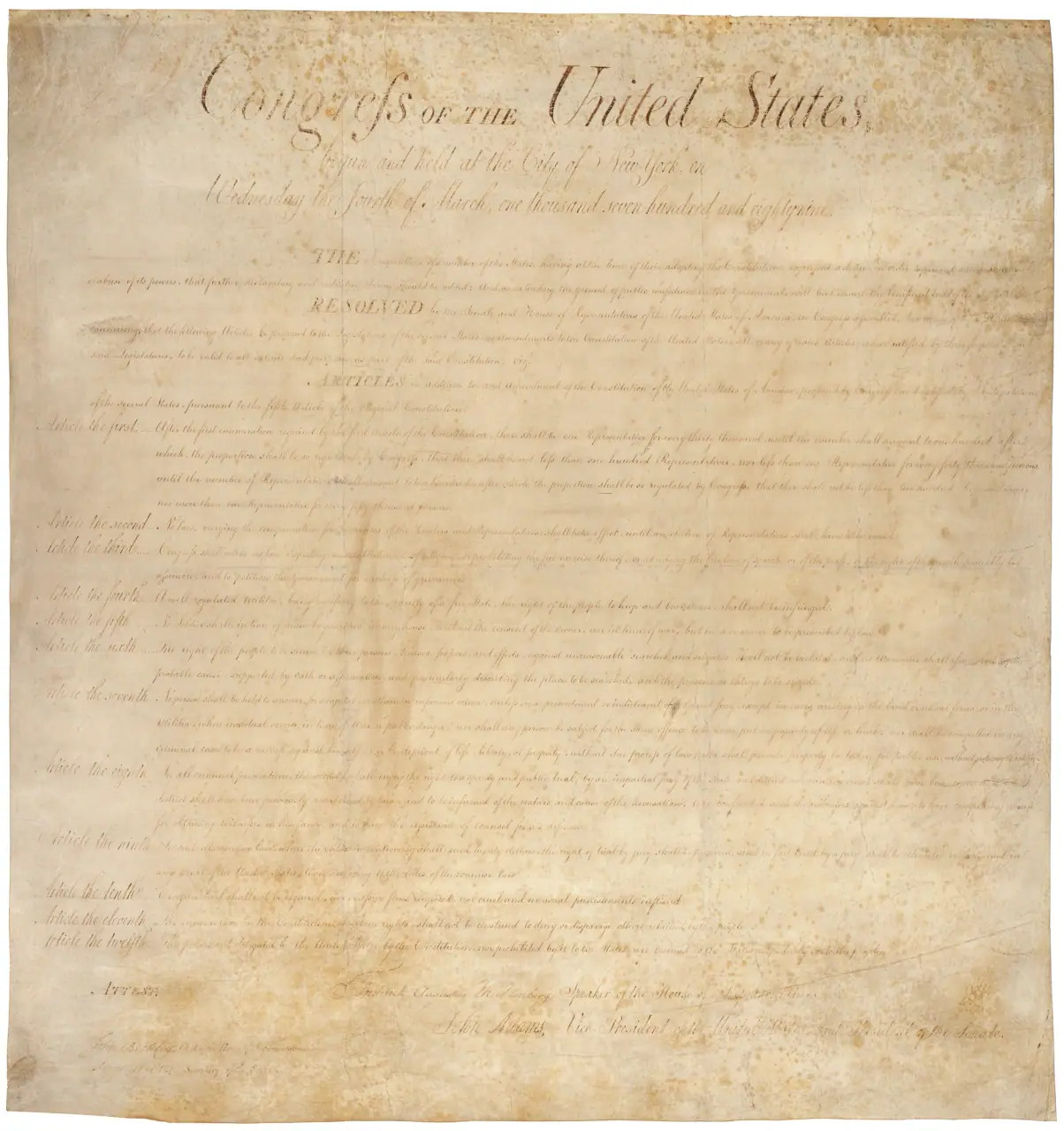
1791: The Bill of Rights is ratified
The first ten amendments are ratified, responding to concerns about federal power and individual liberty; legal protections and the question of who held citizenship and political eligibility remained distinct issues.
1803: Louisiana Purchase
France and the United States reached a territorial and financial transaction that expanded American claims to rule; the lands and political relations held by Indigenous nations did not thereby automatically gain consent or cease to exist.
1812: War with Britain again
Trade, sailors' rights, and competition over the North American frontier led the United States to fight Britain again; the war continued into early 1815 after peace, and Indigenous nations also had independent interests and losses.
What we know
The original constitutional text can be checked for taxation, separation of powers, representation rules, and slavery-related compromises, while protections for rights must be read together with the amendments. The Library of Congress's New Nation feature provides context on the Articles of Confederation, political parties, and the war. Legal texts state formal authority but cannot by themselves prove how it was implemented locally, nor can they replace the life records of those lacking political eligibility or Indigenous nations' own claims.
Questions still debated
Constitution-making was a response to governing difficulties and also reflected the concerns of propertied groups about property and social order; the two are not mutually exclusive. Explanations of democratic expansion or elite control should specify the comparison and who was affected. Reading today's stable institutions backward to conclude that the choices of the time were bound to succeed ignores ratification crises, fiscal disputes, and other governing plans that were once seriously proposed.
Legacies for later generations
The Constitution and Bill of Rights provided a long-term political framework, while party competition and government operations gradually filled in conventions beyond the text. The slavery compromises and unequal representation likewise became part of later crises. Understanding the early republic means seeing it as an institution continually practiced and contested, not a complete blueprint written once in 1787 and thereafter merely faithfully executed.
References and evidence
These materials support this page's account. Check the purpose, perspective and accessible scope of each source. Notes identify the evidential limits of excerpts, summaries and timelines.
- The U.S. Constitution (1787)U.S. National Archives · Primary source
The constitution-making process and access to the original. Institutional compromises also involved slavery and political exclusion.
- Milestone Documents in American HistoryU.S. National Archives · Archive
A thematic navigation entry for locating materials. Specific dates and institutional conclusions are cross-checked against documents, collections and substantive entries listed in this chapter. A directory does not establish an account of an entire period.
- The New Nation, 1783–1815Library of Congress · Archive
A thematic navigation entry for locating materials. Specific dates and institutional conclusions are cross-checked against documents, collections and substantive entries listed in this chapter. A directory does not establish an account of an entire period.
- What Does It Mean to Remove a People?Smithsonian National Museum of the American Indian · Museum research
Perspectives, maps and documents involving Cherokee, Muscogee and other Indigenous peoples. Removal included force, fraud and resistance.
- George Washington: Biographical InformationU.S. National Park Service · Specialist reference
Dates of birth and death, military service and presidency. Celebratory biographical language should be read alongside his status as a slaveholder.
- Transcription of the Bill of RightsU.S. National Archives · Primary source
The first ten amendments, ratified in 1791. Distinguish their provisions and timing of application from the original 1787 Constitution.
- The Louisiana Purchase Treaty and Financial Conventions (1803)U.S. National Archives · Primary source
Interstate transfers of territorial claims and financial arrangements. These are not evidence that all Indigenous nations consented.
- Native Knowledge 360°: Essential UnderstandingsSmithsonian National Museum of the American Indian · Museum research
An educational framework developed with Indigenous participation, emphasizing social diversity, sovereignty, continuity and contemporary life.
- A Clause-by-Clause Transcription of the U.S. ConstitutionU.S. National Archives · Primary source
The institution that produced a source and the nature of its text must be distinguished from what it describes. A source link does not mean that every related archive has been made public.
- The War of 1812–1815 and the North American FrontierOffice of the Historian, U.S. Department of State · Specialist reference
A diplomatic-history interpretation of trade, sailors' rights and expansion. Indigenous peoples were not passive dependents of two empires.
- Mount Vernon: Washington and Enslaved CommunitiesMount Vernon and the Washington Library · Museum research
Notes on the estate, enslaved labor, households and the will. Distinguish those Washington could legally dispose of from the Custis estate. The will is not described as freeing every resident at once.
At the end, bring this chapter to a close.