Continental expansion: The frontier was not empty land
When a territory was added to the map, where did its original inhabitants go?
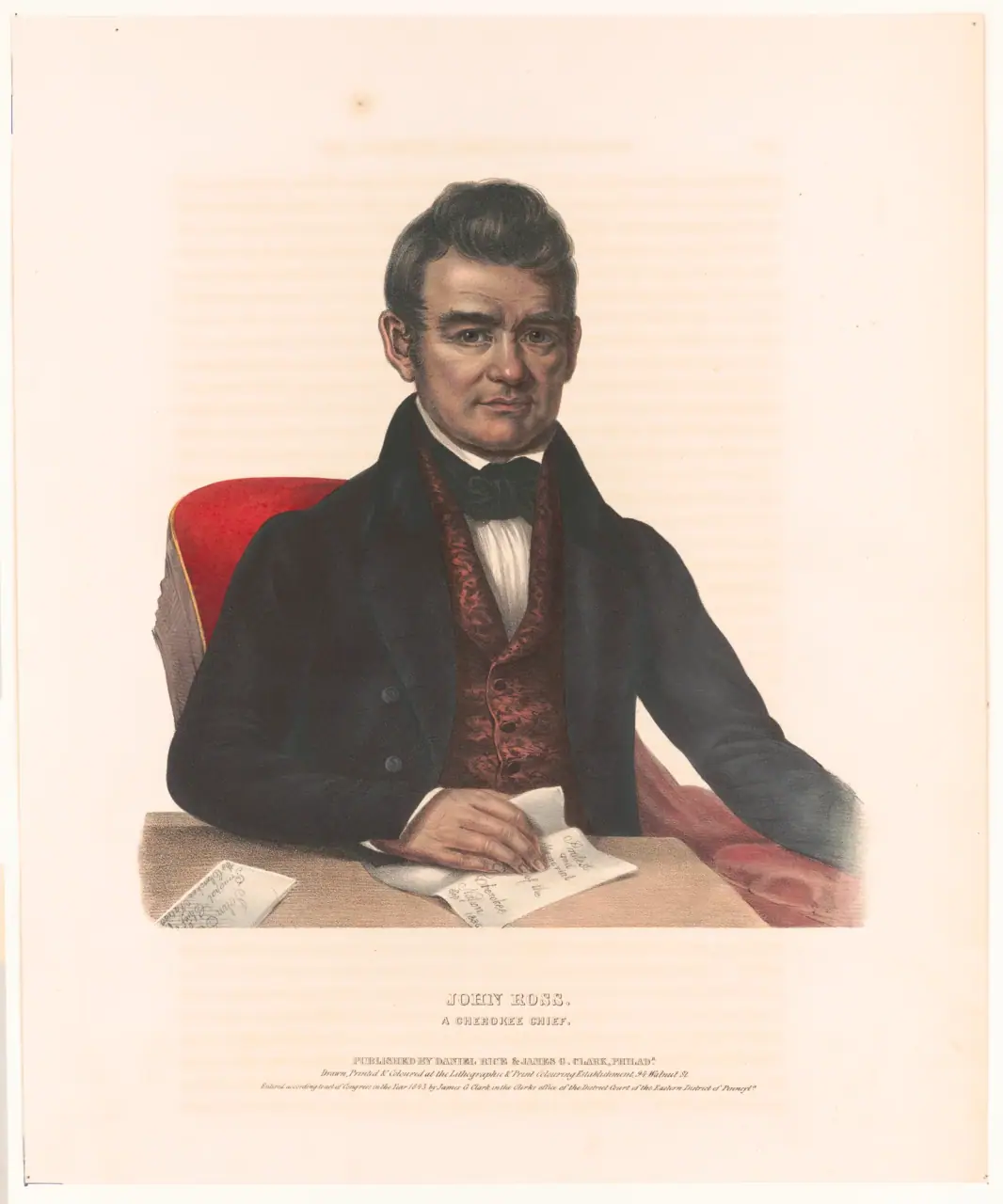
Canals, commercial agriculture, and cotton demand connected American expansion to markets, but the so-called West was not empty land. Indigenous nations in the Southeast defended their lands in various ways, through law, diplomacy, education, and armed force, while the federal government and states pushed removal through treaties, coercion, and military action. The 1830 removal law did not eliminate the existing questions of sovereignty and consent, and the Cherokee expulsion of 1838–1839 especially shows the human cost of policy. At the same time, the U.S.–Mexico War and the 1848 treaty changed claims to rule over vast territories. The story of growth and transportation must therefore be read alongside land loss, the expansion of slavery, and how original inhabitants continued to live and contest power.
01 / 1815–1848How this era began
The early republic had already expanded territorial claims through purchase and war, and settlers, speculators, and planters continued to seek land. The expansion of the cotton trade and forced labor put greater pressure on Indigenous lands in the Southeast. The nations already had political and property systems; removal was not the establishment of order on an ungoverned frontier but the coercive transformation of an existing order by American institutions.
Why did this era begin?
Canal and transportation networks lowered the shipping costs of certain goods, drawing land and labor more tightly into markets. Federal removal policy during the Jacksonian era turned expansionist interests into sustained administrative action, while state governments challenged Indigenous autonomy. Any so-called negotiation must be examined for who was eligible to represent, how pressure was applied, and whether refusal was possible; consent cannot be established from a treaty's name alone.
02 / 1815–1848Who held power
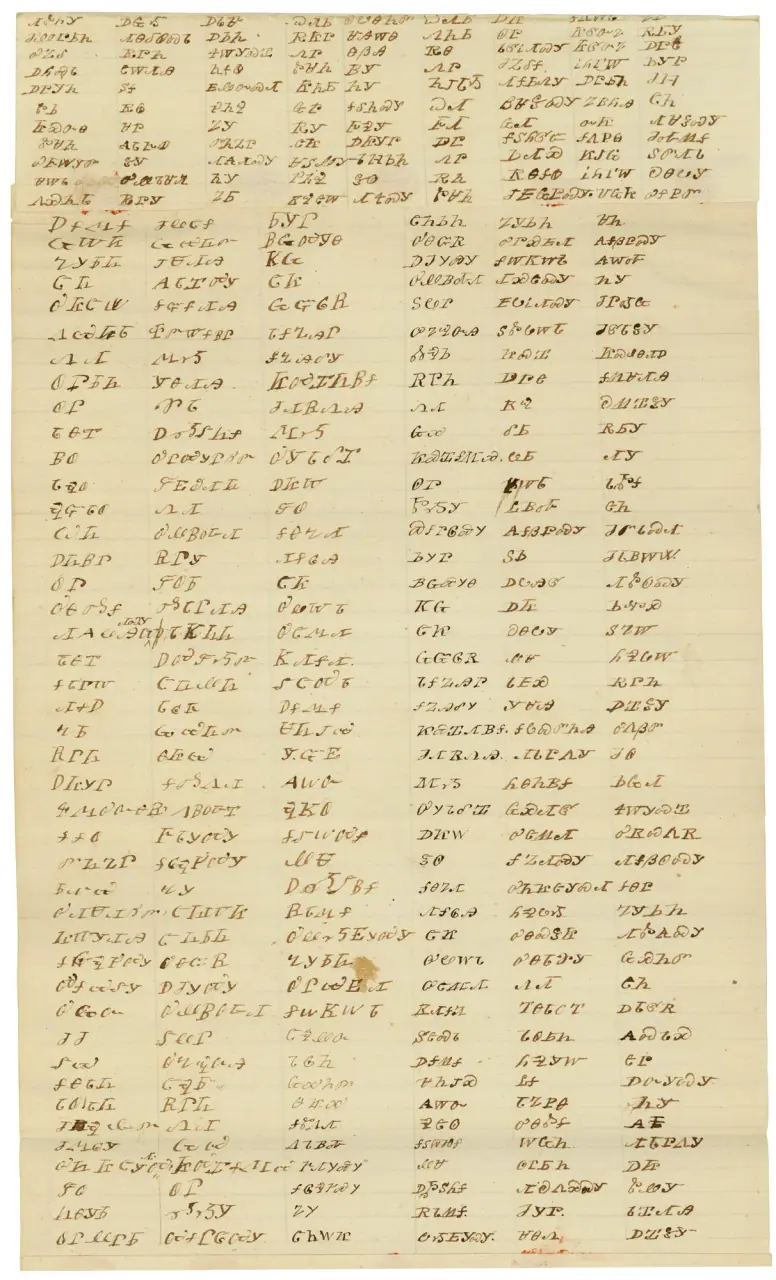
Congress, the president, state governments, courts, and the military played different roles in expansion, and their conflicts did not necessarily protect the weaker party. Worcester held that Georgia's power could not simply enter Cherokee territory, yet enforcement did not prevent forced removal. Petitions by the Cherokee council and leaders were likewise political acts, and their sovereignty should not be narrated merely as a local right granted by U.S. courts.
What tensions existed within the era?
The equal participation of U.S. settlers could coexist with dispossession abroad, and federalism debates were often used to constrict Indigenous sovereignty. Within Indigenous nations, judgments about resistance, compromise, and migration were not uniform, and the representational legitimacy of the Treaty of New Echota was precisely the point of dispute. A few signatories cannot be equated with the consent of an entire nation, nor can internal differences be explained away as absolving forced policy of responsibility.

03 / 1815–1848How society worked
Commercial agriculture, land speculation, and transportation construction supported one another, and the cotton economy depended on the labor of enslaved people. Market expansion simultaneously redistributed land and risk: settlers might acquire farmland, while those expelled lost homes, fields, and social networks. Recording these changes only as productivity growth omits how that growth rested on dispossession and coercion of persons.
How did ordinary people live?
Forced migration caused hardship before people even left their homes; roundups, waiting, the journey, and rebuilding all affected health, families, and food supply. Conditions differed among nations, parties, and routes, and they cannot be merged into a single tidy tragedy. After arriving in Indian Territory, people continued to organize schools, governments, and community life; acknowledging trauma should also preserve their capacity to sustain society.
04 / 1815–1848Where change began
The 1848 Treaty of Guadalupe Hidalgo ended the U.S.-Mexican War, changed national claims to vast territories, and set out arrangements for the property and status of the inhabitants concerned. Its provisions did not mean that they would be consistently implemented afterward; whether the new territories would permit slavery further deepened national conflict. Expansion therefore did not resolve the republic's land question but pushed the boundaries of freedom and rule into a new phase.
Milestones that changed direction
1825: The Erie Canal opens
The Erie Canal connected the Hudson River with Lake Erie, expanding market links between the interior and ports; improved transportation also promoted settler expansion, and its effects cannot be understood only through merchants' profits.
1830: Indian Removal Act
The removal law authorized exchanging western land for Indigenous lands currently occupied and claimed to protect existing treaties; actual coercion must be observed in conjunction with state intrusions, treaty representation, and military enforcement.
1832: Worcester v. Georgia
The Supreme Court held that Georgia law could not be arbitrarily applied in Cherokee territory and overturned the related conviction; the scope of this ruling's protection must be kept separate from its later failure of enforcement.
From 1838: Forced removal of the Cherokee
Military expulsion and the subsequent westward journey subjected Cherokee families to death, disease, and separation; the roundups before migration and the rebuilding after arrival are also part of this catastrophe.
1846: The U.S.-Mexican War begins
Boundary and expansion disputes led to the U.S.-Mexican War, and U.S. forces advanced deep into Mexico; the later treaty must be understood against the pressure of war and the rights of local inhabitants.
1848: Treaty of Guadalupe Hidalgo
The treaty ended the U.S.-Mexican War and changed national claims to vast territories, involving property and the status of inhabitants. The United States deleted and altered provisions when ratifying it, and legal promises did not equal consistent implementation.
What we know
Ross's 1836 protest directly questioned the representational legitimacy and forced implementation of the Treaty of New Echota; the Smithsonian's removal feature presents the experiences of different nations. The text of the 1848 treaty must be checked clause by clause for promises about property and status, and implementation cannot be inferred from signatures. Transportation sources show market connections, while mortality estimates and specific routes still require cross-checking against records of individual parties, localities, and descendants.
Questions still debated
The causes of removal cannot be attributed solely to a president's personal cruelty, nor can responsibility be abstracted into national development; federal, state, economic interests, and specific implementers must all be analyzed. Whether forced migration had alternatives can be judged from petitions, court rulings, and dissenting opinions of the time. The scale of deaths and differences in strategy among nations still require close study, and one estimate cannot be used to cover all experiences.
Legacies for later generations
Migration and land cessions changed the spatial relationships among Indigenous nations, Mexican-origin residents, and U.S. settlers, and treaty and sovereignty disputes persisted. Transportation networks such as canals transformed the movement of goods and people. Placing these legacies together makes it possible to understand why a railroad, map, or boundary line might symbolize opportunity and also record institutional changes that left the dispossessed no free choice.
References and evidence
These materials support this page's account. Check the purpose, perspective and accessible scope of each source. Notes identify the evidential limits of excerpts, summaries and timelines.
- What Does It Mean to Remove a People?Smithsonian National Museum of the American Indian · Museum research
Perspectives, maps and documents involving Cherokee, Muscogee and other Indigenous peoples. Removal included force, fraud and resistance.
- The Treaty of Guadalupe Hidalgo (1848)U.S. National Archives · Primary source
Provisions ending the Mexican-American War and addressing territory and residents' rights. The treaty does not demonstrate that Indigenous sovereignty automatically disappeared.
- The American Industrial Revolution: A Primary Source SetLibrary of Congress · Archive
Context and original materials in a collection on industry and labor. Distinguish government support, corporate narratives and workers' experiences; do not repeat unexamined claims that an invention was the first.
- John Ross's 1836 Protest against the Treaty of New EchotaU.S. National Park Service · Primary source
The institution that produced a source and the nature of its text must be distinguished from what it describes. A source link does not mean that every related archive has been made public.
- The Erie Canal: Transport, Settlement and the Circulation of ReformU.S. National Park Service · Specialist reference
Construction in 1817–1825 and transport connections. The page's patriotic rhetoric is not used to infer equal benefits for every resident.
- Original Indian Removal Act of 1830U.S. Government Publishing Office · Primary source
4 Stat. 411–412, May 28, 1830. Provisions for land exchanges, assistance and treaty reservations must be distinguished from actual coercive implementation.
- Original Decision in Worcester v. Georgia (1832)Legal Information Institute, Cornell University / U.S. Supreme Court decisions · Primary source
Core passages concerning the Cherokee political community and application of Georgia law. Legal victory did not automatically prevent forced removal.
- Trail of Tears: Expulsion, Migration and RebuildingU.S. National Park Service · Specialist reference
Distinguish confinement, different parties' journeys and arrival in 1839. Mortality figures are uncertain. Compare the page's overview with the original Removal Act, petitions and decisions.
At the end, bring this chapter to a close.