Slavery and the Civil War: The Union Fractures
How did people treated as property help bring about the end of slavery?
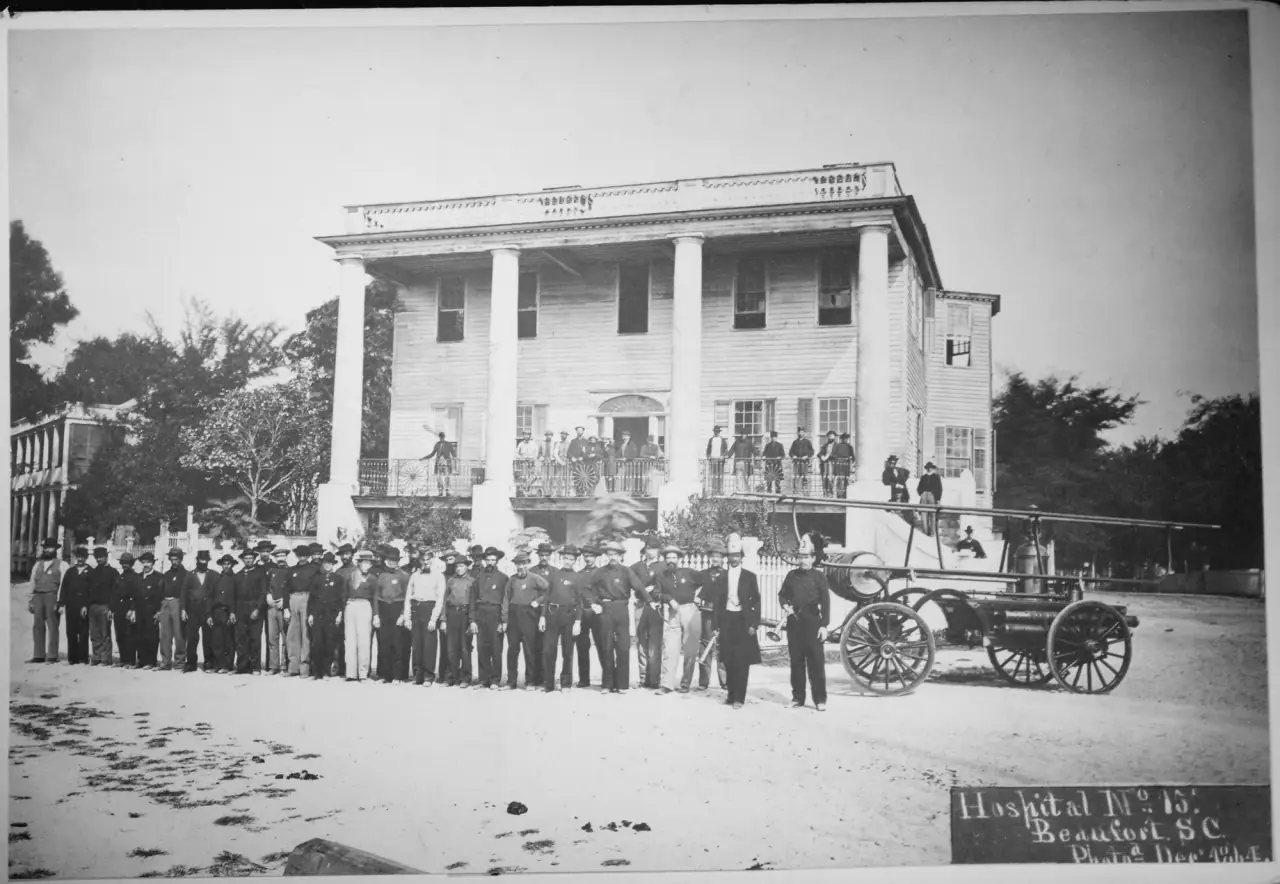
After 1848, disputes over slavery in the new territories made existing compromises increasingly hard to sustain. Fugitive slave laws, territorial legislation, and electoral crises brought the question of slave labor and federal power into national politics; after the Southern slave states seceded, the conflict became a civil war in 1861. The Northern government initially aimed to preserve the Union, but enslaved people's flight, labor, and military service continually pushed the war toward emancipation. The geographic and military limits of the 1863 proclamation did not make it meaningless, nor should it be miswritten as immediate nationwide freedom. The Confederacy's defeat and the antislavery constitutional amendment in 1865 ended one legal system, while struggles over land, family, and citizenship remained to be continued.
01 / 1848–1865How this era began
Expansion made whether slavery would enter the new territories a recurring dispute, as slaveholders' demands for property, security, and political representation clashed with anti-expansion forces. The North did not mean universal racial equality, and the South also contained enslaved people and residents opposed to secession. Summarizing the war's causes as two culturally different regions would obscure how slavery concretely shaped interests and power.
Why did this era begin?
The arrangements of 1850 and territorial legislation of 1854 sought to manage conflict but turned pursuit and the choice over slavery into political questions for more people. After Lincoln's election in 1860, the Southern slave states seceded one after another, and the firing at Fort Sumter turned the crisis into war. Secession was not a generic resistance of states to any central power and must be analyzed in light of the explicit political goal of preserving slavery.
02 / 1848–1865Who held power
The Union and the Confederacy mobilized armies, taxation, and administrative resources, and the war significantly expanded government power. Slaveholders sought to maintain rule, while enslaved people changed the labor available to all parties by leaving plantations and entering Union lines. Presidential orders influenced policy, but military control, congressional legislation, and individual action equally determined whether freedom could be realized; the whole process cannot be explained from White House documents alone.
What tensions existed within the era?
Preserving the Union, abolishing slavery, and racial equality were not the same goal shared by all Northern participants, and Black soldiers still had to fight for treatment and respect. The Confederacy's language of states' rights was combined with protection of slave property and cannot be understood apart from that specific institution. Emancipation expanded the war's political meaning and made more urgent the question of who would hold land, votes, and autonomy over labor after victory.
03 / 1848–1865How society worked
Plantation slave labor and the cotton trade concerned not only the South but also wider commercial and financial networks. The war disrupted production, transportation, and household supply; Northern industrial resources provided an advantage but did not guarantee the success of every military operation. People escaping slavery reduced labor available to the Confederacy and provided military service and support to the Union, making economy and emancipation interact.
How did ordinary people live?
Soldiers faced wounds, illness, and long service, while civilians endured shortages, requisitions, and displacement. Black families searched for separated relatives and fought for wages and education, and people such as Tubman took part in scouting, nursing, and relief. Women's domestic, caregiving, and organizational labor sustained both sides. Photographs of battles can show part of the scene but cannot automatically make visible the household costs that never entered the frame.
04 / 1848–1865Where change began
The surrender of the Confederacy's main armies in 1865 did not mean that all violence and all relations of enslavement ended that day. The Thirteenth Amendment abolished slavery and involuntary servitude nationwide while retaining the punishment exception; legal freedom must be distinguished from the practical conditions of life. The Republic achieved the preservation of the Union and the abolition of slavery, but how to protect the freedpeople and how to reorganize the politics and economy of the South immediately became a new conflict.
Milestones that changed direction
1850: A New Compromise and the Fugitive Slave Law
The compromise addressed disputes over new territories through several bills and strengthened the obligation to pursue fugitive slaves, drawing Northern law enforcement and those who aided fugitives more directly into the conflict over slavery.
1854: The Kansas-Nebraska Act
Territorial legislation referred the slavery dispute to so-called settler choice, which instead triggered political realignment and violence; enslaved people had no equal standing to participate in deciding their own fate.
1860: Lincoln Elected
After Lincoln's election, the Southern slave states began to secede. The secessionists' defense of slavery should be considered together with general claims of states' rights, rather than substituting regional cultural difference for causes.
1861: Fort Sumter and the Civil War
The conflict at Fort Sumter turned the secession crisis into war, with both sides mobilizing armies and social resources; the Union's initial goal of preserving the Union was subsequently pushed steadily forward by emancipation.
1863: Emancipation Proclamation
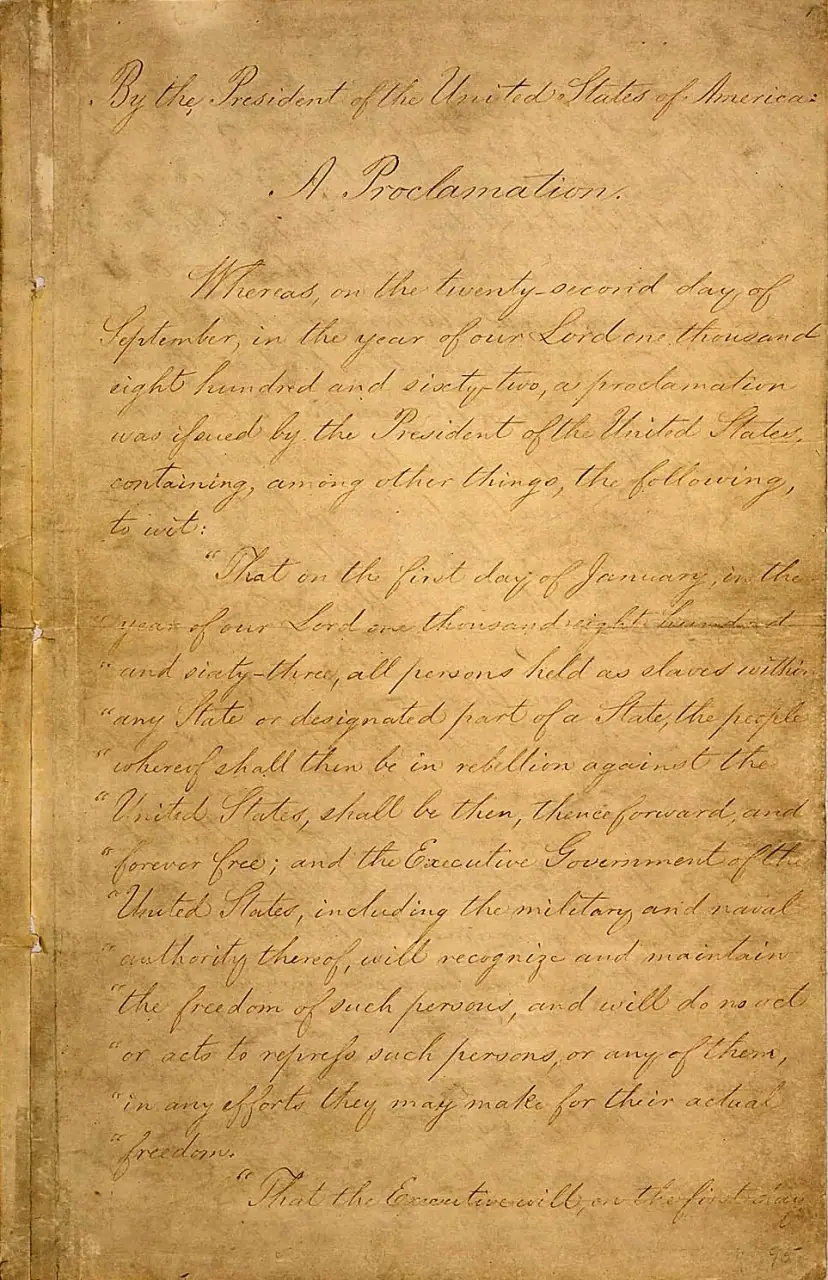
The proclamation was aimed mainly at areas in rebellion and announced the acceptance of Black enlistment; actual freedom still depended on military control, self-emancipation, and the progress of the war, and was not nationwide automatic abolition on that day.
1865: War's End and the Abolition Amendment
The Confederacy suffered military defeat, and the Thirteenth Amendment abolished slavery nationwide while retaining the punishment exception. The legal status of freedom changed fundamentally, but questions of land, wages, and citizenship remained.
What we know
The text of the Emancipation Proclamation explicitly states the areas to which it applied, its military basis, and the enlistment of Black soldiers; its effect must be read together with Union military advances and acts of self-emancipation. The punishment exception in the Thirteenth Amendment can be verified, and National Park Service and Douglass materials document changes in war aims. Judgments about the causes of secession should rest on the claims made at the time, and later reconciliationist commemorative language must not be written backward as the common reason for going to war.
Questions still debated
Scholarship places differing emphasis on the extent to which military necessity, Lincoln's policies, and social action each drove emancipation; the central place of slavery in secession, however, is well evidenced. Whether the war could have been avoided also requires specifying whose interests and freedoms a particular alternative would have protected. Acknowledging multiple factors does not mean treating all claims about causes as equally credible, and still less does it mean attributing abolition to the gift of a single figure.
Legacies for later generations
The Civil War and emancipation changed the foundations of state power and citizenship, and also left behind enormous casualties, commemoration, and disagreements over historical interpretation. Enslaved people participated in the process of creating freedom, offering clues for understanding later civil rights struggles. The outcome of the war must not be substituted for social outcomes; Reconstruction, counter-Reconstruction, and racialized labor systems would continue to determine how far the promise of abolition could be realized.
References and evidence
These materials support this page's account. Check the purpose, perspective and accessible scope of each source. Notes identify the evidential limits of excerpts, summaries and timelines.
- The Causes of the American Civil WarU.S. National Park Service · Specialist reference
Slavery's central role in secession, alongside disputes over federal power and the economy.
- The Emancipation Proclamation (1863)U.S. National Archives · Primary source
Geographical scope, wartime context and Black enlistment. It did not abolish all slavery nationwide on the day of publication.
- Institutions and Society during ReconstructionU.S. National Park Service · Specialist reference
The Thirteenth through Fifteenth Amendments, freed people and gaps in institutional implementation.
- Milestone Documents in American HistoryU.S. National Archives · Archive
A thematic navigation entry for locating materials. Specific dates and institutional conclusions are cross-checked against documents, collections and substantive entries listed in this chapter. A directory does not establish an account of an entire period.
- The Compromise of 1850: Resolutions and Five ActsU.S. National Archives · Primary source
Distinguish Clay's resolutions from subsequent statutes. Stronger provisions for recapturing fugitives from slavery did not end slavery.
- The Kansas-Nebraska Act (1854)U.S. National Archives · Primary source
Specific legislation concerning territorial politics and slavery. Statutory language of self-determination should not conceal violence or excluded people.
- Original Text of the Thirteenth AmendmentU.S. National Archives · Primary source
The institution that produced a source and the nature of its text must be distinguished from what it describes. A source link does not mean that every related archive has been made public.
At the end, bring this chapter to a close.