Transformation and Division: From the Great Inflation to the End of the Cold War
How did policies for price stability and market efficiency change workers' sense of security?

From 1968 to 1991, the United States' growth model, public trust, and global position underwent multiple adjustments. The Vietnam War and Watergate challenged executive authority, while the suspension of dollar-gold convertibility, oil shocks, and persistent inflation made postwar economic arrangements hard to sustain. Anti-inflation austerity lowered price growth but passed the costs on to households and industrial regions through interest rates, credit, and unemployment. Businesses, unions, and government renegotiated the distribution of risk, while environmental and rights movements expanded the public agenda. Cooperation in the late Cold War and the dissolution of the Soviet Union changed international relations but did not automatically answer domestic social conflicts; state capacity and individual opportunity were redefined in the same period.
01 / 1968–1991How this era began
Postwar growth and security shaped some families' expectations of stable employment and consumption, yet racial and gender inequality persisted throughout. The Vietnam War, urban unrest, and fiscal pressure weakened policy consensus, and businesses also faced changes in production and competition. The turn of 1968 was therefore not a prosperous society suddenly falling into disorder, but existing problems of distribution and state power becoming more openly exposed.
Why did this era begin?
In 1971 the United States stopped exchanging dollars for gold with foreign central banks under the original arrangement, and the postwar monetary order gradually transformed; energy shocks deepened price and growth pressures. The government tried various controls in succession, and in 1979 the Federal Reserve moved further toward limiting monetary growth. The restructuring was not the result of a single presidential order but of changes in finance, industry, international markets, and social politics together.
02 / 1968–1991Who held power
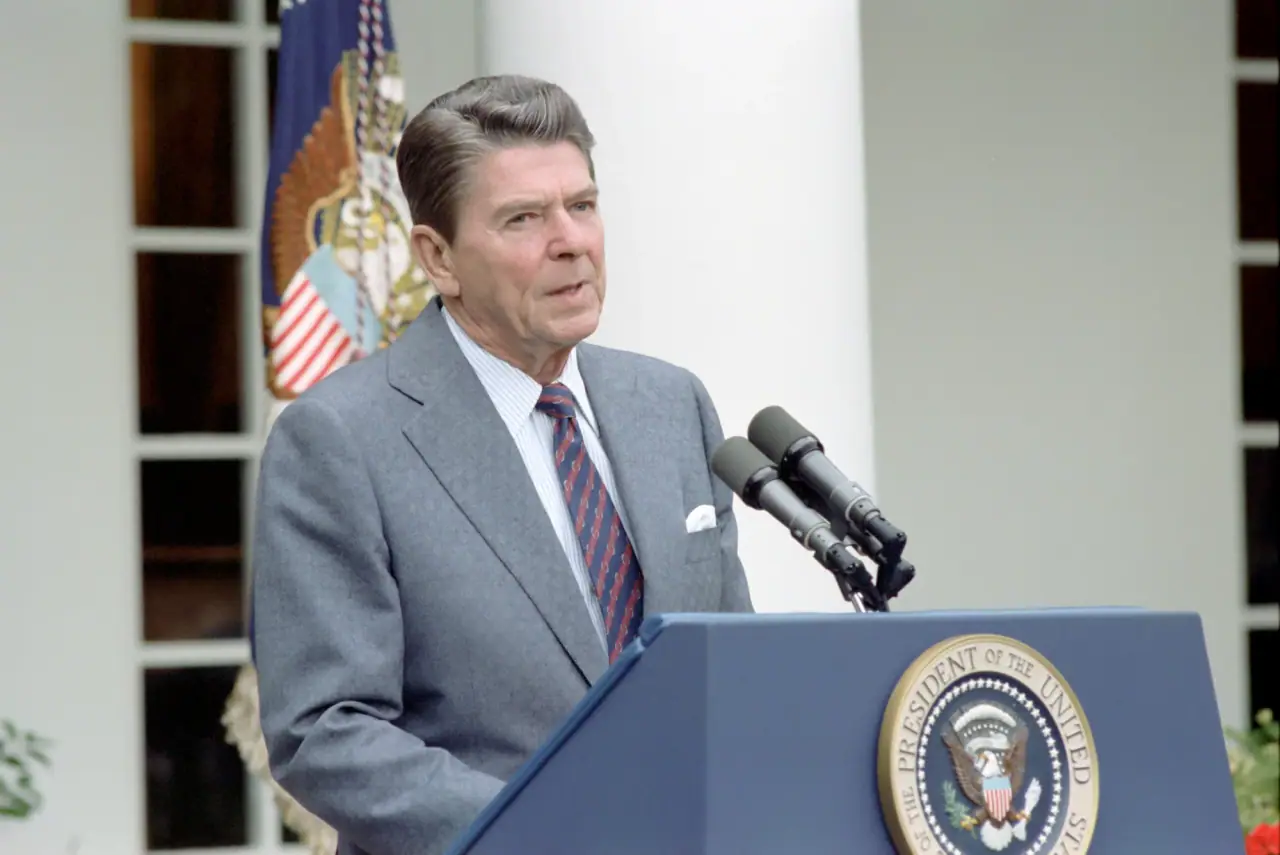
The Watergate investigation, courts, and congressional procedures showed that the president remained subject to law and accountability, and the 1974 resignation also exposed the risk of abuse of executive power. Economically, the Federal Reserve could affect employment through austerity, while the resources of businesses and labor organizations were not equal. When discussing government withdrawal or market freedom, one must specifically identify which powers were reduced and which institutions' decision-making capacity actually increased.
What tensions existed within the era?
Choices had to be made among anti-inflation, employment, and fiscal goals, and the institutions involved in policy also described the costs from their own perspectives. The language of economic freedom could be linked to the contraction of regulation or union protections, while environmental and rights movements demanded a different kind of public responsibility. Understanding disagreements requires examining who had the ability to influence the rules, not reducing it to an abstract question of whether government or the market is better.
03 / 1968–1991How society worked
High inflation, energy costs, and industrial competition changed business investment and household spending, and austerity affected production through interest rates and credit contraction. The severe recession of 1981–1982 brought unemployment, and the benefits of price stability and the costs of lost jobs fell on different people. Deindustrialization also varied by region and sector, and one closed factory cannot prove that all economic sectors nationwide were declining at the same time.
How did ordinary people live?
Gasoline lines, mortgage rates, and job insecurity brought macroeconomic change into household budgets, and industrial regions also faced pressure on community tax bases and public services. Women continued to enter paid work but often retained primary caregiving responsibilities; families in different occupations had very different room to adjust. Environmental and public health issues also showed that the costs residents bore were not reflected only in wage and price indices.
04 / 1968–1991Where change began
Negotiation and cooperation became possible between the United States and the Soviet Union late in the Cold War. Changes in Eastern Europe and crises within the Soviet Union contributed to its dissolution in 1991. American policy influenced the process, but did not substitute for decisions by the Soviet republics and social actors. Changes in international competition and domestic restructuring did not follow exactly the same timetable, so this chapter's endpoint does not mean that all economic, military and social problems were resolved together.
Milestones that changed direction
1971: Dollar convertibility into gold suspended
Nixon ended the existing arrangement under which foreign central banks could exchange dollars for gold. The postwar fixed exchange-rate order gradually broke down. This was a different institution from domestic wage and price controls.
1973: Oil shock
The oil embargo and rising supply costs intensified pressures on prices and growth. Monetary conditions, demand and expectations also contributed to inflation; energy alone cannot explain every price increase.
1974: Nixon resigns
The Watergate investigation and pressure from the courts and Congress ultimately led Nixon to resign. His letter and the time his resignation took effect can be verified. Leaving office does not mean that Congress had already convicted him through impeachment.
1979: A Federal Reserve policy shift
Monetary policy tightened further under Volcker. The ensuing recession and unemployment revealed unequal burdens in the fight against inflation. Slower price growth does not automatically show that every household benefited equally.
1989: Political upheavals in Eastern Europe
Political changes in Eastern Europe and adjustments within the Soviet Union transformed international relations. The United States exercised influence while confronting uncertain choices; a later narrative of victory cannot explain every action at the time.
1991: Dissolution of the Soviet Union
Soviet dissolution produced several independent states, while the United States adjusted its diplomatic and nuclear-security arrangements. The Soviet Union should not be equated with Russia, and its dissolution should not be attributed entirely to unilateral American pressure.
What we know
Nixon's resignation letter and investigative records document the crisis of presidential power. Federal Reserve historical studies explain monetary and energy factors in detail, while remaining interpretations by an institution involved in policymaking. DOCUMERICA photographs add local environmental and everyday experiences. Diplomatic records of Soviet dissolution must be distinguished from its internal politics. A single index or official retrospective cannot fully convey the uneven household costs of monetary tightening.
Questions still debated
How monetary policy, supply shocks and expectations jointly caused inflation, and how technology, competition and policy affected deindustrialization, require comparison at several levels. The end of the Cold War likewise cannot be credited solely to American pressure or one leader. Judging policies through a single national average obscures distributional outcomes. Recognizing multiple causes does not mean abandoning judgments about the strength of the evidence for each.
Legacies for later generations
Monetary stabilization and financial and industrial restructuring changed how firms and households faced risk, while Watergate became an enduring reference for presidential accountability. Environmental, gender and other social movements continued to shape public agendas. The end of the Cold War widened American policy options while leaving questions of nuclear security and international commitments. A label of victory cannot replace evaluation of specific choices and their differing social consequences.
References and evidence
These materials support this page's account. Check the purpose, perspective and accessible scope of each source. Notes identify the evidential limits of excerpts, summaries and timelines.
- The Great Inflation, 1965–1982Federal Reserve History · Specialist reference
Monetary systems, energy shocks and tightening policies. Interpretations from an institution involved in policymaking require comparison with labor and social history.
- Soviet Dissolution and American DiplomacyOffice of the Historian, U.S. Department of State · Specialist reference
American policy choices and internal Soviet changes. Russia and the Soviet Union should not be equated.
- Milestone Documents in American HistoryU.S. National Archives · Archive
A thematic navigation entry for locating materials. Specific dates and institutional conclusions are cross-checked against documents, collections and substantive entries listed in this chapter. A directory does not establish an account of an entire period.
- Nixon and WatergateU.S. National Archives · Archive
The security log of 1972 and resignation letter of 1974: original documents concerning individual accountability.
- Rachel CarsonU.S. National Park Service · Specialist reference
The institution that produced a source and the nature of its text must be distinguished from what it describes. A source link does not mean that every related archive has been made public.
At the end, bring this chapter to a close.