01 / CONTEXT & CONSEQUENCEBefore the event
Before 1931 Japan already held colonial rule over Taiwan and Korea and rights and interests in Northeast China, and the military's institutional position limited the ability of party cabinets to restrain it. Economic crisis, anti-communism, and imperial ideology provided the language of mobilization, but cannot replace analysis of specific policies. The sovereignty and resistance of Chinese society and the interests of the powers in East Asia together formed the environment; invaded countries were not merely background.
Imperial rights, military autonomy, domestic repression, and industrial mobilization made expansion easier to sustain, and the costs of war were then used to argue for the necessity of seizing still more resources. Leaders chose to maintain the position of occupation, narrowing the space for diplomatic compromise; these were a series of political decisions, not a war automatically caused by insufficient natural resources. Resistance in occupied societies also continually upset conquerors' expectations about time and cost.
02 / CONTEXT & CONSEQUENCEHow change unfolded
The Mukden Incident, the escalation of conflict at Lugou Bridge, and the 1941 decision to attack the United States and other targets were triggers and expansions at different stages, and cannot be merged into one sudden war. After 1937, Chinese resistance defeated plans for a quick victory, and in 1940–1941 the southern advance, alliances, and US sanctions further drove the crisis. Resource pressure can explain the background of decisions, but does not absolve those who launched and continued the aggression of responsibility.
The Kwantung Army invaded and occupied Northeast China and installed Manchukuo, and Japan subsequently withdrew from the League of Nations; in 1937 it launched full-scale invasion of China, and after Nanjing fell a massacre occurred. In 1941 the war expanded to Southeast Asia and the Pacific, and supply, labor, and the system of military sexual slavery in occupied areas sustained wartime rule. Allied counteroffensives together with continued Chinese resistance, blockade, and bombing weakened Japan; the atomic bombings in 1945, the Soviet entry into the war, and the choices of the leadership formed the background to surrender.
03 / CONTEXT & CONSEQUENCEPeople, institutions and alternatives
Military and political leaders and specific implementing agencies should bear responsibility according to orders, knowledge, and actions, and complexity of institutions cannot be used to dissolve decision-making. Resisters, medical personnel, relief workers, and survivors in China and other occupied societies affected the war and the continuation of life, while Japanese families, soldiers, and conscripted laborers also had varying degrees of coercion and room for choice. Not everyone had equal power or the same responsibility.
Diplomatic options to restrict unauthorized military action, accept withdrawal, or end aggression were all paths that could be discussed at the time but were blocked by vested interests; that they were not realized does not mean they never existed. External sanctions raised costs, but the choice to expand the war cannot be described as mechanically forced by other countries. Judgments about alternatives must be supported by documents from the time, and one must not invent out of hindsight that some peace was bound to succeed.
04 / CONTEXT & CONSEQUENCEAfter the turning point
The war caused widespread death, destruction, and displacement in Asia and the Pacific; imperial colonial rule eventually collapsed, and prisoners of war and Asian laborers were left with severe illness and trauma. Japanese cities and Okinawa suffered devastating attacks, and survivors of Hiroshima and Nagasaki faced long-term consequences. The formal surrender in September 1945 ended the war of the military regime, but did not immediately resolve return home, nationality, missing persons, and relief for victims.
Postwar independence, constitutions, and regional security systems are all connected to the outcome of the war, and compensation, memory, and history education continue to affect relations. The suffering in Nanjing and elsewhere and military sexual slavery must not be erased because of disputes over numbers or legal responsibility, nor may the suffering of Japanese civilians be excluded. Historical narrative needs to make clear both the starting point of aggression and specific responsibilities, avoiding treating an entire nation as an eternal perpetrator or victim.
How the event unfolded
Mukden Incident
The Kwantung Army created and expanded military action, invaded and occupied Northeast China, and subsequent rule and resistance continued for many years.
Establishment of Manchukuo
The regime installed by Japan carried occupation interests, and its nominal founding must not be mistakenly written as independent sovereignty.
Full-scale invasion of China
After the Lugou Bridge conflict the war expanded, and continued Chinese resistance defeated Japan's expectation of a quick victory.
The suffering in Nanjing and relief negotiations
Massacre and sexual violence occurred; the Safety Zone Committee and others left records of negotiations with the Japanese side and of protecting civilians and prisoners.
Expansion into Asia and the Pacific
Under the background of diplomatic sanctions, Japan chose to advance south and attack the United States and other targets; the starting point of the war cannot be placed at Pearl Harbor alone.
The Burma-Thailand Railway and forced labor
Behind the completion of the project was the labor and death of prisoners of war and Asian laborers under lethal conditions; engineering archives must be read together with survivors' materials.
The atomic bombings and the Soviet entry into the war
Military defeat, blockade, destruction of cities, and the new shocks of August together formed the background to surrender, and the weight of each factor remains disputed among researchers.
Formal surrender on September 2
Signing the instrument of surrender ended the imperial war, while postwar repatriation, injuries, and responsibility issues continued to be handled by different societies.
Facts supported by evidence
- After the Mukden Incident in 1931, Japan occupied Northeast China and in 1932 installed Manchukuo; this preceded the Pacific War of 1941.
- The massacre and sexual violence after Nanjing fell in 1937 are supported by letters, diaries, images, and other materials from those present; a single archival collection does not equal all the evidence.
- The Burma-Thailand Railway used prisoners of war and Asian laborers; forced labor, inadequate nutrition, disease, and violence caused many deaths, and estimates of the numbers involved must state their basis.
- The 1993 Kono Statement acknowledged that the military was involved in comfort facilities and the transfer of women at the time, and also acknowledged that many women were harmed in recruitment and coercive environments against their own will.
- Japan announced acceptance of the surrender terms in August 1945 and formally signed the instrument of surrender in Tokyo Bay on September 2; the broadcast and the signing were not on the same date.
Major historical interpretations
- Wartime expansion had institutional and economic conditions and was also continuously driven forward by traceable decisions; explaining the background does not equal excusing the perpetrators.
- Total mobilization connected the military, factories, colonies, and families, but different groups were coerced in different ways and held unequal power, and "total war" cannot be used to erase differences in responsibility.
Questions still discussed
- The relative weight of the atomic bombings, the Soviet entry into the war, the blockade, and the leadership's consideration of the postwar system in the surrender decision remains disputed among researchers, and specific documents and a timeline should be given.
- Estimates of the scope and number of victims of the Nanjing Massacre are affected by time, region, and the basis of the sources; these disputes are a different question from whether the atrocities occurred.
- Compensation for victims and state responsibility involve postwar treaties and different legal views; this topic states historical facts and the boundaries of dispute, and does not treat any government statement as a final judicial ruling.
Korean residents under Japanese colonial rule
The ruled, independence activists, and those who bore daily lifeThe protectorate arrangement and the 1910 annexation deprived Korea of sovereignty, and residents experienced unequal treatment under police, education, and economic systems while also seeking independence through organizations, demonstrations, and overseas connections. The March First Movement archives present anti-colonial voices but do not cover every village or political position. The fact that the colonial government built schools, railways, and so on cannot be explained as equal cooperation apart from the purposes of control and the deprivation of rights.
Asian laborers and prisoners of war
Forced laborers in war projects and the occupation economyMilitary projects such as the Burma-Thailand Railway relied on prisoners of war and laborers from various parts of Asia, who died in large numbers under hunger, disease, violence, and intensive labor. Different recruitment and conscription routes, nationalities, and camp treatment cannot be merged into a single experience. Australian memorial materials lean toward prisoner-of-war records, and individual names and testimonies of Asian laborers still have larger gaps; they must not be marginalized because records are fewer.
Civilians in East Asian war zones
Residents in occupation, displacement, resistance, and rescueResidents of war zones in Korea, Northeast China, and Nanjing faced military occupation, killing, displacement, and loss of livelihood at different stages, and also took part in rescue, mutual aid, and resistance. Peace treaties between states or battle maps cannot replace their experiences. The letter from the Nanjing Safety Zone to the Japanese side shows negotiations to protect civilians and soldiers who had laid down their weapons; when materials were formed by foreigners present, it is all the more necessary to preserve the boundary that Chinese residents' voices are not yet fully represented.
Atomic bomb survivors
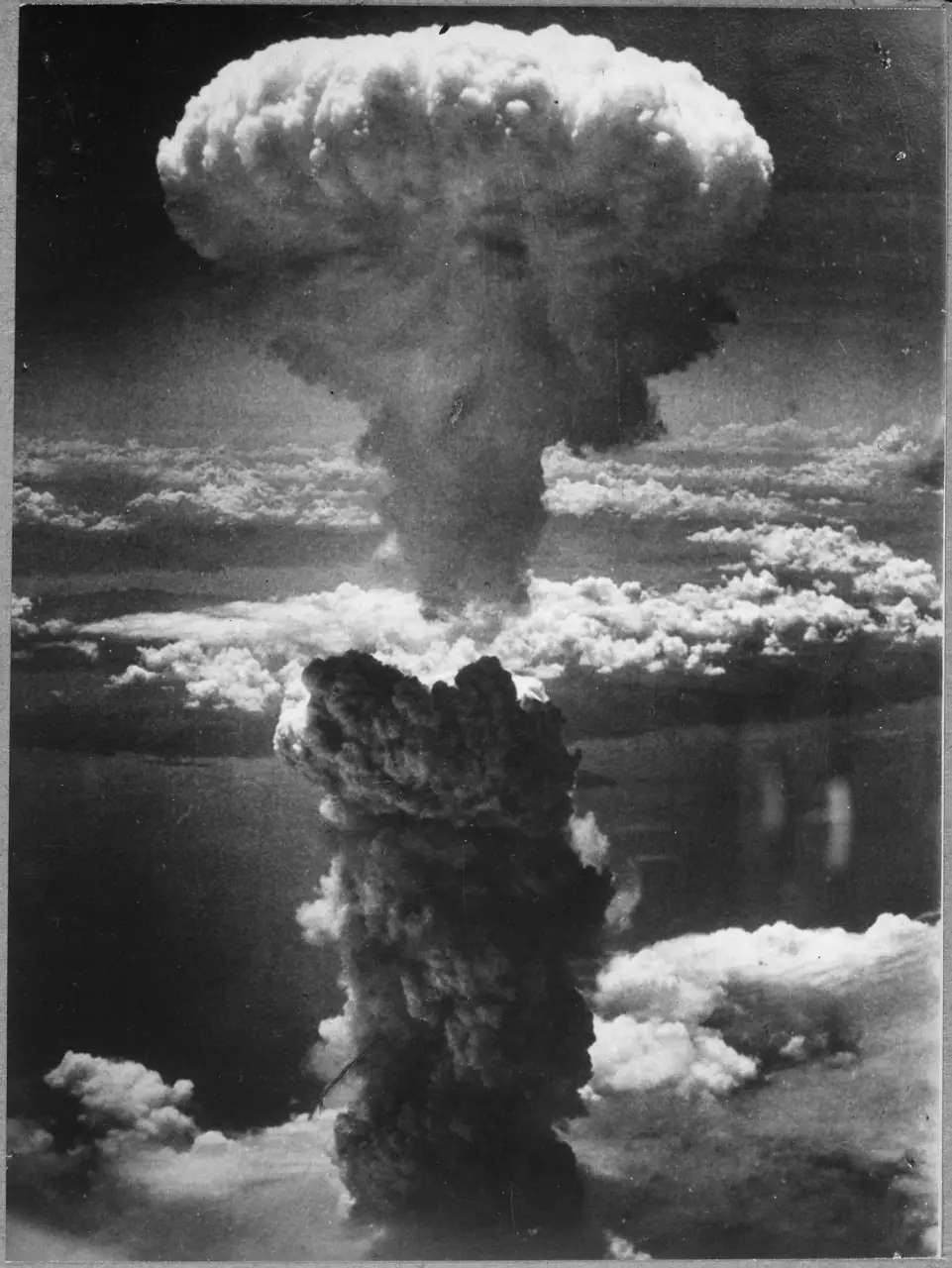
Bearers of long-term injury, illness, livelihood reconstruction, and memorySurvivors in Hiroshima and Nagasaki faced physical harm, loss of relatives, and long-term livelihood reconstruction, and their experiences cannot be fully expressed by a single mushroom cloud or military ruins photograph. Presenting civilian suffering does not require denying prior Japanese aggression; likewise, pursuing responsibility for aggression cannot erase the consequences of indiscriminate destruction. Here no individual's medical condition is inferred from a particular photograph; individual health and compensation experiences still require dedicated testimony and archives.
References and evidence
These materials support this page's account. Check the purpose, perspective and accessible scope of each source. Notes identify the evidential limits of excerpts, summaries and timelines.
- Chronology of modern Japanese archivesNational Diet Library of Japan · Archive
Checked political nodes from 1853 to the postwar period and can link to individual archival items. Lunar and Gregorian dates are listed together; this draft uses Gregorian years.
- Japan: A Country Study (1992 edition), Historical Background chapterFederal Research Division, Library of Congress; edited by Ronald E. Dolan and Robert L. Worden · Specialist reference
Actually read the relevant passages of the 1992 edition's historical chapter: PDF pages 49–62, 64–80, and 81–110, and sampled the social environment section on PDF pages 129–132; the research mainly runs through 1990. The book's old Yayoi dating, some ethnic classifications, and several dates are clearly outdated or erroneous; errors such as the atomic bomb in 1941/August 8 and Kwantung Army losses of 80,000 were not adopted; precise dates and causation were checked against updated archaeology, NDL, and institutional materials. Makes no claim to have read all 670 pages or to treat old statistics as 2024 current conditions.
- Nanjing Massacre archive project: project descriptionYale Divinity School Library · Archive
Provides letters, diaries, and photographs of Western witnesses in Nanjing; the project itself states that this is not all the evidence of the event.
- Letter from the Nanking Safety Zone Committee to the Japanese side, December 15, 1937Yale Divinity School Library, Nanking Safety Zone Committee archives · Primary source
Actually download, render, and read line by line the one-page original; the letter is addressed to Fukuda Tokuyasu at the embassy, discusses disarmed soldiers and civilians mixed together in the Safety Zone, and requests treatment as prisoners of war and humane treatment. The letter is evidence of negotiations at the time and does not independently prove a total death toll or all Japanese military actions.
- Stolen years: the Burma-Thailand RailwayAustralian War Memorial · Museum research
Forced labor, disease, and death among prisoners of war and Asian laborers; differences in statistical definitions and estimates must be preserved.
- Original text of the 1993 Kono Cabinet Secretary statementGovernment statement preserved by the Ministry of Foreign Affairs of Japan · Primary source
Actually read the complete statement; the military's direct or indirect involvement in comfort facilities, transfers, and recruitment and coercive environments against women's will are what the statement acknowledges. An official statement is not all victims' testimony or a final international judicial determination, and unverified totals are not used.
- The Sino-Japanese conflict, the United States, and the road to the Pacific WarOffice of the Historian, U.S. Department of State · Specialist reference
Diplomacy and sanctions from 1937 to 1941; U.S. diplomatic materials cannot be treated as a substitute for the social history of China and the colonies.
- Occupied and Rebuilt Japan, 1945–1952Office of the Historian, U.S. Department of State · Specialist reference
Land reform, democratization, the Cold War turn, and the peace treaty; a retrospective account by a US institution.